
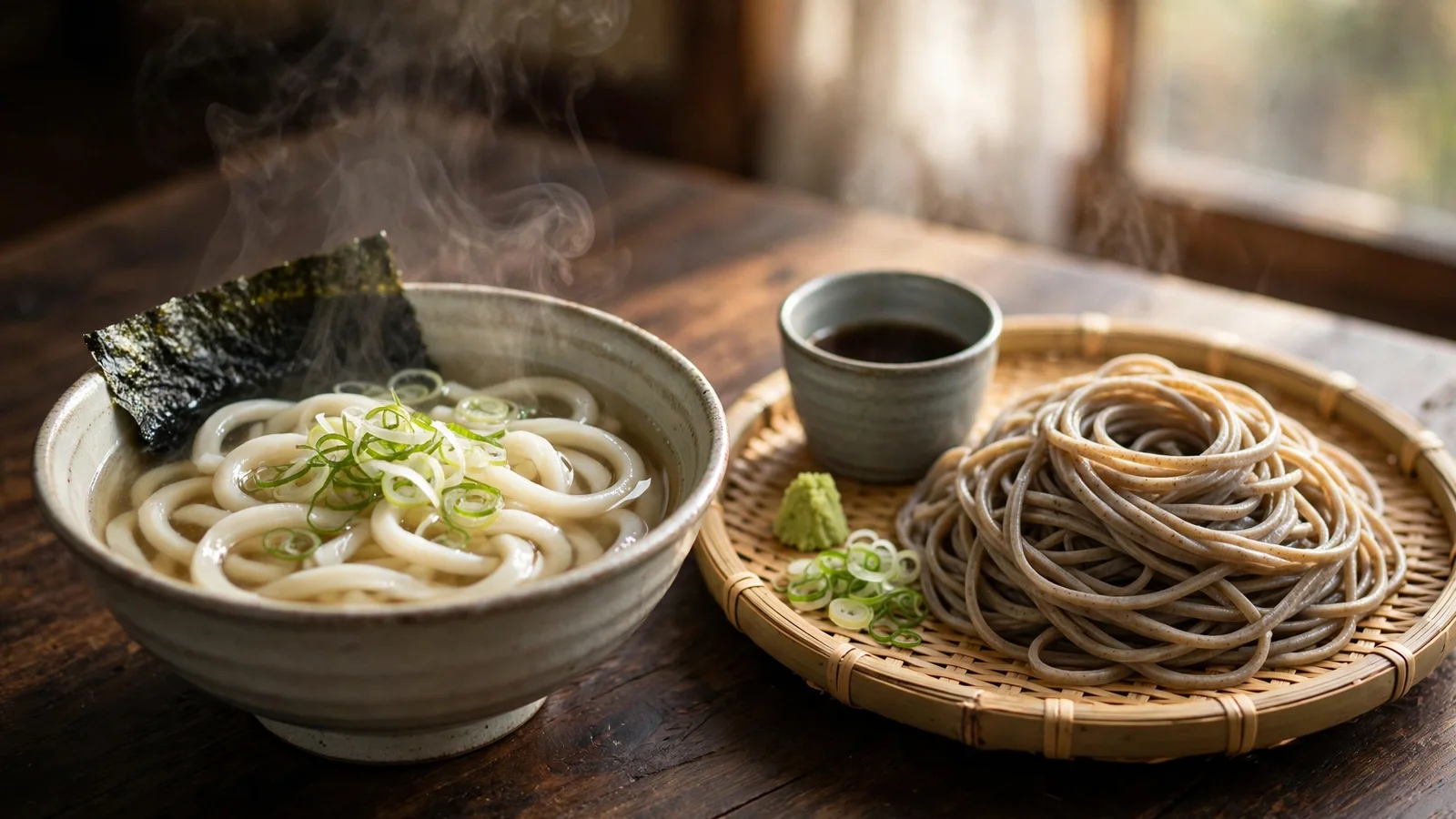
Udon and soba share a shelf at every Asian grocery store, and from a few steps back they can pass for the same beige noodle. Put them in a bowl and the difference is immediate. Udon is thick, white, and chewy, made from wheat flour. Soba is thin, brown, and earthy, made mostly from buckwheat flour.
That sounds like a simple choice — thick or thin — but the two noodles behave differently in hot broth, served cold at the table, and in the package at the store. The wheat in udon gives it a soft, almost pillowy chew that settles happily into broth. The buckwheat in soba gives it a delicate bite and a nutty flavor that stands up to dipping sauces. Pick the wrong one for the dish and dinner is still fine; pick the right one and it is the meal you meant to make.
The Quick Verdict
- Reach for udon when you want a comforting hot noodle bowl. Its thick, chewy strands are made for broths — dashi, curry, nabeyaki hot pots — and they survive simmering and stir-frying without falling apart.
- Reach for soba when you want a lighter meal, especially cold. Its thin, nutty strands are at their best dipped in tsuyu sauce on a hot day, and they cook in about half the time udon needs.
- If you only stock one, let the season decide. Udon is the winter noodle — hot, filling, forgiving to cook. Soba is the summer noodle — quick, refreshing, and satisfying cold. Neither one is better in the abstract; they are built for different jobs.
Udon vs Soba at a Glance
| Detail | Udon | Soba |
|---|---|---|
| Main ingredient | Wheat flour, salt, water | Buckwheat flour, usually blended with wheat flour |
| Color | Pale white to off-white | Tan to dark brown |
| Thickness | Thick — about 4 to 5 mm | Thin — about 1.5 to 2 mm |
| Texture | Soft, chewy, almost pillowy | Delicate with a gentle bite; much less chew |
| Flavor | Mild, clean, faintly wheaty | Nutty, earthy, distinctly buckwheat |
| Best served | Hot, in broth | Cold, dipped in sauce; also good hot |
| Dried cook time | 8 to 12 minutes | 4 to 6 minutes |
| Overcooking | Forgiving; goes mushy only if badly overdone | Unforgiving; breaks apart fast — watch the clock |
| Gluten | Contains gluten | Usually contains wheat flour; only 100% buckwheat soba (juwari) is gluten-free |
The one-line version: udon is a comfort noodle built on chew, and soba is a flavor noodle built on buckwheat.
What They're Made Of and How They Taste
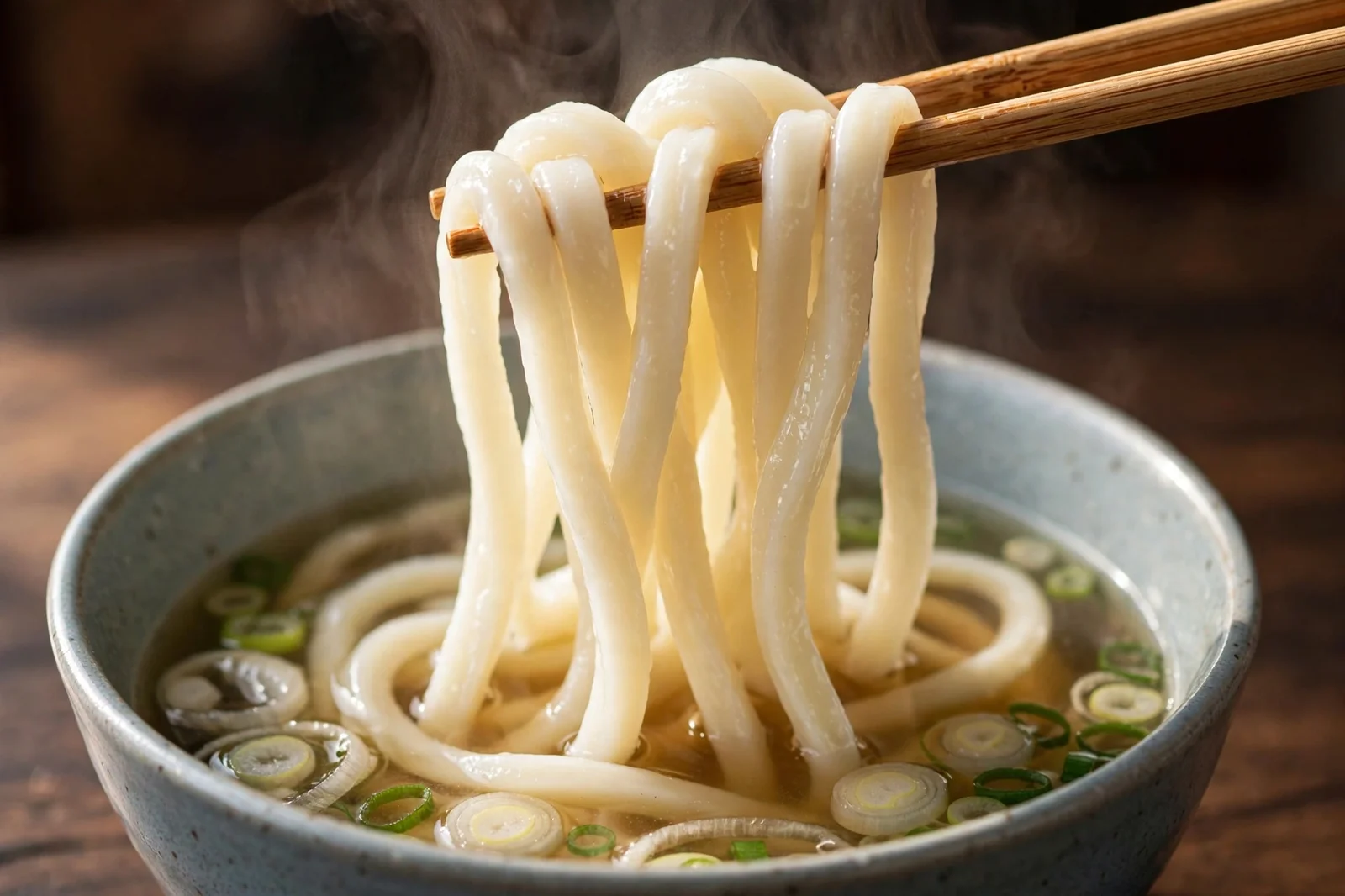
Udon dough is about as simple as noodles get: wheat flour, water, and salt, kneaded well to build chew. The flavor is mild on purpose — udon is a vehicle, happy to take on the taste of whatever broth or sauce surrounds it. That is why udon shows up in so many different bowls: the noodle itself stays out of the way while the broth does the talking.
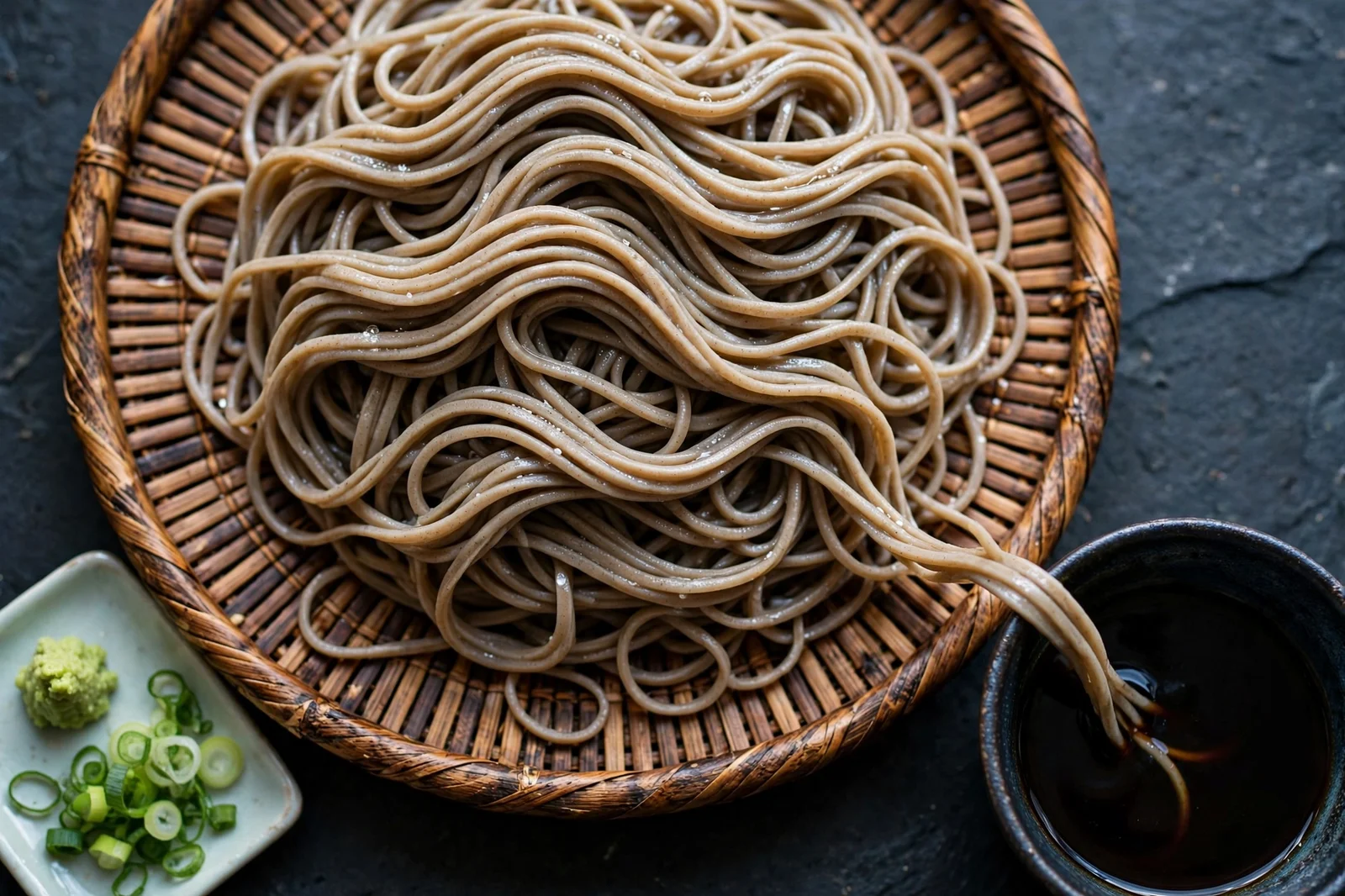
Soba is defined by buckwheat flour, though the package deserves a read. Most dried soba is a blend — often around 30 to 50 percent buckwheat, the rest wheat flour to hold the delicate noodles together. True 100 percent buckwheat soba, labeled juwari, exists but is fragile and usually sold fresh or frozen. The buckwheat gives soba a nutty, almost earthy taste you can identify blind. It is the noodle with a point of view, which is why soba is often served with minimal accompaniments: good noodles, good dipping sauce, and not much else getting in the way.
Texture and How They Cook
The texture gap is the real reason these noodles are not interchangeable. Udon is thick enough to stay chewy through a full simmer, which makes it the safer noodle for one-pot meals and stir-fries. It also reheats well — leftover udon soup still eats like udon soup the next day.
Soba needs more attention at the stove. Thin strands go from firm to broken in a minute or two, so set a timer and rinse the noodles in cold water the moment they are done, whether you are serving them hot or cold. That rinse stops the cooking and washes off surface starch, which keeps cold soba strands separate instead of gummy. It is standard practice in Japan, not an optional flourish.
For cold serving, soba wins on convenience as well as tradition: cook, rinse, drain, and pile the noodles on a bamboo tray or a wide plate. Udon can be served cold too, but its thick chew feels heavier without a hot broth around it.
Which Noodle for Which Dish
| Dish or situation | Better first pick | Why |
|---|---|---|
| Light dashi broth with scallions (kake) | Udon | Chewy noodles carry a delicate broth without the bowl feeling thin |
| Cold noodles with dipping sauce (zaru) | Soba | The nutty flavor and firm bite are the whole point; dipping keeps strands distinct |
| Tempura-topped noodles | Either | Tempura udon is the comfort bowl; tempura soba is the lighter one — both are classics |
| Nabeyaki or hot-pot style | Udon | Thick strands survive simmering in a shared pot |
| Stir-fried noodles | Udon | Stands up to the wok; soba breaks apart too easily |
| Cold summer meal | Soba | Light, cooks in minutes, and is traditionally served chilled |
| With curry | Udon | The thick chew holds its own against a heavy curry sauce |
The pattern is consistent: udon handles heat, weight, and time; soba handles freshness, flavor, and restraint. Both are classics with tempura on top, and our shrimp tempura recipe is built exactly for that kind of bowl — crisp, light, and happy in either broth.
The broth for a classic udon or soba bowl is usually a light dashi — kombu and bonito — rather than a heavy stock. For another gentle Japanese soup bowl built on dashi, see our classic miso soup. If you prefer a vegetarian version of that dashi, our guide to dried shiitake mushrooms covers the soak-and-simmer method that builds a savory mushroom broth base.
A Note on Nutrition
Neither noodle is a health food, and the toppings and broth decide how light or heavy the bowl feels far more than the noodle does. That said, the buckwheat in soba gives it a small edge on paper: a cup of cooked soba has a bit more protein and fiber than the same amount of refined-wheat udon, since buckwheat is a whole grain.
Two label notes matter more than the numbers. First, most store-bought soba contains wheat flour, so it is not gluten-free unless the package says 100 percent buckwheat (juwari). Second, the buckwheat percentage varies widely — a package that is 30 percent buckwheat tastes and eats closer to a wheat noodle than one that is 80 percent. If buckwheat flavor is what you are after, check the ingredient list, not just the front of the package.
Buying and Storing Them
Udon is the easier noodle to shop for. Dried udon keeps for months in the pantry and cooks in 8 to 12 minutes. Frozen udon — the thick Sanuki-style bundles sold in most Asian groceries — cooks in about a minute and eats the closest to fresh, making it the best weeknight shortcut in this whole comparison. Fresh udon is a treat when you find it; use it within a few days.
Soba is mostly sold dried, which is fine — good dried soba is excellent. Look for a higher buckwheat percentage on the label if you want that nutty flavor to come through. Fresh and frozen soba exist and are worth trying, but they are delicate and do not keep long.
For both noodles, cook only what you will eat. Cooked noodles go gummy in the fridge, and reheated soba in particular loses its bite. Dried packages, on the other hand, ask for nothing: a cool, dry shelf and they wait patiently.
The Bottom Line
Udon vs soba is chew against flavor, comfort against freshness. Buy udon when dinner should be a hot, forgiving bowl — broth, curry, or a quick stir-fry on a cold night. Buy soba when dinner should be light and quick — cold noodles with dipping sauce, or a simple hot bowl that lets the buckwheat come through. Stock both if you have the shelf space; they cover different weeks of the year, and neither one asks for much beyond boiling water.