
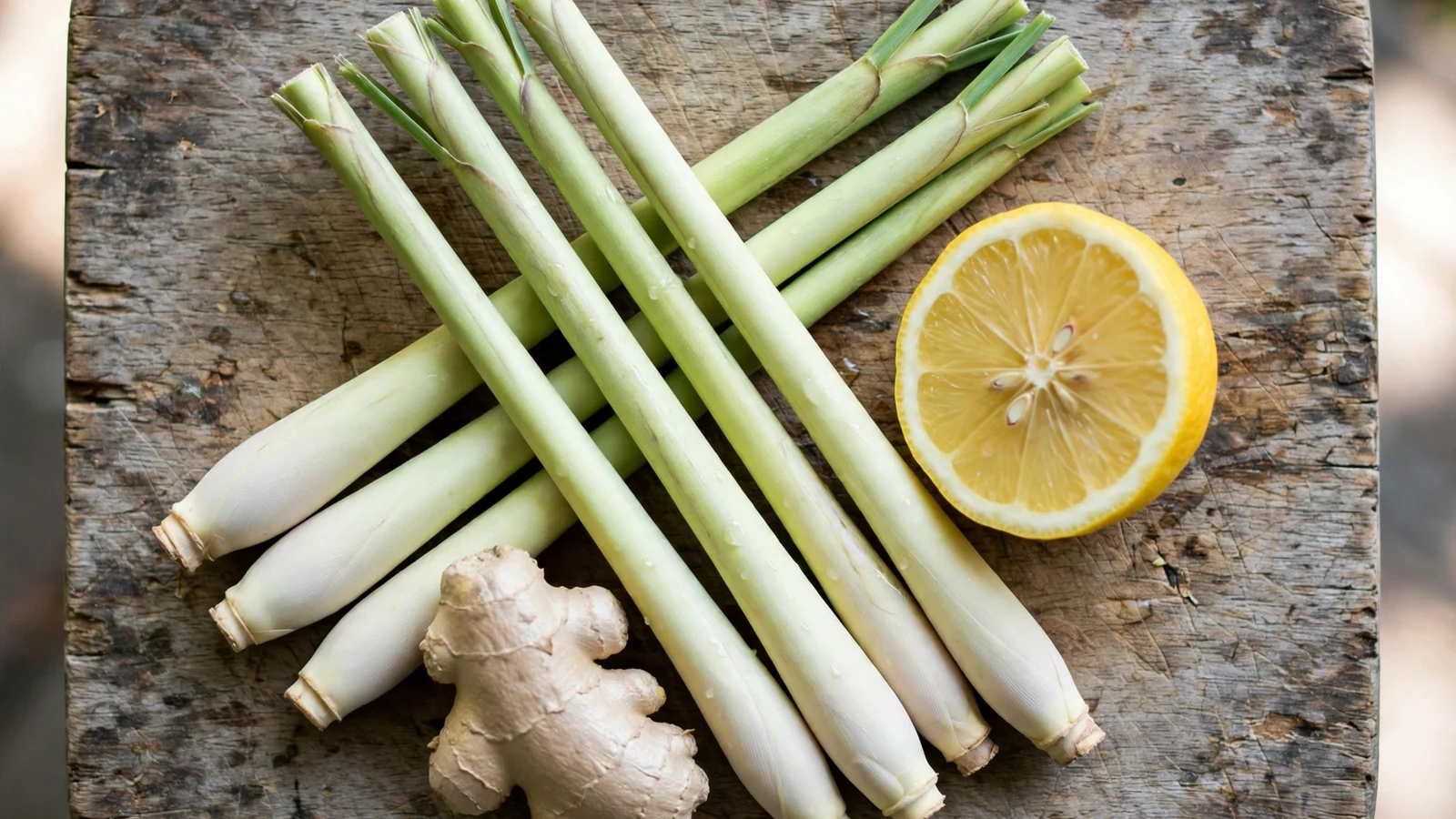
What Fresh Lemongrass Actually Brings to a Dish
Fresh lemongrass tastes like lemon's perfume without lemon's sourness: bright citrus on the nose, a faint floral note, and a mild ginger warmth underneath. The stalks go into the pot whole and bruised, and they season by infusion — they soften into the background rather than dissolving into the dish.
That is why a squeeze of lemon juice is not a substitute, even though it sounds like one. Juice brings acid the stalk never had, and it misses the floral, grassy perfume completely. Every swap below rebuilds the two things lemongrass actually contributes — citrus aroma and warm, rounded depth — from parts. Pick by the job: a swap that shines in a simmered curry can fall flat in a clear broth.
Quick Picker: Match the Swap to the Dish
| Substitute | Swap for 1 stalk lemongrass | Best for | Watch out for |
|---|---|---|---|
| Lemon zest + fresh ginger | Zest of 1/2 large lemon + 1 tsp finely grated ginger | Soups, curries, marinades — closest all-round | Adds acidity fresh lemongrass lacks; see the timing rule below |
| Frozen lemongrass | 1 frozen stalk, used exactly like fresh | Clear broths and anything simmered | None — this is the real thing, just frozen |
| Lemongrass paste (tube) | 1 Tbsp paste | Curry pastes, stir-fries, marinades | Often contains citric acid and oil; weak in delicate broths |
| Dried lemongrass | 1 Tbsp dried pieces | Long-simmered soups and teas | Muted aroma; needs a longer simmer to wake up |
| Lemon verbena leaves | 2–3 fresh leaves | Light broths, teas, steaming liquids | Lovely citrus but no warm depth; steep, don't boil |
| Kaffir lime leaves + lemon zest | 2 kaffir lime leaves + a wide strip of lemon zest | Thai curries and coconut soups | More floral and perfumed than lemongrass; use a light hand |
| Dried lemongrass powder | 1 tsp powder | Spice rubs and dry marinades | Gritty in wet dishes; bloom it in oil first |
One trimmed stalk means the pale, tender lower 6–8 inches after you peel off the dry outer layers and cut away the woody top. If your stalks run thin (grocery-store bundles often do), use two.
The Closest Swap: Lemon Zest Plus Fresh Ginger
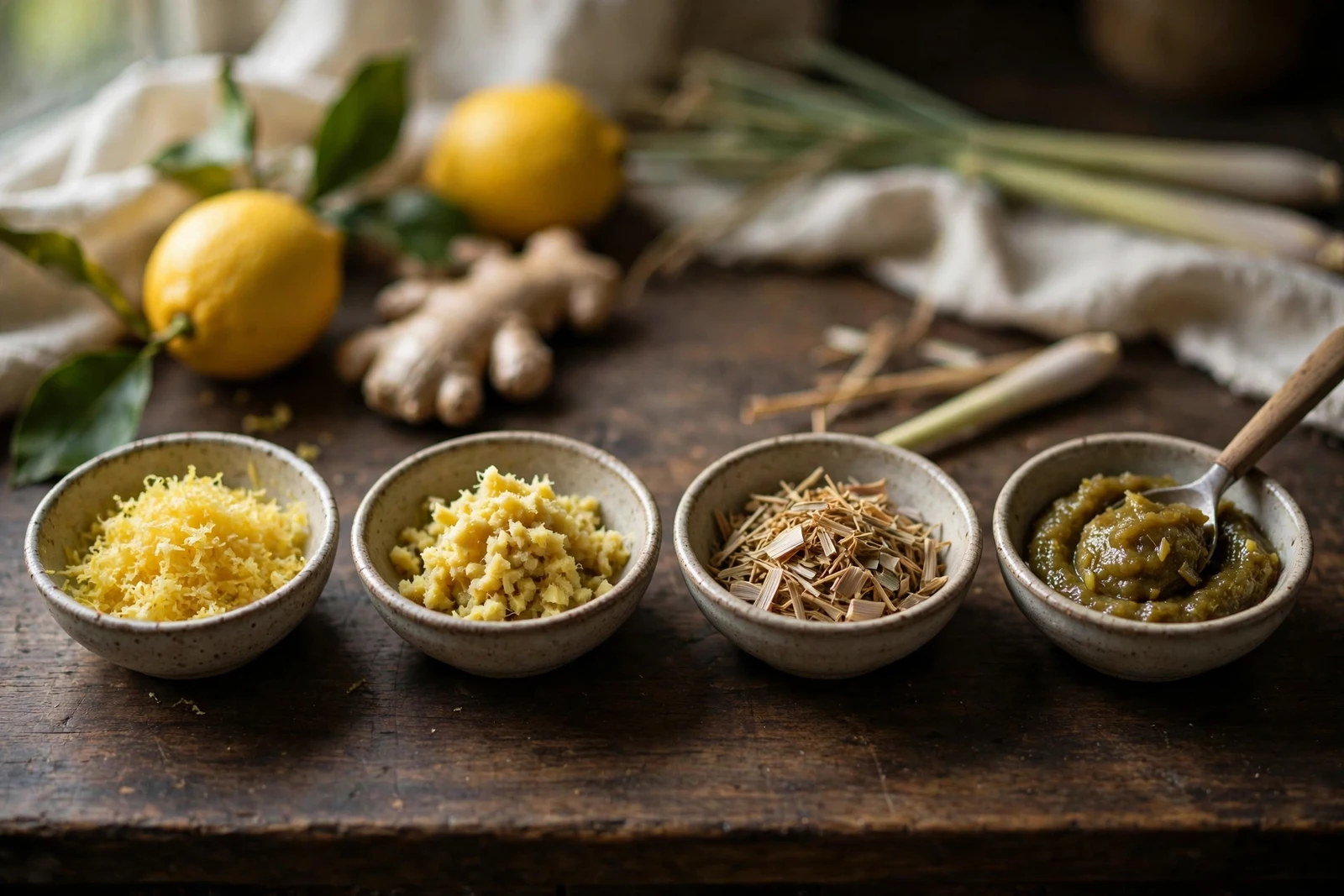
For most dishes, this is the winner. Microplane the zest of half a large lemon — yellow part only, no white pith — and mix it with 1 teaspoon of finely grated fresh ginger per stalk the recipe calls for.
How you add it matters as much as the ratio. Fresh lemongrass stalks go in bruised and whole, and they can simmer for 25–30 minutes without turning bitter. Citrus zest cannot. Boil zest hard for more than about 10 minutes and the pith-like bitterness creeps in, even if you were careful with the Microplane. So do this instead: simmer the rest of the dish first, then stir the zest-and-ginger mix in for the last 10–15 minutes. You get the perfume without the bitter edge.
For clear broths, bundle the mix in a small square of cheesecloth tied with kitchen twine so it lifts out cleanly — same idea as fishing out bruised stalks. I do this in Lemongrass Tofu Banh Mi's marinade step when my freezer stash runs out, and the marinade tastes right: bright up front, warm underneath.
Paul's Freezer Stash: The Swap That Isn't a Swap
The best substitute for fresh lemongrass is fresh lemongrass that happened to spend time in your freezer. When I buy a bundle, I trim the stalks, wrap them tightly in a freezer bag, and freeze them whole. Months later they go straight from frozen into the pot — no thawing, no chopping first.
Frozen stalks behave like fresh ones in every way that matters: they take the same 25–30 minute simmer, they infuse clear broths cleanly, and they come out in one piece. The only difference I've noticed is that the outer layer gets a little papery after a few months, so I peel one extra layer off frozen stalks before bruising them. If you cook with lemongrass more than twice a year, this one habit makes the rest of this guide almost unnecessary.
Lemongrass Paste: Good for Curries, Weak for Broths
The tube of lemongrass paste in the international aisle is genuinely useful — 1 tablespoon stands in for 1 stalk in curry pastes, stir-fry sauces, and marinades, where it gets pounded or blended in and disappears. Check the ingredient list, though: most brands add citric acid and a little oil, which is why paste tastes sharper and flatter than the stalk.
In a delicate clear broth, that sharpness shows. I tried paste in a simple chicken-and-lemongrass soup once and the broth tasted oddly tangy in a way the stalk version never does. For broths, pick the frozen stalk or the zest-and-ginger bundle instead. For a Thai green curry or a Vietnamese caramel marinade, the paste is fine — the coconut milk and fish sauce cover its rough edges.
Dried Lemongrass and the Long Simmer
Dried lemongrass pieces work, but they need coaxing: use 1 tablespoon per stalk and give them a full 20–30 minutes in simmering liquid, longer than you would give fresh. The aroma comes back slowly. This is the right call for teas, pho-style broths that simmer for hours anyway, and any dish where the lemongrass steeps rather than shines.
Dried lemongrass powder (about 1 teaspoon per stalk) belongs in dry rubs and spice mixes, not wet dishes — it never fully dissolves and can feel gritty. Bloom it in hot oil for 30 seconds before adding other aromatics and it behaves much better.
Two Swaps to Reach For in Thai Cooking
If the dish is Thai, kaffir lime leaves are already in the flavor family. Two torn kaffir lime leaves plus a wide strip of lemon zest get you close to lemongrass in coconut curries and tom kha-style soups. Go easy: kaffir lime is more floral and perfumed, and it can take over if you match it stalk-for-stalk.
Lemon verbena, if you grow herbs, is the sleeper pick for light applications — 2–3 leaves steeped in a broth or tea give a clean lemon perfume. It lacks lemongrass's warm depth, so it suits dishes where lemongrass plays a supporting role, not the lead.
What Not to Use
Lemon or lime juice alone is the most common mistake. It adds sourness the recipe did not ask for and none of the perfume, and in coconut-milk dishes the extra acid can make the coconut milk more likely to split. If juice is truly all you have, use half the amount, add it at the very end, and cut back on any other acid in the recipe — but expect a different dish.
Also skip anything labeled citronella oil or lemongrass essential oil. Those are fragrance products, not food, and they are far too concentrated to cook with.
From the Garden
The honest endgame here is growing your own. Lemongrass is one of the easiest tropical herbs to keep — I overwinter mine indoors and it comes back every spring, which means a fresh stalk is a few steps from the kitchen for most of the year. If you want to try it, start with How to Overwinter Lemongrass Indoors — and freeze the end-of-season harvest, because a homegrown stalk pulled from your own freezer beats every store-bought swap on this page.
More Recipes and Guides You'll Use
- Lemongrass Tofu Banh Mi — the marinade where the zest-and-ginger swap shines
- Gochujang Substitutes — the same swap-by-dish approach for Korean chili paste
- Substitutes for Shaoxing Wine — another pantry-gap rescue, with ratios
- How to Overwinter Lemongrass Indoors — never run out of the real thing again