
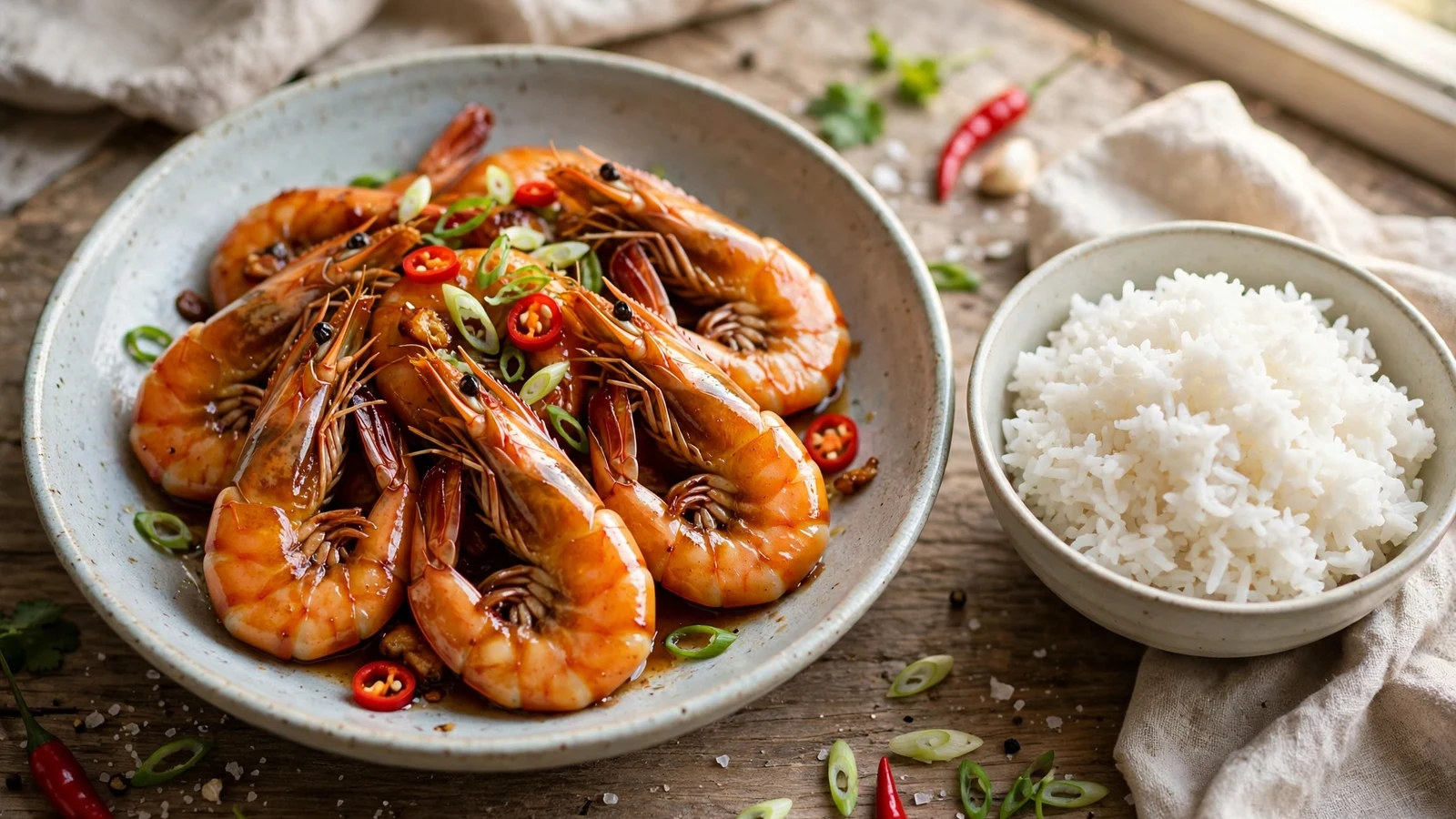
Tom rim is the shrimp dish I make when dinner needs to be fast but still taste like someone stood at the stove and paid attention. Shell-on shrimp cook in a dark amber caramel made from sugar and fish sauce, and the sauce thickens into a glaze that clings to every shrimp. You serve it over plain steamed rice, and the rice soaks up whatever sauce is left in the pan.
What is tom rim?
Tom rim is a Vietnamese home-style dish of shrimp simmered in caramel sauce. The name breaks down simply: tom means shrimp, and rim means to simmer something in a seasoned sauce until it glazes. The sauce here is built from sugar cooked to a dark amber color, fish sauce, and a spoon of water. It is salty, sweet, and a little smoky from the caramel, and it coats the shrimp instead of pooling around them.
Shrimp stay in their shells for this dish. The shells protect the meat from overcooking, and they give the sauce more shrimp flavor as it reduces. You peel the shrimp at the table, which is half the fun of eating it. If you prefer peeled shrimp, the recipe still works, but pull them out a minute sooner since they cook faster without shells.
Ingredients
For the shrimp:
- 1 lb large shell-on shrimp, deveined
- 1 tablespoon fish sauce
- 1 teaspoon sugar
- 1/4 teaspoon black pepper
- 1 small shallot, minced
For the caramel sauce:
- 2 tablespoons neutral oil
- 2 tablespoons sugar
- 1 1/2 tablespoons fish sauce
- 1 tablespoon water
To finish:
- 2 garlic cloves, minced
- 2 scallions, thinly sliced
- 1 red chili, thinly sliced (optional)
How to make tom rim
- Pat the shrimp dry with paper towels. Toss them with the fish sauce, sugar, black pepper, and shallot. Let them sit for 10 minutes while you set out the rest.
- Heat the oil in a large skillet over medium heat. Add the garlic and stir for 30 seconds, just until it smells fragrant. Lift the garlic out with a slotted spoon and set it aside. Garlic left in a hot pan turns bitter fast, and this step keeps it out of harm’s way.
- Turn the heat to low. Add the sugar to the same oil and stir until it melts and turns dark amber, about 2 to 3 minutes. Watch the color, not the clock: dark amber is right, black is burnt, and there is no way back from black.

- Add the shrimp in a single layer. Cook for 2 minutes without moving them, until they turn pink underneath, then flip each one.
- Pour in the fish sauce and water. Simmer and toss for 2 to 3 minutes, until the sauce thickens into a glaze that coats each shrimp. If the shrimp finish before the sauce does, lift them out, let the sauce reduce on its own, then toss them back through it.

- Return the garlic to the pan with the scallions and chili. Toss for 30 seconds and take the pan off the heat. Serve at once over steamed rice.
Tips for a glossy glaze
The ratio that holds this dish together is 2 tablespoons sugar to 1 1/2 tablespoons fish sauce for 1 lb of shrimp, plus 1 tablespoon of water to keep the caramel fluid while it reduces. Change the shrimp amount and scale the sauce with it, or the pan ends up either dry or swimming.
Dry shrimp matter more than fancy shrimp. Shrimp that go into the pan wet steam instead of glaze, and the sauce stays thin. Pat them dry after rinsing, and if you use frozen shrimp, thaw them fully and pat them dry twice.
Taste the sauce before the final toss. Fish sauce brands differ in salt, and a sauce that tastes right before the shrimp go in will taste right after. If it lands too salty, add a splash of water and a pinch of sugar, then reduce it again for a minute.
What to serve with tom rim
Plain steamed rice is the classic partner, and this how to cook jasmine rice guide covers the pot method I use. Cucumber slices and fresh herbs on the side cut through the sweet-salty glaze, and they take no cooking at all. The same caramel method works for fish in this ca kho to recipe, and if you want a second shrimp dish for the same week, this salt and pepper shrimp recipe uses a dry, crisp coating instead of a glaze.

Troubleshooting: Fix My Vietnamese Caramelized Shrimp (Tom Rim)
Most tom rim problems come from the same three places: the caramel went too far, the shrimp stayed in the pan too long, or wet shrimp thinned the sauce. The notes below cover the common fixes, and the widget walks through each one.
HERB & LIME · KITCHEN HELP
Fix My Vietnamese Caramelized Shrimp
Choose what went wrong to see a practical next step.
Possible cause
What to try next
For next time
From Paul's kitchen. Results vary with shrimp size, oil, and stove heat, adjust timing to your setup.
Quick reference (also works without JavaScript)
The caramel turned black and tastes bitter
Cause: The sugar cooked past dark amber into black, and burnt sugar tastes bitter no matter what else goes into the pan.
Try: Start the caramel again, since burnt sugar bitterness cannot be cooked out, and keep the heat low until the sugar turns dark amber.
Prevent: Cook the sugar on low heat, watch the color instead of the clock, and pull the pan off the heat as soon as it reaches dark amber.
The shrimp came out rubbery
Cause: The shrimp stayed in the pan after they were done, and shrimp meat tightens fast once it passes opaque.
Try: Serve the shrimp as they are this time, and pull the next batch as soon as the shrimp turn pink and opaque.
Prevent: Cook shell-on shrimp about 2 minutes per side, and lift them out of the pan if the sauce still needs time to reduce.
The sauce stayed thin and watery
Cause: Wet shrimp release water into the pan as they cook, and that water thins the caramel instead of letting it glaze.
Try: Lift the shrimp out, simmer the sauce alone until it thickens, then toss the shrimp back through it.
Prevent: Pat the shrimp fully dry before cooking, and thaw frozen shrimp completely and pat them dry twice.
The sauce tastes too salty
Cause: Fish sauce varies by brand, so a measured amount can still land saltier than expected.
Try: Add a splash of water and a pinch of sugar, then reduce the sauce for one more minute before tossing the shrimp.
Prevent: Taste the sauce before the final toss, since fish sauce brands differ in salt, and adjust there while a fix still blends in.
The garlic burned and the sauce tastes bitter
Cause: Garlic left in a hot pan past fragrant turns dark fast, and burnt garlic flavors the whole sauce.
Try: Lift out any dark garlic, since burnt garlic bitterness cannot be cooked out, and add a fresh minced clove with the fish sauce instead.
Prevent: Fry the garlic for about 30 seconds until fragrant, lift it out, and return it only at the end with the scallions.
Vietnamese Caramelized Shrimp (Tom Rim)
Ingredients
Method
- Pat the shrimp dry with paper towels. Toss them with the fish sauce, sugar, black pepper, and shallot. Let them sit for 10 minutes.
- Heat the oil in a large skillet over medium heat. Add the garlic and stir for 30 seconds, just until fragrant. Lift the garlic out with a slotted spoon and set it aside.
- Turn the heat to low. Add the sugar to the same oil and stir until it melts and turns dark amber, about 2 to 3 minutes. Do not let it go black.
- Add the shrimp in a single layer. Cook for 2 minutes without moving them, until pink underneath, then flip each one.
- Pour in the fish sauce and water. Simmer and toss for 2 to 3 minutes, until the sauce thickens into a glaze that coats each shrimp. If the shrimp finish first, lift them out, reduce the sauce alone, then toss them back through it.
- Return the garlic to the pan with the scallions and chili. Toss for 30 seconds, take the pan off the heat, and serve at once over steamed rice.
Notes
More Vietnamese recipes
Vietnamese fish sauce chicken wings, cha ca la vong, bo luc lac shaking beef, and com tam with grilled pork all sit on the same weeknight table as this shrimp, and each one pairs well with plain steamed rice.
From the garden
The scallion garnish is the part of this dish that comes back on its own: cut scallions leave their white bases in the pot, and new green tops push up within days. That regrowth is covered in the guide to growing green onions in pots, and it is the reason a small pot of scallions by the door earns its place.
Serve it hot, with extra rice for the sauce.