
How to Prepare Lemongrass for Cooking: Trim, Bruise, Mince, Store
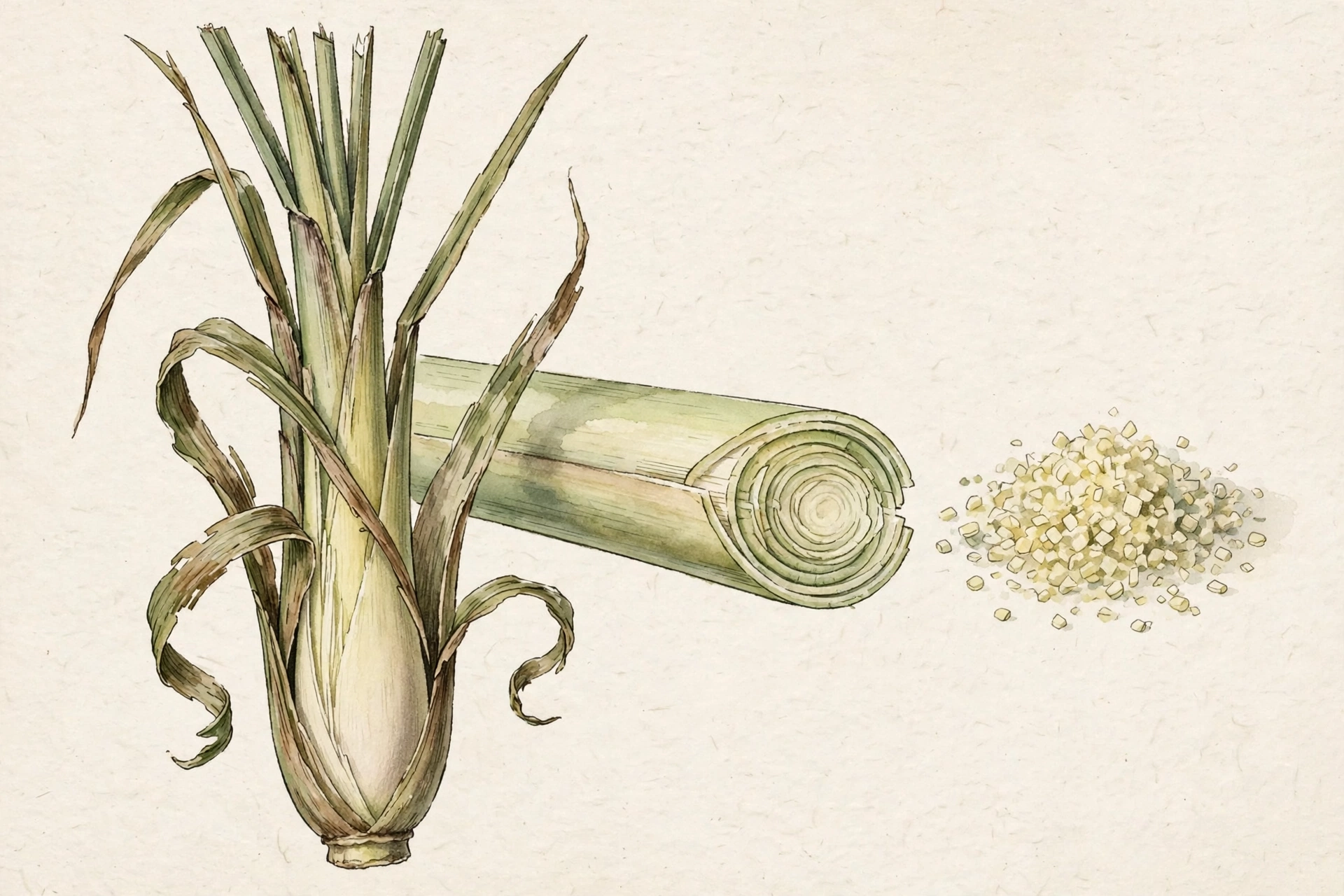
Lemongrass looks intimidating the first time you hold it — a bundle of tough, fibrous stalks that seem more like yard waste than food. The whole trick is knowing that most of the stalk is packaging. The usable part is the tender core at the base, and everything else is either compost or flavoring for a stockpot.
Here’s the short version: peel off the tough outer layers, trim both ends, then either bruise the stalk whole for simmering or mince the pale core finely for eating. That’s the entire technique. The rest of this guide is the details that make it work.
Buying: What to Look For
Pick stalks that are firm and pale green with a thick base. The bottom should feel solid, not dry or hollow. A little dryness at the very top is normal — avoid stalks that are brown, soft, or moldy. Scratch the base with your nail: it should smell fresh and lemony. If it doesn’t smell like anything, it won’t taste like anything either.
Step 1: Trim the Ends
Cut off the root end (about half an inch) and trim the dry, grassy tops. How much top you remove depends on the dish — for simmering whole, you can leave more; for mincing, you’ll only use the bottom few inches anyway. Most recipes use the pale, bulbous base of the stalk, roughly the bottom 4–6 inches.
Step 2: Peel the Tough Outer Layers
This is the step people skip, and it’s the reason their lemongrass dishes taste like chewing on twigs. Peel away the tough, fibrous outer layers — usually two or three of them — until you reach the paler, more tender core. You’ll feel the difference: the outer layers are stiff and woody; the core gives slightly when you press it.
What you peel off isn’t trash. The outer layers and green tops can go into a stockpot, a pot of tea, or a simple syrup — anywhere they’ll simmer and be strained out. They still carry plenty of aroma.
Step 3a: Bruise It (for Soups, Stews, and Infusions)
When the lemongrass is going to simmer in liquid and be removed before serving — pho broth, curry, tom yum-style soups — you don’t need to chop it at all. Just bruise it.
Lay the trimmed stalk on a cutting board and whack it with the flat side of a heavy knife, a rolling pin, a meat pounder, or the bottom of a heavy skillet. You want to crush the fibers enough to release the fragrant oils without shredding it. A bruised stalk can also be tied into a loose knot, which keeps it together in the pot and makes it easy to fish out later — like a bay leaf you can actually find.
Step 3b: Mince It (for Marinades, Pastes, and Stir-Fries)
When the lemongrass stays in the dish — a marinade for grilled pork, a curry paste, a stir-fry — it has to be minced, and minced finely. The fibers are genuinely tough; pieces that are merely chopped will survive cooking and end up as unpleasant woody bits in the finished dish.
Use only the tenderest pale core for mincing. Slice it thinly crosswise first, then rock your knife over the slices until they’re as fine as you can get them. If your recipe calls for a paste, pound the minced lemongrass in a mortar and pestle, or blitz it in a small food processor with a splash of water — that breaks down the last of the fiber.
Rule of thumb: if you can feel the pieces between your teeth in the finished dish, they weren’t minced finely enough.
What to Discard vs. What to Use
| Part | Use it or lose it? |
|---|---|
| Pale tender core (bottom ~4–6 inches) | Use — mince for eating, or bruise for simmering |
| Tough outer layers you peeled off | Simmer only — stocks, teas, syrups; strain out |
| Green leafy tops | Simmer only — tea or infused syrup |
| Dry root end | Discard |
| White powdery coating on the stem | Harmless — rinse it off |
Storage and Freezing
Fresh: Wrap stalks loosely in a paper towel, slip them into a bag, and refrigerate. They’ll keep for two to three weeks.
Frozen: Lemongrass freezes beautifully, which makes it worth buying extra. You can freeze whole trimmed stalks in a freezer bag, or mince the core first and freeze it in small portions — ice cube trays work well, especially if you freeze the mince with a little water or oil. Use frozen stalks straight from the freezer; they soften quickly in a hot pan or pot.
Dried or paste: Dried lemongrass and lemongrass paste exist and are fine in a pinch, but they don’t match fresh for brightness. If a recipe is built around lemongrass flavor, fresh is worth the trip.
A Note on Safety
Lemongrass stalks are stiff and can snap unpredictably under the knife, and the outer layers have sharp-ish edges that can give you a paper-cut-like nick. Use a sharp knife (a dull one slips), keep your guiding hand in a claw grip, and don’t try to power through a stalk that’s fighting back — reposition it instead.
Recipes That Use Lemongrass
Our Vietnamese Lemongrass Chicken and Lemongrass Tofu with Fresh Herbs both start with prepared lemongrass. To grow your own, see how to grow lemongrass in pots.
Sources
- Food52, “How to Prep Lemongrass” — peeling to the white core, bruising for infusions, scraps for tea/stock, freezing. https://food52.com/story/10031-how-to-prep-lemongrass
- Illinois Times, “A key to many Asian recipes” — peeling tough outer layers, mincing the tender core finely, using the base of the stem; green tops for tea and syrup. https://www.illinoistimes.com/food-drink/a-key-to-many-asian-recipes-18836670/
- Recipes by Nora, “What is Lemongrass (Tanglad)? How to Prepare and Use it” — crushing for soups, mincing for stir-fries and marinades, storage (fridge 2–3 weeks, freezing), buying tips. https://www.recipesbynora.com/lemongrass-in-filipino-cooking/
- RecipeTin Eats, Vietnamese noodles with lemongrass chicken — peel tough outer layers, bruise with the back of the knife, keep pieces large enough to remove. https://www.recipetineats.com/vietnamese-chicken-noodle-bowl/comment-page-5/
Editorial note: Preparation guidance is compiled from the published cooking references above. No step-by-step photos were taken for this article.