
Sambal kangkong is one of the fastest dishes in the Southeast Asian repertoire, and one of the easiest to ruin if you treat it like an afterthought. Water spinach goes into a screaming-hot wok with a spoonful of sambal, and ninety seconds later it comes out glossy, tender at the stems, just wilted at the leaves, and carrying heat in every bite. When it works, you get crunch and softness in the same mouthful. When it doesn’t, you get a sad gray tangle. The difference is almost entirely about timing and water.
Kangkong is the Malay and Indonesian name for water spinach, also sold as ong choy, rau muong, or morning glory depending on where you shop. It’s a hollow-stemmed green that grows fast in warm, wet places, which is why it shows up all over Malaysia, Indonesia, Singapore, Vietnam, and Thailand. The stems stay crisp while the leaves wilt to silk, and the whole bunch cooks in about the time it takes to make the sauce.
Choosing and Prepping Water Spinach
Look for bright green stems that snap cleanly instead of bending. Avoid bunches with yellowed leaves or slimy cut ends. A standard supermarket bunch runs about a pound, which looks enormous raw and cooks down to a modest mound, so don’t be shy about buying two bunches for four people as a side.
Wash it well. Kangkong grows in and near water, so grit hides in the hollow stems. Fill a big bowl with cold water, swish the greens around, lift them out, and repeat until the water runs clear. Trim off the tough bottom inch or two of the stems, then cut everything into 3-inch pieces. Keep stems and leaves in separate piles if you want the most even result; the stems get a 30-second head start in the wok.
The most important prep step is draining. Wet greens dropped into a wok steam instead of fry, the sambal dilutes, and the dish turns watery. Shake the greens dry in a colander, or give them a quick spin. A little clinging moisture is fine. Puddles are not.
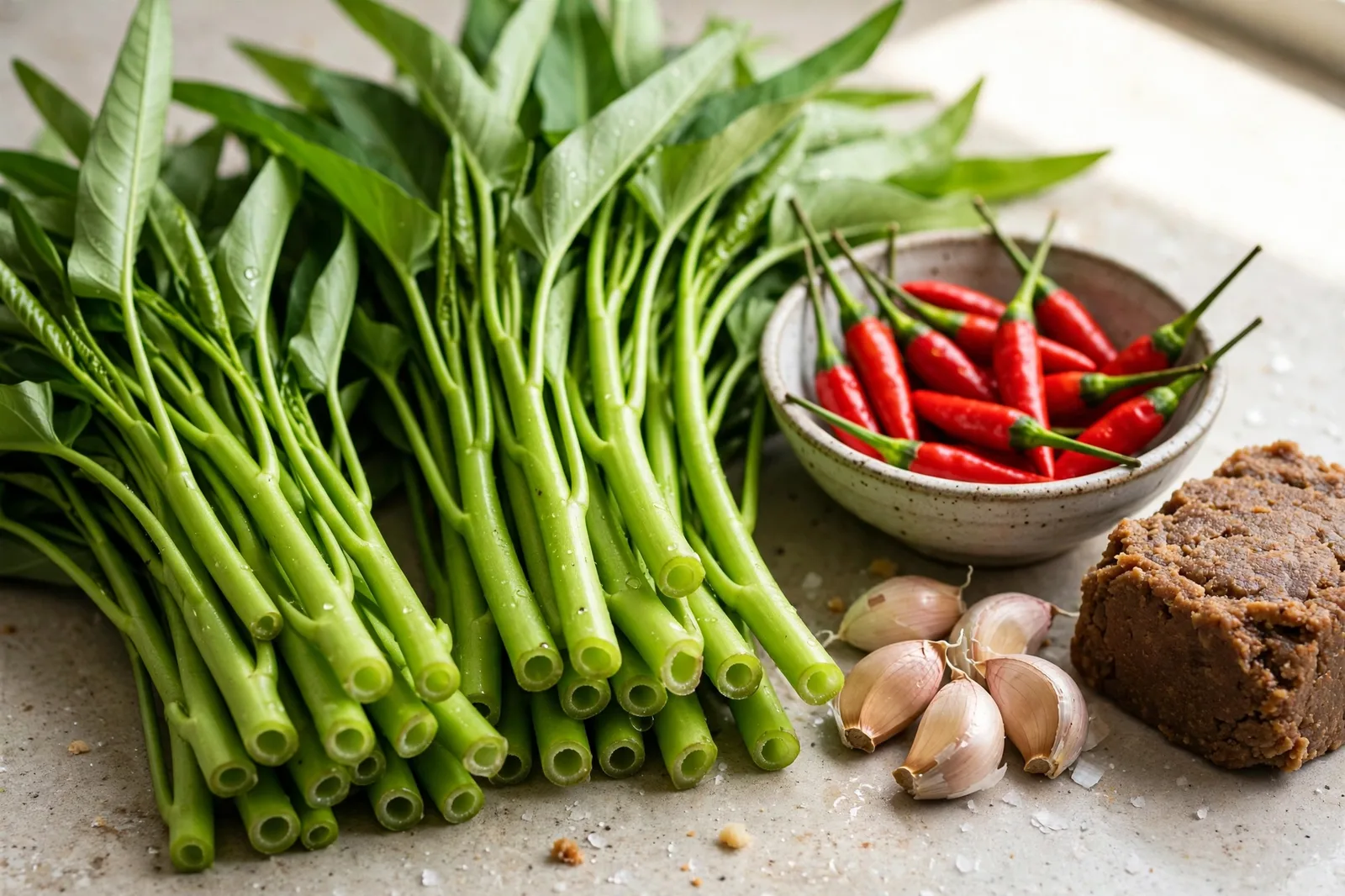
Sambal Kangkong
Water spinach stir-fried in a hot sambal sauce with shrimp paste, garlic, and chiles, finished with a squeeze of lime. Fast, spicy, and best eaten right away.
Prep time: 10 minutes
Cook time: 5 minutes
Total time: 15 minutes
Servings: 4 as a side dish
Ingredients
- 1 pound (450 g) water spinach (kangkong), trimmed and cut into 3-inch pieces
- 2 tablespoons neutral oil
- 4 cloves garlic, minced
- 2 to 3 Thai bird chiles, sliced, or 1 tablespoon sambal oelek
- 1 teaspoon belacan (shrimp paste), or 1 teaspoon fish sauce
- 1 tablespoon oyster sauce
- 1 teaspoon sugar
- 1 to 2 tablespoons water, only if needed
- 1/2 teaspoon salt, to taste
- Lime wedges, for serving
Instructions
- Wash the water spinach in several changes of cold water, trim the tough stem ends, and cut into 3-inch lengths. Drain thoroughly and set aside. Mince the garlic and slice the chiles so everything is ready before the wok heats up.
- Heat a wok or large skillet over high heat until it just begins to smoke. Add the oil and swirl to coat.
- Add the garlic, chiles, and belacan. Stir-fry for about 20 seconds, mashing the shrimp paste into the oil, until the mixture smells pungent and toasty. Work fast; garlic burns quickly at this heat.
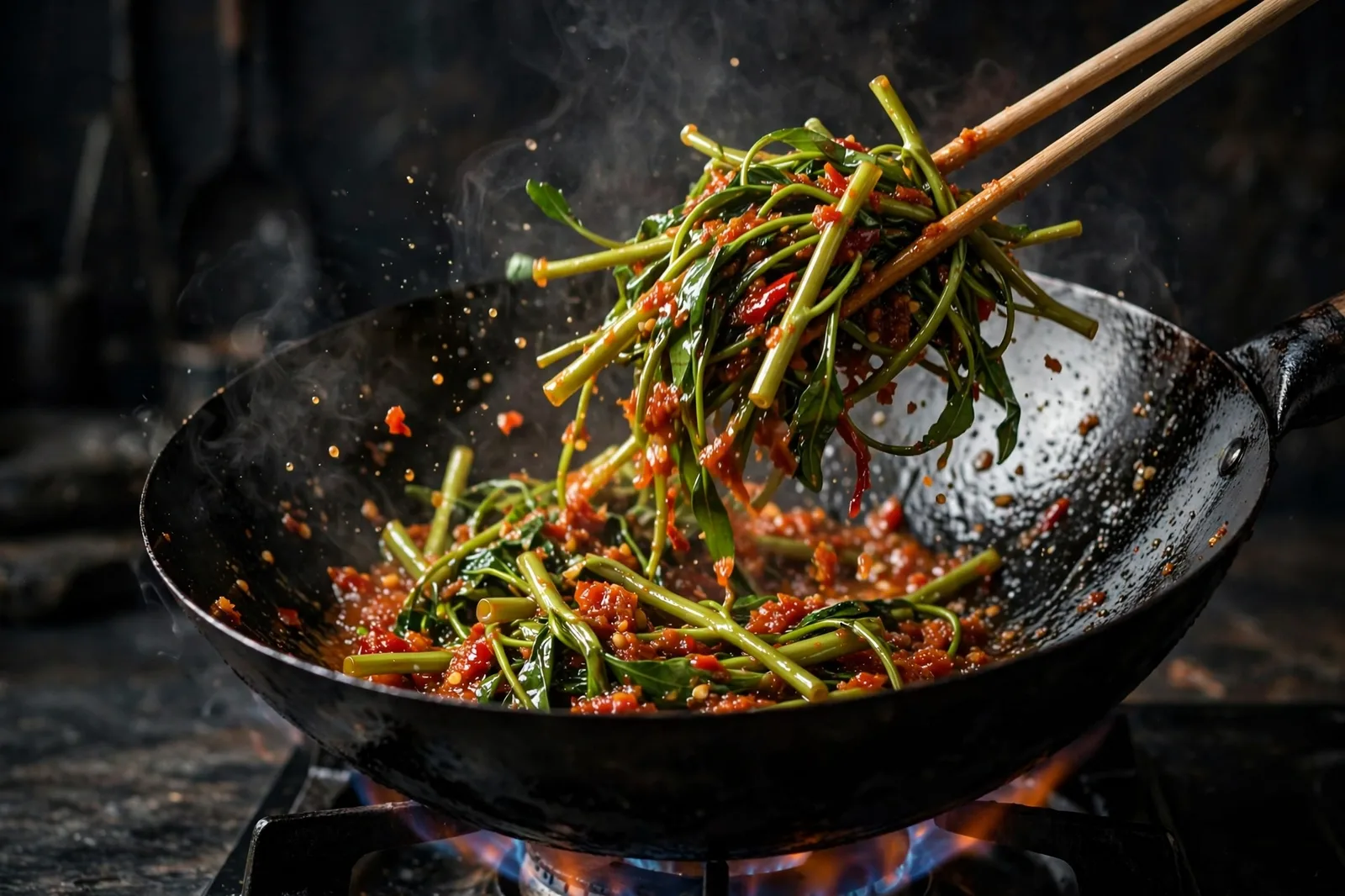
- Add the water spinach stems first and toss for 30 seconds. Then add the leaves all at once. It will look like far too much for the pan; it wilts quickly.
- Pour the oyster sauce around the edge of the wok so it sizzles, add the sugar, and toss continuously for 60 to 90 seconds, until the leaves are wilted and glossy but the stems still have bite. Add a tablespoon of water only if the pan looks dry.
- Taste and add salt if needed. Serve immediately with lime wedges, while the stems are still crisp.
Notes
- Everything cooks in under two minutes once the greens go in. Have the sauce ingredients measured and within reach before you light the burner.
- Shrimp paste is strong straight from the jar and mellows a lot in hot oil. If you are new to belacan, start with half a teaspoon and add more next time.
- Do not cover the pan. Trapped steam overcooks the leaves and dulls the color.
Getting the Heat and Balance Right
Sambal kangkong should taste hot, salty, a little sweet, and deeply savory, in roughly that order. The chiles bring the heat, the oyster sauce and belacan bring the salt and depth, and the small spoon of sugar is not there to sweeten the dish so much as to round the edges off the spice. If your first bite is only hot, add a pinch more sugar. If it tastes flat, it usually needs salt, not more chile.
For the chile element, fresh bird chiles give a bright, sharp heat. Sambal oelek works well too and saves the chopping; use it straight, about a tablespoon for a medium-hot dish. Some cooks pound a quick fresh sambal of chiles, garlic, and belacan in a mortar. That version has the most character, and it is worth doing when you have five extra minutes. Our homemade chili oil is a different animal — a finishing oil rather than a stir-fry base — but a spoonful drizzled over the finished greens is a fine way to add a second layer of heat.
Belacan deserves a quick word for anyone who hasn’t cooked with it. It is fermented shrimp pressed into blocks, and the raw smell is intense. In hot oil it transforms into something savory and rounded, closer to the depth you get from fish sauce than to anything fishy. Fish sauce is the reliable substitute; use a teaspoon and add it with the oyster sauce so it cooks briefly rather than splashing on raw at the end.
Variations Worth Trying
- With dried shrimp: Soak a tablespoon of dried shrimp in warm water for 10 minutes, drain, and fry it with the garlic. It adds chew and a concentrated savory note.
- Sambal kangkong with squid: Slice cleaned squid into rings, stir-fry it for one minute, set it aside, then return it to the wok once the greens wilt. This turns a side dish into a main.
- Taucu version: Swap the oyster sauce for a tablespoon of salted soybean paste (taucu) for a funkier, bean-forward sauce common in Malaysian home cooking.
- Less heat: Use one chile and a teaspoon of sambal, or trade the bird chiles for a milder red chili. The dish should still hum a little; a completely mild version loses its point.
- With a fried egg: A crisp-edged fried egg on top, eaten with rice, makes a simple and very satisfying meal out of a side dish.
For another hot-wok green with a totally different personality, Smashed Cucumber Salad with Garlic hits the same garlic-and-chile buttons from the cold side, and it sits well next to kangkong on a shared table.
What to Serve It With
Kangkong rarely travels alone. It is a classic partner for grilled or fried fish, where its heat and crunch cut through oil, and it shows up constantly next to rich curries and coconut-heavy mains. Plain steamed jasmine rice is non-negotiable; the sauce needs somewhere to go. Our how-to guide for jasmine rice covers the rinse-and-rest method that keeps grains separate for exactly this kind of saucy table.
Buy the greens the day you cook them if you can. Water spinach wilts fast in the fridge. If you need to hold a bunch for a day or two, wrap it in a damp towel inside a loose bag, and wash it just before cooking rather than before storing — pre-washed greens deteriorate faster. Once cooked, eat it now. Leftovers lose the stem crunch that makes the dish, though a cold handful from the fridge the next morning has its own appeal over hot rice.
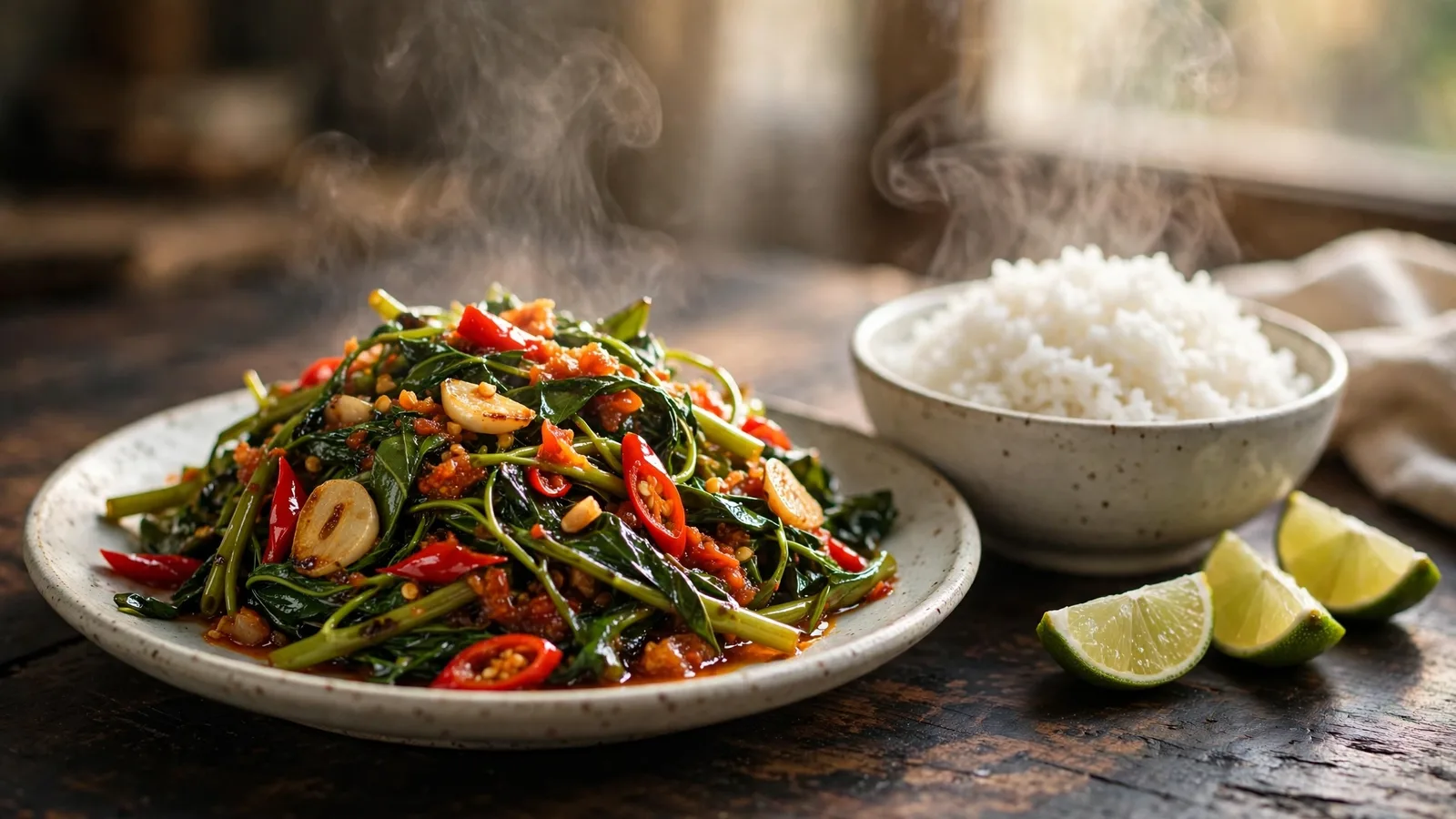
Sambal Kangkong
Ingredients
Method
- Wash the water spinach in several changes of cold water, trim the tough stem ends, and cut into 3-inch lengths. Drain thoroughly. Mince the garlic and slice the chiles so everything is ready before the wok heats up.
- Heat a wok or large skillet over high heat until it just begins to smoke. Add the oil and swirl to coat.
- Add the garlic, chiles, and belacan. Stir-fry about 20 seconds, mashing the shrimp paste into the oil, until pungent and toasty.
- Add the water spinach stems first and toss 30 seconds, then add the leaves all at once.
- Pour the oyster sauce around the edge of the wok so it sizzles, add the sugar, and toss continuously 60 to 90 seconds, until the leaves are wilted and glossy but the stems still have bite. Add a tablespoon of water only if the pan looks dry.
- Taste and add salt if needed. Serve immediately with lime wedges, while the stems are still crisp.
2 thoughts on “Sambal Kangkong: Water Spinach with Chili”