
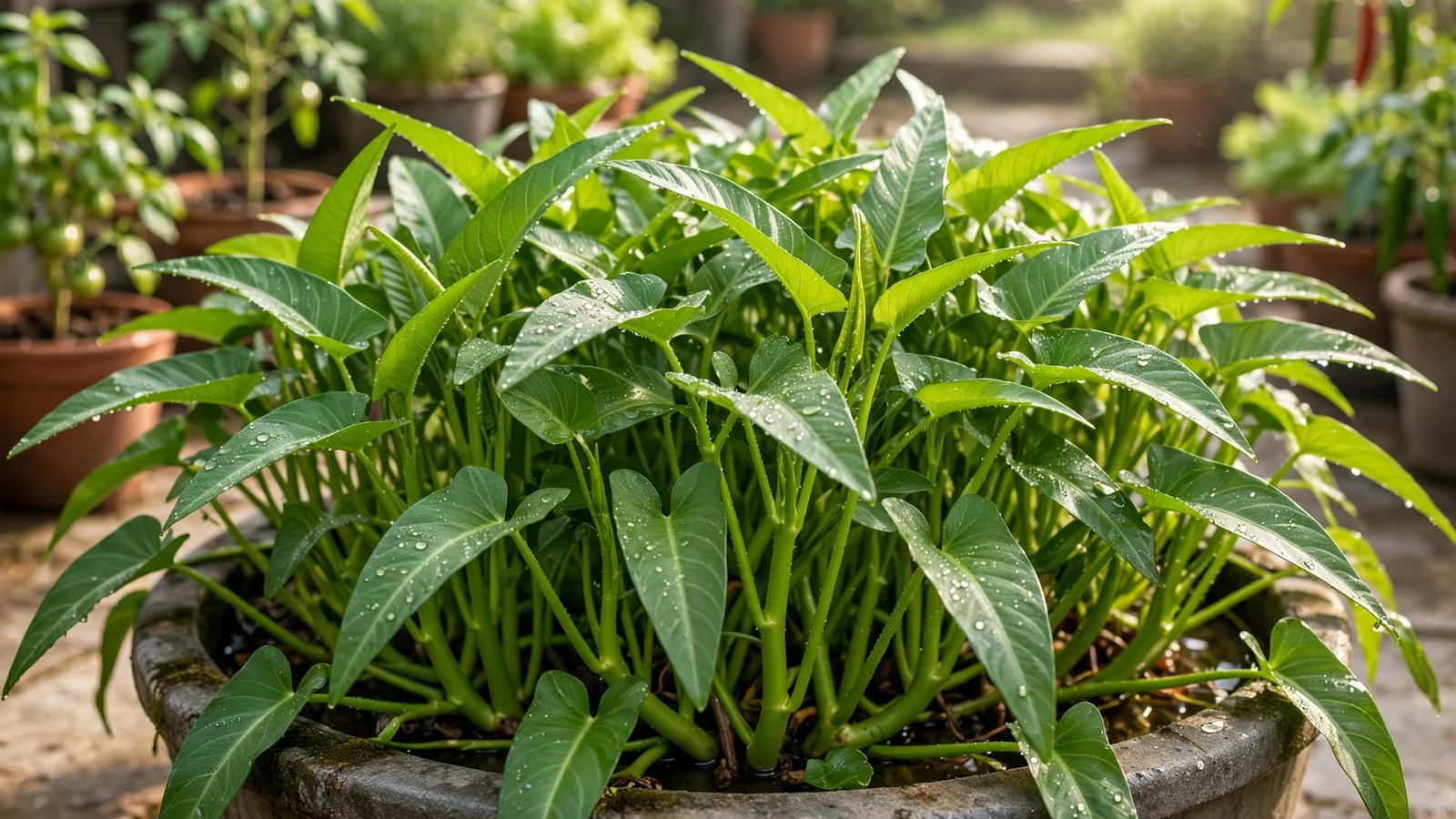
Water spinach — kangkong, ong choy, rau muong, depending on where you shop — is one of the most rewarding greens you can grow at home. It grows fast in warm weather, shrugs off heat that makes lettuce and spinach bolt, and gives you repeated harvests of tender stems and leaves for stir-fries all summer long. A single healthy planting can fill a wok again and again from late spring until the first cold nights.
It also has one non-negotiable quirk: it loves water. This plant evolved along streambanks and marshy edges in Southeast Asia, and it is happiest when its roots stay constantly moist. Once you understand that, it is one of the easiest vegetables in the garden. Give it a sunny spot, a container that holds moisture, and regular picking, and it will out-produce almost any other leafy green you plant.
What Water Spinach Is
Water spinach (Ipomoea aquatica) is a warm-season leafy vegetable in the morning glory family, which explains its vining habit. There are two broad types at markets and on seed racks: a broader-leaf, more upright type usually grown in moist soil, and a narrower-leaf type that trails at the water’s edge. For home containers, either one works — planting stock from an Asian market bundle is usually the broader-leaf type, and it takes to pots beautifully.
The flavor is mild and clean, with a slight mineral note, and the hollow stems are the prize: they stay crisp-tender in a fast, hot stir-fry and soak up garlicky sauces. Growing your own means picking it the same hour it goes into the pan, which is when the stems are at their best. Our Sambal Kangkong recipe is the classic first thing to cook with a fresh harvest.
Start From Cuttings or Seed
You have two realistic ways to start, and cuttings are the easier one.
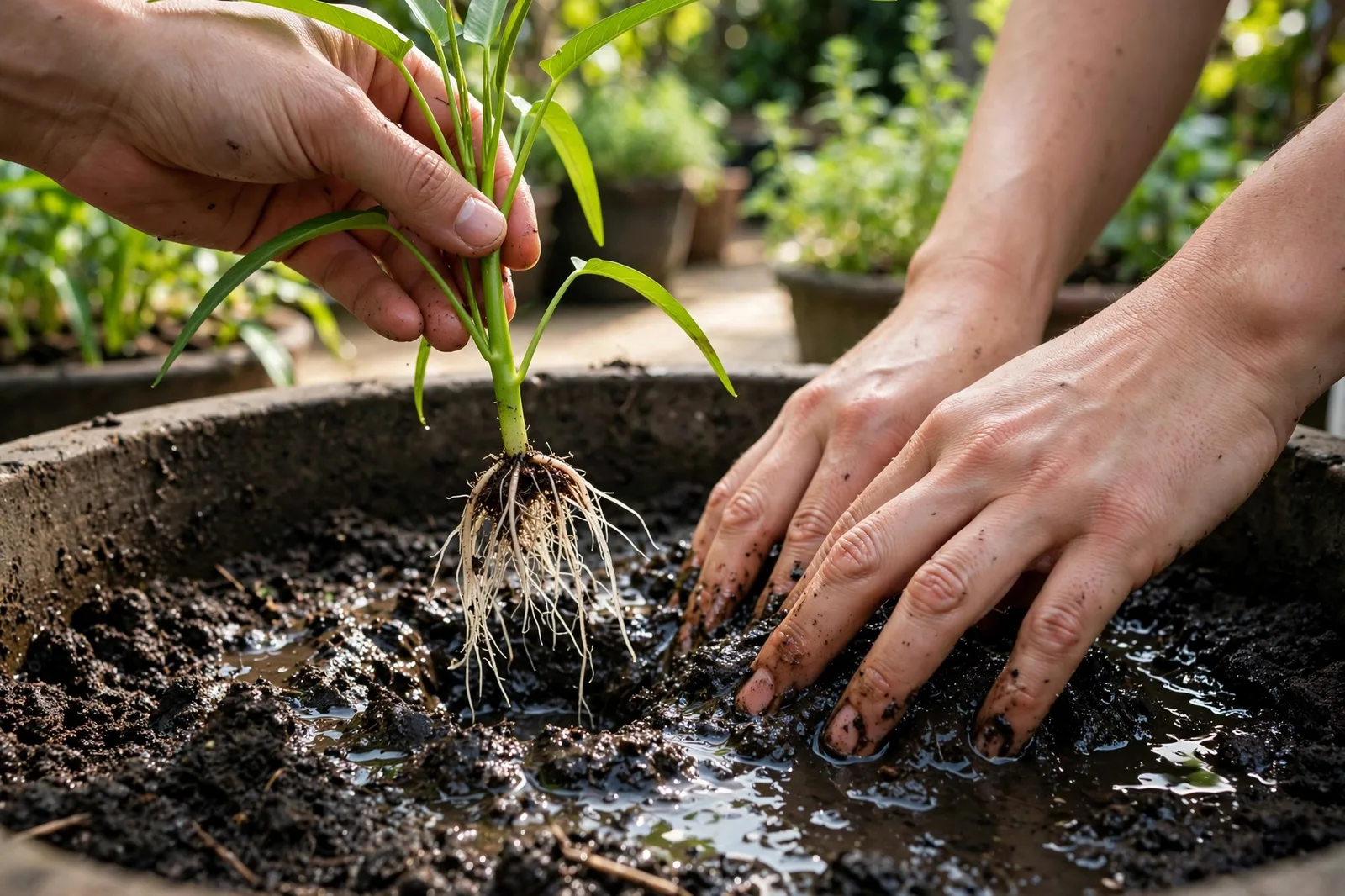
From market cuttings. Buy the freshest, firmest bundle of water spinach you can find — this is the same bunch you would cook with. At home, cut the stems into pieces about 6 to 8 inches long, each with at least two leaf nodes, and strip the lower leaves. Stand the pieces in a jar of water on a bright counter for a few days, changing the water daily. Roots appear quickly at the submerged nodes in warm weather. Once the roots are an inch or two long, plant them. This method is fast, cheap, and the plants get going weeks ahead of seed.
From seed. Water spinach seed germinates best in warmth — soil in the 75–85°F range. Soak the hard seeds in warm water overnight to speed things up, then sow them about half an inch deep. Keep the potting mix evenly moist and warm; a heat mat or a spot on top of the refrigerator helps in a cool spring house. Seedlings usually emerge in about a week to ten days. Plants from seed take a little longer to reach picking size, but they grow vigorously once the weather turns properly hot.
Either way, wait until the weather is reliably warm before moving plants outside. Water spinach sulks in cold soil and can be set back hard by a chilly night. After your last frost, when nights stay above about 55°F, is a safe time to plant out. It is a true heat lover: growth crawls in the 60s and takes off once days are in the 80s and 90s.
The Container Setup
Because this plant wants constant moisture, containers are actually easier than garden beds for most people. The winning setup is a big pot or tub that holds water rather than draining it away freely.
- Pot choice: a 5-gallon bucket, a wide storage tub, or a large self-watering planter all work well. A 14- to 18-inch wide container gives a small thicket of stems room to spread. If your tub has drainage holes, line the bottom or set the pot in a deep saucer you keep topped up, so the soil never dries out.
- Soil: use a rich potting mix blended with a generous amount of compost — roughly two-thirds mix to one-third compost. Water spinach is a heavy feeder grown for constant leafy growth, and lean soil makes thin, pale plants. Mix in a handful of slow-release balanced fertilizer at planting.
- Water level: keep the soil saturated and the saucer full. Some growers set pots so an inch or two of water stands at the base at all times, mimicking the marshy edges the plant comes from. You do not need to submerge the crowns, but the mix should never go dry, not even for an afternoon in July.
If you plant in the ground instead, choose the lowest, wettest corner of the garden — near a downspout or a frequently watered bed — and mulch heavily. Dry soil is the one condition this vegetable genuinely dislikes. Our seasonal guide to when to plant Asian greens places water spinach firmly in the warm-season group, planted well after tomatoes go out.
Planting Step by Step
- Fill your tub or pot with the compost-rich mix and water it thoroughly until it is evenly saturated.
- Poke holes about 4 to 6 inches apart. Set each rooted cutting or seedling in so the lowest node sits just under the soil surface.
- Firm the mix around the stems and water again to settle everything in.
- Stand the container where it gets at least six hours of direct sun. More sun, with water to match, means faster growth.
- Keep the saucer or reservoir full from day one. In hot weather you may be topping it up daily.
Plants space themselves out quickly by rooting at the nodes where stems touch wet soil, so a modest start of eight to ten cuttings fills a tub within a few weeks of warm weather.
Water, Sun, and Feeding
Three things drive production: water, heat, and food, in that order.
Water. Never let the container dry out. Wilting water spinach recovers after a deep drink, but repeated drought makes the stems fibrous and slows the plant for days. Morning top-ups work well; in a heat wave, check again in the evening. This is the thirstiest plant in the container garden — group it with the other water lovers, as we suggest in our Vietnamese herb container garden plan, so one watering pass covers everything that needs a daily drink.
Sun. Full sun produces the thickest stems and fastest regrowth. The plant tolerates light afternoon shade in very hot climates, especially if the roots stay wet, but a shady balcony will give you thin, leggy growth.
Feeding. Because you are harvesting constantly, feed constantly. Beyond the compost and slow-release fertilizer at planting, give the container a half-strength liquid feed every week or two during peak summer growth. Leafy growth responds to nitrogen, so a balanced fertilizer or one slightly higher in nitrogen keeps the leaves deep green. Pale, slow plants in a wet pot are almost always hungry rather than thirsty.
Harvesting So It Keeps Coming
Start picking when the stems are about a foot long, usually four to six weeks after planting in warm weather. The method is simple: cut or pinch stems back to just above a lower node, taking the tender top 8 to 10 inches. The plant responds by sending out side shoots from the nodes below the cut, so every harvest makes the planting denser.
Pick often — every few days in midsummer is normal. Frequent cutting keeps stems tender and delays the tough, hollow, overgrown stage. If life gets busy and the patch gets rangy, cut the whole thing back hard to a few inches, feed it, and keep it wet; it regrows fast in heat. Always harvest more than tonight’s dinner needs rather than less, because unpicked stems just get woodier while the plant slows down.
Cook your harvest the same day when you can. Water spinach wilts quickly after picking and is at its crisp best within hours. Any extra keeps a day or two in the refrigerator, wrapped in a damp towel.
Pests, Problems, and Quick Fixes
Water spinach is refreshingly untroubled compared with most greens, but a few issues come up:
- Yellow leaves with wet soil: almost always a feeding problem. Liquid-feed and the new growth should green up within a week.
- Thin, tough stems: too little water, too little food, or harvests left too long. Cut back hard, feed, and pick the regrowth young.
- Aphids or whiteflies on the undersides: blast them off with a strong jet of water every couple of days. A healthy, well-fed plant shrugs off a light infestation.
- Slowed growth in early fall: this is temperature, not failure. Once nights dip into the 50s, growth stalls no matter how wet and fed the plants are.
- A note on planting in the ground: water spinach can spread enthusiastically in warm, wet climates and is restricted in some states. Growing it in a container, as this guide describes, keeps it contained and is the responsible default for most home gardeners. Check your local rules before planting it in open ground.

Carrying It Through Winter
Water spinach is a perennial in frost-free climates but behaves as a summer annual anywhere with real winters — the first frost finishes it. To get a head start next year, take a few healthy cuttings in early fall, root them in a jar of water, and pot them up for your sunniest windowsill. Indoors they grow slowly through winter, which is fine: you are keeping planting stock alive, not chasing a harvest. When warm weather returns, move the pot outside and the plants take off weeks ahead of a fresh market bundle. Bringing tender plants indoors for winter follows the same logic as our guide to overwintering lemongrass indoors.
From Garden to Wok
The whole point of growing water spinach is how fast it moves from pot to plate: pick, rinse, and stir-fry within the hour. Keep the cooking simple and quick — high heat, a hot wok, garlic, and a sauce with some backbone. The Sambal Kangkong on this site, water spinach blistered with chili sambal, is the natural first harvest meal, and garlic with a splash of fish sauce and lime suits it just as well.
Set up one saturated tub in your sunniest spot this summer, keep its saucer full, and pick from it every few days. Of all the Asian greens you can grow at home, this one asks for the least skill and gives back the most dinners per square foot.