
A new carbon steel wok looks promising right out of the box — dark, heavy in the hand, ready for high heat. Then you cook your first stir-fry and everything sticks, the eggs grab, and the noodles clump into a pale, steamed tangle. That first messy cook is normal. Carbon steel is not nonstick until you season it, and seasoning is not a one-time trick. It is the thin, hard layer of polymerized oil that builds up on the metal and turns a raw pan into the tool that gives you real wok hei at home.
This guide walks through how to season a carbon steel wok from scratch, how to fix the patchy first layer everyone gets, and how to keep that surface slick for years. You do not need special equipment. You need heat, a little oil, good ventilation, and patience for three or four thin coats.
What Seasoning Actually Does
Seasoning is not oil sitting on the pan. When you heat a very thin layer of unsaturated oil past its smoke point on hot steel, the oil bonds and hardens into a dry, blackish film. That film fills the microscopic pores in the metal, blocks water from reaching the steel, and creates a surface that food releases from with far less sticking.
A well-seasoned wok will never behave exactly like a Teflon pan, and it should not. You want ingredients to make solid contact with hot metal so they sear instead of steam. Good seasoning gives you the middle ground: enough release that rice slides and eggs do not glue themselves down, but enough grip that your pad thai still picks up caramelized edges.
If you skip seasoning, two problems show up fast. First, everything sticks because bare steel loves to bond with proteins and starches. Second, the pan rusts. Carbon steel rusts the way cast iron does — happily, and overnight if you leave it damp. Seasoning plus a dry storage habit is the whole defense.
What You Need Before You Start
You do not need to buy a seasoning kit. Gather these basics:
- Your carbon steel wok, washed once with hot soapy water and a stiff brush to remove the factory protective coating
- A high smoke point oil with a neutral flavor — grapeseed, canola, peanut, or avocado oil all work well
- Paper towels or a folded cotton rag you do not mind staining
- Tongs or heatproof gloves for handling the hot wok
- A stovetop with decent ventilation, or an oven if you prefer the oven method
Skip flaxseed oil for your first seasoning. It can form a hard layer, but it is also more brittle and can flake if the coat goes on too thick. A common grocery-store oil applied thin will outperform a fancy oil applied heavy.
A quick word on the factory coating: most new woks ship with a lacquer or oil layer to prevent rust in transit. That layer has to come off completely or your seasoning will not bond. Scrub with hot water, dish soap, and a steel scrubber or stiff brush until the water runs clear and the metal feels clean, not slick. Dry the wok thoroughly on the stove over low heat. Any water left behind will pop and streak the first coat.
The Stovetop Method (Best for Most Home Cooks)
The stovetop method is faster and lets you watch the color change as you go. It works best on gas, but an electric coil or flat-top can handle it with a flat-bottom wok. Turn on your vent hood and open a window — this process smokes.
Step 1: Heat the bare wok until it blues
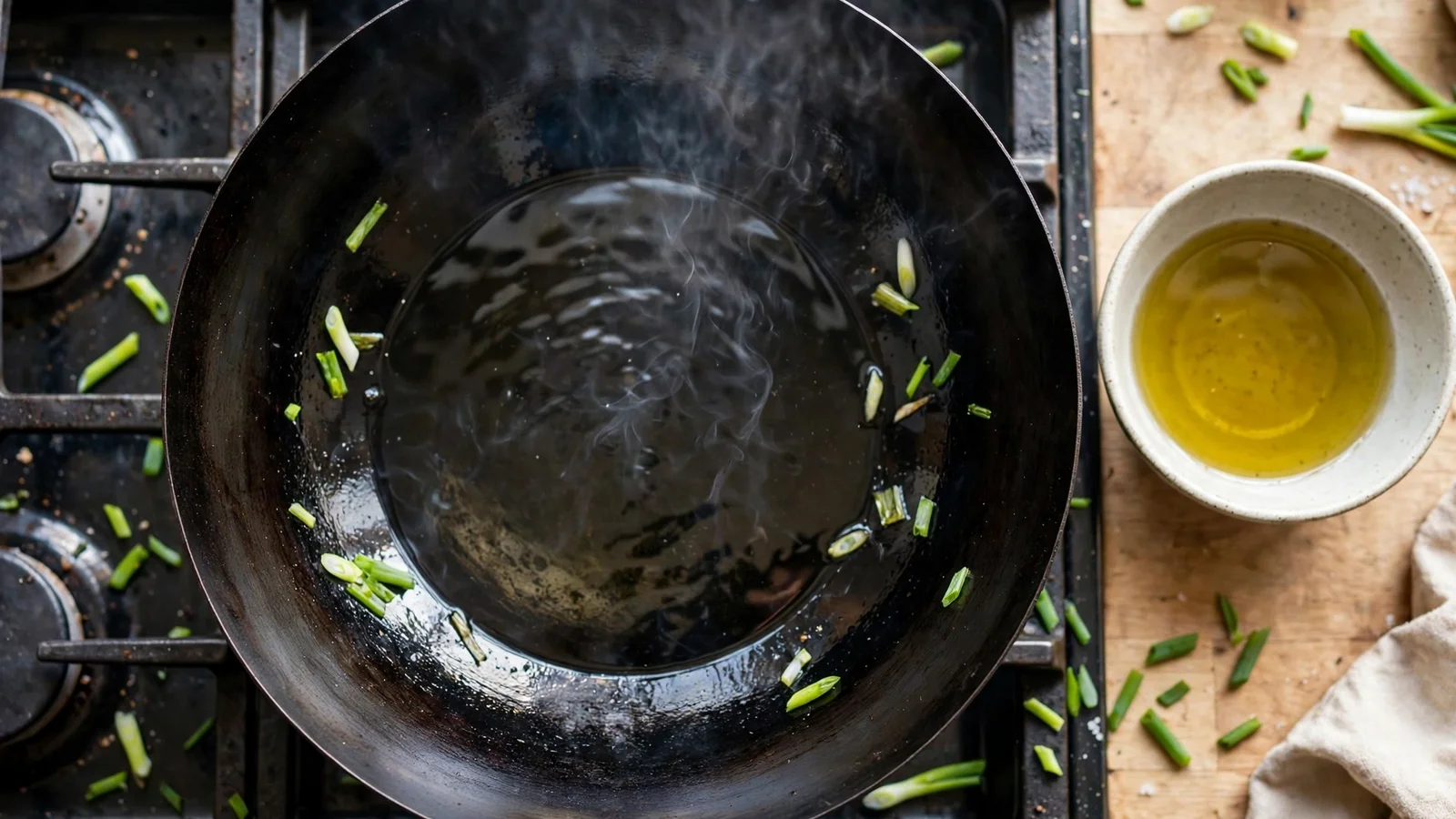
Set the dry, clean wok over high heat. You will see the steel shift color as it heats — straw, then blue, then a dull gray. That blue tint is a good sign. It means the metal is hot and dry. Whole-wok heating helps burn off any last traces of factory coating. Rotate and tilt the wok so the sides get direct heat too, holding it with tongs or a glove. This takes 3 to 5 minutes on a home burner.
Let the wok cool just enough that you can approach it safely, about 30 seconds off the heat. You want it hot, not glowing.
Step 2: Wipe on the thinnest possible oil coat
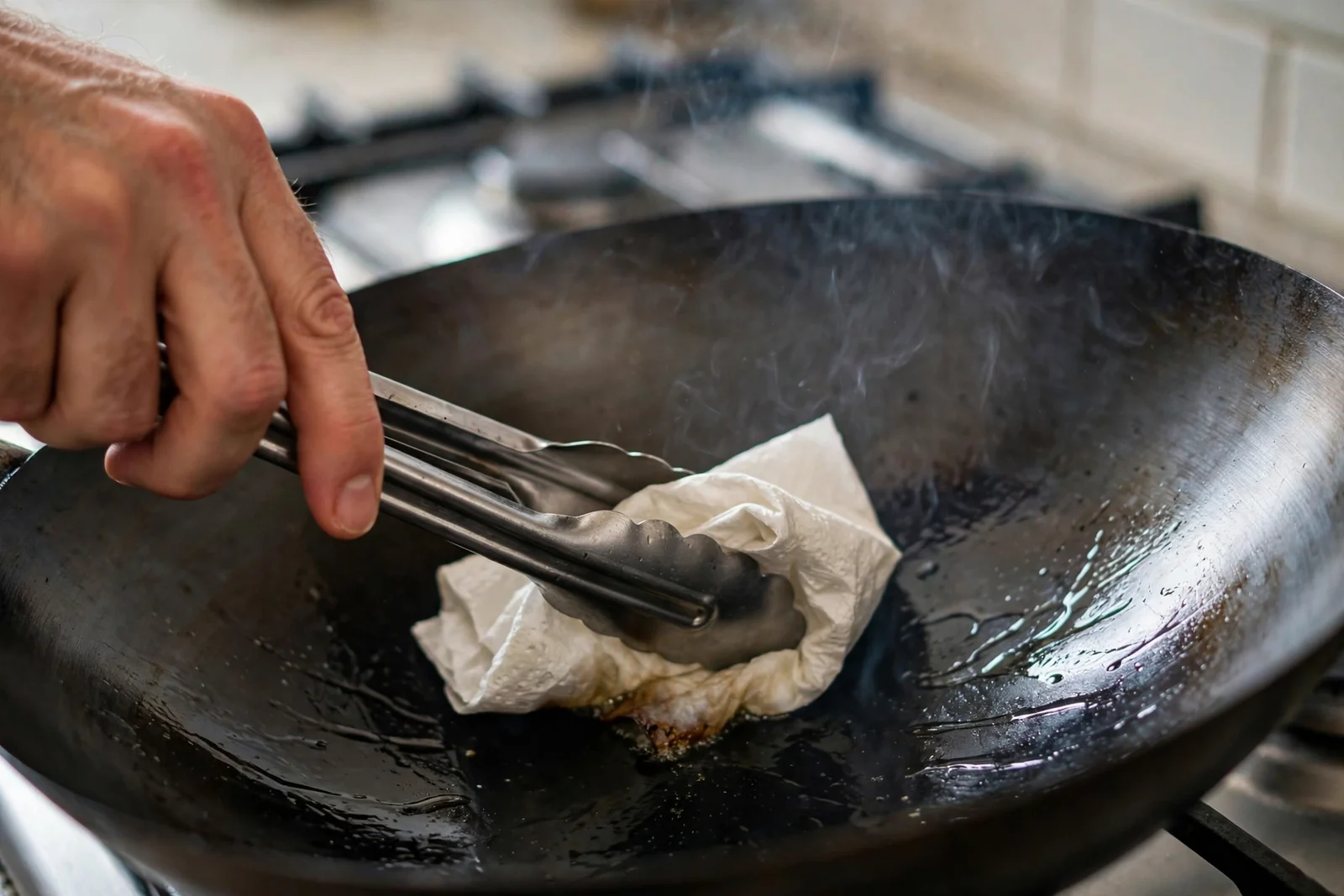
Fold a paper towel into a small pad and grip it with tongs. Dip it lightly in oil, then wipe the entire inside of the wok — bottom and sides — in quick, even strokes. The surface should look wet but not pooled. If you can see beads or puddles, you have too much oil. Wipe again with a dry section of towel until the wok looks almost dry. This is the most common seasoning mistake: too much oil makes a sticky, blotchy layer that never fully hardens. Thin wins every time.
Step 3: Heat until the oil smokes and dries
Return the wok to high heat. The thin oil film will start to shimmer, then smoke. Keep heating and gently tilting the wok so the sides season too. After 1 to 2 minutes the surface will look dry and matte, with a light brown or amber tint. That is your first coat. Let the wok cool for a minute or two on the burner with the heat off.
Step 4: Repeat three to four times
Repeat the wipe, smoke, and cool cycle three or four more times. Each coat darkens the pan a little more. By the third coat the inside should be a patchy bronze to dark brown. Patchy is fine. Even, jet-black seasoning comes from weeks of cooking, not from one afternoon of stovetop coats. What you are building now is a solid base that resists rust and gives you a head start on release.
When you finish the last coat, let the wok cool completely on the stove. Wipe the inside once with a clean dry towel to pick up any tacky spots. Your wok is ready to cook.
The Oven Method (Good for Even Coats)
If you have an oven that goes to 450°F (230°C) or higher and a wok that fits with the door closed (handle included), the oven method gives you very even coats with less hands-on tilting. It is slower but forgiving.
Heat the oven to 450°F. While it heats, warm the clean wok on the stove just until it is dry and warm to the touch. Wipe on the same ultra-thin oil coat described above — inside only, almost dry to the eye.
Place the wok upside down on the middle rack with a sheet of foil on the rack below to catch any drips. Bake for 1 hour. Turn the oven off and let the wok cool completely inside with the door closed. That slow cool helps the layer set hard.
Repeat the thin coat and bake cycle two or three times. The oven method produces a smooth, even base color and is a good choice if your stovetop runs uneven or your wok has a long handle that is awkward to tilt over a burner.
One caution: wooden or plastic handles cannot go in a 450°F oven. If your wok has a non-oven-safe handle, stick with the stovetop method, or wrap the handle tightly in a damp towel and then foil — though the stovetop route is simpler and safer for most home woks.
Your First Cooks After Seasoning
Seasoning improves with use, but the first few dishes matter. Choose forgiving foods that bring their own fat and do not punish a young surface.
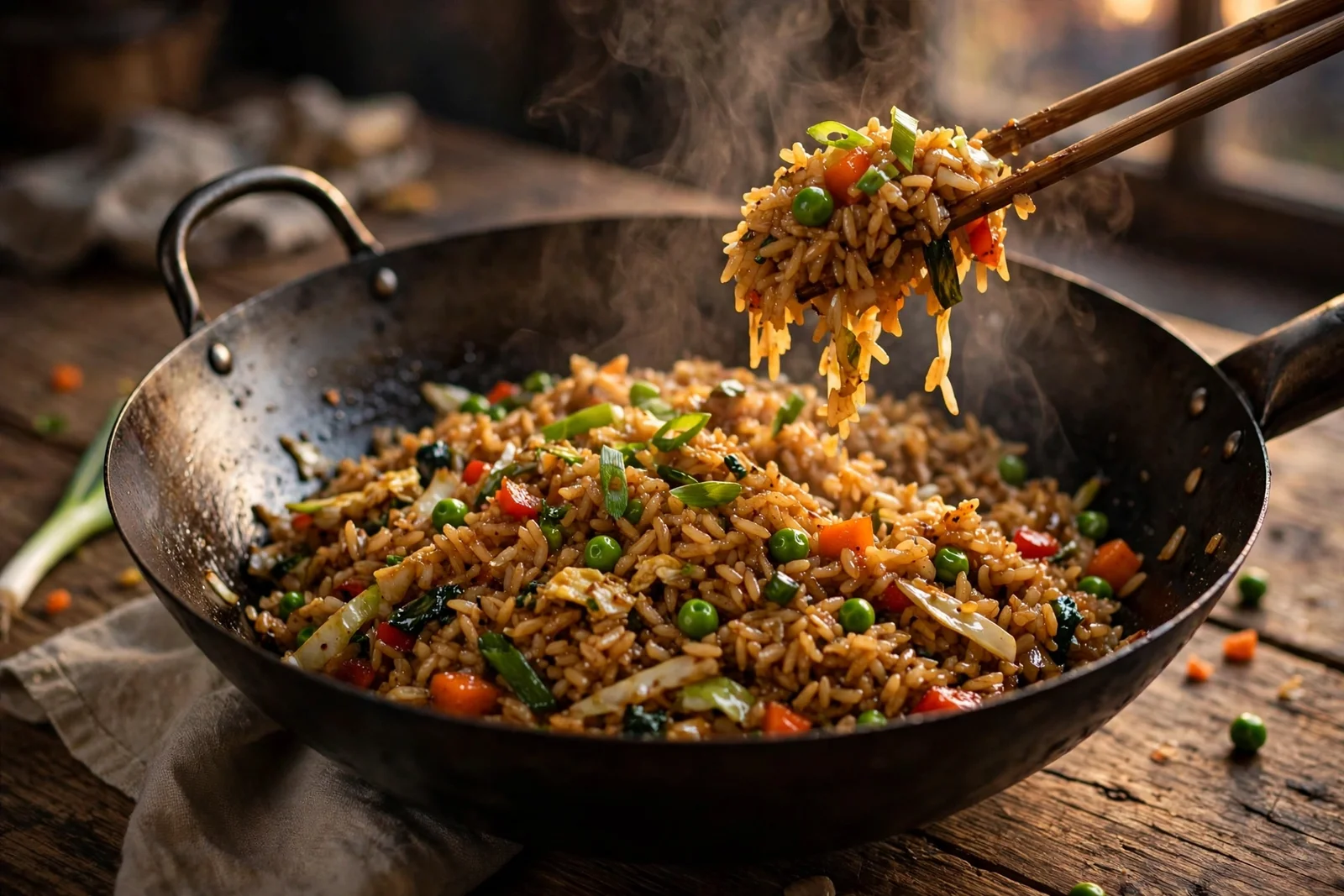
Good first cooks include fried rice with plenty of oil (day-old rice releases well and polishes the pan), stir-fried vegetables in oil, and anything with eggs cooked in a well-heated, well-oiled wok. A plate of garlic eggplant is another kind early test — soft, saucy, and friendly to a new pan.
Hold off on these for the first week or so:
- Long-simmered tomato or vinegar-heavy sauces, which can eat at a young seasoning layer
- Steaming with a bamboo steamer sitting in water for 30-plus minutes
- Boiling big pots of water for noodles inside the wok
None of these will ruin a mature wok for long, but they can strip a fresh coat before it fully hardens. Give the surface a dozen oily stir-fries first. By then it can handle almost anything and bounce back with a quick stovetop coat if needed.
Daily Care That Keeps Seasoning Strong
How you wash the wok matters more than how you seasoned it. A few habits keep the layer intact:
Wash gently. After cooking, rinse the warm wok with hot water and wipe it clean with a soft sponge or brush. A tiny drop of dish soap is fine for a well-seasoned pan. What you want to avoid is a long soak in soapy water or a harsh scour that strips the layer you just built. For stuck bits, simmer a cup of water in the wok for a minute and scrape gently with a wooden spatula.
Dry on the stove, every time. This is the nonnegotiable step. Set the washed wok over low heat for 30 to 60 seconds until every drop of water evaporates. Carbon steel can flash-rust in the time it takes to answer a text message. A dry wok does not rust.
Add a whisper of oil when storing. While the wok is still warm from drying, wipe the inside with a paper towel that has just a few drops of oil on it. The surface should look satiny, not greasy. This micro-coat protects the steel in humid kitchens and makes your next cook easier.
Cook often. The best seasoning does not come from the initial coats. It comes from repeated high-heat cooking with oil. Every stir-fry adds a microscopic layer. A wok that sits in a cabinet for months will always lag behind a wok that cooks three times a week.
Fixing Common Problems
Almost every home cook runs into at least one of these. All of them are fixable.
Sticky, gummy patches. This is too much oil during seasoning. Scrub the sticky spots with hot water and a brush, dry the wok on the stove, and apply one correct thin coat. In the future, wipe until the pan looks dry before heating.
Flaking or peeling. Often a thick early coat that never bonded, sometimes made worse by flaxseed oil. Scrub loose flakes back to solid metal, then add two thin coats of a standard oil. The pan will even out as you cook.
Rust spots. Light rust is not a disaster. Scrub the spot with a steel scrubber and a paste of baking soda and water or a cut potato dipped in salt until the orange is gone. Rinse, dry on the stove immediately, and season that area with one or two thin coats. Then store the wok dry with a light oil wipe.
Food still sticks after seasoning. Usually a heat problem, not a seasoning problem. Carbon steel needs to be properly hot before food goes in, and food needs a moment to sear and release before you start pushing it around. Preheat the wok until it just starts to smoke, add oil, swirl, and then add ingredients. Give proteins 20 to 30 seconds of still contact before tossing. That pause is when the sear forms and the release happens, the same principle that builds wok hei.
The color is uneven. Bronze, brown, blue-gray, and black patches on the same wok are completely normal. Color is not a report card. What matters is that the surface feels smooth and dry, not tacky, and that food releases reasonably well. Even black comes with time.
How Often Should You Reseason?
You do not need to strip and reseason a wok on a schedule. Think of seasoning as maintenance, not a project.
A quick stovetop coat — heat the dry wok, wipe on a thin oil film, heat until it smokes and dries — takes 3 minutes and is worth doing any time you notice food starting to grab more than usual, after a long acidic cook, or after you had to scrub out rust. A full strip and restart is only needed if the seasoning has gone thick, bumpy, and flaky in a way that scrubbing does not fix, which is rare if you keep coats thin.
Most home woks find their stride after two to three weeks of regular cooking. The surface darkens, eggs slide a little easier each time, and fried rice stops leaving a starchy film. That is the seasoning doing its real work — not the four coats you put on the first day, but the dozens of small ones that cooking adds on its own.
A Few Honest Expectations
A carbon steel wok is a lifetime tool, but it asks for a little more attention than stainless steel or nonstick. You have to dry it on the stove. You have to accept a pan that changes color and looks used. In exchange you get a lightweight pan that heats fast, responds instantly when you adjust the flame, and develops real character over years of meals.
If you cook a lot of stir-fries, fried rice, and noodle dishes, that trade is well worth it. Season it once with care, cook in it often, dry it every time, and the wok will quietly get better at its job. That slick, dark interior you see in restaurant kitchens is not a product you buy. It is just a wok that has been cooked in, wiped thin, and heated well, over and over. Yours gets there the same way.