
Some vegetables need a lot of help in the pan. Eggplant is not one of them — it needs the opposite: a hard sear, a fragrant sauce, and the restraint to let it collapse into something creamy. Chinese garlic eggplant (yu xiang qie zi, 鱼香茄子) is the dish that sells you on eggplant for good. The pieces turn silky and golden, soaked through with a garlic-heavy sauce that is savory, lightly sweet, and just tangy enough to keep you reaching back in.
This is a home-style staple across China, and the kind of dish you find on weeknight tables more often than on restaurant menus. It comes together in about 25 minutes with one wok or skillet, and it eats equally well over steamed rice or alongside plain congee. Once you get the hang of the eggplant's behavior — it drinks oil fast, then gives back flavor — the whole thing feels effortless.
Why This Garlic Eggplant Works
The whole recipe turns on one trick: coating the eggplant in cornstarch before it hits the oil. That thin starch shell does two jobs. It browns into a delicate crust that gives the pieces structure, and it slows down how fast the eggplant's spongy flesh soaks up oil. Without it, the eggplant can turn greasy or fall apart; with it, you get pieces that are golden on the outside and custardy inside.
The sauce follows the classic "fish-fragrant" (yu xiang) profile — a seasoning combination, not a seafood ingredient — built on soy sauce, black vinegar, sugar, and a generous amount of garlic. The vinegar matters: a small splash at the end brightens everything and keeps the richness from feeling heavy. Ginger goes in early so its raw bite mellows in the oil, and a few dried chiles or fresh chilies add warmth without taking over.
Choosing the Right Eggplant
Chinese and Japanese eggplants are the best fit here. They are long and slender, with thinner skin, fewer seeds, and a sweeter, less bitter flavor than the globe eggplants common in Western markets. Their smaller size also means they cook faster and absorb less oil.
If all you can find is globe eggplant, the recipe still works — cut it into slightly smaller pieces and plan on a minute or two of extra cooking time. Salting it first is optional; with the starch coating and high-heat sear, bitterness is rarely an issue.
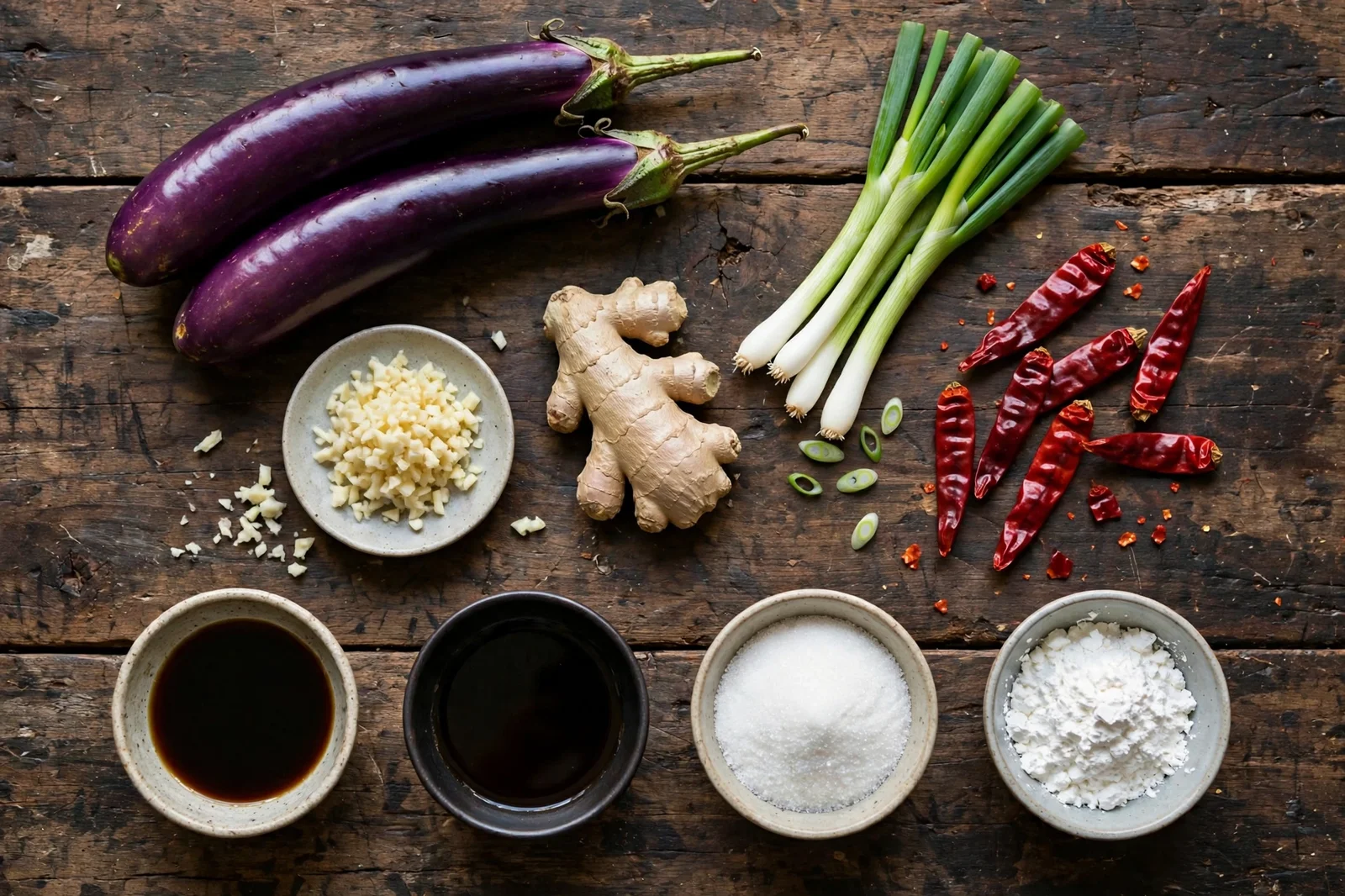
Ingredients
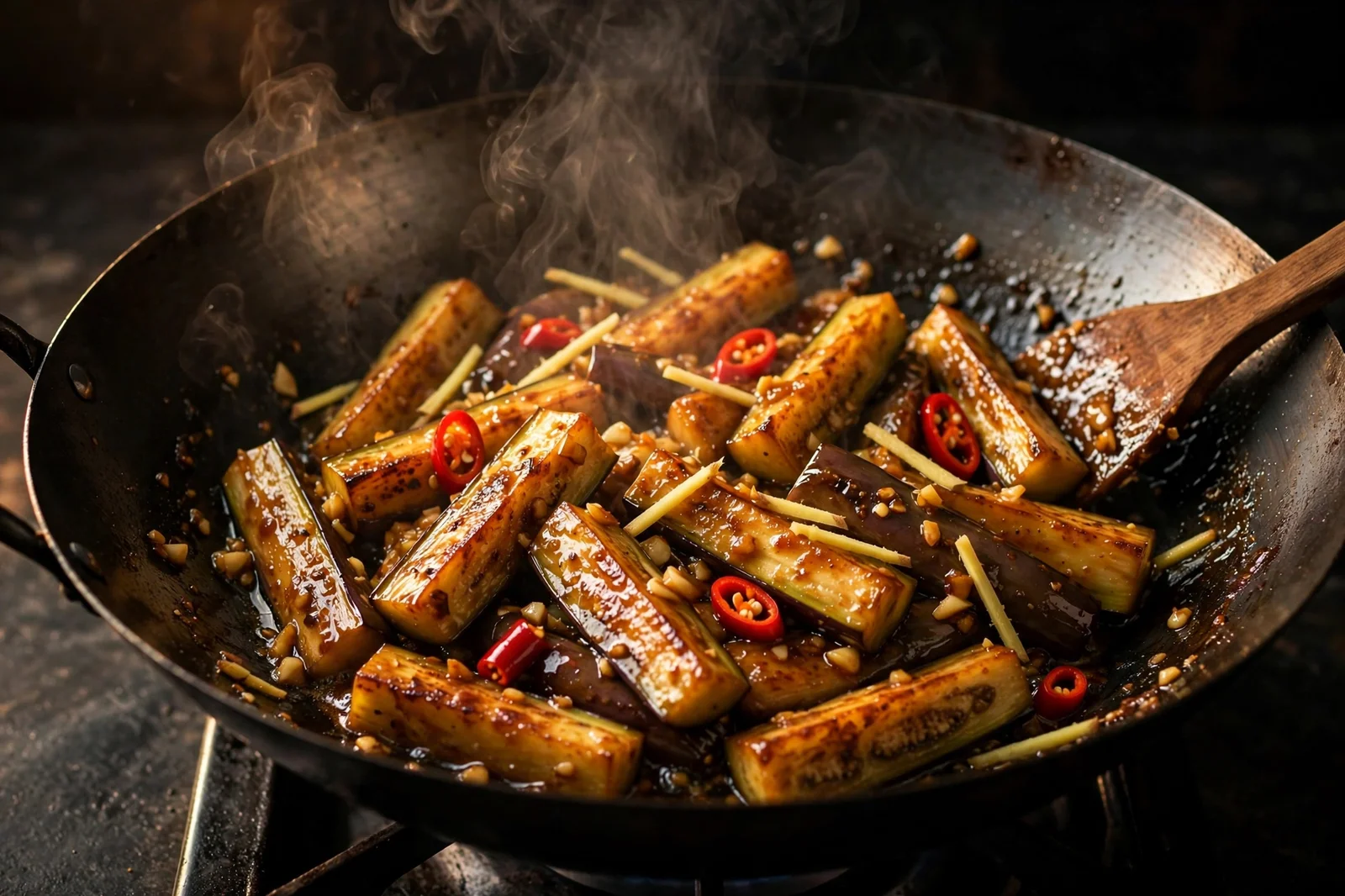
Instructions
Step 1. Prep the eggplant. Trim the ends and cut the eggplants on a sharp diagonal into 2-inch batons, roughly 1/2 inch thick. Diagonal cuts expose more surface area, which means more browning and more sauce clinging to each piece. Toss the batons with the cornstarch in a large bowl until every piece is lightly and evenly coated.
Step 2. Sear in batches. Heat 2 tablespoons of the oil in a large wok or heavy skillet over high heat until it shimmers. Add half the eggplant in a single layer — crowding the pan steams it instead of searing it. Cook undisturbed for 2 minutes, then turn and cook until golden on two or three sides and the flesh has started to soften, 4 to 5 minutes total. Transfer to a plate and repeat with another 2 tablespoons of oil and the remaining eggplant.
Step 3. Build the aromatics. Lower the heat to medium-high. Add a drizzle of oil if the pan looks dry, then add the garlic, ginger, and dried chiles. Stir-fry for 30 seconds to a minute, until fragrant and the garlic just starts to turn golden at the edges — do not let it brown past pale gold, or it will taste bitter.
Step 4. Add the sauce. Stir in the light soy sauce, dark soy sauce, and sugar, and cook for 30 seconds, stirring, until the sugar dissolves and the mixture bubbles and darkens slightly.
Step 5. Bring it together. Return all the eggplant to the pan and toss to coat. Add 1/4 cup of water, cover, and cook for 3 to 4 minutes, until the eggplant is completely tender and the sauce has thickened to a glossy glaze. The starch on the eggplant will help the sauce cling — that is exactly what you want.
Step 6. Finish and serve. Uncover, stir in the black vinegar and scallions, and toss for 30 seconds. Drizzle with the sesame oil, taste for salt, and adjust. Serve immediately over steamed rice.
Tips and Variations
Garlic eggplant is the kind of side that quietly steals the meal — pair it with something clean and crunchy, like Chinese smashed cucumber salad, and a bowl of rice, and you have a dinner that tastes far more considered than the effort it took.
Make-Ahead and Storage
Cooked garlic eggplant keeps well in the refrigerator for up to 3 days in an airtight container. The flavors actually settle in nicely overnight, so it makes a good make-ahead side for a dinner party. Reheat gently in a covered skillet over medium heat with a tablespoon or two of water to loosen the sauce, and add fresh scallions and a drop of sesame oil at the end to wake it back up. Freezing is not recommended — the eggplant's texture turns watery and spongy once thawed.
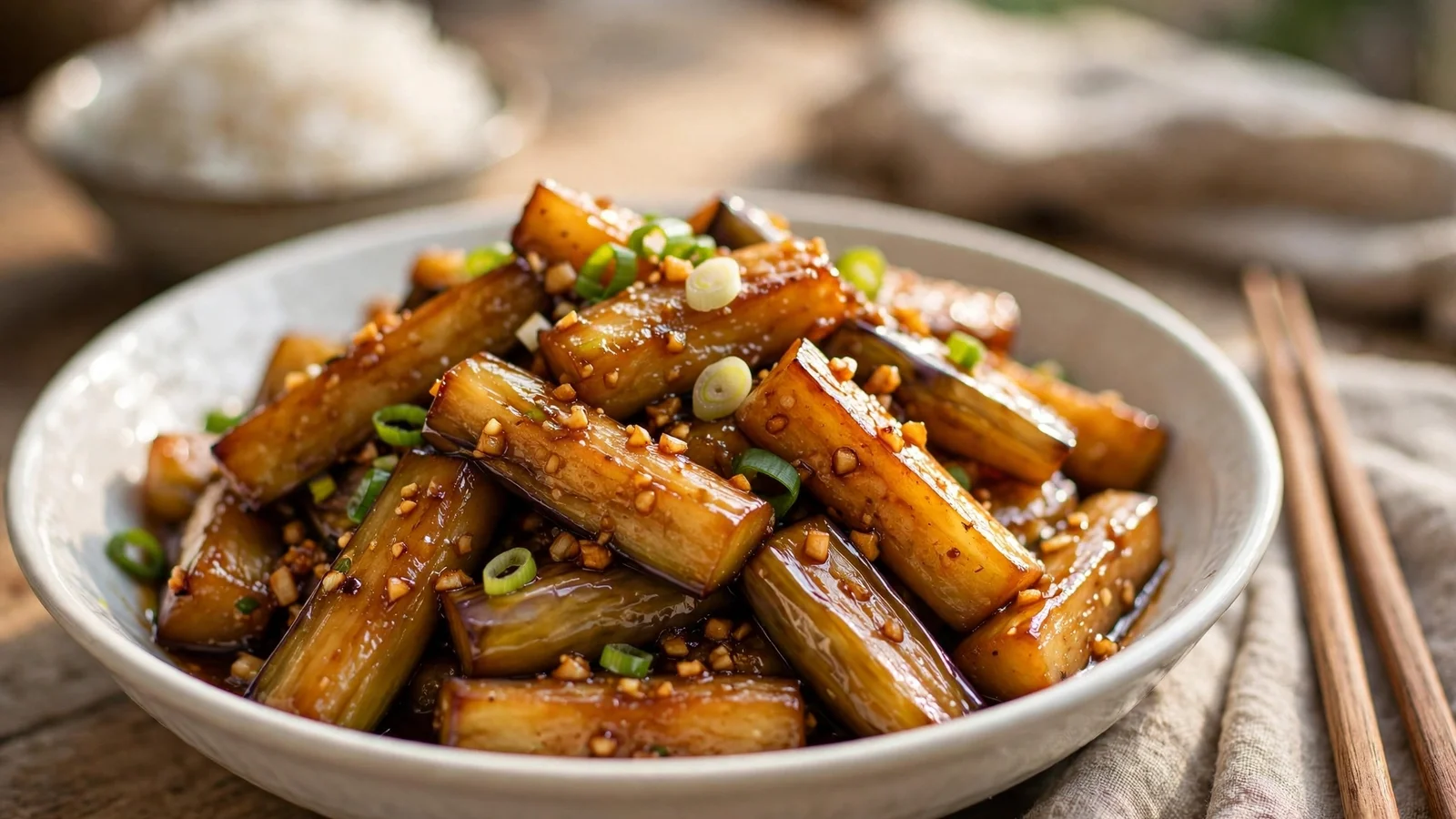
Chinese Garlic Eggplant
Ingredients
Method
- Trim the ends of the eggplants and cut on a sharp diagonal into 2-inch batons about 1/2 inch thick. Toss with the cornstarch until every piece is lightly and evenly coated.
- Heat 2 tablespoons of oil in a large wok or heavy skillet over high heat until shimmering. Add half the eggplant in a single layer and sear undisturbed for 2 minutes, then turn and cook 4-5 minutes total until golden on two or three sides and softening. Transfer to a plate and repeat with more oil and the remaining eggplant.
- Lower the heat to medium-high. Add a drizzle of oil if the pan looks dry, then stir-fry the garlic, ginger, and chiles for 30 seconds to 1 minute, until fragrant and the garlic is just pale gold.
- Stir in the light soy sauce, dark soy sauce, and sugar; cook 30 seconds, stirring, until the sugar dissolves and the mixture bubbles.
- Return all the eggplant to the pan and toss to coat. Add 1/4 cup water, cover, and cook 3-4 minutes, until the eggplant is completely tender and the sauce has thickened to a glossy glaze.
- Uncover, stir in the black vinegar and scallions, and toss for 30 seconds. Drizzle with sesame oil, taste for salt, and serve immediately over steamed rice.
1 thought on “Chinese Garlic Eggplant”