
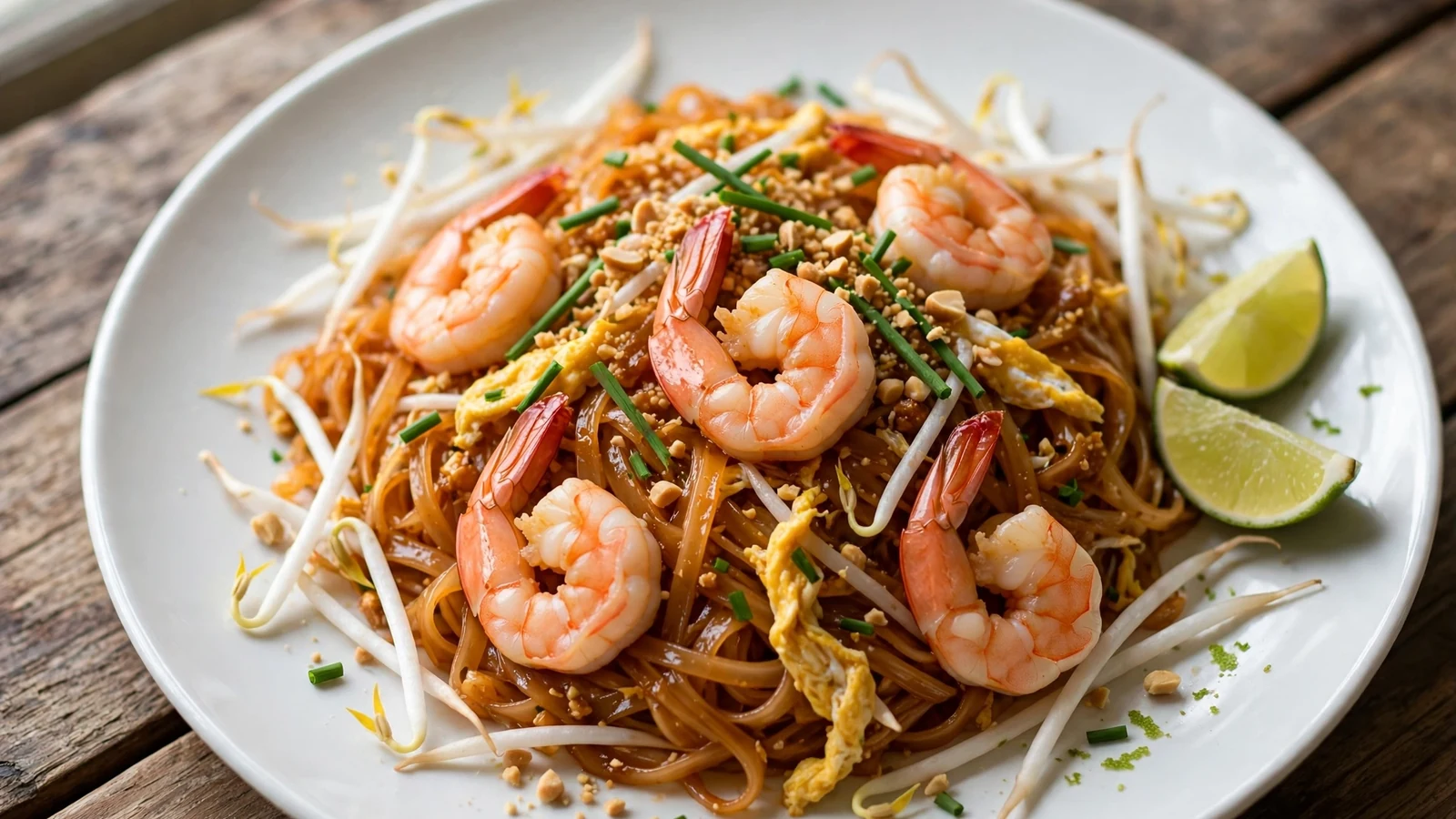
Pad Thai is the dish that made Thai food famous in America, and the shrimp version is the one most people order first. Chewy rice noodles get tossed in a sweet, sour, and salty tamarind sauce, then wrapped around plump shrimp, ribbons of egg, and crisp bean sprouts, with crushed peanuts and a squeeze of lime on top. It's the kind of plate where every bite tastes a little different — savory, then tangy, then nutty — and that's the whole point.
Making it at home is easier than most people expect. The ingredient list looks long, but the actual cooking takes about 15 minutes once everything is prepped. The real work happens before the wok gets hot: soaking the noodles, mixing the sauce, and lining up your ingredients. Pad Thai is a stir-fry, which means once the cooking starts, there's no pausing to chop garlic.
The Sauce Makes the Dish
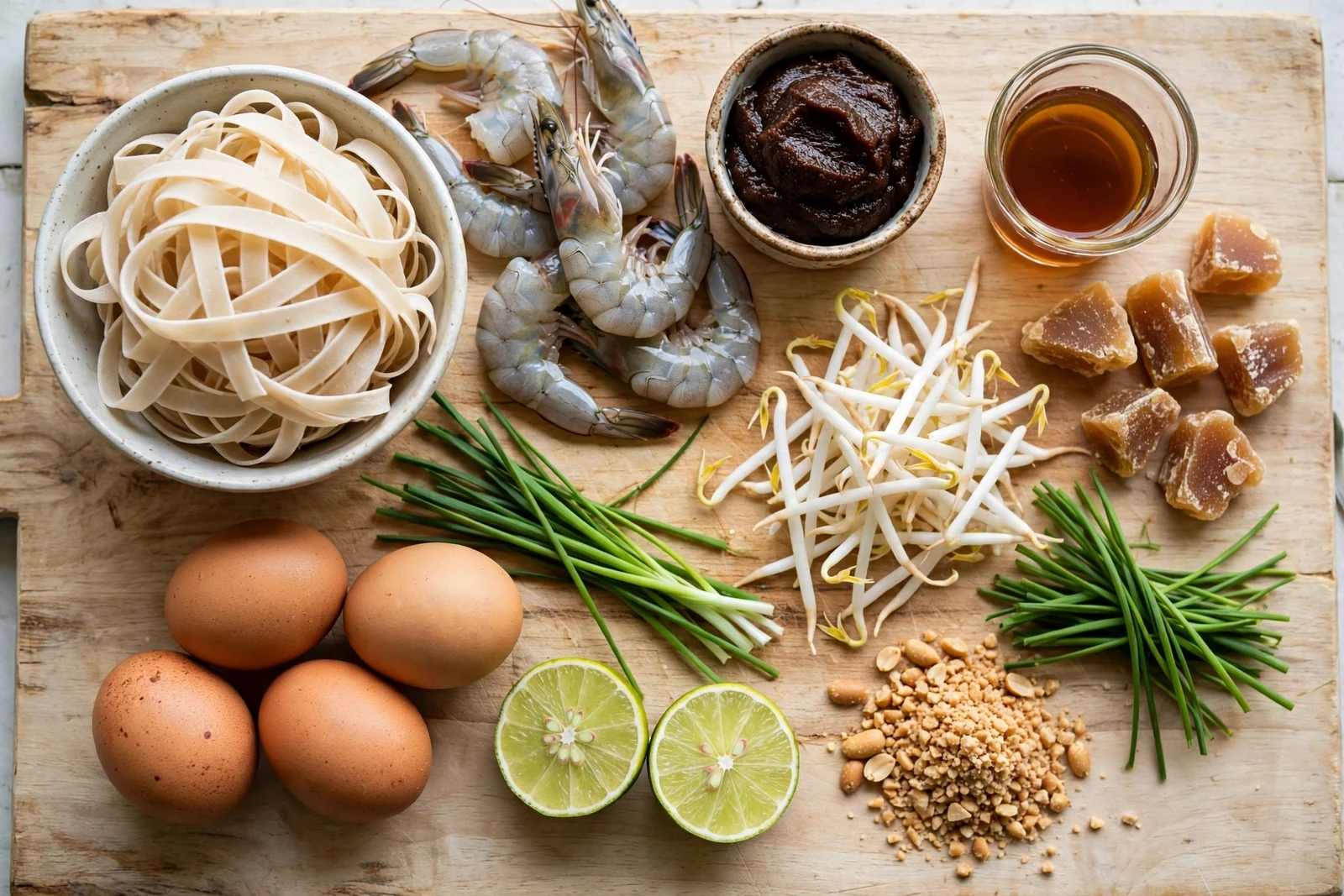
A good Pad Thai sauce is a simple balance of three flavors: sour from tamarind paste, sweet from palm sugar, and salty from fish sauce. If you've only had Pad Thai made with ketchup or bottled sauce, the tamarind version is a different dish entirely — deeper, tangier, with a faint fruity note that ketchup can't imitate.
Tamarind paste is the one ingredient worth seeking out. Look for seedless tamarind paste (sometimes labeled "tamarind concentrate") at an Asian grocery or online. It keeps for months in the fridge. If you can't find it, mix fresh lime juice with a little extra palm sugar, though the flavor won't be quite as complex.
Palm sugar is traditional, but light brown sugar works well as a substitute — it's actually closer in flavor than white sugar, with a hint of caramel.
Ingredients
For the sauce:
For the noodles and stir-fry:
For serving:
Instructions
1. Soak the noodles. Place the rice noodles in a large bowl and cover with warm (not hot) water. Soak 25–30 minutes until they're pliable but still firm — they should bend without snapping but feel underdone. Drain well. Cold or lukewarm water keeps them from turning mushy later.
2. Mix the sauce. Whisk the tamarind paste, palm sugar, fish sauce, and water in a small bowl until the sugar dissolves. Taste it: it should hit sweet, sour, and salty in equal measure. Adjust with a touch more sugar or fish sauce if needed.
3. Sear the shrimp. Heat 1 tablespoon of oil in a large wok or skillet over high heat until it shimmers. Add the shrimp in a single layer and sear 1–2 minutes per side until pink and just opaque. Remove to a plate — they'll finish cooking later, and pulling them early keeps them tender.
4. Build the base. Add the remaining tablespoon of oil to the wok. Add the garlic and cook 15 seconds until fragrant. Pour in the beaten eggs and let them set for a few seconds, then scramble into ribbons with your spatula.
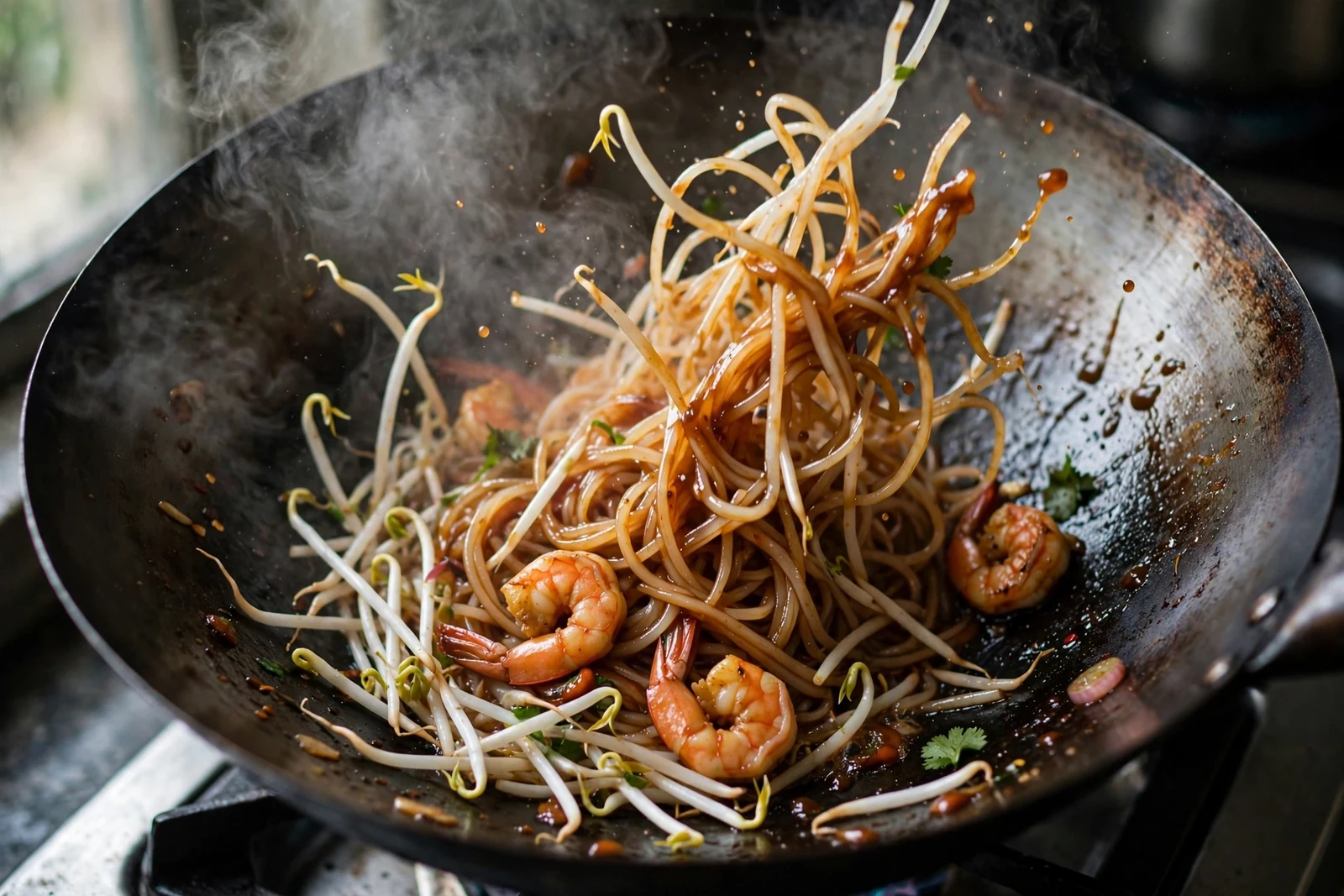
5. Add noodles and sauce. Add the drained noodles and the sauce. Toss continuously for 3–4 minutes, using tongs or two spatulas. The noodles will soften and absorb the sauce, turning glossy and amber. If they look dry and stubborn, splash in 2–3 tablespoons of water — that's normal. For tips on getting real wok heat from a home burner, see What Is Wok Hei and How to Get It at Home.
6. Finish with sprouts and chives. Add the bean sprouts, chives, and chili flakes. Toss 1 minute until the sprouts just begin to wilt — they should stay crisp. Return the shrimp to the wok and toss to warm through, about 30 seconds.
7. Serve immediately. Divide among plates and top with crushed peanuts. Serve with lime wedges, extra bean sprouts, and chili flakes on the side. Squeeze the lime over the noodles right before eating.
Tips
Don't boil the noodles. Soaking in warm water is the method that works. Boiling makes rice noodles gummy and they'll fall apart in the wok. Pliable-but-firm is the goal — they finish cooking in the sauce.
Mise en place is not optional here. Line up every ingredient next to the stove before you start. Once the wok is hot, Pad Thai moves fast, and there's no time to grate palm sugar or peel shrimp mid-stir-fry.
Taste the sauce before the noodles go in. It's the only chance to adjust the balance cleanly. The finished dish is hard to fix.
Keep the heat high and the batch small. A crowded wok steams instead of sears. If your wok is on the small side, cook the noodles in two batches for better texture.
A good pair for the meal: Pad Thai's bold flavors love something cold and sweet on the side. Thai Iced Tea is the classic restaurant pairing, and it works just as well at home.
Variations
Chicken or tofu Pad Thai: Swap the shrimp for 8 oz of thinly sliced chicken breast (sear it the same way, 3–4 minutes until cooked through) or pressed extra-firm tofu cut into sticks (sear until golden on two sides).
Extra veggie Pad Thai: Add julienned carrots, snap peas, or shredded cabbage along with the bean sprouts. Add hearty vegetables a minute earlier so they have time to soften.
Spicy Pad Thai: Double the chili flakes in the stir-fry and add a teaspoon of chili oil to the sauce mixture. Thai bird's eye chilies, thinly sliced and added with the garlic, bring real heat.
Tamarind-free version: If tamarind isn't available, use 3 tablespoons fresh lime juice plus an extra tablespoon of palm sugar in the sauce. It won't have the same depth, but the balance of sweet, sour, and salty still comes through.
Pad Thai with Shrimp
Ingredients
Method
- Soak the rice noodles in warm (not hot) water for 25-30 minutes until pliable but still firm. Drain well.
- Whisk the tamarind paste, palm sugar, fish sauce, and water in a small bowl until the sugar dissolves. Taste and adjust the sweet-sour-salty balance.
- Heat 1 tablespoon oil in a large wok over high heat. Sear the shrimp 1-2 minutes per side until pink and just opaque; remove to a plate.
- Add the remaining oil to the wok. Cook the garlic 15 seconds, then add the beaten eggs and scramble into ribbons.
- Add the drained noodles and sauce; toss 3-4 minutes until glossy and tender, adding a splash of water if they look dry.
- Add bean sprouts, chives, and chili flakes; toss 1 minute. Return the shrimp and toss 30 seconds to warm through.
- Serve immediately topped with crushed peanuts, with lime wedges, extra bean sprouts, and chili flakes on the side.
3 thoughts on “Pad Thai with Shrimp”