
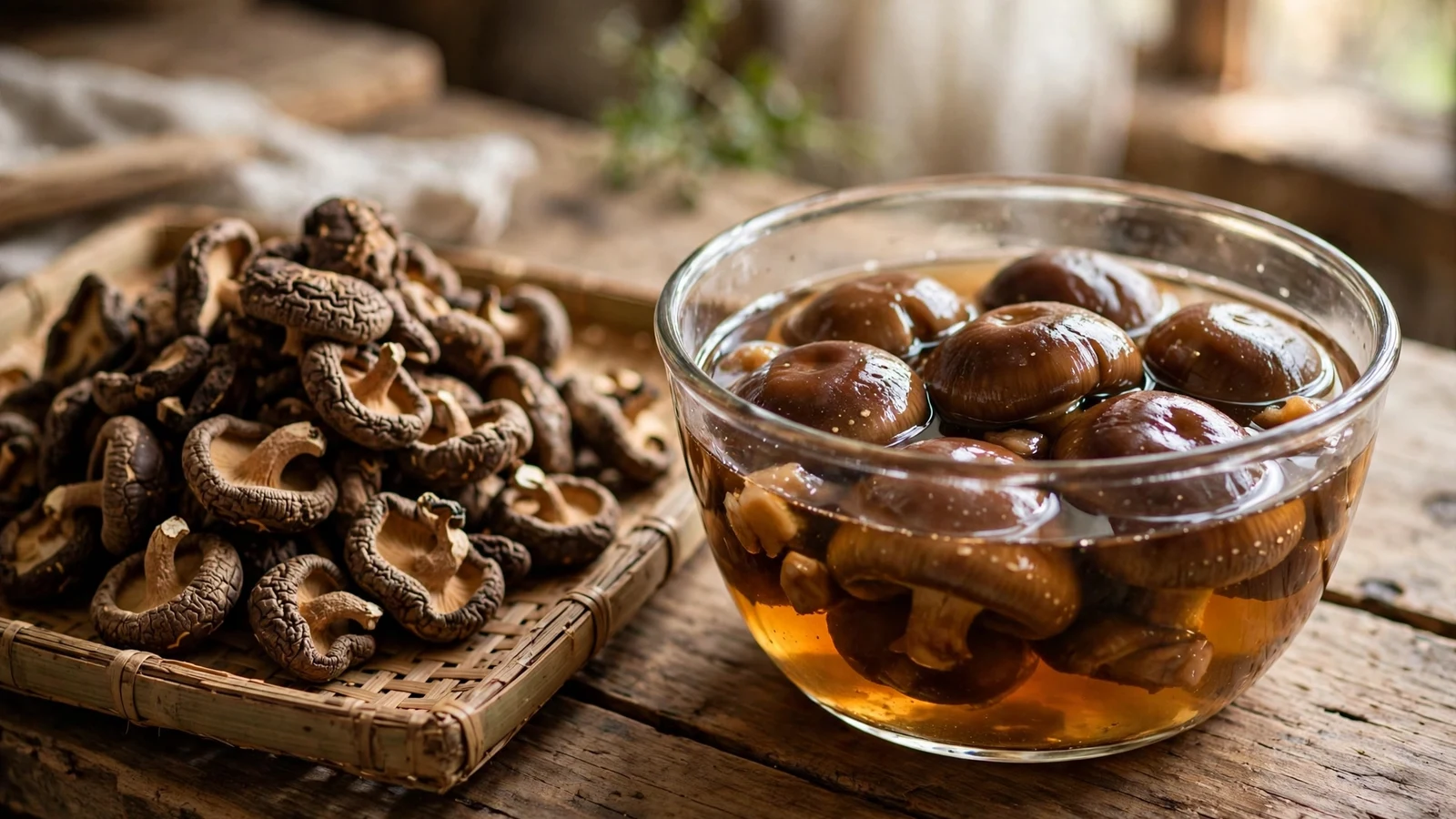
Walk past the mushroom bin at any Asian grocery and you will find bags of dried shiitake mushrooms, wrinkled and pale, packed tight enough to rattle. They do not look impressive. But soak a handful in warm water and something changes: the caps plump up, turn glossy, and release a dark, savory liquid that smells like the base of every good soup you have had at a noodle shop. Dried shiitake are a pantry workhorse in Japanese, Chinese, and Korean cooking, and once you know how to handle them, they are easier to use than fresh mushrooms, not harder.
This guide covers how to choose a good bag, the right way to rehydrate the mushrooms, what to do with the soaking liquid, and the dishes where dried shiitake shine most. They pair naturally with staples from the essential Asian pantry and show up in classics like classic miso soup.
Why Dried, When Fresh Exists?
Fresh shiitake are great, but drying changes the mushroom. As water leaves the cap, the flavor compounds concentrate. Dried shiitake carry notably more of the amino acid behind deep savory taste (umami) than fresh ones, which is why a few dried caps can flavor a whole pot of broth while you would need a full punnet of fresh mushrooms for the same effect.
There are practical reasons, too. Dried shiitake keep for 6 to 12 months in a cool, dark cupboard, cost less per mushroom than fresh, and are always on hand. No limp mushrooms forgotten at the back of the fridge. For weeknight cooking, they are one of the most dependable ingredients you can stock.
Choosing a Bag
Look for caps that are thick, curled slightly at the edges, and a warm tan to light brown color. At Chinese markets you will sometimes see “flower mushrooms” (hua gu), pale caps with a cracked, flower-like pattern on top. Those crackle-pattern caps are the premium grade, prized for their thick flesh. Standard dried shiitake cost less and work fine for everyday cooking.
Skip bags with crumbled mushrooms, dark black spots, or a sour smell through the packaging. The caps should feel firm, not soft or bendy, which can mean they picked up moisture. Store the opened bag in an airtight jar or a sealed container away from heat and light.
How to Rehydrate Dried Shiitake
The soak is simple, but a few details decide whether you get tender, silky mushrooms or rubbery ones.
- Brush, don’t scrub. Give each cap a quick wipe or a very brief rinse under the tap to remove surface dust. Long washing before the soak just washes flavor away before you start.
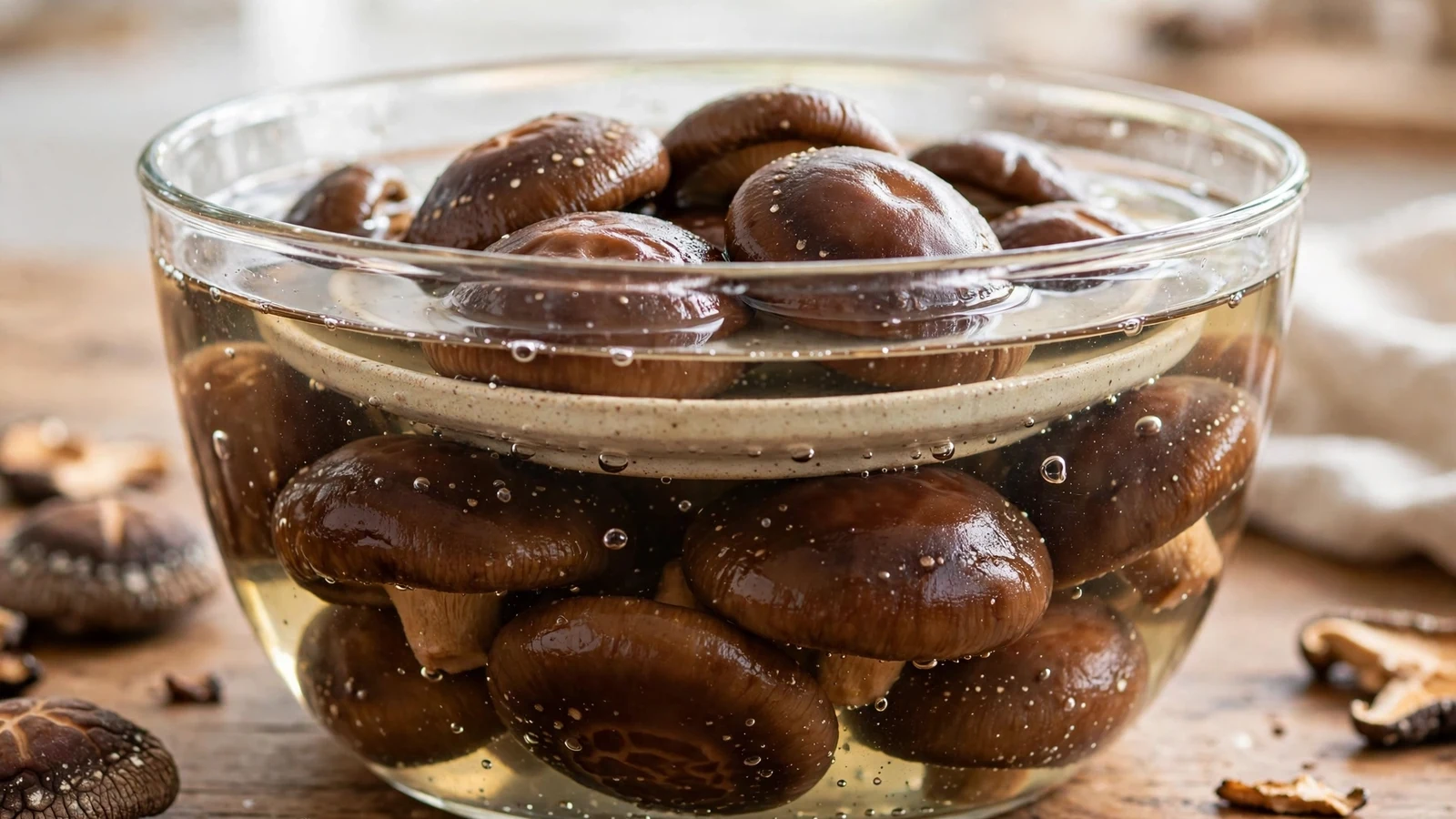
- Use warm water, not boiling. Place the mushrooms in a bowl and cover them with warm (not hot) water, roughly 100°F / 38°C, about what feels comfortably warm on your wrist. Boiling water cooks the outside too fast and can push out bitter notes.
- Weight them down. Dried caps float. Set a small plate or a second bowl on top so every mushroom stays submerged and hydrates evenly.
- Soak 20 to 30 minutes for thin caps, 1 to 2 hours for thick ones. Flower mushrooms and very thick caps can take up to 4 hours, or overnight in the fridge. They are ready when the cap bends without cracking and a knife slides through the thickest part with no chalky, dry core.
- Squeeze gently. Lift each mushroom out and press lightly over the bowl to return the extra liquid. Do not wring them dry; you want them moist.
In a hurry, warm water and 20 minutes gets thin caps usable, though the texture will be a touch firmer. Cold water and a long fridge soak gives the most even result and the cleanest flavor, which is worth it for thick caps.
Save the Soaking Liquid
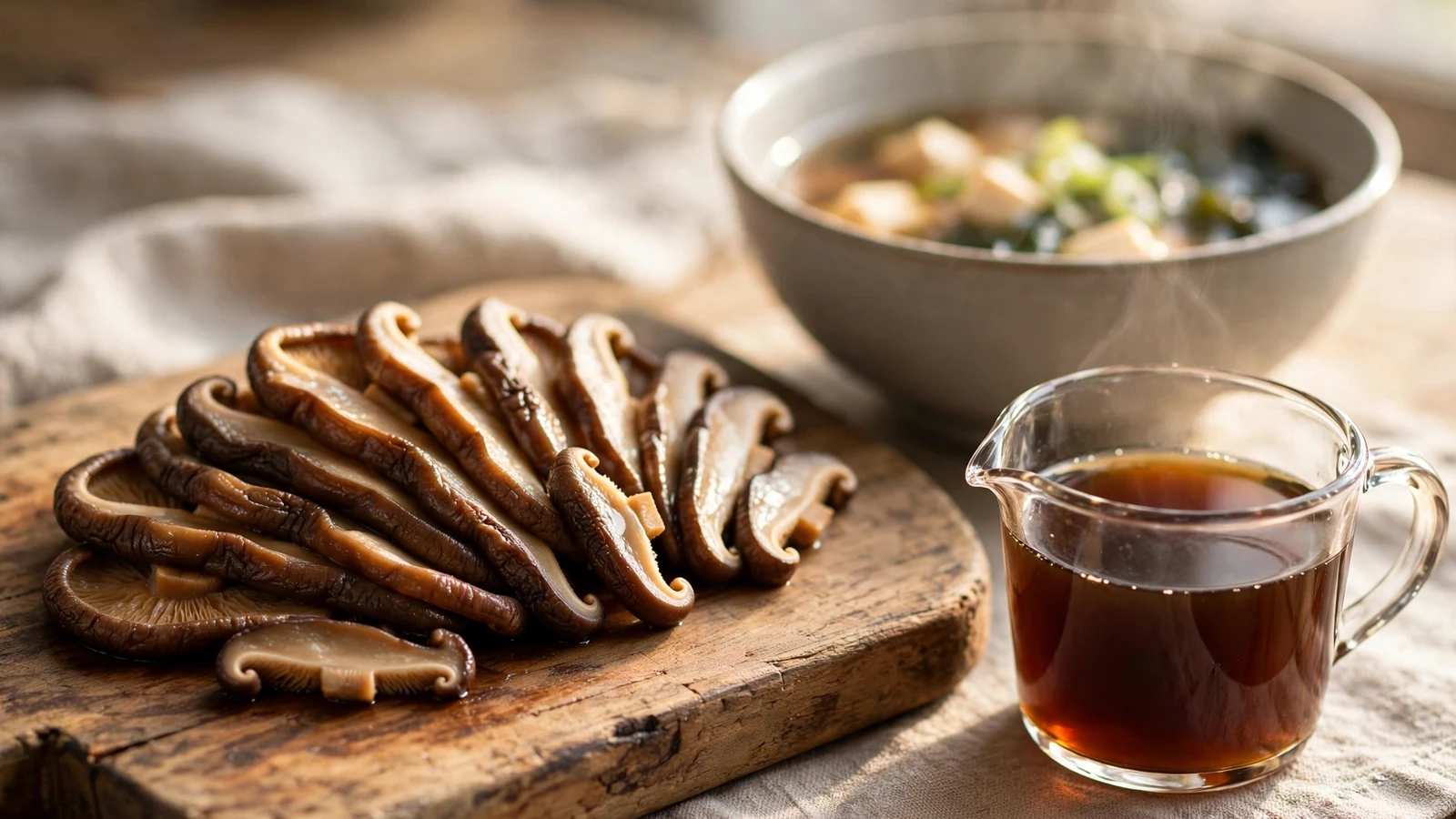
Never pour the soak water down the drain. That amber liquid is liquid seasoning: it carries the mushrooms’ savory depth and a lot of their aroma. Strain it through a fine-mesh strainer, a coffee filter, or a paper towel to remove grit, then use it anywhere you would use stock.
Good places for it:
- As the base for classic miso soup or a clear Japanese soup
- To cook rice, congee, or noodle broth for extra depth
- Stirred into stir-fry sauces and braises in place of water
- As part of the liquid for doenjang jjigae or other stews
Freeze leftover soaking liquid in an ice cube tray and you have small, ready portions for sauces all month.
Preparing the Mushrooms for Cooking
Once soaked, trim the stems. Shiitake stems stay tough even after a long soak, so cut them off where they meet the cap. Do not throw them out: toss the stems into the strainer with the soaking liquid, simmer them in stock, or freeze them for the next pot of broth. They give flavor even though you would not want to chew them.
Slice the caps about 1/4 inch thick for stir-fries and soups, or leave them whole for braises where they hold up beautifully over a long simmer. If the caps are very large, halve them first so the slices stay bite-size.
Where Dried Shiitake Work Best
Dried shiitake earn their keep in dishes where they get time to mingle:
- Soups and broths. Sliced caps plus their soaking liquid build the base of miso soup, hot pot broth, and noodle soups.
- Braises. Whole caps simmered with soy sauce, a little sugar, and their own soaking liquid turn glossy and meaty; a classic Japanese simmered dish (fukumeni) is built on exactly that.
- Stir-fries. Sliced caps bring chew and savoriness to vegetable stir-fries and noodle dishes like japchae.
- Rice dishes. Cook sliced mushrooms and strained soaking liquid with rice for takikomi gohan, the Japanese mixed rice.
- Dumpling and spring roll fillings. Finely chopped rehydrated shiitake add moisture and depth to pork, shrimp, or tofu fillings.
A small caution: dried shiitake flavor is assertive. In a delicate clear soup, 3 or 4 caps for a family pot is plenty. You can always add more next time.
Dried vs. Fresh: A Quick Rule of Thumb
Use dried shiitake when you want broth depth, a chewier bite, or a make-ahead pantry ingredient. Use fresh when you want the mushroom itself to be the star on the plate, grilled or roasted in thick slices. Roughly, 1 ounce of dried shiitake (about 8 to 10 medium caps) rehydrates to around 4 to 5 ounces, close to a small punnet of fresh.
Storage After Soaking
Rehydrated mushrooms keep in the fridge for 3 to 4 days in a sealed container, covered with a little of their strained soaking liquid. For longer storage, slice and freeze them for up to 3 months; they go straight into soups and stir-fries from frozen with a couple of extra minutes of cooking.
Stock up once, soak as you go, and save that soaking liquid. That is the whole habit, and it quietly improves a lot of weeknight cooking.
Frequently Asked Questions
Do I need to wash dried shiitake before soaking?
A quick wipe or brief rinse is enough. The soak itself loosens any remaining grit, which is why you strain the soaking liquid before using it.
Can I rehydrate shiitake in cold water?
Yes. Cold water with several hours, or overnight in the fridge, gives the most even texture and a clean flavor. Warm water is faster for weeknight cooking.
Why are my rehydrated mushrooms still tough?
Either they needed more time (thick caps can take 2 to 4 hours) or the stems were left on. Always trim the stems after soaking, and check that a knife passes through the cap with no dry core.
Is the soaking liquid safe to use?
Yes, once strained. It is a traditional base for soups and sauces across Japanese and Chinese cooking. Strain out grit through a fine strainer, coffee filter, or paper towel first.