
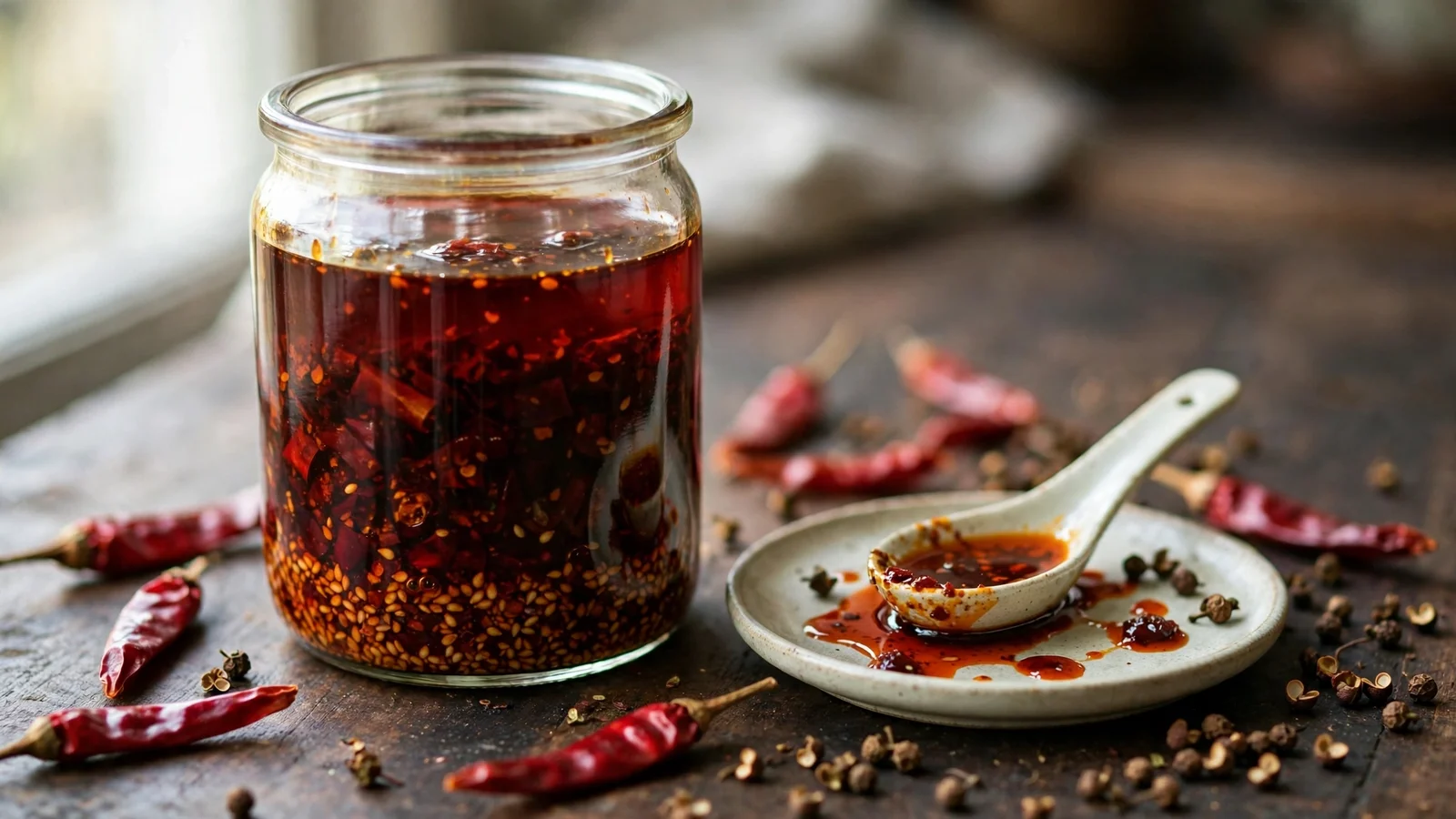
A jar of chili oil in the pantry does quiet work all week. Spoon it over noodles and the bowl turns fragrant and warm. Swirl it into dumpling dipping sauce and plain vinegar suddenly has depth. Drizzle it on fried eggs, steamed greens, or a pot of congee and dinner feels finished with almost no extra effort. Store-bought jars can be great, but homemade chili oil lets you set the heat, the tingle, and the aroma exactly where you like them. It also costs very little, and one batch keeps for months in the fridge.
This guide covers the whole process: picking chilies, handling the oil temperature, building aroma with spices, and storing the finished oil safely. If you are stocking a flavor pantry, it sits nicely next to the essential Asian pantry guide and a jar of crispy shallots.
What Chili Oil Is
Chili oil is a condiment made by pouring hot oil over dried chili flakes and aromatics. The heat of the oil blooms the chilies and spices, coloring the oil deep red and pulling out a toasty, fragrant flavor. The finished jar has two parts: the flavored oil itself and the chili sediment that settles at the bottom. Both get used. The oil carries aroma and gentle heat, while the flakes bring body and a slower, deeper burn.
Regional styles vary a lot. Sichuan-style chili oil leans on Sichuan peppercorns for a citrusy tingle and often includes star anise and cinnamon. Cantonese versions tend to be milder, with garlic and shallot doing more of the work. Korean gochugaru-based oils are brighter and fruitier. The method below is a flexible base. Once you have made it once, adjusting it is easy.
Choosing Your Chilies
The chili flakes matter more than anything else in the jar. You want flakes, not fine powder. Powder scorches fast and turns bitter, and it makes the oil cloudy. Coarse flakes toast evenly and keep their color.
Good options include:
- Sichuan chili flakes (lajiao mian): medium heat, deep red color, slightly fruity. The classic choice for a Sichuan-style oil.
- Korean gochugaru: bright red, mild to medium heat, a little sweet. Use the coarse grind sold for kimchi.
- Crushed red pepper flakes: the pizza-shop kind works in a pinch. Heat varies by brand, and the flavor is sharper and less round, but it still makes a solid everyday oil.
- Dried Thai chilies, crushed: much hotter. Blend them with a milder flake so the heat does not swamp everything else.
A blend is often best. Half Sichuan flakes and half gochugaru gives you color, warmth, and a little sweetness. Whatever you choose, check that the flakes smell fresh and fruity, not dusty. Old chilies make flat oil no matter how careful you are with the rest.
For heat control, remember that seeds add fire. Flakes with fewer seeds taste rounder. If your blend runs hot, shake some seeds out before you start.
The Aromatics
Chili oil is as much about aroma as heat. A few whole spices and fresh aromatics turn a plain hot oil into something you want to eat by the spoonful.
Classic additions:
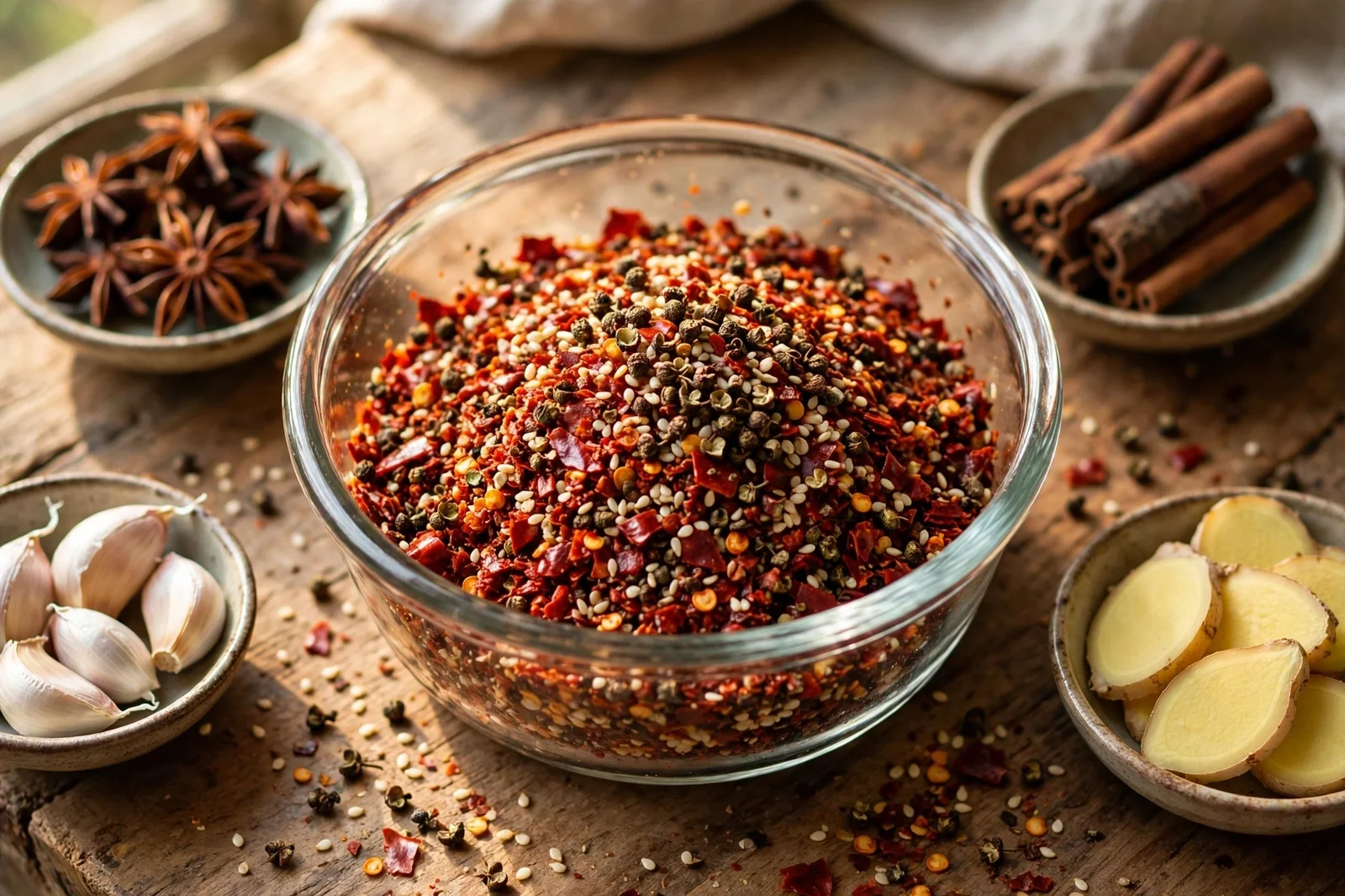
- Sichuan peppercorns: 1 to 2 teaspoons, lightly crushed. They bring the signature tingle. Use red ones for a floral note, green ones for a brighter, citrusy edge.
- Star anise, cinnamon stick, bay leaves: warm background spice. One or two pieces each is plenty.
- Garlic and ginger: a few smashed cloves and slices. They go into the hot oil first and come out once golden.
- Scallions or shallots: fried briefly in the oil for sweetness. A small shallot, thinly sliced, adds a lot.
- Sesame seeds: a tablespoon of white sesame seeds in the bowl with the flakes adds nuttiness and looks great in the jar.
- A pinch of sugar and salt: half a teaspoon of each balances the heat more than you would expect.
Keep the list short for your first batch. Chilies, Sichuan pepper, garlic, ginger, and sesame is a complete oil. Add the warm spices once you know your base.
The Oil and the Temperature That Makes or Breaks It
Use a neutral oil with a high smoke point: grapeseed, canola, peanut, or a light vegetable oil. Peanut oil adds a faint nuttiness many people love in this. Avoid extra-virgin olive oil here. Its flavor fights the chilies and it does not love high heat.
Temperature is the one real skill in this recipe, and it is simple once you see it. You heat the oil to about 375°F (190°C), take it off the heat, and let it fall to around 325°F (165°C) before it touches the flakes. Here is why that range matters:
- Too hot (above 375°F on the flakes): the chilies scorch in seconds. The oil turns dark, bitter, and harsh.
- Just right (300–340°F): the flakes sizzle, bubble, and release their color and aroma without burning. The oil turns red and smells toasty.
- Too cool (below 280°F): the chilies barely bloom. The oil stays pale and tastes raw.
No thermometer? Heat the oil until a wooden chopstick dipped in it bubbles steadily, then take the pot off the heat and wait a full minute. Drop in a pinch of flakes. They should sizzle actively and smell fragrant right away without turning dark. If they brown instantly, wait another minute and test again.
A two-pour method gives you even more control and a deeper flavor:
- Heat the oil with the garlic, ginger, scallion, and whole spices until the garlic is golden, about 3 to 4 minutes. Strain out and discard the solids. The oil is now infused.
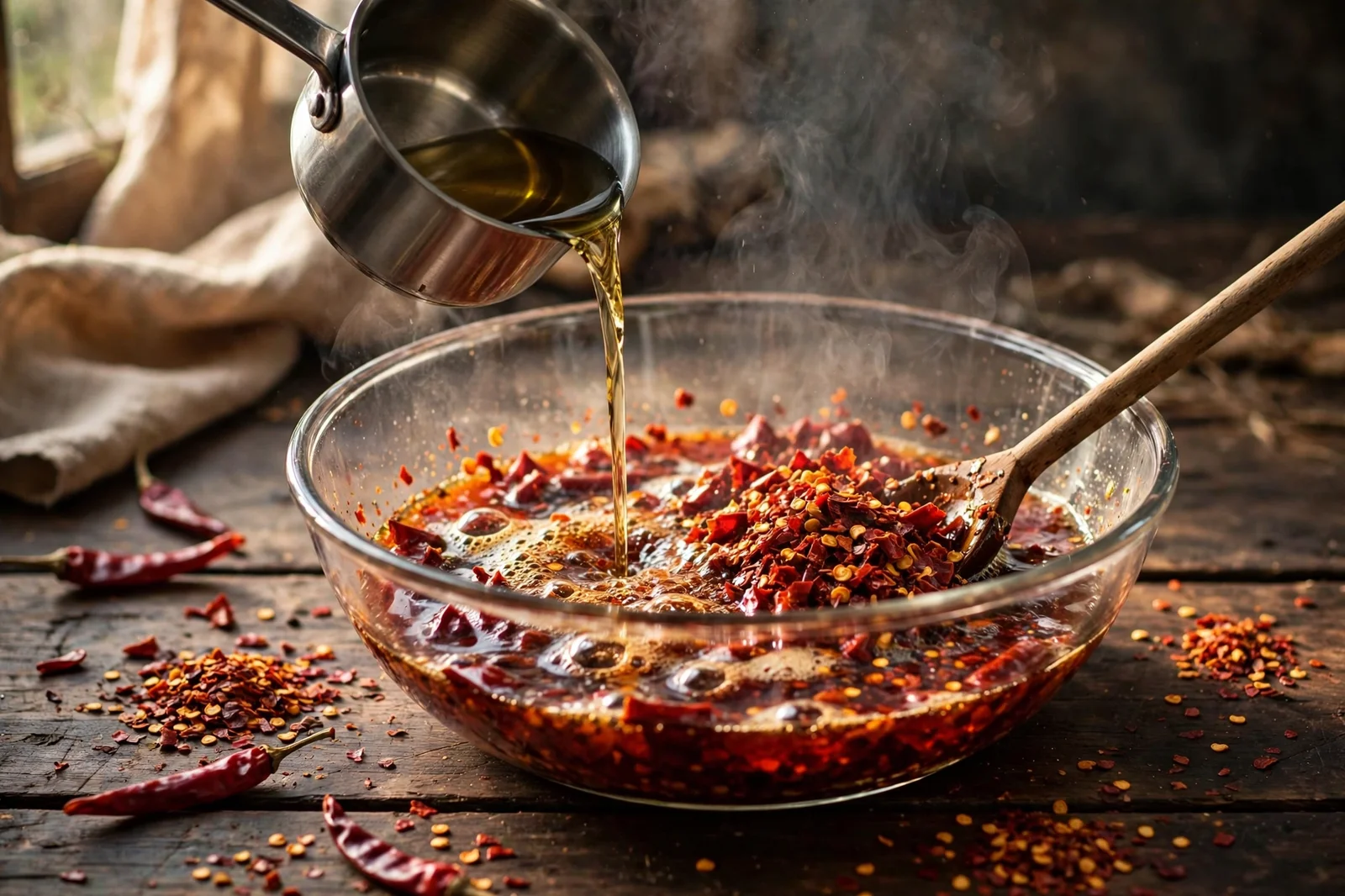
- Let the oil cool to about 340°F. Pour one third over the chili flakes and stir. This first pour blooms the spices without burning them.
- Wait 30 seconds, then pour in the rest of the oil. The second, slightly cooler pour deepens the color and toasts the flakes gently.
The mixture will bubble up, so use a heatproof bowl with room to spare, and stir as you pour.
A Simple Base Recipe
This makes about 1½ cups, enough to fill a pint jar with room at the top.
You will need:
- 1 cup neutral oil (grapeseed, canola, or peanut)
- ½ cup coarse chili flakes
- 1 tablespoon Sichuan peppercorns, lightly crushed
- 1 tablespoon white sesame seeds
- 3 garlic cloves, smashed
- 3 slices fresh ginger
- 2 scallions, cut into 2-inch pieces (or 1 small shallot, thinly sliced)
- 1 star anise and a small piece of cinnamon (optional)
- ½ teaspoon fine salt
- ½ teaspoon sugar
Method:
- Put the chili flakes, Sichuan peppercorns, sesame seeds, salt, and sugar in a heatproof bowl or a clean glass jar. Stir to combine.
- Heat the oil in a small saucepan over medium heat with the garlic, ginger, scallions, and whole spices if using.
- When the garlic turns light golden at the edges, about 3 to 4 minutes, take the pan off the heat. Strain out the solids.
- Let the oil sit for 1 minute. Test with a pinch of flakes if you are unsure about the temperature.
- Pour about one third of the oil over the flakes. Stir. Wait 30 seconds, then pour in the rest, stirring as you go.
- Let the oil cool to room temperature, uncovered. It will look pale at first and deepen to a rich red over the next few hours.
- Transfer to a clean, dry jar with a tight lid. Label it with the date.
Storage and Food Safety
Chili oil keeps well, but a little care matters because fresh aromatics are involved. Fry the garlic and ginger in the oil and strain them out, as above, rather than leaving raw pieces in the jar. Store the finished oil in a clean, completely dry jar, and never dip a wet spoon into it.
In the fridge, homemade chili oil keeps for up to 6 months, and the flavor often improves over the first week. At cool room temperature it is fine for about a month. If the oil ever smells off or stale, toss it and make a fresh batch. Fresh oil is always better than a questionable jar.
One more note: the flakes settle. Give the jar a stir before spooning so you get oil and sediment together, unless a recipe wants just the clear oil on top.
How to Use It
Once the jar is in the fridge, it finds its own way into everything. A few favorite uses around here:
- Stirred into the sauce for dan dan noodles, loosened with a little black vinegar and soy sauce
- Drizzled over scallion oil noodles along with the scallion oil for a double hit of aroma
- Mixed with soy sauce, black vinegar, and a little sugar as a dumpling dip
- Spooned over steamed or roasted vegetables, especially eggplant and green beans
- Swirled into noodle soups and congee right at the table
- Whisked into mayonnaise for a spicy sandwich spread
Start with a teaspoon and taste. A good chili oil should add aroma and warmth first, heat second. If your batch comes out hotter than you planned, you can temper a serving by mixing it with plain neutral oil. If it comes out too mild, a pinch of fresh flakes warmed in a spoonful of the oil brings it back up.
Troubleshooting
The oil tastes bitter. The oil was too hot when it hit the flakes. Next time, let it cool longer and test with a pinch first. Bitter oil cannot really be fixed, but it is still usable in small amounts in strongly flavored dishes.
The color is pale. The oil was too cool, or the flakes were old. Fresher flakes and a slightly warmer pour fix it.
There is no tingle. Sichuan peppercorns lose their punch with age. Buy them from a store with good turnover, crush them just before using, and do not skip them. A few extra in the next batch is an easy adjustment.
The oil went cloudy in the fridge. That is normal. Cold oil thickens and clouds, then clears again at room temperature.
The flakes settled into a hard layer. Stir the jar before each use, or store it upside down for a day so the sediment loosens. A quick stir is all it takes.
Make one batch and you will see why so many home cooks keep a jar going year-round. It takes about fifteen minutes, most of it waiting for oil to cool, and it pays you back every time dinner needs a lift.