
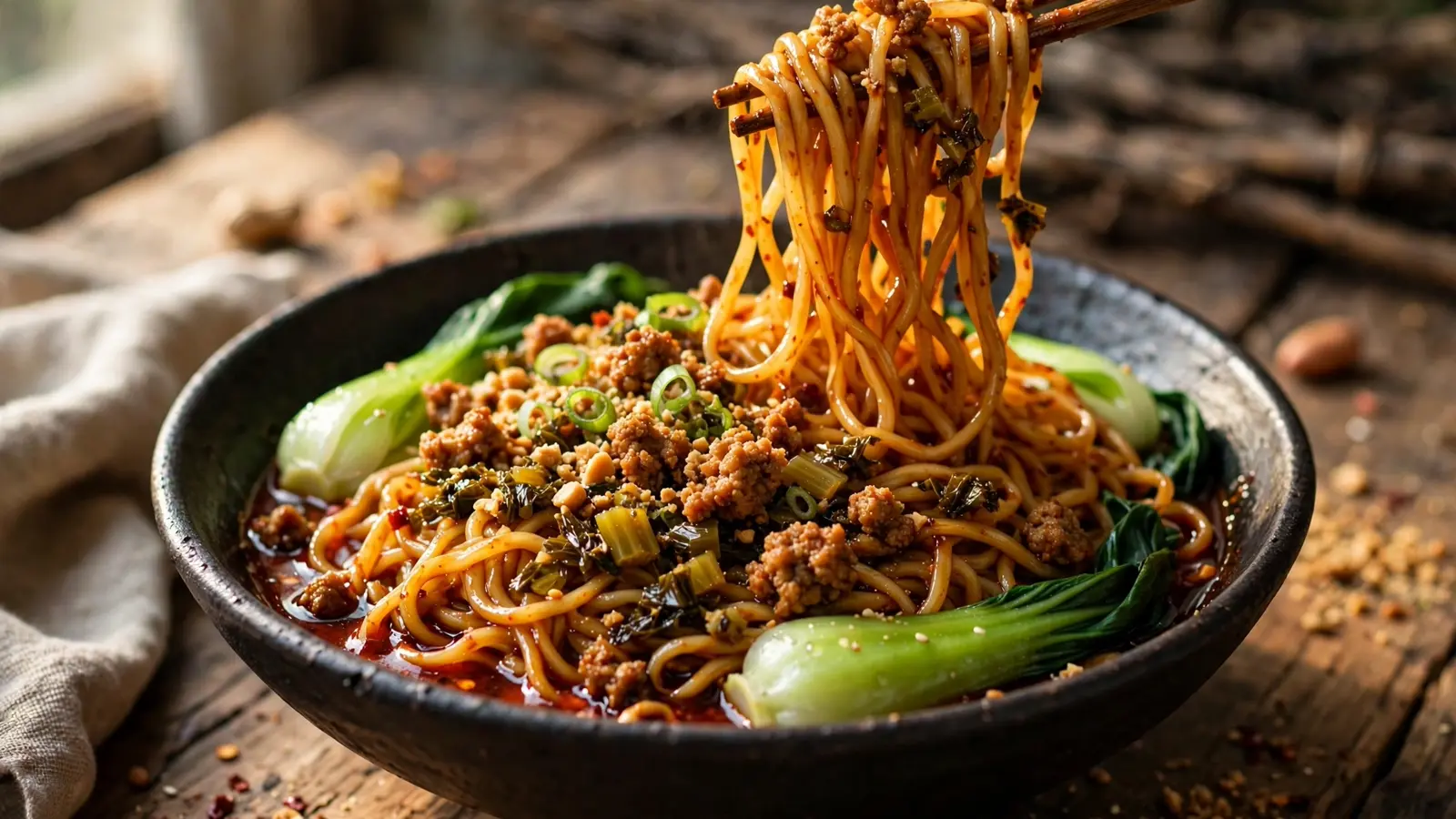
Dan dan noodles are Sichuan street food at its most irresistible — a bowl that hits every note at once. Springy wheat noodles sit in a shallow pool of sauce made from toasted sesame paste, chili oil, and soy sauce: nutty, spicy, savory, with a low hum of Sichuan pepper underneath. A spoonful of savory ground pork, a tangle of preserved mustard greens, and a handful of blanched greens on top turn the bowl from a snack into a full meal.
The dish is named for the carrying pole — the "dan dan" — that street vendors in Chengdu used to balance baskets of noodles and sauce across their shoulders more than a century ago. The original street version was a small, punchy snack bowl with barely any soup at all; restaurant versions today run soupier. This recipe lands in the middle, with enough sauce to coat every strand and a little extra to spoon up at the end.
What Makes Dan Dan Noodles Taste Right
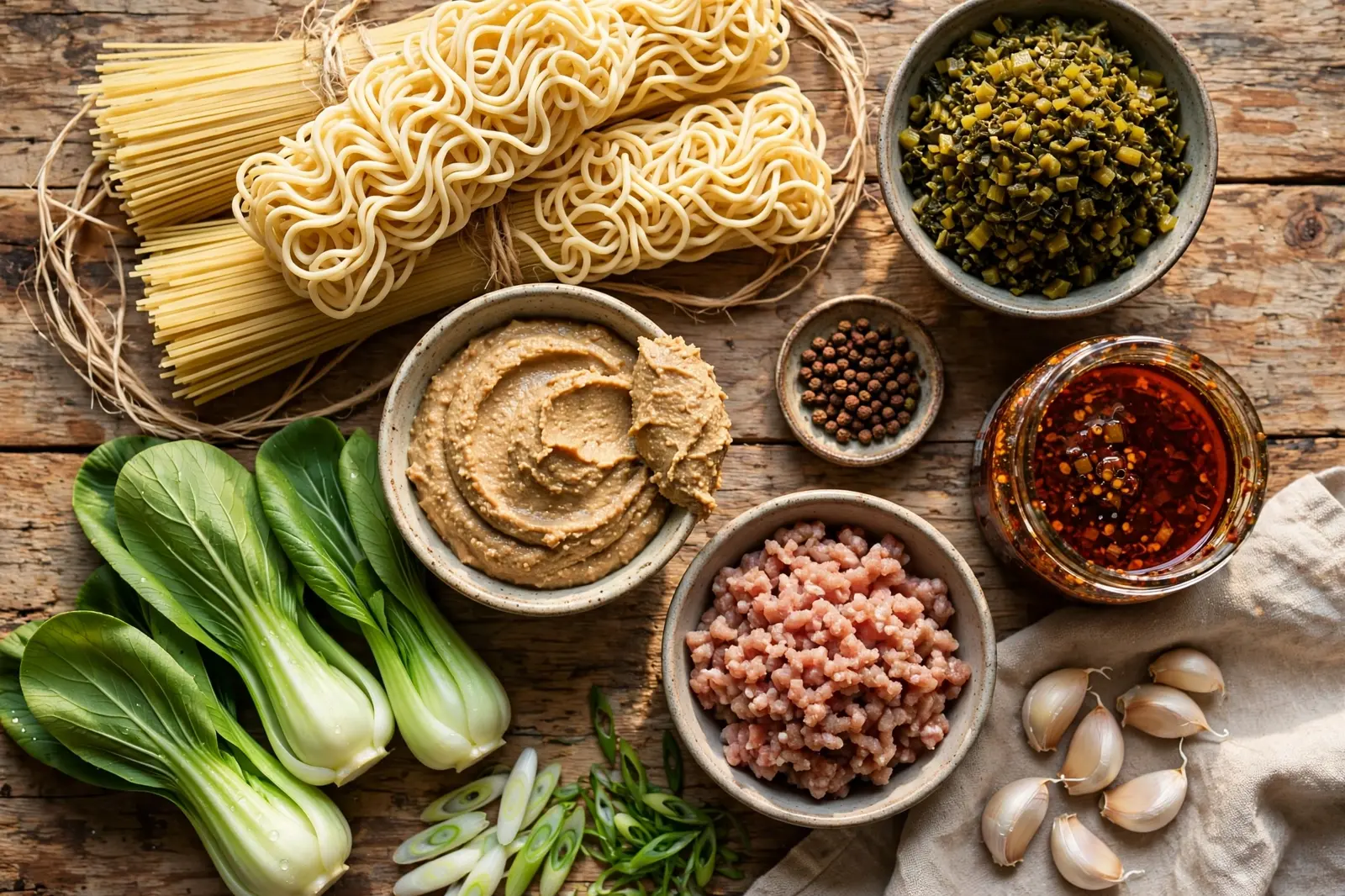
Three things carry this dish, and the balance between them is the whole game. First, the sauce base: Chinese toasted sesame paste (zhi ma jiang), which is nuttier and thicker than tahini, loosened with warm water until it turns creamy. Thinning it matters — thick sesame paste clumps, thinned paste coats.
Second, the chili oil. Not the clear red kind for drizzling, but a good homemade chili oil with a sediment of fried chili flakes and, if you have them, a few Sichuan peppercorns in the jar. The flakes are where the flavor lives. A generous two to three tablespoons per bowl is not excessive; this is Sichuan cooking.
Third, the toppings: finely chopped preserved mustard greens (sui mi ya cai), which bring a sweet-salty crunch that cuts through the richness, and ground pork browned until it is crumbly and caramelized at the edges. The greens matter as much as the meat — leave them out and the bowl loses its contrast.
Ingredients
For the Noodles
For the Sauce (per Bowl — Multiply for 4 Bowls)
For the Toppings
Instructions
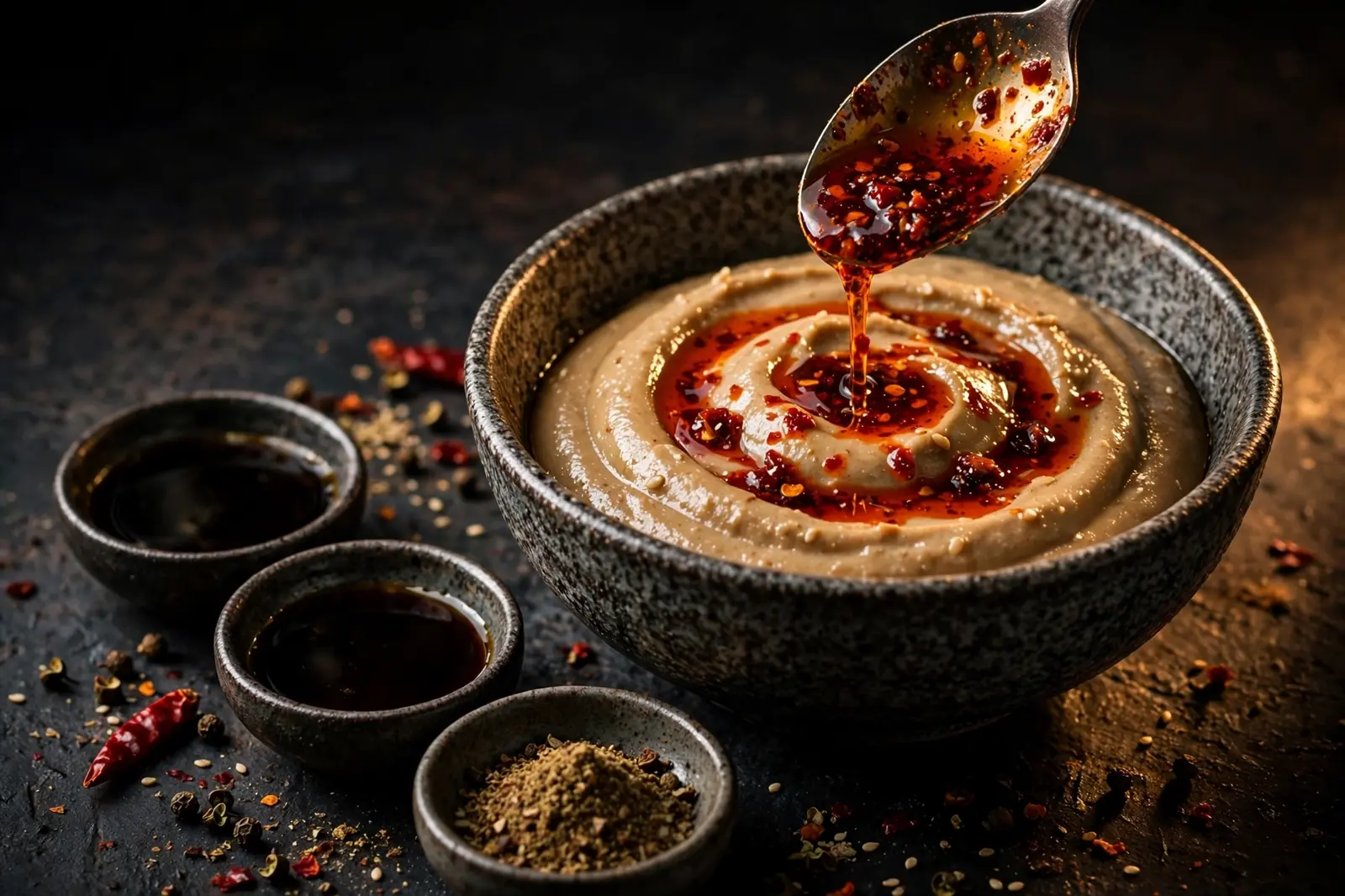
Step 1. Thin the sesame paste. Put the sesame paste in a medium bowl and whisk in the warm water, a tablespoon at a time, until it loosens into a smooth, pourable cream — roughly the consistency of heavy cream. Divide it among 4 serving bowls. This is the step people skip, and it is the reason their sauce clumps instead of coating.
Step 2. Build the sauce. To each bowl add the chili oil with flakes, soy sauce, black vinegar, ground Sichuan pepper, garlic, and a pinch of sugar. Whisk each bowl briefly. The sauce will look broken and oily right now; that is fine — it comes together when the hot noodles hit it.
Step 3. Brown the pork. Heat the oil in a wok or large skillet over medium-high heat. Add the ground pork and spread it into a thin layer. Let it sit undisturbed for 2 to 3 minutes so it browns, then break it up and stir-fry until it is crumbly and caramelized at the edges, about 4 more minutes. Add the Shaoxing wine and let it sizzle off, then stir in the soy sauces and sugar. Cook 1 more minute, tasting for balance — it should be savory with a faint sweetness. Set aside and keep warm.
Step 4. Crisp the mustard greens. In the same pan, add the chopped preserved mustard greens and stir-fry 1 to 2 minutes until fragrant and lightly crisped at the edges. Rinsing them first tames the salt; the quick fry wakes up their flavor. Transfer to a small bowl.
Step 5. Cook the noodles and greens. Bring a large pot of water to a rolling boil and add the salt. Cook the noodles according to package directions until just tender with bite — fresh noodles need about 2 minutes, dried 5 to 7. In the last 60 seconds, add the bok choy leaves to blanch. Reserve 1 cup of noodle water, then drain.
Step 6. Assemble. Loosen each bowl's sauce with a splash of hot noodle water and stir until creamy. Divide the noodles among the bowls and toss well with tongs — every strand should be slick and glossy. Top with the pork, mustard greens, blanched bok choy, scallions, and crushed peanuts if using. Serve immediately, with extra chili oil at the table.
Tips and Variations
Sesame paste vs. peanut butter. Chinese toasted sesame paste is the classic and tastes distinctly nuttier than tahini. In a pinch, natural creamy peanut butter works — whisk it with a teaspoon of toasted sesame oil to get closer to the right flavor. Our Mapo Tofu uses a similar approach to coaxing depth from pantry staples.
How spicy should it be? Traditionally, dan dan is firmly spicy — two to three tablespoons of chili oil per bowl. Start with two if you are unsure; the noodles pick up heat as they sit, and it is easier to add more at the table than to take it away. Toasting and grinding your own Sichuan peppercorns (a trick that also upgrades our Kung Pao Chicken) gives a fresher, more floral tingle than pre-ground.
Make it vegetarian. Swap the pork for crumbled extra-firm tofu pressed dry and browned the same way, or finely chopped shiitake mushrooms stir-fried until crisp at the edges. Season exactly the same.
Sui mi ya cai substitutes. If you cannot find preserved mustard greens, use a tablespoon of finely chopped preserved radish (ya cai is ideal) or, in a real pinch, a teaspoon of capers rinsed well — the goal is a salty, fermented crunch.
Noodle choice matters. Fresh wheat noodles give the springiest bite, but dried are completely fine. Avoid Italian pasta — it is too soft and the wrong shape for the sauce to cling. Fresh ramen noodles from the refrigerated section are an excellent substitute.
Keep the wok hot for the pork. Crumbly, browned pork with caramelized edges — not steamed gray crumbles — is what makes the topping taste like itself. Do not crowd the pan, and let it sit long enough to actually brown. Our guide on What Is Wok Hei and How to Get It at Home covers the heat management that makes this work.
How to Serve Dan Dan Noodles
Serve each bowl tossed at the last moment, piping hot. A cold, crisp side is the traditional companion — sliced cucumbers dressed with a little rice vinegar and salt are the classic pairing in Chengdu noodle shops. For drinks, iced jasmine tea or a light lager both cut through the chili oil. Leftovers are tricky: the noodles soak up sauce and go soft, so if you expect leftovers, store noodles and sauce separately and toss to order. The pork topping keeps 3 days in the fridge and reheats well in a hot pan.
Common Questions
Is dan dan noodles supposed to have soup? The original street version was nearly dry — just enough sauce to coat the noodles. Modern versions vary from dry to quite soupy. This recipe is saucy but not soupy. If you like a wetter bowl, add a half cup of the hot noodle water to each bowl before tossing.
Can I make this gluten-free? Yes with swaps: use gluten-free wheat-style noodles (rice noodles work but change the texture), tamari instead of soy sauce, and check your chili oil and preserved greens for hidden wheat.
Why does my sauce clump? The sesame paste was not thinned enough, or the noodles went in cold. Thin the paste to heavy-cream consistency with warm water, and always toss the noodles in while they are steaming hot — the heat melts the sauce around them.
Where do I find sui mi ya cai? In the pickled-vegetable aisle of any Chinese grocery, usually in small vacuum-sealed packets. They keep for months in the fridge once opened. If your store stocks them, grab two packets — you will want them for mapo tofu and twice-cooked pork too.
Dan Dan Noodles
Ingredients
Method
- Whisk the sesame paste with warm water, a tablespoon at a time, until smooth and pourable like heavy cream. Divide among 4 serving bowls.
- Add the chili oil with flakes, soy sauce, black vinegar, ground Sichuan pepper, garlic, and sugar to each bowl; whisk briefly.
- Heat the oil in a wok over medium-high heat. Spread the ground pork in a thin layer and brown 2-3 minutes undisturbed, then break up and stir-fry about 4 more minutes until crumbly and caramelized. Add the Shaoxing wine, soy sauces, and sugar; cook 1 minute. Keep warm.
- In the same pan, stir-fry the chopped preserved mustard greens 1-2 minutes until fragrant and lightly crisped at the edges.
- Boil the noodles in salted water until just tender (fresh: ~2 minutes; dried: 5-7). Add the bok choy leaves for the last 60 seconds. Reserve 1 cup of noodle water, then drain.
- Loosen each bowl's sauce with a splash of hot noodle water, divide in the noodles, and toss until every strand is glossy. Top with pork, mustard greens, bok choy, scallions, and peanuts. Serve immediately.
1 thought on “Dan Dan Noodles”