
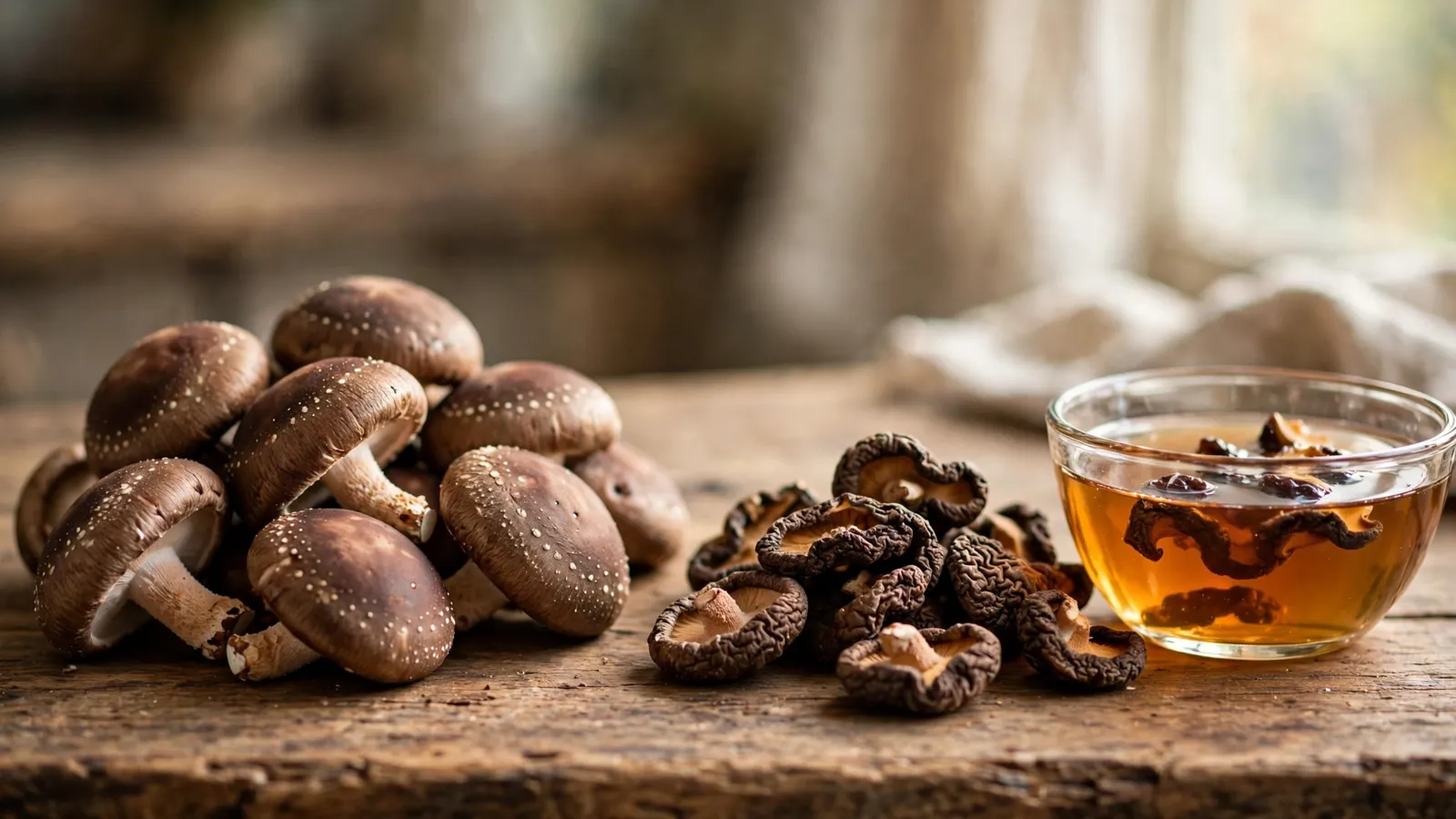
Walk into any Asian grocery and you will meet shiitake mushrooms in two very different forms. In the produce case, they sit plump and smooth, caps curved like little brown umbrellas. A few aisles over, the dried version hangs in clear bags, shriveled and leathery, smelling faintly smoky even through the plastic. Both cook up into deeply savory dishes, but they are not interchangeable. Knowing what each one does well will save you money, storage headaches, and a few disappointing soups.
At a Glance
Fresh shiitake are mild, buttery, and meaty, with a springy chew. They cook fast, need almost no prep, and suit quick stir-fries, grilling, and anywhere you want mushroom slices that hold their shape.
Dried shiitake taste far more concentrated. Drying builds the savory depth people associate with good dashi and long-simmered braises. They need a soak before cooking, but they keep for months in the pantry and produce a flavorful soaking liquid as a bonus.
Think of fresh shiitake as the everyday mushroom and dried shiitake as the flavor concentrate. Many home cooks end up keeping both.
Flavor: Gentle vs. Deep
A fresh shiitake tastes mild and slightly sweet, with a gentle earthiness that blends into a dish instead of taking it over. Sautéed with a little oil and salt, it reads as savory and buttery, closer to a meaty portobello than to anything funky. That restraint is a strength in delicate dishes. In Classic Miso Soup, fresh shiitake add body without muddying the broth.
Dried shiitake are another story. The drying process concentrates their savory compounds and adds a warm, almost smoky edge. Once soaked, they bring the kind of deep, rounded flavor that makes a plain broth taste like it simmered all afternoon. That is why dried shiitake anchor so many soup bases and vegetarian stocks across Chinese and Japanese cooking.
Neither is more authentic than the other. They simply sit at different volumes. Fresh whispers, dried speaks up.
Texture: Springy vs. Chewy
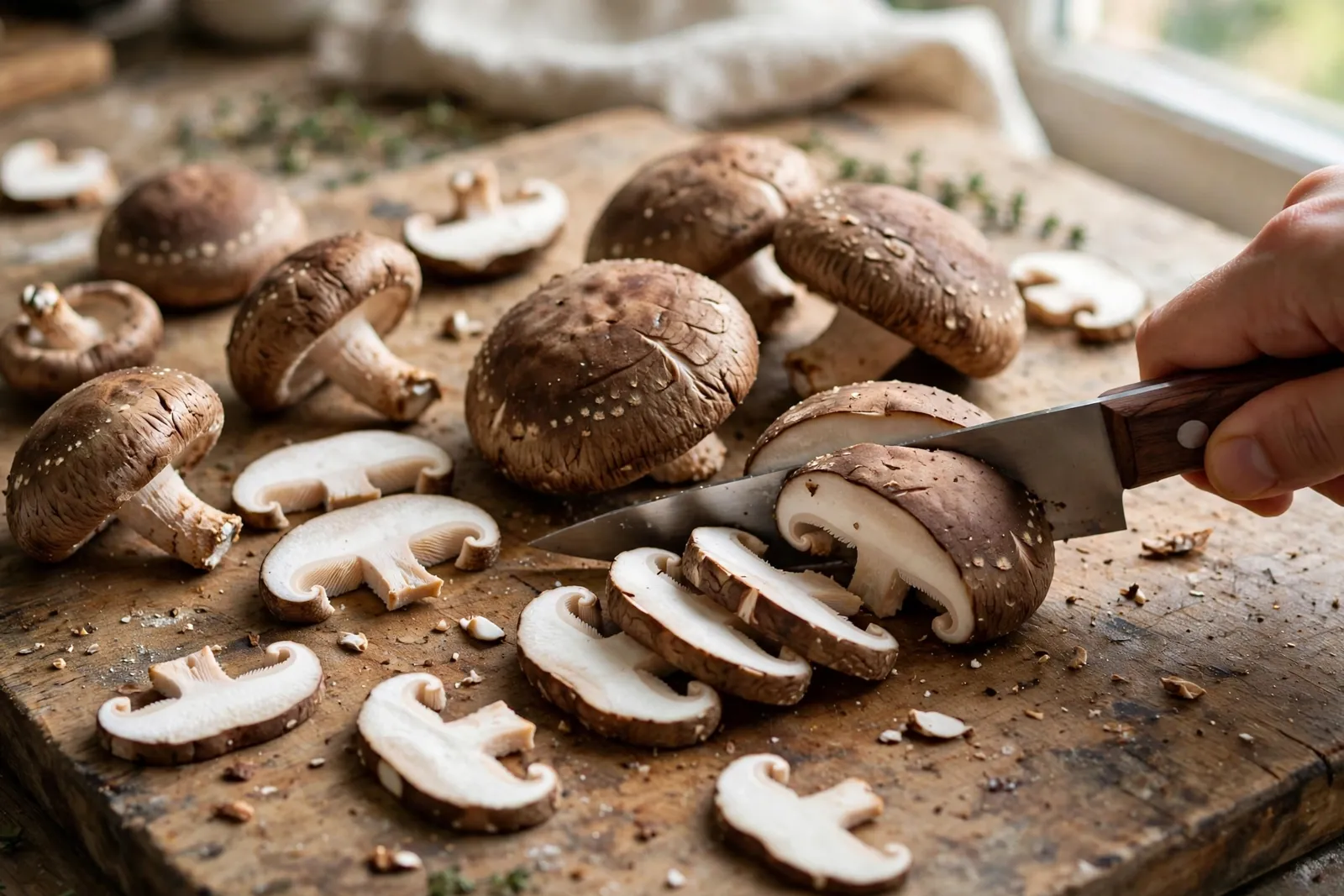
Fresh shiitake have thick, firm caps that slice cleanly and hold up in a hot pan. They brown nicely, keep a springy bite, and work beautifully in quick cooking: stir-fries, noodle dishes like Japchae, or a simple sauté over rice. The stems are tough, so trim them off and save them for stock.
Rehydrated dried shiitake turn silky and chewy, with a satisfying, almost meaty resistance. They shine in dishes with some simmering time, where that chew softens into tenderness: braised dishes, hot pots, mixed rice, and stuffed dumplings. Minced fine, soaked dried shiitake disappear into fillings while making everything taste richer.
One caution: dried shiitake rushed through a short soak stay rubbery in the center. Give them time, and they reward you. Our full guide to rehydrating and cooking with dried shiitake walks through soak times and temperatures in detail.
The Soaking Liquid Bonus
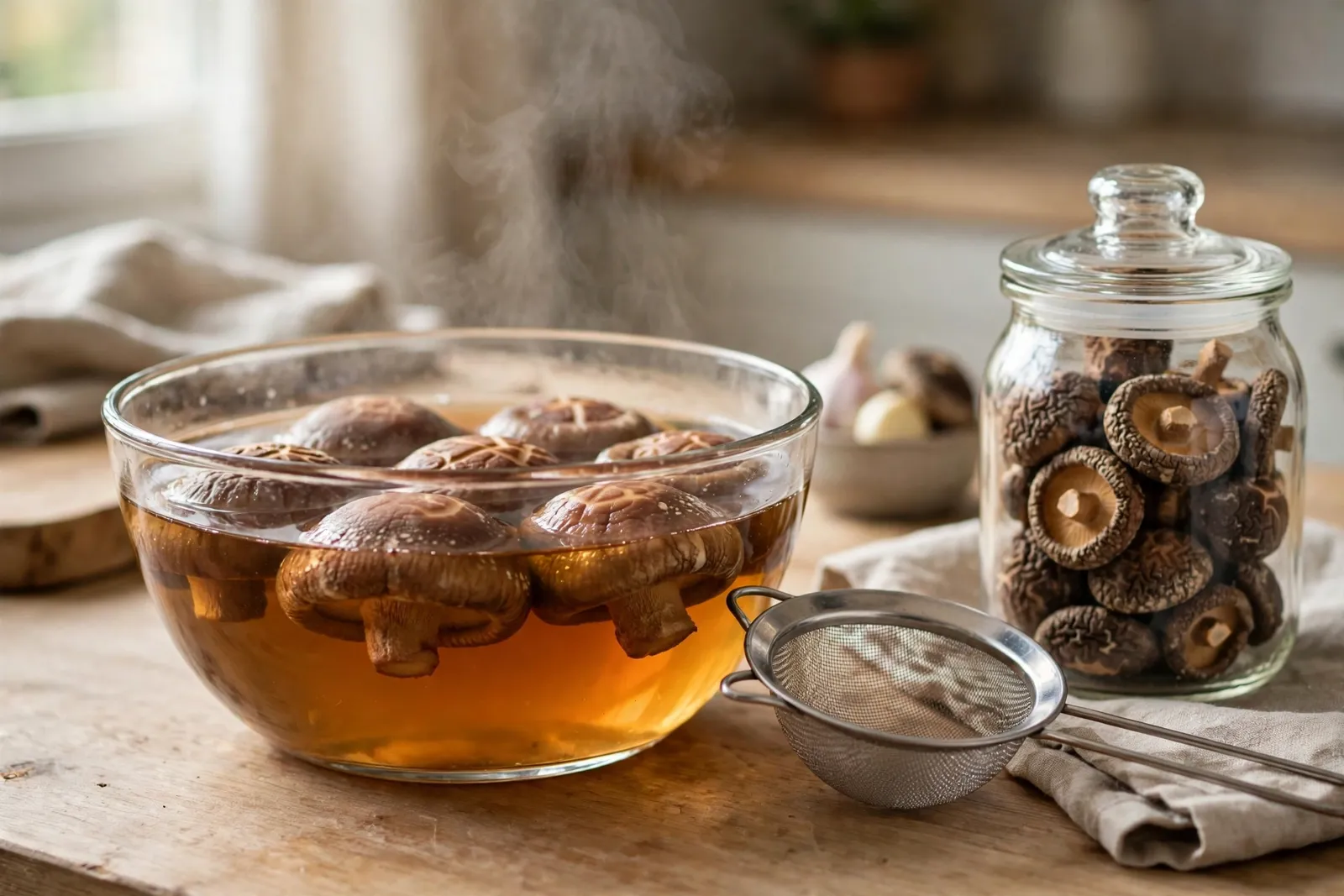
Dried shiitake come with a gift fresh ones cannot match: the soaking liquid. After an hour or more in warm water, that liquid turns amber and deeply savory. Strain it through a fine sieve or coffee filter to catch any grit, then use it wherever you would use stock. It is excellent in soups, noodle broths, braising liquids, and the pan sauce for stir-fried greens.
A few ground rules keep the liquid at its best. Soak in just enough water to cover, so the flavor stays concentrated. Squeeze the caps gently over the bowl before slicing. And if a batch smells sour or the liquid looks cloudy and slimy, toss it and start over; properly dried mushrooms keep well, but old ones past their prime do not improve with soaking.
Fresh shiitake offer a different convenience: zero planning. Rinse or wipe, trim, slice, cook. On a busy weeknight, that matters more than any flavor nuance.
Price, Storage, and Availability
Fresh shiitake cost more per pound and spoil within about a week in the fridge, even stored in a paper bag that lets them breathe. Buy them close to when you plan to cook, look for firm caps with no slimy spots, and pass on any that smell sour.
Dried shiitake cost more per bag but far less per use, since a small handful flavors a whole pot. Stored in an airtight jar away from heat and light, they keep for six months to a year with no loss of character. Thick-capped dried shiitake, the kind with pale cracked patterns on the cap, are the premium pick for texture, but standard dried caps are perfectly good for stocks and minced fillings.
Availability has evened out in recent years. Most large supermarkets stock fresh shiitake now, while dried ones still live mostly in Asian groceries and online shops. If you cook Asian dishes often, the dried bag is one of the cheapest pantry upgrades you can make.
Which One Should You Use?
Reach for fresh shiitake when:
- You are stir-frying, sautéing, grilling, or roasting.
- The dish is delicate and the mushroom should support, not lead.
- You need dinner tonight with no soaking time.
- You want thick slices that hold their shape on the plate.
Reach for dried shiitake when:
- You are making soup, stock, braises, or simmered dishes.
- You want the deepest savory flavor you can get.
- You are cooking vegetarian and need richness without meat.
- You want that soaking liquid to stretch into a second use.
Plenty of dishes welcome both. A noodle soup might simmer dried shiitake in the broth, then finish with fresh slices on top for texture. Once you taste the two side by side, those combinations start to suggest themselves.
The Short Answer
Fresh and dried shiitake are the same mushroom at two different intensities. Fresh brings mild flavor, springy texture, and weeknight convenience. Dried brings concentration, chew, a year of pantry life, and a pot of savory soaking liquid on the side. Stock the dried ones always, buy the fresh ones when a recipe calls for them, and you will rarely be caught short either way.