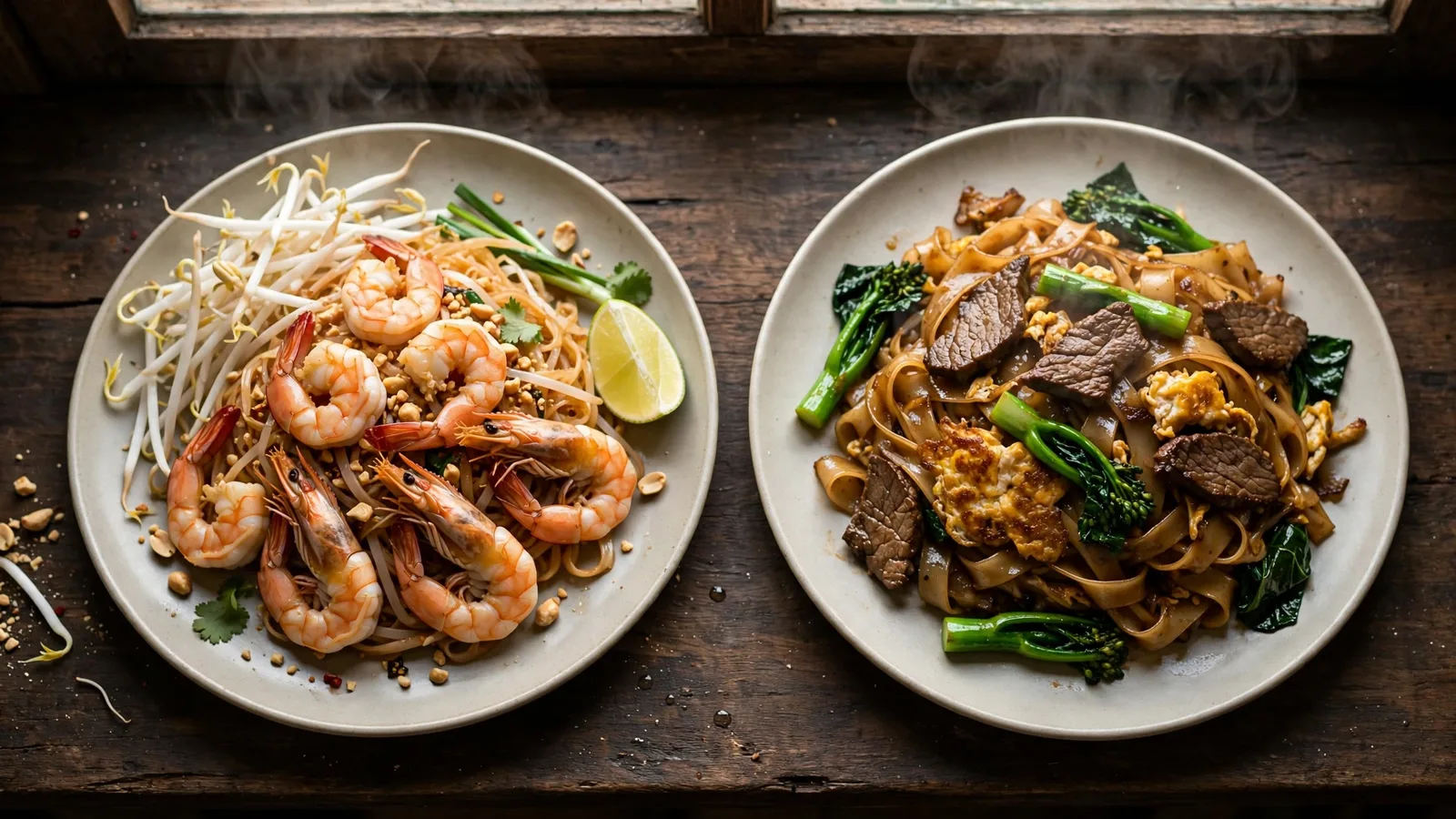
If you have ever flipped between Pad Thai and Pad See Ew on a Thai menu, you have picked between two very different kinds of comfort. Both are beloved noodle stir-fries with egg, scallions, and a hot wok in common. One leans bright and tangy with a little crunch. The other leans deep, smoky, and savory. Knowing which is which makes ordering and cooking a lot easier.
At a Glance
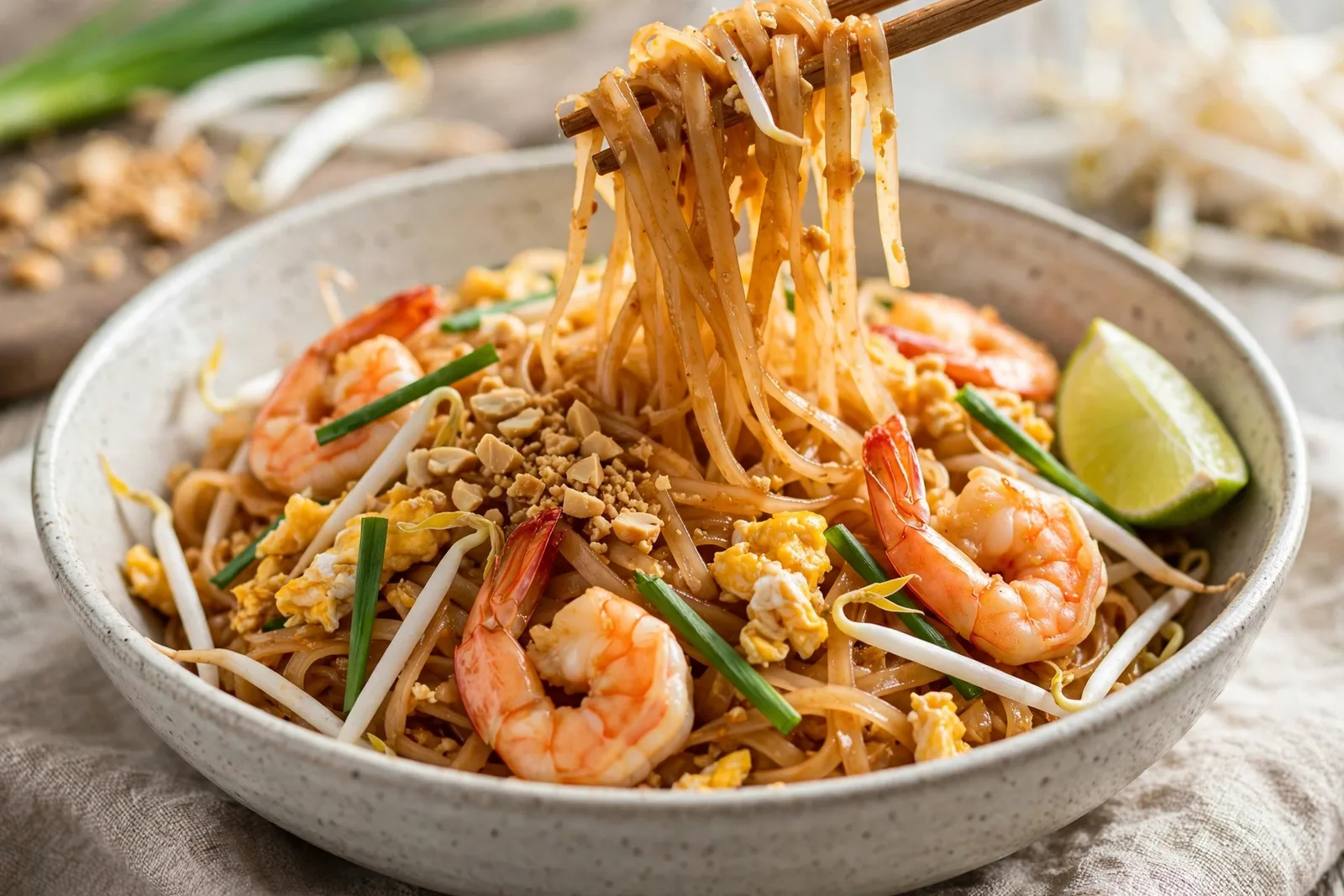
Pad Thai uses thin flat rice noodles tossed in a sweet-tangy tamarind sauce. It usually comes with shrimp, chicken, or tofu, plus bean sprouts, garlic chives, crushed peanuts, and a lime wedge on the side.
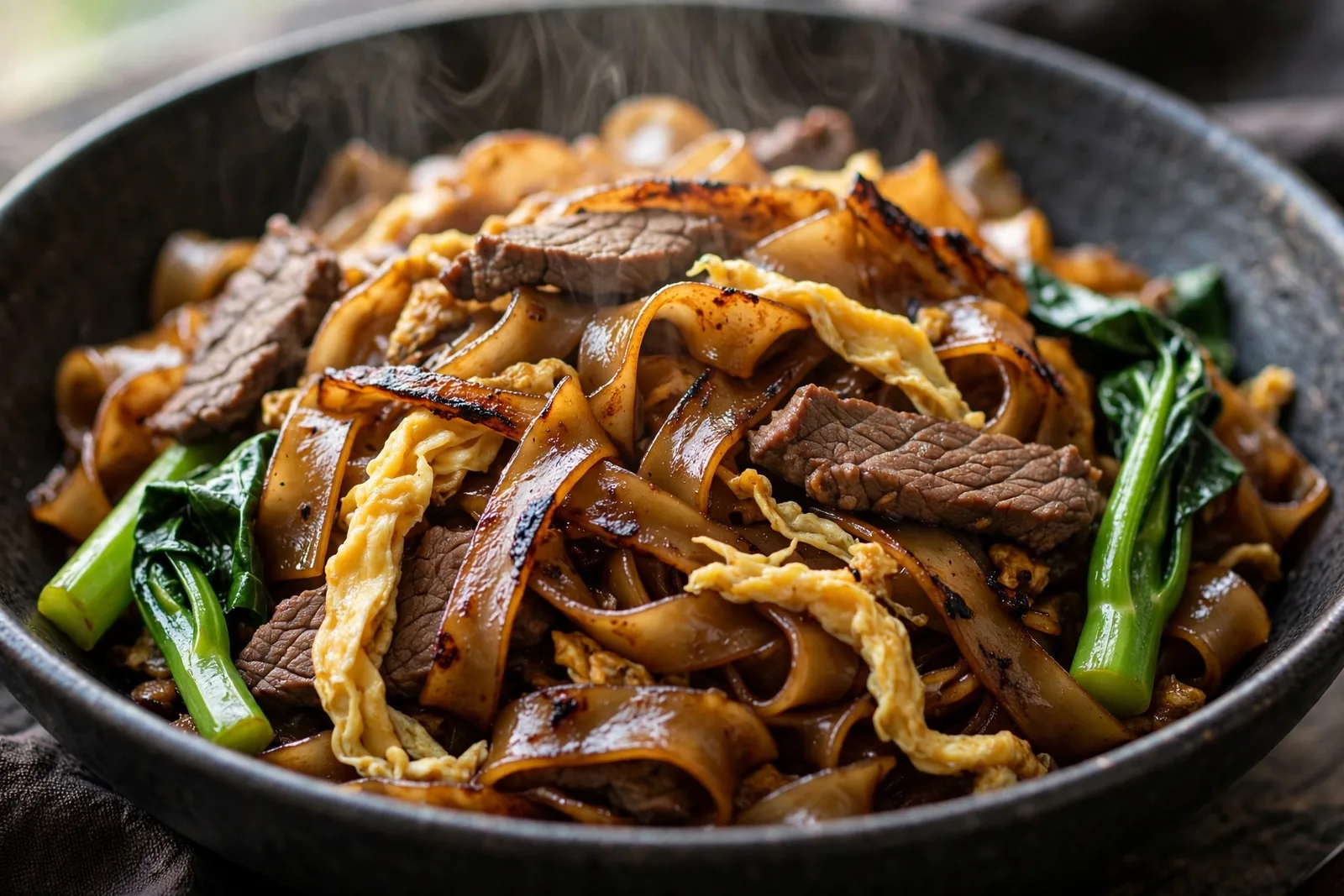
Pad See Ew uses wide, flat rice noodles stir-fried in dark soy sauce until the edges caramelize. It is typically made with beef, chicken, or pork, plus Chinese broccoli and egg, and it has a smoky, savory depth.
Think of it this way: Pad Thai wakes up your palate. Pad See Ew settles into it.
Noodles: Thin and Tender vs Wide and Chewy
The noodle alone tells you a lot.
Pad Thai calls for narrow rice sticks, about the width of linguine. They soak until pliable, then finish cooking in the sauce. Done well, they stay tender with a gentle chew and absorb the tamarind dressing without falling apart.
Pad See Ew needs wide flat rice noodles, sometimes labeled sen yai or ho fun. They are soft and slippery when fresh, with more surface area to catch soy sauce and wok heat. That width gives you chewy sheets that fold over egg and greens. Dried wide noodles work too, but soak them carefully so they do not tear.
If you want to try the classic shrimp version first, our Pad Thai with Shrimp walks through the soaking and tossing order. For the wide-noodle side, Pad See Ew: Thai Soy Sauce Noodles shows how to keep the noodles from clumping.
Sauce and Flavor: Tamarind Brightness vs Soy Depth
This is where the two dishes part ways most clearly.
Pad Thai sauce is built on tamarind, fish sauce, and palm sugar. The result is sweet, sour, and salty at once, with tamarind giving a fruity tang you do not get from lime alone. Some cooks add a touch of chili, but heat sits in the background. The sauce coats the thin noodles lightly, so every bite tastes balanced rather than heavy.
Pad See Ew sauce is built on soy. A mix of light soy for salt and dark soy for color and molasses-like sweetness goes into a screaming hot wok. The sugar in the sauce caramelizes, the noodles pick up charred edges, and you get that smoky wok flavor people chase at home. There is sweetness here too, but it reads deeper and less tangy. No tamarind, no peanuts, no lime wedge as standard.
Taste them side by side and the difference is instant. Pad Thai is lively and layered. Pad See Ew is mellow, savory, and a little smoky.
Protein, Veg, and Toppings
Both dishes welcome the protein you have on hand, but their usual partners differ.
Pad Thai leans toward shrimp as the headline, with chicken and tofu close behind. Pressed tofu cubes, scrambled egg ribbons, and a shower of bean sprouts are classic. Garlic chives or scallions add a mild onion bite, and the finish is all about texture: crushed peanuts, extra sprouts for crunch, and lime to squeeze over just before eating.
Pad See Ew leans toward sliced beef or chicken, though pork and tofu show up often. Its signature vegetable is Chinese broccoli, also called gai lan, with sturdy stems and leafy tops that stand up to the heat. Egg is scrambled right in the wok so it clings to the noodles. Toppings stay simple, sometimes just a pinch of white pepper or chili flakes at the table.
Those toppings change the eating experience. Pad Thai has crunch and freshness in every forkful. Pad See Ew has chew, char, and greens that feel hearty enough for a main course on a busy night.
Heat, Sweetness, and Who Will Love Each
Pad Thai is rarely fiery unless you ask for it. The chili warms the sweet-sour balance rather than dominating, which makes it friendly for mixed tables. You can add chili flakes or lime at the end to suit your taste.
Pad See Ew is also mild by default, but for a different reason. The focus is soy and smoke, not chili heat. A little sugar rounds out the salt, and the char adds complexity without spice. If you like noodles that taste savory first and sweet second, this is your bowl.
For kids or spice-shy eaters, both work. Pad Thai may win for peanut lovers. Pad See Ew may win for soy sauce fans who prefer no sour notes.
Cooking at Home: What Is Easier?
Both are weeknight-friendly once your ingredients are ready, but they ask for slightly different timing.
Pad Thai rewards prep. Soak the noodles until just flexible, mix the tamarind sauce ahead, and have peanuts, sprouts, and lime ready to go. The stir-fry itself is quick, and the biggest pitfall is over-soaking the noodles so they turn mushy. Add sauce a little at a time and toss until the noodles absorb it and stay springy.
Pad See Ew rewards heat. Get the wok very hot, work in batches if needed, and let the noodles sit for a few seconds so they caramelize before you toss. Crowding the pan steams the noodles instead of charring them. Separate the wide sheets gently before they hit the oil, and keep the greens moving so the stems soften while the leaves wilt.
If your wok is small, Pad Thai can feel more forgiving because the thin noodles move easily. If you love that smoky edge and have a strong burner, Pad See Ew is deeply satisfying to make.
Nutrition and Dietary Notes
Pad Thai with tofu and extra sprouts makes a filling vegetarian option if you swap in soy sauce or vegetarian fish sauce for the regular fish sauce. Leave the peanuts off for nut allergies and the sprouts still give you crunch.
Pad See Ew is easy to lighten with chicken or tofu and plenty of Chinese broccoli. If you cannot find gai lan, broccolini or thin-sliced broccoli works well. Use tamari if you need it gluten-free.
Neither dish needs to be heavy. Keep portions modest on the protein and load up the vegetables.
When to Choose Each Dish
Choose Pad Thai when:
- You want sweet, tangy, and savory in one bite with a little crunch.
- Shrimp, tofu, and peanuts sound like the main event.
- You are cooking for a table that likes bright flavors and mild heat.
- You want a noodle dish that feels festive and fresh.
Choose Pad See Ew when:
- You crave smoky, soy-rich noodles with caramelized edges.
- Beef or chicken with hearty greens sounds right for dinner.
- You prefer savory depth over sour tang.
- You want a comforting wok dish that reheats well the next day with a quick toss in a hot pan.
The Bottom Line
Pad Thai is thin rice noodles in a tamarind sauce that is sweet, sour, and salty, finished with peanuts, sprouts, and lime. Pad See Ew is wide rice noodles in dark soy, smoky from the wok, with Chinese broccoli and egg for a deeper, more savory bowl. One is bright and crunchy. The other is chewy and mellow. Once you know which mood you are in, the choice takes care of itself.