
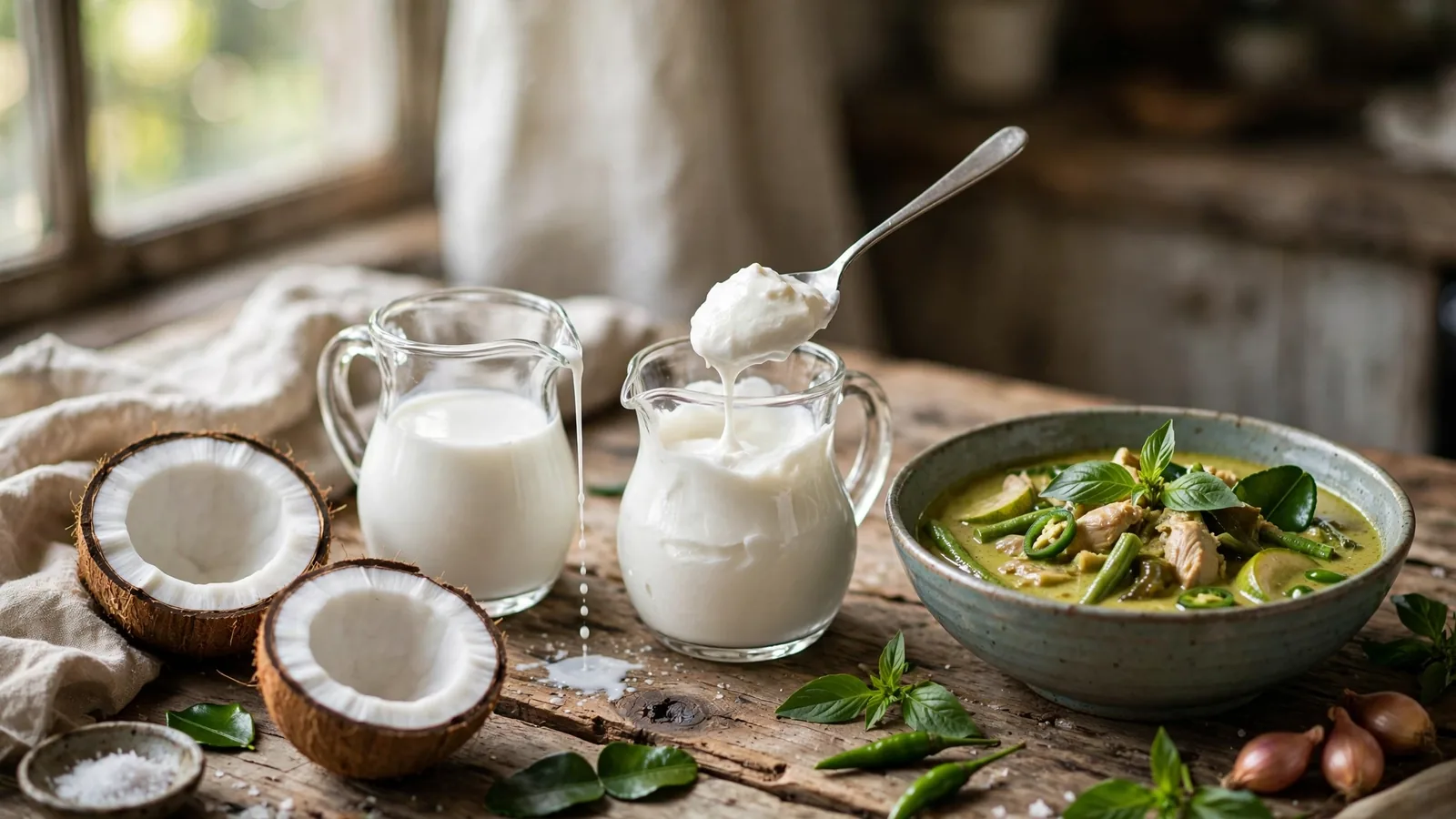
They come from the same coconut, sit side by side on the shelf, and often wear nearly identical labels. Still, coconut milk and coconut cream are not interchangeable in every pot. One pours like heavy cream’s lighter cousin. The other spoons up thick enough to hold soft peaks. Picking the right one decides whether your curry feels silky or heavy, and whether a dessert topping stays glossy or turns runny.
At a Glance
Coconut milk is the thinner, more pourable option. It is made by pressing grated coconut flesh with water, then straining the mixture. A standard full-fat can usually lands in the range of everyday cooking cream: rich enough to soften curry paste and chili heat, but fluid enough to become the broth itself.
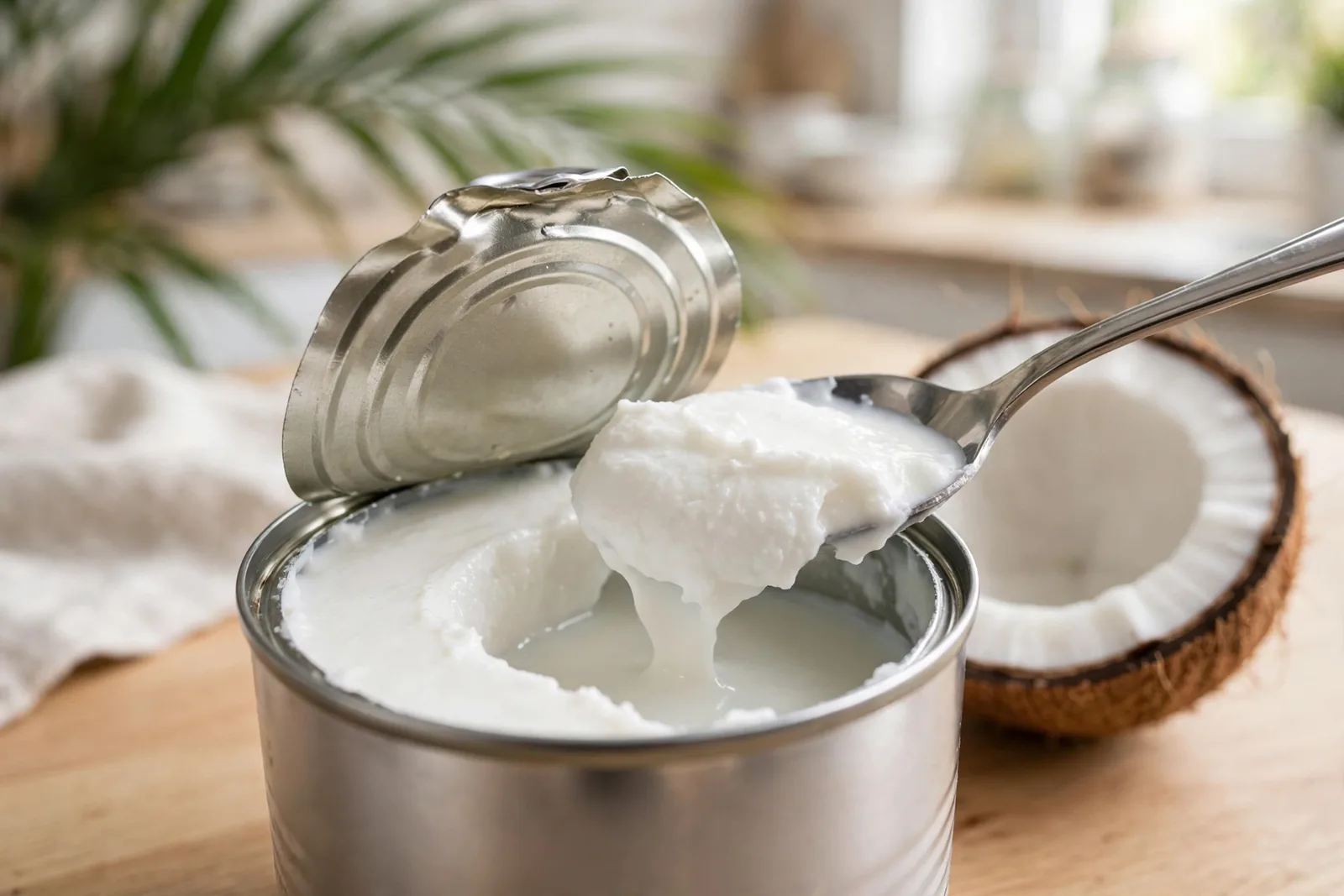
Coconut cream is made the same way, with less water in the mix, so it carries a higher share of coconut fat. It is dense, spoonable, and intensely coconutty. Think of it as the concentrated version, best used in smaller amounts where richness is the point.
The quick rule: coconut milk builds the sauce. Coconut cream finishes, thickens, and enriches.
The Real Difference Is Fat
Both products start with coconut flesh and water. The difference is the ratio. More coconut and less water give cream a thicker body and a fuller flavor. More water gives milk a lighter texture that can simmer into soups and curries without coating your mouth.
Labels vary by brand, so it pays to flip the can over. Full-fat coconut milk often contains roughly 14 to 17 percent fat, while coconut cream often sits around 19 to 22 percent. Light coconut milk drops far lower, which is why it can taste thin in a curry that expects body. Those numbers are a guide, not a promise; the ingredient list and nutrition panel tell the real story for the can in your hand.
Fat also explains how each one behaves with heat. Coconut milk can simmer gently and blend into a sauce. Coconut cream, with more fat and less water, enriches quickly but can feel heavy if you use a whole can where a few spoonfuls would do.
Texture and Flavor
Coconut milk tastes clean and mildly sweet, with enough fat to round out salty, sour, and spicy flavors. It pours in a steady stream and leaves a light film on a spoon. In a bowl of soup, it softens the edges while the broth still tastes fresh.
Coconut cream tastes deeper and more concentrated. It coats the tongue, carries spice paste beautifully, and gives desserts a lush finish. Because it is so rich, it can mute bright flavors if you add too much. A curry made with only coconut cream may taste flat and heavy, even if the seasoning is right.
That balance is why many Thai curries use both ideas at once: a generous amount of coconut milk for the sauce, plus the thick cream scooped from the top of the can to fry the paste at the start. Our Thai Green Curry with Chicken follows that logic, using coconut fat to bloom the paste before the rest of the sauce comes together.
When to Use Coconut Milk
Reach for coconut milk when coconut is meant to be part of the liquid, not just a rich accent.
- Curries: It gives green, red, and Massaman curries enough body to coat rice without turning the sauce pasty.
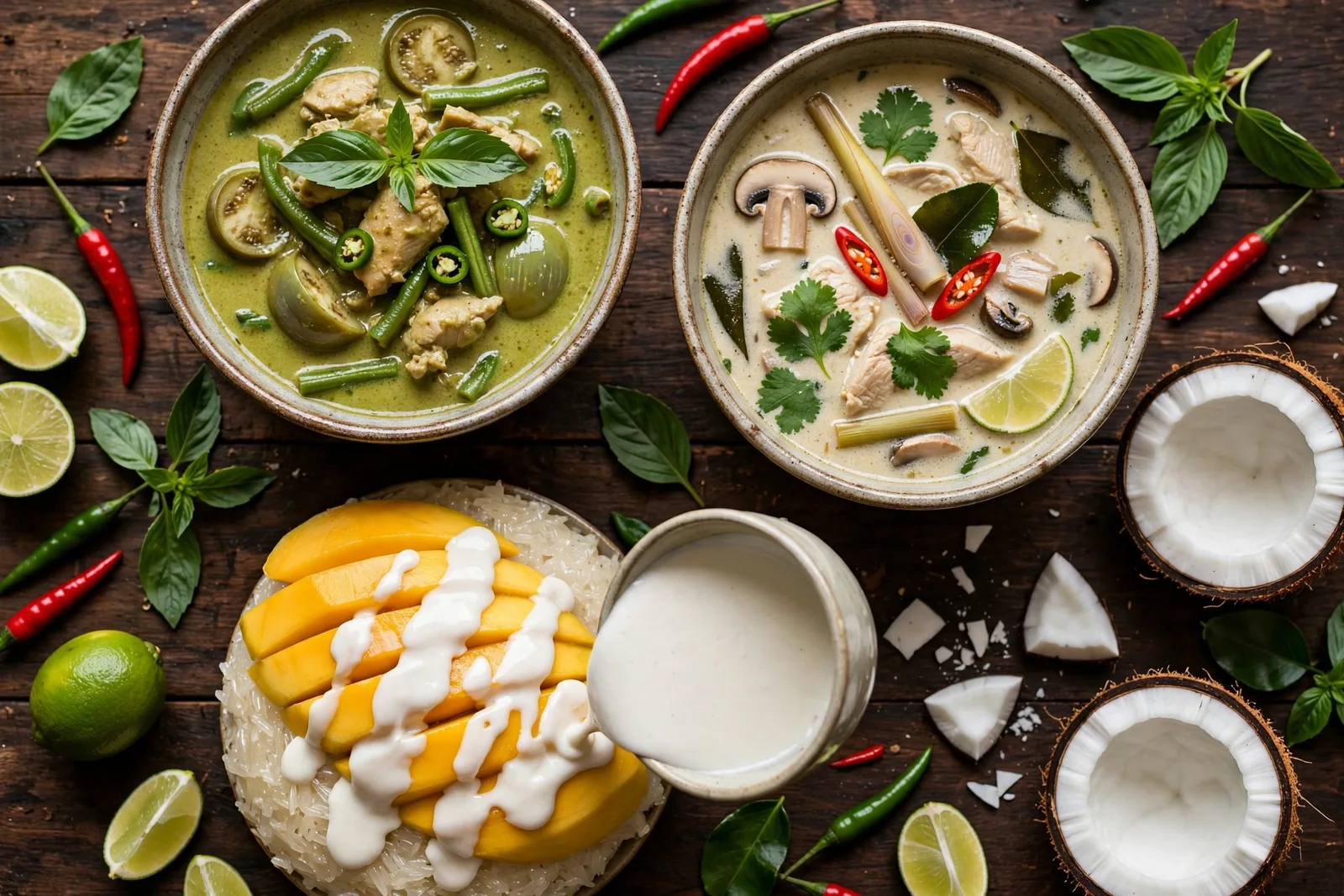
- Soups: It is the right choice for creamy soups that should still spoon like soup. The contrast is easy to see beside clear Tom Yum in Tom Yum vs Tom Kha.
- Noodle soups: It thins curry paste into a slurpable broth, as in laksa-style bowls.
- Drinks and smoothies: It blends smoothly and keeps the coconut flavor gentle.
- Everyday sauces: It loosens peanut sauce and pan sauces without making them greasy.
Coconut milk is also the safer default when a recipe simply says “coconut milk.” Unless the recipe names cream, changing to cream will usually make the dish richer and thicker than intended.
When to Use Coconut Cream
Coconut cream shines when a spoonful or two should change the whole texture.
- Dessert toppings: It spoons over sticky rice, grilled fruit, and warm cakes in thick ribbons.
- Whipped toppings: Chilled coconut cream can whip into soft peaks for cakes and puddings. Use the solid part from a cold can and keep the bowl cold.
- Rich curries: A small amount at the end adds gloss and body to a curry that tastes thin.
- Ice cream and custards: Its fat gives frozen desserts a smoother bite and puddings a fuller set.
- Concentrated sauces: It works where you want coconut flavor without adding much liquid.
For Mango Sticky Rice, a cream-based drizzle feels luxurious over warm rice, while coconut milk makes a lighter sauce that soaks in more. Neither is wrong; they simply eat differently.
Can You Substitute One for the Other?
Yes, with a small adjustment.
To replace coconut milk with coconut cream, mix about 3/4 cup coconut cream with 1/4 cup water for each cup of coconut milk. That gets the texture close, though the flavor may still taste richer. For soups, start with a little less and add water as needed.
To replace coconut cream with coconut milk, chill a can of full-fat coconut milk and scoop off the thick top layer. That solid cap is the closest stand-in for desserts and whipped toppings. The thinner milk left below works well in smoothies and light sauces.
Avoid light coconut milk as a cream substitute. It has too much water and too little fat, so whipped toppings slump and sauces stay thin.
A carton beverage labeled “coconut milk drink” is a different product altogether. It is made for cereal and coffee, contains far more water, and will not give a curry the body it needs. For cooking, buy canned coconut milk or coconut cream from the Asian foods aisle.
What to Buy and How to Store It
For most home cooking, full-fat canned coconut milk is the pantry staple. It is flexible enough for curries, soups, sauces, and desserts. Add one can of coconut cream if you make desserts often or like finishing curries with a rich swirl.
Check the ingredient list. Many cooks prefer cans with coconut and water, plus a stabilizer if needed, rather than sweetened products. “Cream of coconut” is not the same thing as coconut cream; it is sweetened and belongs in drinks and desserts that call for it by name.
Shake coconut milk before opening if you plan to use it as one uniform liquid. For cream, or when you want the thick top layer, chill the can and do not shake it.
Once opened, move leftovers to a sealed container and refrigerate for up to 4 days. Coconut milk and cream also freeze well in ice cube trays. Drop a few cubes into a curry or smoothie later; the texture may separate slightly after thawing, but a good whisk or simmer brings it back together for cooked dishes.
The Bottom Line
Coconut milk is the everyday workhorse: pourable, balanced, and right for curries, soups, and sauces. Coconut cream is the rich finisher: thick, concentrated, and best for desserts, whipped toppings, and small additions that need impact. Stock coconut milk first, keep coconut cream for richness on demand, and you will have the right can for almost every pan-Asian dish on your list.
1 thought on “Coconut Milk vs Coconut Cream: How to Choose”