
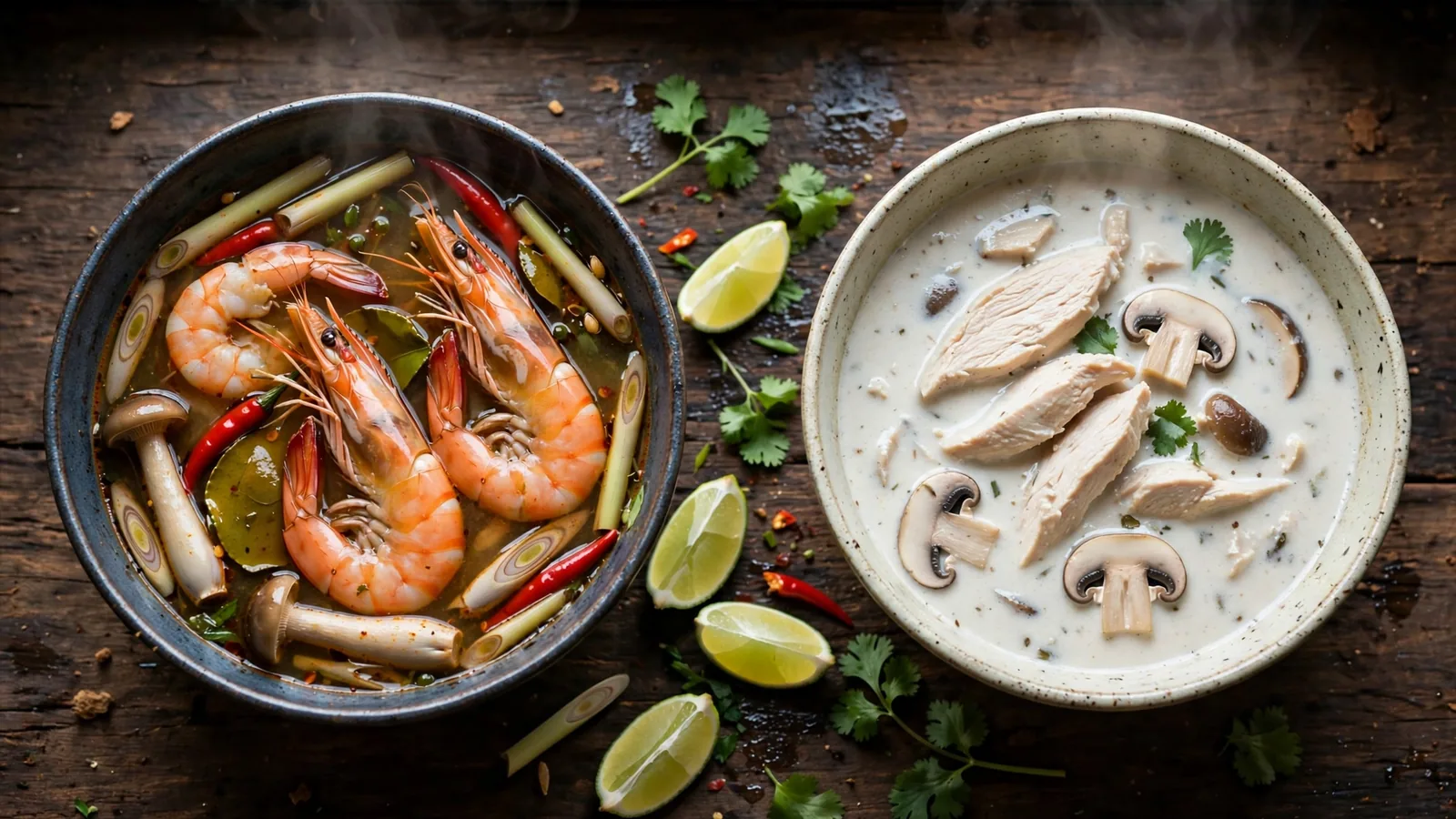
If you have ever stared at a Thai menu and hesitated between Tom Yum and Tom Kha, you are not alone. The names look alike, both bowls arrive steaming and fragrant, and both lean on lemongrass, galangal, and lime. Yet the first spoonful makes the difference clear. One is bright, sharp, and light. The other is round, creamy, and soothing. The better choice depends on what you crave and who is at your table.
At a Glance
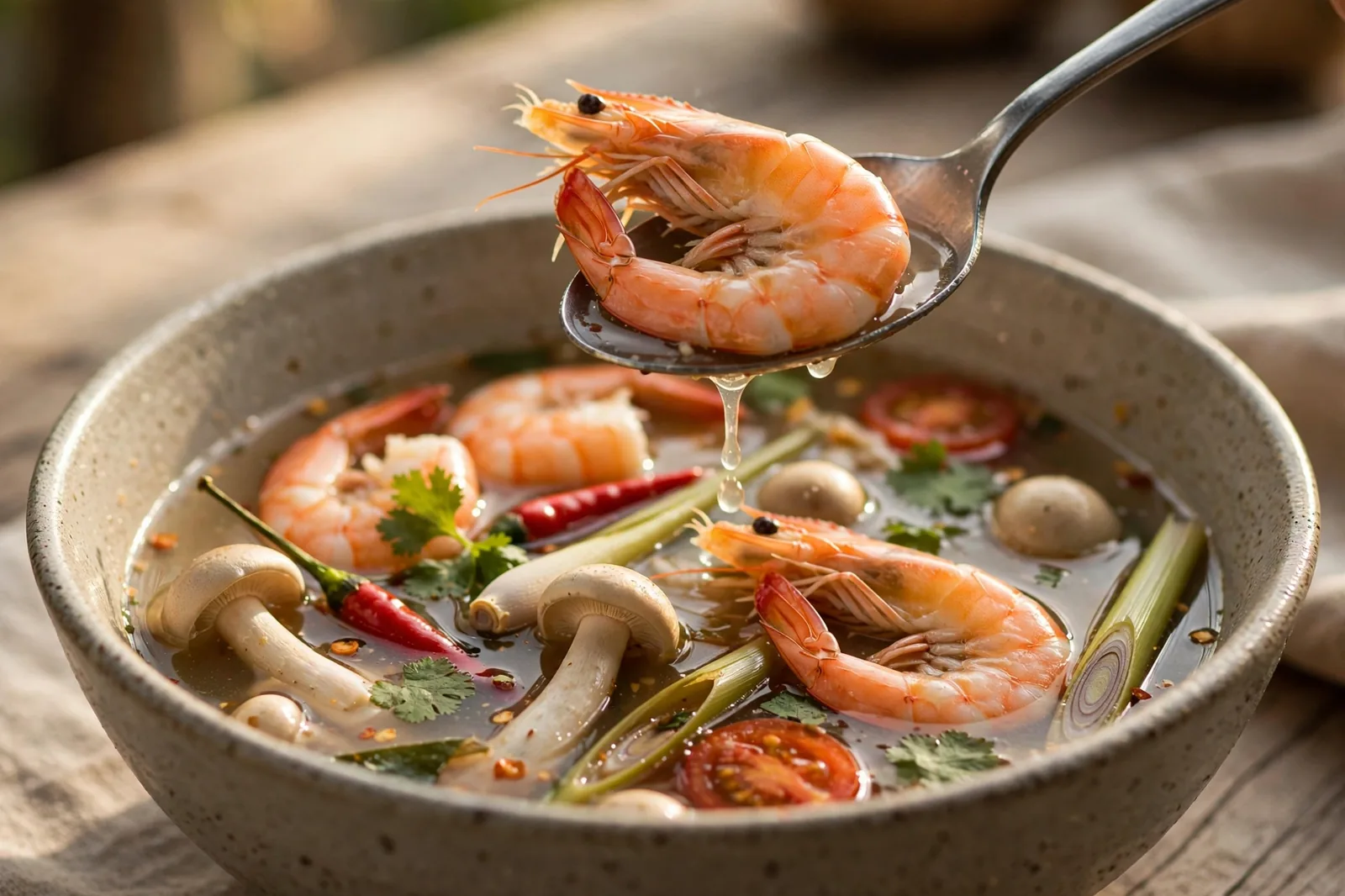
Tom Yum is a clear, sour-spicy soup. The broth is water or stock based, with no coconut milk, so every aromatic hits directly. It is usually made with shrimp (Tom Yum Goong) but also appears with chicken, mushrooms, or mixed seafood.
Tom Kha is a coconut milk soup. Kha means galangal, and the coconut softens the same sour and salty notes into something mellow and rich. The most common version is Tom Kha Gai, made with chicken, though mushroom and tofu versions are also popular.
Think of it this way: Tom Yum wakes you up. Tom Kha settles you down.
Tom Yum: Bright, Clear, and Assertive
Tom Yum starts with a light broth flavored with lemongrass, galangal, makrut lime leaves, fresh lime juice, fish sauce, and Thai chilies. Straw mushrooms and tomatoes often join the pot, and the bowl is finished with cilantro.
Because there is no coconut milk, the sourness feels crisp and the chili heat feels direct. You taste salt, sour, and heat in quick succession, with the herbs right on top. The broth stays thin and refreshing, even served piping hot.
If you love the punchy profile in Tom Yum Fried Rice, you will recognize the same logic here, just in spoonable form. Reach for Tom Yum when you want something lively before a rich main course, or a bowl that clears your head on a cold day.
Tom Yum is naturally lighter and reheats with very little change in flavor. Add the lime juice at the end, off a rolling boil, so it stays fresh instead of turning flat.
Tom Kha: Creamy, Round, and Soothing
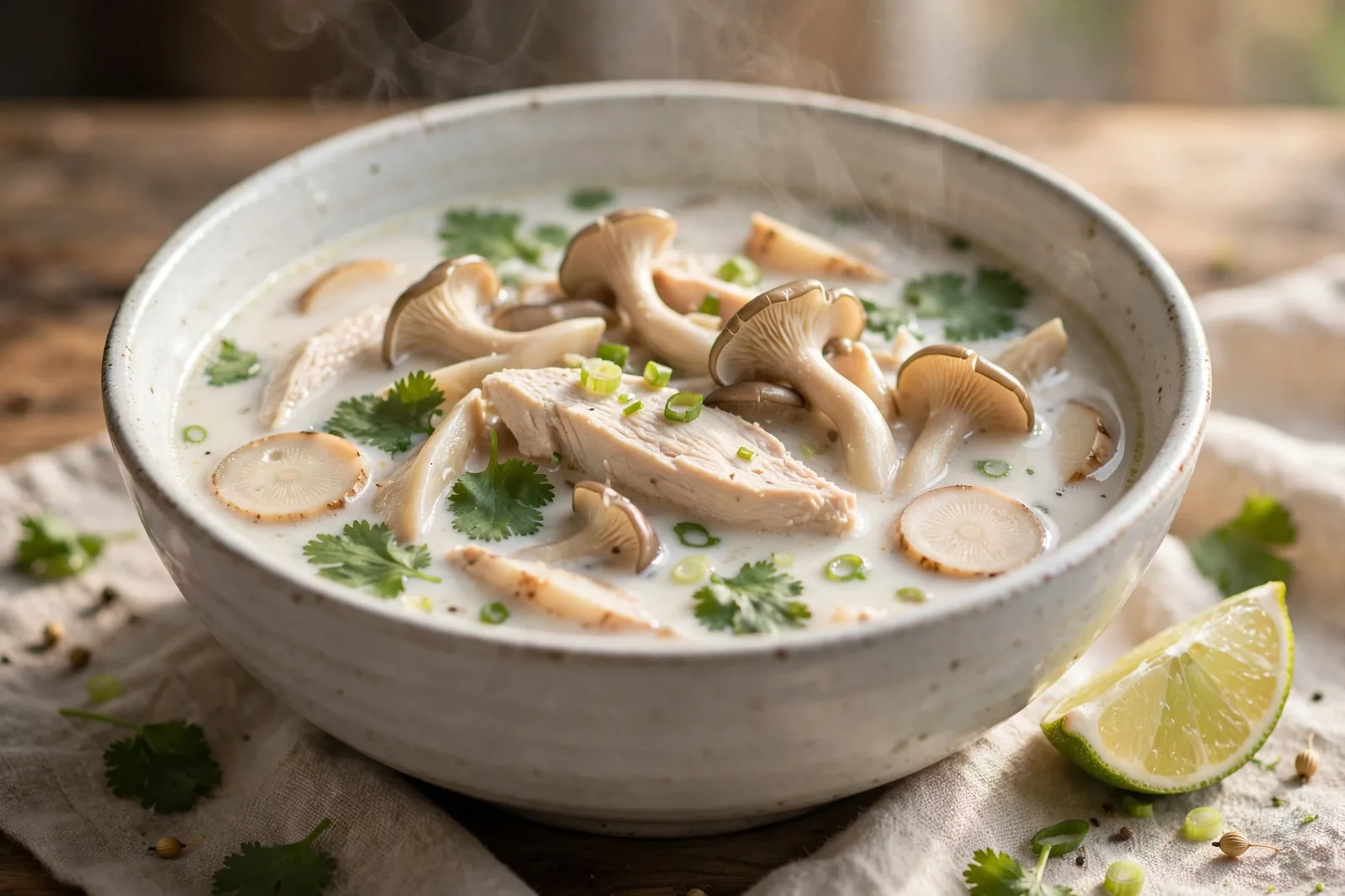
Tom Kha uses many of the same aromatics, but coconut milk changes the whole experience. The broth is opaque and velvety. Lime and fish sauce are still there, yet the coconut rounds off their edges. Galangal comes forward more clearly because the fat carries its piney, peppery flavor.
A typical bowl includes sliced chicken, straw or oyster mushrooms, and cilantro and scallions on top. Some versions add a little sugar to balance the lime. The result is sour, salty, and gently sweet at once, with heat tucked underneath rather than up front.
If you enjoy the creamy depth in Laksa, Tom Kha will feel familiar. It eats almost like a light curry in soup form, and a small bowl with jasmine rice can stand in for lunch.
Because of the coconut milk, Tom Kha feels more filling than Tom Yum. It also softens spice, which makes it a kind first Thai soup for anyone who likes flavor without a lot of burn.
Ingredients Side by Side
Both soups share a strong foundation: lemongrass, galangal, makrut lime leaves, lime juice, fish sauce, and chilies. If you stock those, you are most of the way to either soup.
Here is where they part:
- Broth base. Tom Yum uses water or clear stock. Tom Kha uses coconut milk, sometimes cut with a little stock so it does not feel heavy.
- Signature protein. Tom Yum is most associated with shrimp, while Tom Kha is most associated with chicken. Both welcome mushrooms, tofu, or mixed vegetables.
- Fat and body. Tom Yum is lean and brothy. Tom Kha is rich and coats the spoon.
- Finishing balance. Tom Yum leans sour and hot. Tom Kha leans sour, salty, and lightly sweet, with coconut holding it together.
Galangal deserves a quick note. It looks like ginger but tastes sharper and more citrusy. Fresh or frozen galangal is best for either soup. In a pinch, ginger plus a strip of lime zest gets you closer than ginger alone.
Flavor, Heat, and Texture
Tom Yum is all edges in a good way: tart lime, briny fish sauce, and chili heat that lands fast. The herbs stay distinct, and you can pick out lemongrass and lime leaf in every bite. Mushrooms add a soft chew, shrimp stays snappy, and the broth feels clean.
Tom Kha is all curves. Coconut milk slows everything down. You still get sour and salt, but they arrive wrapped in fat, so the soup tastes fuller and more mellow. The heat reads as warmth rather than sting. Chicken stays tender, and mushrooms soaked in coconut taste almost buttery.
Texture follows the same split. Tom Yum is light and leaves your palate refreshed. Tom Kha lingers a little longer. Neither is better. They suit different meals and moods.
Protein and Dietary Tweaks
Both soups flex easily once you know the base.
For a vegetarian bowl, use vegetable stock, swap fish sauce for soy sauce or vegetarian fish sauce, and load up on mushrooms, tofu, cherry tomatoes, and baby corn. Tom Yum keeps its punch. Tom Kha stays satisfying because coconut milk gives it body without meat.
For seafood, shrimp is the classic Tom Yum choice. White fish and squid also work, added near the end so they stay tender. Tom Kha with shrimp is lovely too, though chicken is the version you will see most often.
For a milder bowl, use fewer chilies and add them whole and bruised, so you get aroma with less burn. A small dish of chili oil at the table lets each person set their own level.
One caution for Tom Kha: coconut milk can split if it boils hard. Keep it at a gentle simmer and add lime juice at the end, off the heat, to help the broth stay smooth.
When to Make Each Soup
Choose Tom Yum when:
- You want a light starter before grilled meats, curries, or stir-fries.
- You are serving rich dishes and need a bright counterpoint.
- You prefer a coconut-free bowl with bold sour heat.
- You need a soup that reheats cleanly the next day.
Choose Tom Kha when:
- You want a comforting soup that can be the main event with rice.
- You are cooking for someone who likes Thai flavors but not intense heat.
- Cold or rainy weather calls for something creamy and warming.
- You have coconut milk to use and want a soup that makes it shine.
Both come together quickly once the aromatics are prepped, and both reward tasting as you go. Add lime gradually. The right balance is the one that tastes lively in your bowl.
Can You Turn One into the Other?
Sort of. Stir coconut milk into Tom Yum and you will land near Tom Kha, though a soup built for coconut from the start tastes more balanced. To push Tom Kha brighter, add extra lime, a splash of stock to thin it, and more fresh chilies. You will not erase the coconut, but you can sharpen the profile.
It is more fun to treat them as siblings. Make Tom Yum for clarity and lift. Make Tom Kha for comfort and roundness. After you have had each once, the menu choice gets easy.
The Bottom Line
Tom Yum is clear, sour, and spicy, with lemongrass and lime leading and no coconut to soften the hit. Tom Kha takes the same aromatic family and wraps it in coconut milk for a creamy, gentle bowl. Pick Tom Yum for brightness. Pick Tom Kha for richness. Either way, you get one of Thailand’s great soups, and there is no wrong answer at the table.