
Food safety first: this is a refrigerator pickle recipe. It is NOT a canning recipe and must never be treated as shelf-stable. Keep refrigerated at all times.
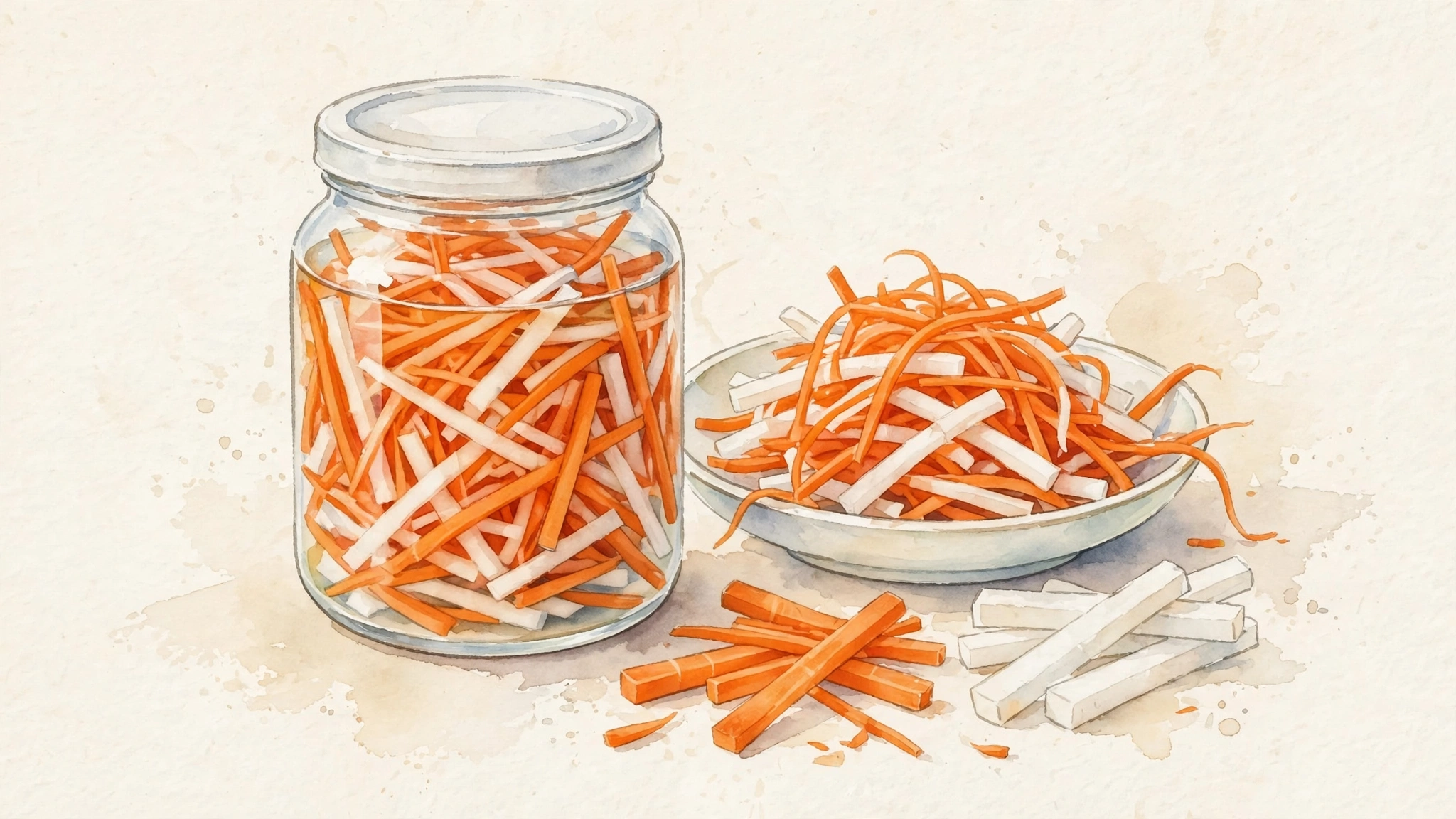
Do chua is the sweet-sour crunch that goes on banh mi, alongside grilled meats, and inside spring rolls. Carrots and daikon are cut into matchsticks, salted briefly, then covered in a sweet vinegar brine. It takes about 15 minutes of work plus a few hours in the fridge — and the fridge part is non-negotiable.
Ingredients
Makes about 1 quart jar.
- 2 medium carrots (about 8 oz / 225 g), peeled
- 1 small daikon radish (about 8 oz / 225 g), peeled
- 1 tsp kosher salt (for the initial salting step)
- 1 cup distilled white vinegar (5% acidity — standard grocery vinegar)
- 1 cup water
- 1/2 cup sugar
Method
- Cut the carrots and daikon into matchsticks about 1/4 inch thick and 2 inches long. Even cuts matter: uneven pieces pickle unevenly.
- Toss the matchsticks with the kosher salt in a bowl and let stand 15 minutes. The vegetables will release water and soften slightly.
- Rinse the salted vegetables under cold water and squeeze gently to remove excess liquid. Do not skip the rinse — unrinsed vegetables make an over-salted brine.
- In a clean jar or bowl, stir the vinegar, water, and sugar until the sugar dissolves. (Some cooks heat the brine to dissolve the sugar faster; either works as long as it cools before the vegetables go in.)
- Pack the vegetables into a clean glass jar and pour the cooled brine over to cover completely.
- Refrigerate immediately. The pickles are ready after about 4 hours and are at their best within the first week.
Tips and ingredient notes
- Daikon: the long white radish in Asian markets; it has a mild peppery bite that mellows in the brine. If daikon is unavailable, all-carrot is acceptable but should be noted as a variation, not the default.
- Vinegar: plain distilled white vinegar (5% acidity) is the standard. Rice vinegar is milder and also used.
- Brine proportions: do not casually alter the vinegar, water, and vegetable amounts. The NCHFP advises following tested proportions and not changing vinegar/water/food ratios in pickling recipes.
- Sugar: the sweetness balances the vinegar bite.
- Salt: kosher or sea salt, not iodized table salt (iodine can cloud the brine).
Storage and food safety
This recipe is for refrigerator pickles only — it has NOT been tested for water-bath canning safety. Do not can it, and never store it at room temperature. Keep refrigerated at 40°F (4°C) or below at all times. These keep about 3 weeks refrigerated. Discard if the brine turns cloudy, smells off, or shows any mold. Allergens: none inherent; note cross-contact if your kitchen handles allergens.
Sources and references
Vietnamese Pickled Carrots and Daikon (Do Chua)
Ingredients
Method
- Cut the carrots and daikon into matchsticks about 1/4 inch thick and 2 inches long. Even cuts matter: uneven pieces pickle unevenly.
- Toss the matchsticks with the kosher salt in a bowl and let stand 15 minutes. The vegetables will release water and soften slightly.
- Rinse the salted vegetables under cold water and squeeze gently to remove excess liquid. Do not skip the rinse — unrinsed vegetables make an over-salted brine.
- In a clean jar or bowl, stir the vinegar, water, and sugar until the sugar dissolves. (Some cooks heat the brine to dissolve the sugar faster; either works as long as it cools before the vegetables go in.)
- Pack the vegetables into a clean glass jar and pour the cooled brine over to cover completely.
- Refrigerate immediately. The pickles are ready after about 4 hours and are at their best within the first week.