
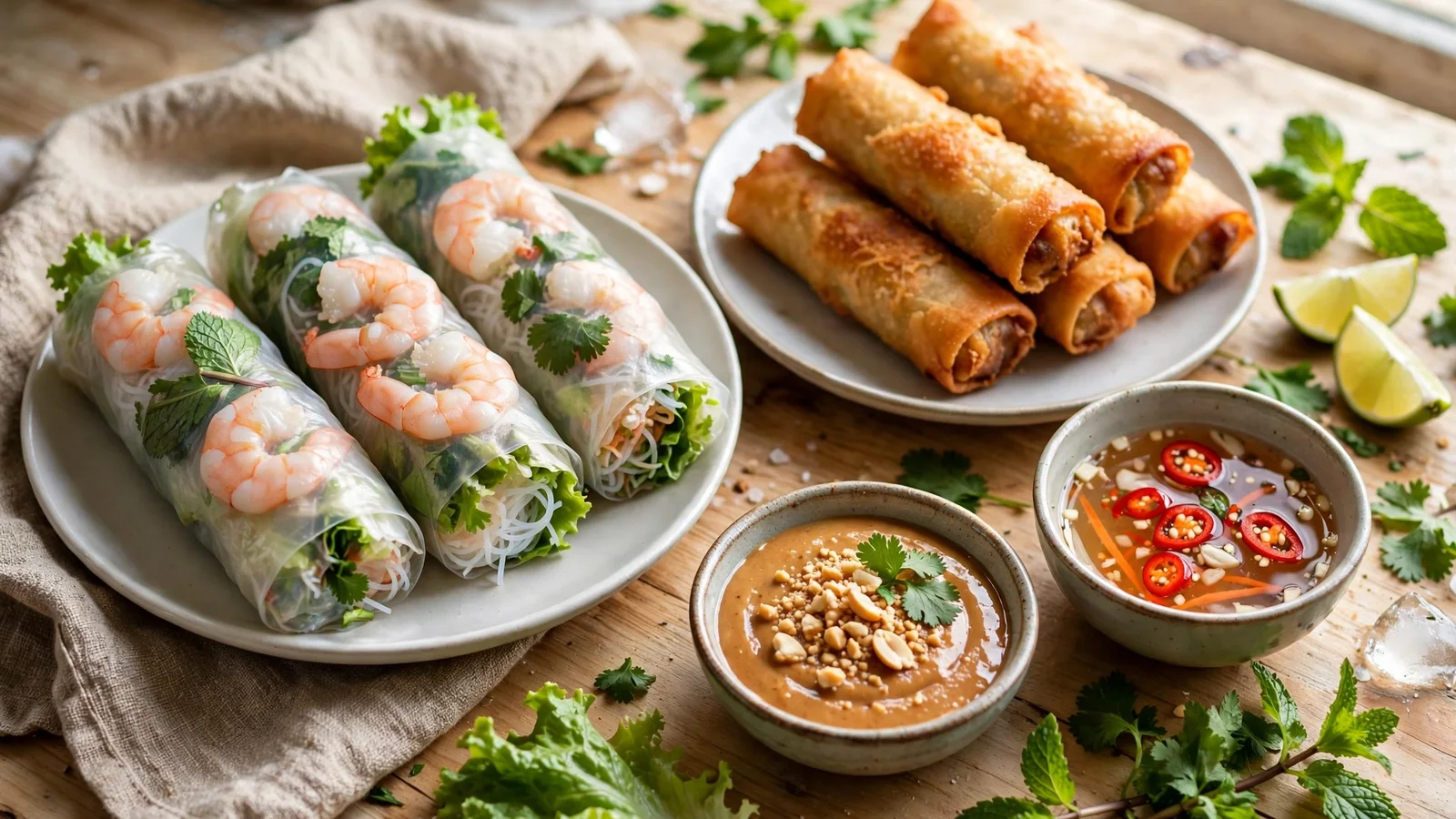
Menu names cause most of the confusion here. On many American menus, a "spring roll" is the crisp, fried roll, and a "summer roll" is the soft, fresh rice-paper roll. In Vietnamese cooking, both styles exist side by side: goi cuon is the fresh rice-paper roll, and cha gio is the fried roll. So the real choice is not about the season in the name. It is about wrapper, texture, and how you plan to serve them.
This guide puts fried and fresh rolls side by side — what wraps them, what fills them, which sauces fit, how far ahead each one holds, and a clear verdict for parties, lunches, and hot-weather meals. For a full fresh-roll recipe, start with our Vietnamese shrimp spring rolls (goi cuon), and for the fried side, our lumpia: crispy Filipino spring rolls shows how a wheat wrapper changes the bite.
The Quick Verdict
- Choose fresh summer rolls when you want something cool, light, and herb-heavy: rice-paper rolls with shrimp or tofu, rice noodles, lettuce, and fresh herbs, served right after rolling with a dipping sauce.
- Choose fried spring rolls when you want a hot, crisp appetizer that feels like a starter at a restaurant: a filled wheat or rice-paper roll, fried until blistered and golden, eaten while it still crackles.
- For a party, serve both if you can. The contrast is the point — cool and soft next to hot and crisp, with two sauces between them. If you only pick one for a crowd, fried rolls hold a little better on a platter, while fresh rolls are better made close to serving time.
Why the Names Overlap
"Summer roll" is mostly a menu name used outside Vietnam to signal the fresh, unfried roll, probably because it eats cool and light. "Spring roll" is the broader term, and restaurants use it for both styles depending on the country and the house style. That is why one menu lists spring rolls as fried appetizers and another lists the fresh rice-paper version under the same name.
A more reliable way to order or shop is to ask about the wrapper and the cooking method. If it is wrapped in softened rice paper and served uncooked, it is the fresh style, whatever the menu calls it. If it is fried, it is the crisp style. The wrapper tells you more than the season word does.
Fried vs Fresh at a Glance
| Detail | Fried spring rolls | Fresh summer rolls (goi cuon) |
|---|---|---|
| Wrapper | Wheat flour wrapper, or rice paper in Vietnamese cha gio | Rice paper (banh trang), softened in warm water |
| Cooking | Deep-fried or shallow-fried until crisp | No cooking after rolling; fillings are cooked ahead |
| Texture | Shattering, blistered crust with a hot, savory center | Soft, chewy rice paper with crisp lettuce and herbs inside |
| Typical fillings | Ground pork or shrimp, glass noodles, wood ear mushrooms, carrot, taro or jicama | Whole shrimp, sliced pork or tofu, rice vermicelli, lettuce, mint, chives |
| Temperature | Served hot, straight from the fryer | Served cool or at room temperature |
| Classic sauces | Nuoc cham, sweet chili sauce, or vinegar-garlic dip | Peanut sauce or nuoc cham |
| Make-ahead | Fill and roll ahead, fry close to serving; reheats in an oven | Roll shortly before serving; cover with a damp towel so the rice paper stays soft |
| Best role | Hot appetizer, party starter, side for noodle soups | Light lunch, warm-weather meal, fresh starter before a rich main |
The Wrapper Decides Almost Everything
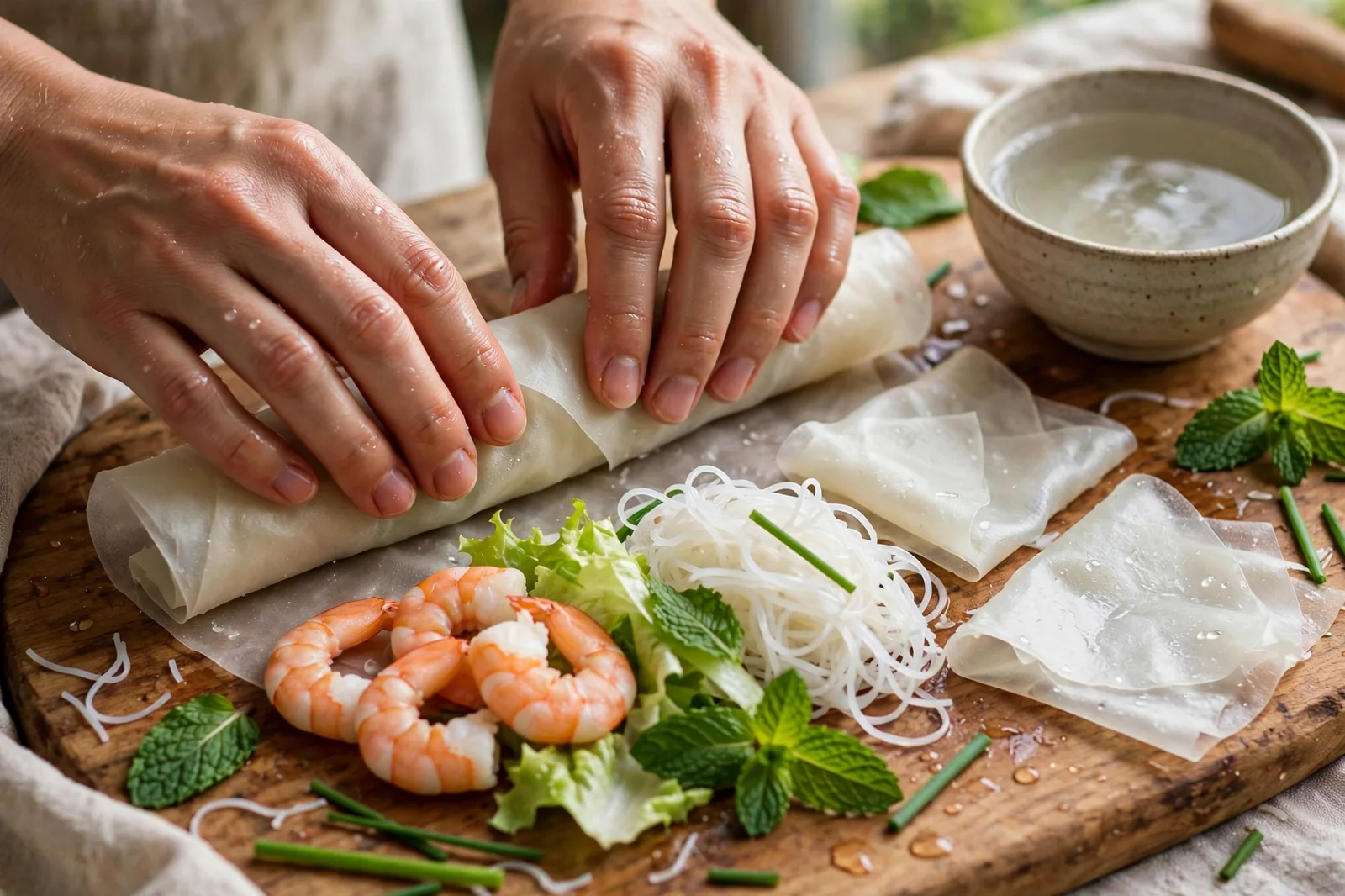
Rice paper behaves in both rolls, which surprises people. Softened and eaten fresh, it is tender and slightly chewy, and you can see the shrimp and herbs through it. The same kind of rice paper, wrapped tighter around a savory filling and fried, turns crisp and blistered with a delicate shell that shatters. Vietnamese cha gio often uses rice paper this way, while Filipino lumpia and many Chinese-style spring rolls use a thin wheat wrapper that fries up smoother and sturdier.
That difference drives the whole eating experience. A wheat wrapper gives a fried roll a stronger crunch and holds up a little longer on a platter. Rice paper gives a lighter, more delicate crisp, but it softens faster once it sits. Fresh rolls have no crisp wrapper at all — the crunch has to come from inside, which is why lettuce, herbs, and sometimes a crisp vegetable matter so much in the filling.
Rolling technique follows the wrapper. Fresh rice paper needs only a brief dip in warm water; it keeps softening as you fill it, so a fast hand helps. Fried rolls need a tight wrap with the seam sealed well, because a loose roll drinks oil and can burst in the pan.
Fillings: Cooked Center vs Fresh Crunch
Fried fillings are usually cooked by the frying itself, but the mixture starts raw or partly prepared: seasoned ground meat, minced shrimp, soaked glass noodles, and finely cut vegetables that cook quickly. The vegetables need to be dry. A wet filling steams inside the wrapper, and steam is what turns a crisp roll soggy or splits it open.
Fresh rolls work in the opposite direction. Every component is ready to eat before the rice paper is softened — poached shrimp, cooked pork or tofu, soft rice noodles, and raw herbs and lettuce. Nothing cooks after rolling, so seasoning lives in the components and the sauce. A bland fresh roll cannot be rescued at the table except by a good dip, which is why the sauce matters even more here. Our peanut dipping sauce for spring rolls is the classic rich option, and it suits tofu and shrimp rolls especially well.
Sauces Are Not Interchangeable
Both rolls are dipping foods, but the sauces do different jobs.
Fresh summer rolls lean on peanut sauce for richness against all that cool, lean filling, or on nuoc cham when you want something brighter and lighter. The peanut route makes the roll feel like a meal; the fish-sauce route keeps it snappy and herb-forward.
Fried rolls almost always want acidity to cut the oil. Nuoc cham, with its lime and chili, is the natural partner for cha gio — see our nuoc cham recipe for the balance. Sweet chili sauce works for wheat-wrapper rolls, and a simple vinegar-garlic dip suits lumpia. A heavy peanut sauce on a fried roll is not wrong, but it double-ups the richness, so serve it when the rest of the plate is light.
Which One for Which Occasion?
| Occasion | Better first pick | Why |
|---|---|---|
| Hot day, no-fry lunch | Fresh summer rolls | Cool, herb-heavy, and no hot oil in a warm kitchen |
| Party appetizer platter | Fried spring rolls | Crisp, hot, and easy to eat standing with a small dip cup |
| Mixed starter for guests | Both | The temperature and texture contrast makes each one taste better |
| Meal-prep lunches | Fried, reheated in an oven | Fresh rice paper firms up and dries in the fridge |
| Light starter before a rich curry or braise | Fresh summer rolls | Keeps the first course cool and clean |
| Side for a noodle soup meal | Fried spring rolls | A crisp, hot bite next to a steaming bowl is a classic pairing |
Make-Ahead and Storage, Honestly
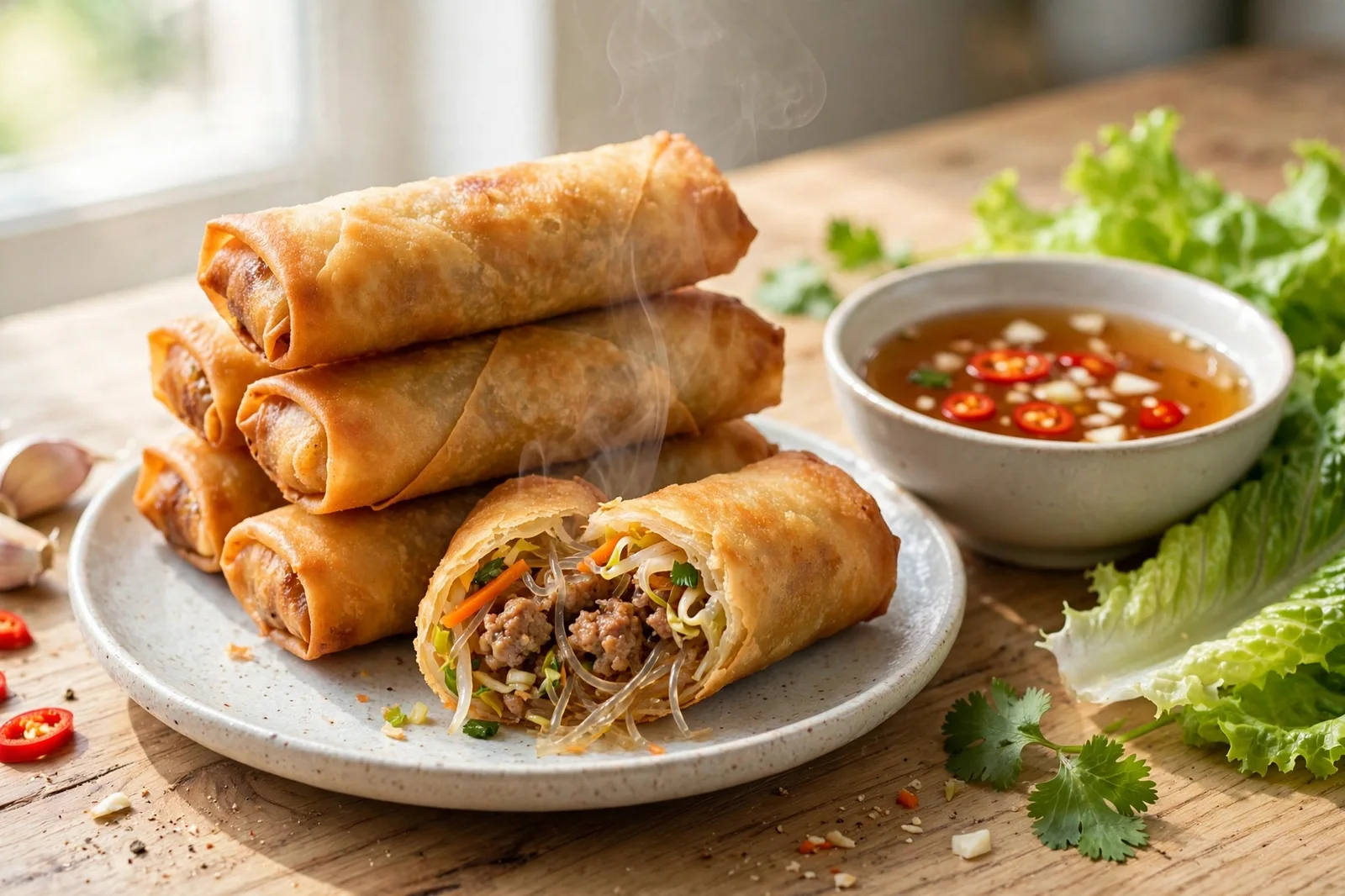
Fresh rolls are at their best within a few hours. Rice paper dries at the edges and turns firm in the refrigerator, and the herbs lose their snap. If you must hold them, lay them in a single layer not touching each other, cover with a damp paper towel and then plastic wrap, and keep the holding time short. Rolling them at the table with guests is the traditional workaround, and it is also the most fun version.
Fried rolls give you more room. Assemble them ahead, keep them covered in the fridge, and fry them close to serving. Cooked leftovers reheat well in a hot oven or air fryer until the wrapper crisps again; a microwave will make the crust soft. Uncooked assembled rolls can be frozen in a single layer, then bagged, and fried from frozen with a little extra time — keep the oil steady rather than hotter, so the center cooks before the wrapper darkens.
The Bottom Line
Spring rolls vs summer rolls is really fried vs fresh. Pick fresh rice-paper rolls for a cool, herb-packed bite with peanut sauce or nuoc cham, and pick fried rolls for a hot, crisp starter that wants an acidic dip. The names on a menu will keep shifting, but the wrapper and the cooking method never lie: softened rice paper served as-is means fresh, and a golden, crackling shell means fried. Once you read a menu that way, you will always order exactly what you meant to.
1 thought on “Spring Rolls vs Summer Rolls: Fried or Fresh?”