
Food safety first: this is a refrigerator pickle recipe. It is NOT a canning recipe and must never be treated as shelf-stable. Keep refrigerated at all times.
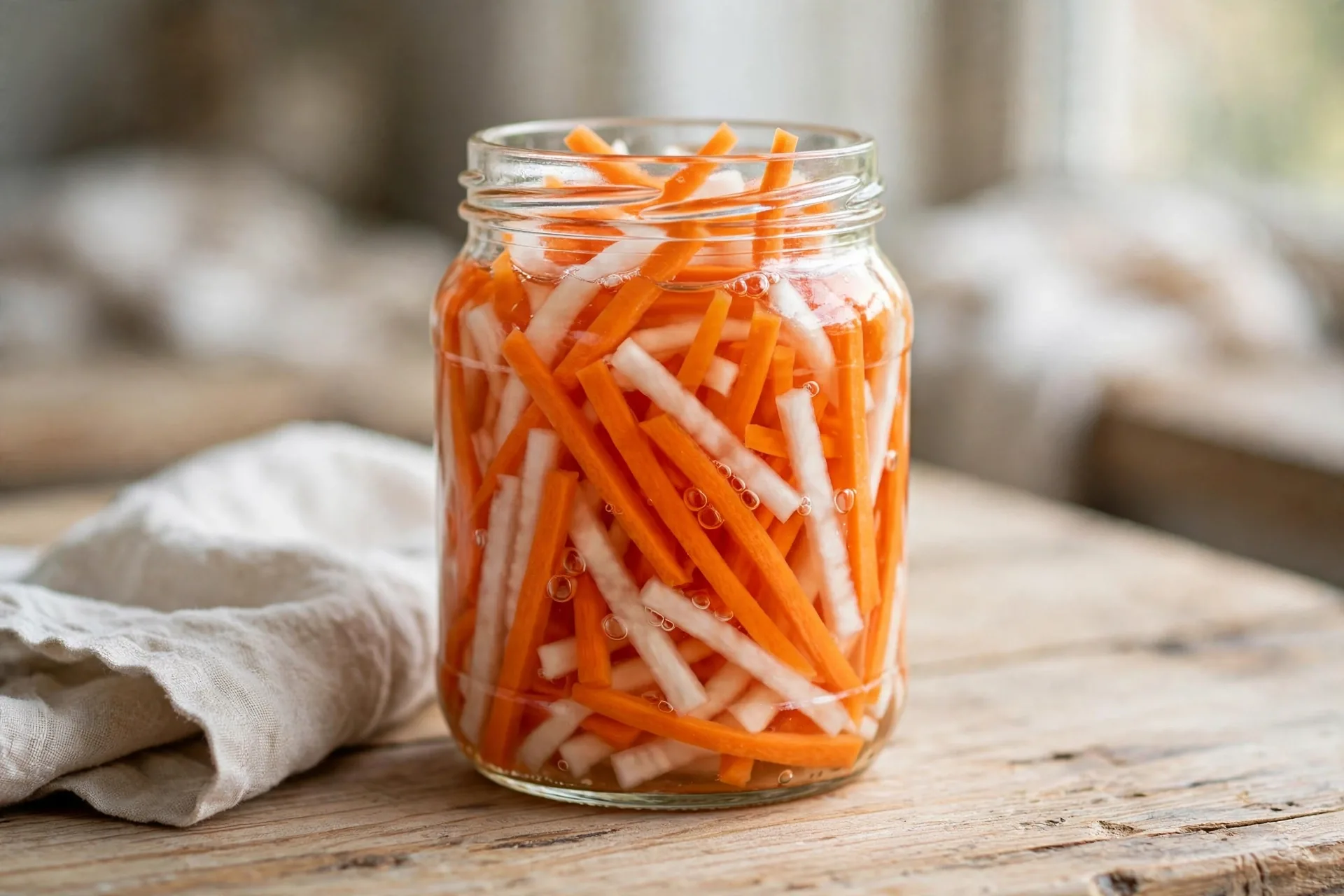
Do chua is the sweet-sour crunch that goes on banh mi, alongside grilled meats, and inside spring rolls. Carrots and daikon are cut into matchsticks, salted briefly, then covered in a sweet vinegar brine. It takes about 15 minutes of work plus a few hours in the fridge — and the fridge part is non-negotiable.
Ingredients
Makes about 1 quart jar.
- 2 medium carrots (about 8 oz / 225 g), peeled
- 1 small daikon radish (about 8 oz / 225 g), peeled
- 1 tsp kosher salt (for the initial salting step)
- 1 cup distilled white vinegar (5% acidity — standard grocery vinegar)
- 1 cup water
- 1/2 cup sugar
Method
- Cut the carrots and daikon into matchsticks about 1/4 inch thick and 2 inches long. Even cuts matter: uneven pieces pickle unevenly.
- Toss the matchsticks with the kosher salt in a bowl and let stand 15 minutes. The vegetables will release water and soften slightly.
- Rinse the salted vegetables under cold water and squeeze gently to remove excess liquid. Do not skip the rinse — unrinsed vegetables make an over-salted brine.
- In a clean jar or bowl, stir the vinegar, water, and sugar until the sugar dissolves. (Some cooks heat the brine to dissolve the sugar faster; either works as long as it cools before the vegetables go in.)
- Pack the vegetables into a clean glass jar and pour the cooled brine over to cover completely.
- Refrigerate immediately. The pickles are ready after about 4 hours and are at their best within the first week.
Tips and ingredient notes
- Daikon: the long white radish in Asian markets; it has a mild peppery bite that mellows in the brine. If daikon is unavailable, all-carrot is acceptable but should be noted as a variation, not the default.
- Vinegar: plain distilled white vinegar (5% acidity) is the standard. Rice vinegar is milder and also used.
- Brine proportions: do not casually alter the vinegar, water, and vegetable amounts. The NCHFP advises following tested proportions and not changing vinegar/water/food ratios in pickling recipes.
- Sugar: the sweetness balances the vinegar bite.
- Salt: kosher or sea salt, not iodized table salt (iodine can cloud the brine).
- Timing: 30 minutes in the recipe card below — about 15 minutes of hands-on work (cutting the matchsticks, rinsing and squeezing, stirring the brine, packing the jar) plus the 15-minute salt stand, which pulls water out of the vegetables so the brine stays bright instead of diluting. The 4 hours in the fridge after that is the pickle finishing itself, not prep — and a full day in the brine is better still.
What to serve with do chua
One batch fills about a quart jar, and a jar in the fridge quietly improves half the meals you make that week. These are the jobs do chua is best at:
- Banh mi, first and always: this pickle is the crunch that keeps a banh mi tasting bright instead of heavy. A drained handful goes into our lemongrass tofu banh mi, and the same goes for any grilled-meat or pâté version. Drain it well and pat it dry first — brine dripping off the pickles is the fastest way to sog out a crisp baguette.
- Broken rice and grilled meats: on a plate of com tam with grilled pork, do chua is the sweet-sour counterweight to the caramelized meat and the broken rice. That same plate usually carries nuoc cham for spooning over everything — the two are partners, not substitutes: one pours, the other crunches.
- Rice bowls and noodle salads: a forkful folded through a rice bowl or a cold noodle salad adds pickle brightness without another sauce to make. Set it next to goi du du, the green papaya salad, and the contrast is instructive: the papaya salad is fresh and crunchy in a lime dressing, while do chua is softer, sweeter, and ready straight from the jar.
- Fresh and fried rolls: a few matchsticks tucked inside fresh rice-paper rolls, or a drained pile beside fried ones to cut the richness — our spring rolls vs summer rolls comparison walks through both styles. For fresh rolls, pat the pickles dry so the brine does not tear the wrapper as you roll.
However you use it, keep the jar topped up with brine and take pickles out with a clean fork rather than fingers — that, plus steady refrigeration, is what keeps the crunch and the brine clear through the jar’s roughly three-week fridge life. The flavor peaks in the first week, so small jars made often beat one giant jar made rarely.
Storage and food safety
This recipe is for refrigerator pickles only — it has NOT been tested for water-bath canning safety. Do not can it, and never store it at room temperature. Keep refrigerated at 40°F (4°C) or below at all times. These keep about 3 weeks refrigerated. Discard if the brine turns cloudy, smells off, or shows any mold. Allergens: none inherent; note cross-contact if your kitchen handles allergens.
Sources and references
Vietnamese Pickled Carrots and Daikon (Do Chua)
Ingredients
Method
- Cut the carrots and daikon into matchsticks about 1/4 inch thick and 2 inches long. Even cuts matter: uneven pieces pickle unevenly.
- Toss the matchsticks with the kosher salt in a bowl and let stand 15 minutes. The vegetables will release water and soften slightly.
- Rinse the salted vegetables under cold water and squeeze gently to remove excess liquid. Do not skip the rinse — unrinsed vegetables make an over-salted brine.
- In a clean jar or bowl, stir the vinegar, water, and sugar until the sugar dissolves. (Some cooks heat the brine to dissolve the sugar faster; either works as long as it cools before the vegetables go in.)
- Pack the vegetables into a clean glass jar and pour the cooled brine over to cover completely.
- Refrigerate immediately. The pickles are ready after about 4 hours and are at their best within the first week.
3 thoughts on “Vietnamese Pickled Carrots and Daikon (Do Chua)”