
Canh chua is the Mekong Delta’s sweet-sour soup: a tamarind-soured broth balanced with sugar and fish sauce, loaded with pineapple, okra, tomato, and bean sprouts, with shrimp added at the very end so they stay tender. The broth should be clearly sour with sweetness and salt behind it — taste it before anything else goes in, and adjust.
This is a home-kitchen adaptation of a Mekong Delta soup, not a claim of regional authenticity or tradition.
Ingredients
Serves 6.
- 12 oz (340 g) large shrimp (16/20 count), peeled and deveined
- 6 cups (1.4 L) water
- 1 tbsp tamarind paste, dissolved in a little hot water, plus more to taste (tamarind strength varies hugely by brand — start at 1 tbsp, taste, and add more)
- 2 tbsp sugar
- 3 tbsp fish sauce, plus more to taste
- 1 cup fresh pineapple chunks (about 1/4 pineapple)
- 1 cup okra, sliced diagonally (about 8 pods)
- 1 large tomato, cut into wedges
- 2 cups bean sprouts
- 2 celery stalks, sliced diagonally (traditional bac ha, elephant ear stem, is hard to find outside Vietnamese markets)
- 2 cloves garlic, minced, plus 1 tbsp neutral oil for the garlic oil
- Cilantro and sliced scallions, chopped (rice paddy herb, ngo om, and sawtooth herb, ngo gai, are the classic finish when available)
- 1 Thai chile, sliced (optional)
For serving: steamed jasmine rice; extra fish sauce with sliced chile on the side.
Method
- Make the garlic oil. Heat the oil in a small pan over medium heat, fry the minced garlic until just golden (about 2 minutes), and transfer to a heatproof bowl. Set aside — this gets drizzled over each bowl at the end.
- Build the broth. Bring the water to a simmer in a large pot. Stir in the tamarind (dissolved first in a ladle of hot water so it disperses evenly), the sugar, and the fish sauce. Taste now, before anything else goes in: it should be clearly sour with sweetness and salt behind it. Adjust tamarind and sugar in small increments — the safe approach is to start at 1 tbsp tamarind and taste up, since overshooting makes the soup harsh.
- Cook the firm vegetables. Add the pineapple and okra; simmer 2 minutes. Add the celery and tomato wedges; simmer 2 minutes more.
- Add the shrimp last. Bring the soup back to a boil, add the shrimp, and cook just until they turn pink and opaque — about 2 minutes. Do not walk away; shrimp go from perfect to rubbery in under a minute past done. The shrimp must be fully opaque all the way through (145°F / 63°C) — no translucent centers.
- Finish. Remove from heat immediately. Stir in half the herbs. Place a handful of raw bean sprouts in each serving bowl and ladle the hot soup over them — the residual heat wilts them just enough. That is the intended texture, not an oversight.
- Serve hot over or alongside steamed rice, topped with the remaining herbs and a drizzle of garlic oil.
Tips and ingredient notes
- Tamarind strength: the critical variable. Seedless tamarind paste, concentrated tamarind pulp, and tamarind powder all sour differently, and brands differ within each type. Starting at 1 tbsp and tasting up is the safe approach.
- Sugar and fish sauce balance: canh chua is sweet-sour-salty all at once, and the right sugar amount depends on the tamarind actually used.
- Shrimp size: larger shrimp (16/20 count) are more forgiving on timing than small ones.
- Herbs: ngo om and ngo gai are the classic finish; cilantro plus scallions work when they are unavailable — the page names both options honestly rather than pretending the fallback is the original.
What to serve with canh chua
Canh chua is a light, brothy soup, so the meal around it should be sturdier: the soup is the bright course, not the whole dinner. About 35 minutes of cooking puts a full spread on the table.
- Steamed jasmine rice. The classic move is ladling the sweet-sour broth over rice in the bowl. If your rice habit is shaky, our how to cook jasmine rice guide covers the water ratio that works every time.
- A savory protein anchor. Vietnamese lemongrass chicken is the pairing I reach for — the caramelized edges and lemongrass perfume stand up to the sour broth without competing with it.
- A second vegetable. Garlic bok choy gives the table a dark green contrast to the soup’s pineapple and tomato.
- Fish sauce with sliced chile on the side. Canh chua already carries fish sauce in the broth, so a full dish of nuoc cham would double up — instead, put out plain fish sauce with chile slices for anyone who wants their bowl saltier.
Leftovers: by day two in the fridge, the okra and tomato have given everything to the broth and gone soft — that is the expected tradeoff of a fresh soup, not a failure. Reheat the broth to a boil, and add a fresh handful of bean sprouts and herbs when serving so the second bowl still has texture. Do not reheat the shrimp more than once.
More Vietnamese recipes
- Vietnamese Lemongrass Chicken — caramelized, savory, and built for rice
- Nuoc Cham — the all-purpose dipping sauce worth learning by heart
- Vietnamese Chicken Salad — light, crunchy, and dressed to order
- Do Chua — pickled carrot and daikon for banh mi, rice plates, and everything else
Storage and food safety
Allergen note: contains shellfish (shrimp) and fish (fish sauce). Shrimp must be cooked until fully opaque with no translucent centers — 145°F (63°C) (FoodSafety.gov). The broth must be brought back to a boil before the shrimp go in. Serve within 2 hours; refrigerate leftovers promptly and reheat until steaming hot.
Sources and references
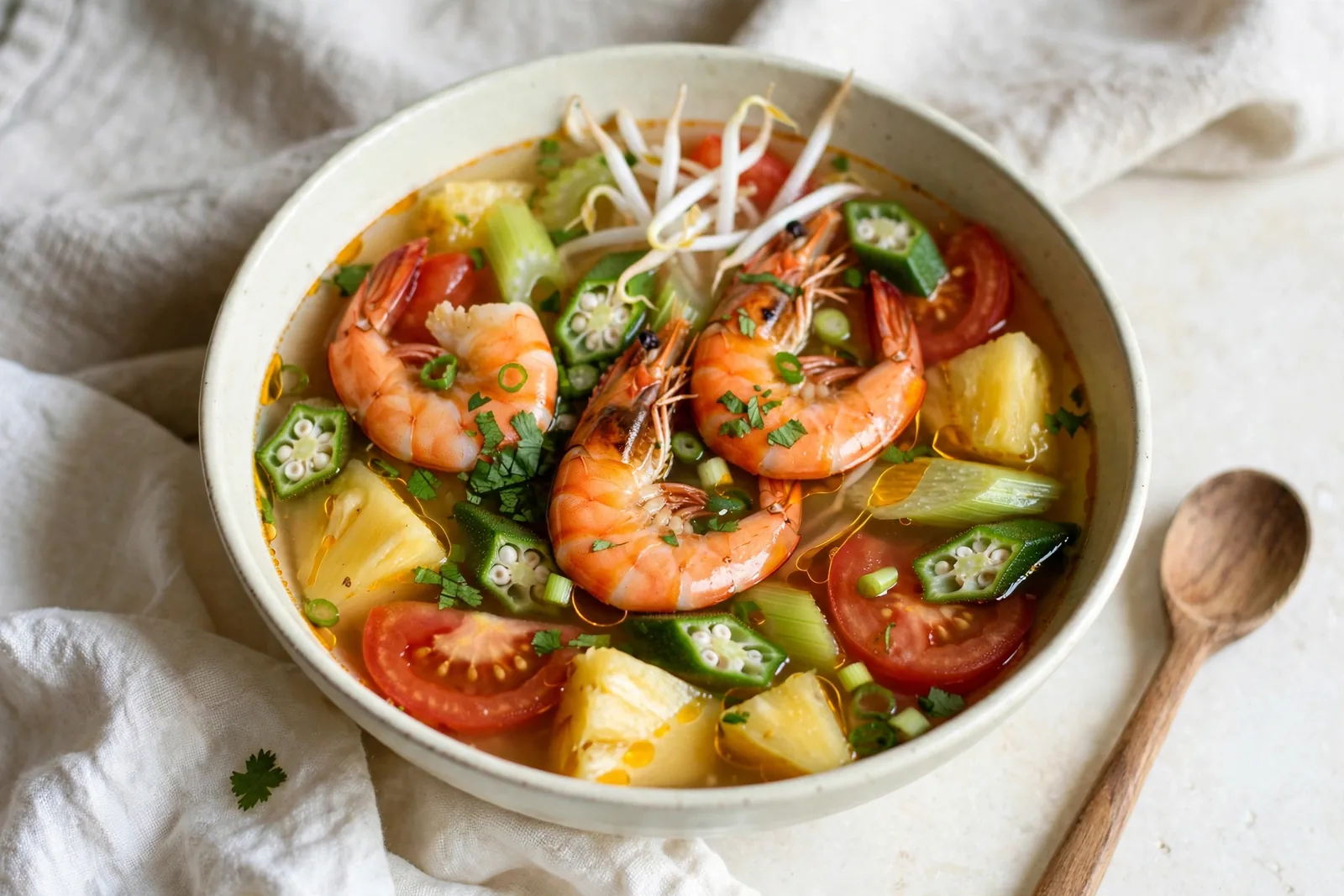
Vietnamese Tamarind Shrimp Soup (Canh Chua Tom)
Ingredients
Method
- Make the garlic oil. Heat the oil in a small pan over medium heat, fry the minced garlic until just golden (about 2 minutes), and transfer to a heatproof bowl. Set aside — this gets drizzled over each bowl at the end.
- Build the broth. Bring the water to a simmer in a large pot. Stir in the tamarind (dissolved first in a ladle of hot water so it disperses evenly), the sugar, and the fish sauce. Taste now, before anything else goes in: it should be clearly sour with sweetness and salt behind it. Adjust tamarind and sugar in small increments — the safe approach is to start at 1 tbsp tamarind and taste up, since overshooting makes the soup harsh.
- Cook the firm vegetables. Add the pineapple and okra; simmer 2 minutes. Add the celery and tomato wedges; simmer 2 minutes more.
- Add the shrimp last. Bring the soup back to a boil, add the shrimp, and cook just until they turn pink and opaque — about 2 minutes. Do not walk away; shrimp go from perfect to rubbery in under a minute past done. The shrimp must be fully opaque all the way through (145°F / 63°C) — no translucent centers.
- Finish. Remove from heat immediately. Stir in half the herbs. Place a handful of raw bean sprouts in each serving bowl and ladle the hot soup over them — the residual heat wilts them just enough. That is the intended texture, not an oversight.
- Serve hot over or alongside steamed rice, topped with the remaining herbs and a drizzle of garlic oil.
Notes
Note 2: Taste the broth before any vegetables go in. The 1 tbsp tamarind : 2 tbsp sugar : 3 tbsp fish sauce baseline per 6 cups of water is where the balancing starts, but the final call is always the spoon.
Note 3: Shrimp timing is tight — about 2 minutes until fully opaque at 145°F, then off the heat immediately. They keep cooking in the hot broth, so a shrimp that looks just-done in the pot is perfect; one left a minute longer is rubbery.
Note 4: Bean sprouts go into the bowls raw, not into the pot. The ladled hot soup wilts them just enough; simmering them in the pot turns them limp.