
Why Restaurant Chicken Stays Silky and Yours Doesn't
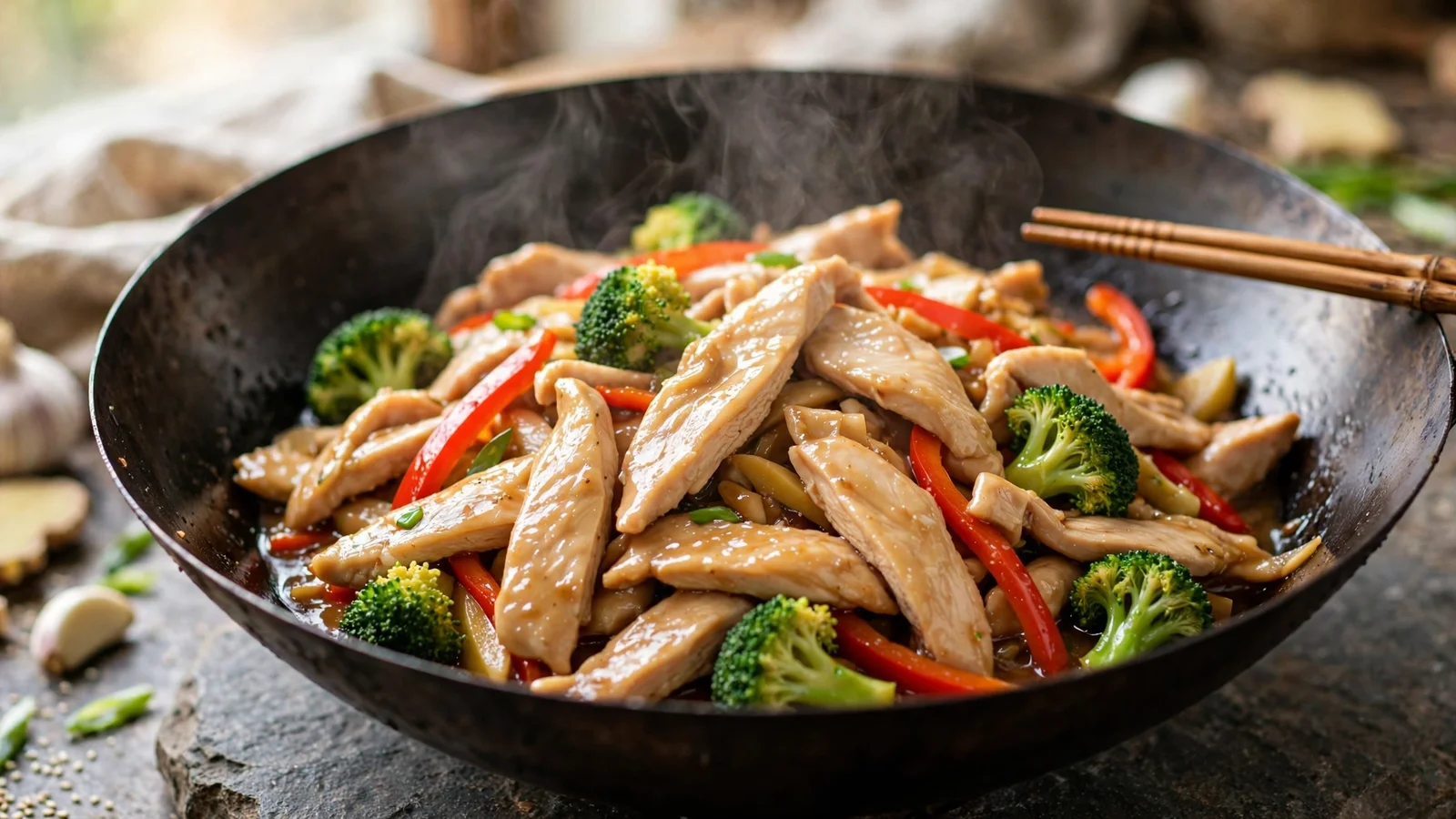
Order a chicken stir-fry at a good Chinese restaurant and the meat comes out tender, smooth, almost slippery — nothing like the squeaky, dry-edged chicken most home cooks get from a hot pan. The difference isn't a special cut or expensive equipment. It's a preparation step called velveting: coating thinly sliced chicken in a thin cornstarch marinade, then briefly pre-cooking it in water or oil before the actual stir-fry begins.
Velveting sounds fussy, but it takes about 20 minutes, most of it hands-off resting time. Once you know the ratio, it becomes the default way you treat chicken breast for any stir-fry — and it rescues the exact cut of meat that usually dries out fastest.
What Velveting Actually Does
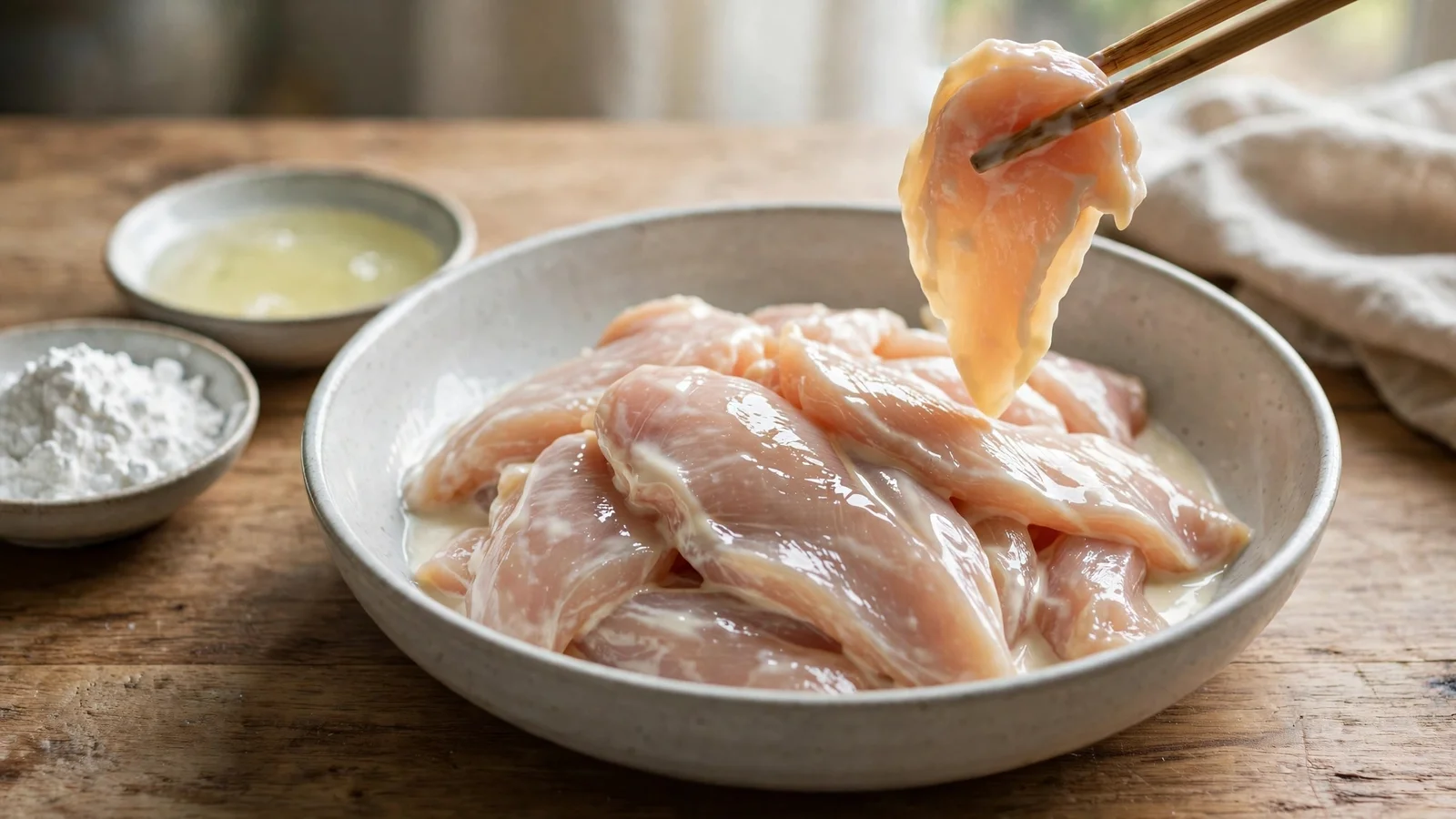
The coating is a thin batter of cornstarch, egg white, and a little liquid. When the coated chicken hits gentle heat, the starch gelatinizes into a smooth, protective film around each slice. That film does three things:
- It shields the meat from harsh heat. Stir-fry pans run hot; the coating takes the abuse so the meat surface doesn't seize and squeeze out its juices.
- It holds moisture in. The gel layer acts like a seal, so the chicken stays juicy even though it's sliced thin.
- It gives sauce something to cling to. The velvety surface grabs onto glossy stir-fry sauces instead of letting them slide off and pool in the pan.
The result is chicken that tastes deliberately tender — the texture people describe as "silky" — rather than chicken that happened to survive the pan.
The Velveting Marinade (Standard Ratio)
This ratio is for 1 pound (450 g) of boneless, skinless chicken breast or thigh, sliced against the grain into thin pieces about 1/8 inch thick. Scaling is simple: the marinade doubles cleanly for 2 pounds.
| Ingredient | Amount | Job |
|---|---|---|
| Cornstarch | 1 tablespoon | Forms the protective coating |
| Egg white | 1 large | Binds the starch to the meat |
| Shaoxing wine or dry sherry | 1 tablespoon | Seasons, loosens the batter |
| Kosher salt | 1/2 teaspoon | Seasons the meat itself |
Whisk the cornstarch, egg white, wine, and salt together until smooth, then toss the sliced chicken in it until every piece is coated. It should look glossy and thin — a wet sheen, not a thick batter. Cover and refrigerate for 30 minutes. That rest matters: it gives the starch time to hydrate and the salt time to season the meat below the coating.
If you're building out a stir-fry pantry for techniques like this, our essential Asian pantry staples list covers the cornstarch, Shaoxing wine, and sauces that come up again and again.
Method 1: Water-Blanching (The Home-Friendly Way)
Restaurants with big burners often pass velveted chicken through hot oil, but blanching in water gives you nearly the same texture with no pot of oil to deal with. This is the method to start with.
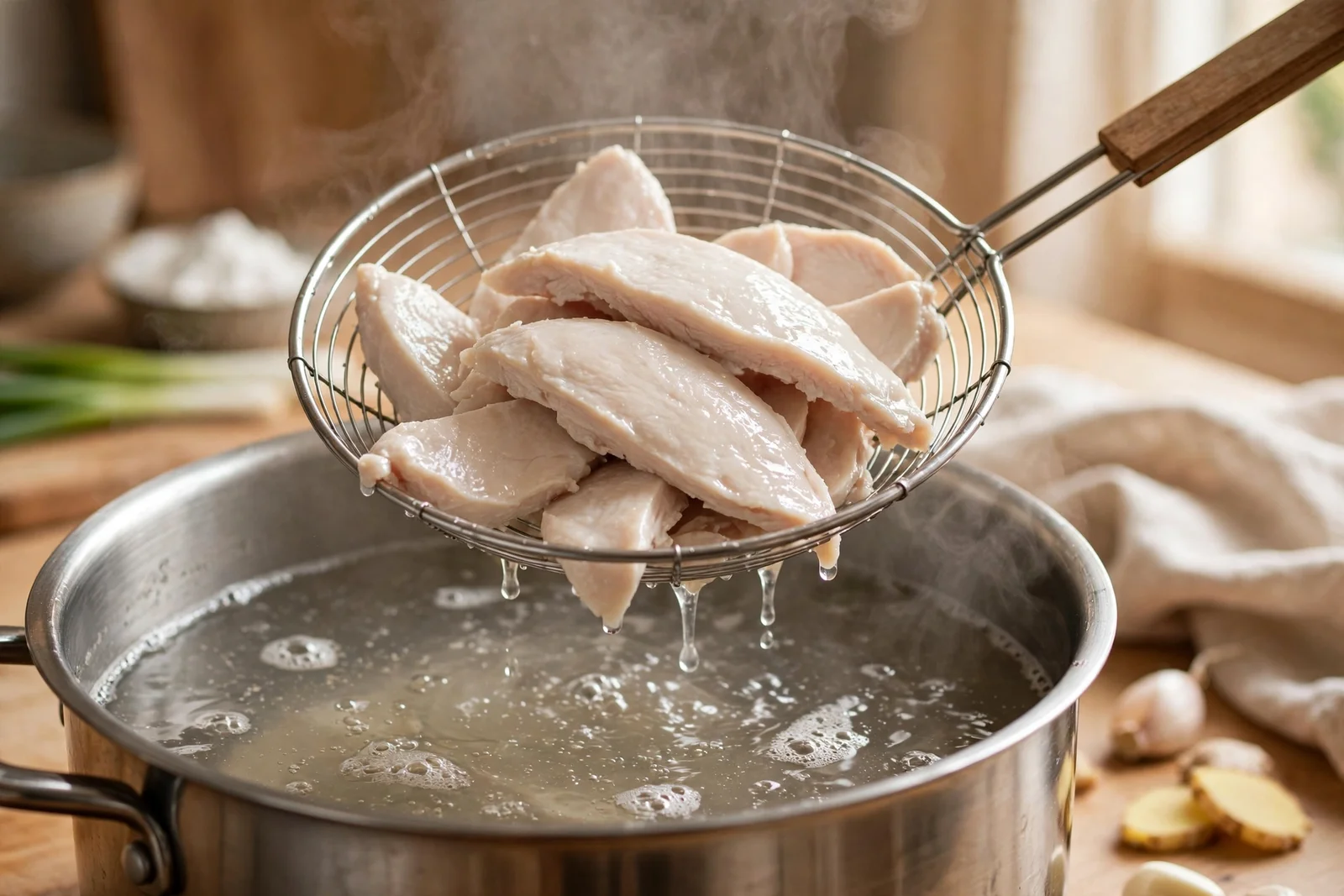
1. Bring a pot of water to a full boil, then drop the heat so it's just below a simmer — small bubbles rising, surface barely moving. Aggressively boiling water will shred the coating right off.
2. Add the marinated chicken piece by piece, stirring gently so the slices don't clump. They'll sink, then float as they cook.
3. Cook 2 to 3 minutes, until the chicken turns opaque and white on the outside. It does not need to be cooked through — it will finish in the stir-fry.
4. Scoop the chicken out with a slotted spoon or spider strainer into a colander, and let it drain well. Extra water on the surface will fight your stir-fry later.
Method 2: Oil-Blanching (The Restaurant Way)
Oil-blanching (sometimes called "passing through oil") produces the slickest texture and a faint richness water can't give. It's worth it for a special dish; it's overkill for a Tuesday.
1. Heat about 2 cups of neutral oil in a wok to around 300°F (150°C) — hot but nowhere near smoking. If you don't have a thermometer, a wooden chopstick dipped in the oil should show a few lazy bubbles.
2. Add the chicken in one layer, separating pieces as you go. Stir very gently to keep the slices apart.
3. After about 1 minute, when the chicken is white and just set, scoop it out onto a rack or paper-towel-lined plate.
4. Let the oil cool completely before straining it for reuse. Oil used for blanching mild chicken can be reused a few times for stir-frying.
Either way, the blanched chicken holds in the fridge for a few hours. When your vegetables and sauce are ready, the chicken goes back in the pan for the final minute or two of the stir-fry — just long enough to heat through and pick up the sauce. The high-heat sear at this stage is where char develops; if that smoky edge is what you're chasing, our guide to what wok hei is and how to get it at home explains the science and the home-stove workarounds.
Dishes That Depend on Velveting
Velveting shows up anywhere tender chicken matters more than crispy edges. Classic uses include:
- Kung Pao chicken. The glossy, spicy sauce is built to coat velveted chicken. Try it in our Kung Pao chicken — the recipe's chicken step is written for this technique.
- Chicken with broccoli, snow peas, or snap peas. Gentle vegetables and a light sauce let the silky texture take center stage.
- Moo goo gai pan and other white-sauce stir-fries. Anything with a delicate sauce benefits, because the coating keeps the sauce glossy instead of thin.
- Beef, with one tweak. Velveting works on beef too — sliced beef for dishes like Vietnamese shaking beef is often marinated with cornstarch the same way, though beef usually skips the blanch and goes straight into the hot pan for a harder sear.
Common Mistakes and How to Fix Them
- The coating slides off in the pot. The water was boiling too hard, or the chicken went in straight from a wet marinade without enough rest. Keep the water just under a simmer and don't skip the 30-minute rest.
- The chicken turns out gummy. Too much cornstarch, or the blanched chicken sat in its own drained liquid. Stick to the ratio above and drain thoroughly — a minute on a clean towel or rack helps.
- The chicken is tender but bland. The marinade seasons only lightly by design; the stir-fry sauce carries the dish. If the finished dish tastes flat, the fix is in the sauce (more salt, soy sauce, or a pinch of sugar), not in a heavier marinade.
- Slices stick together in a clump. They were added to the pot all at once without separating. Add a few pieces at a time and stir gently as you go.
- The finished stir-fry is watery. Wet blanched chicken steaming in the pan is the usual culprit. Drain it well, and make sure your pan is properly hot before the chicken goes back in so any surface moisture flashes off instead of pooling.
The Takeaway
Velveting is one of those techniques that quietly separates restaurant stir-fries from home ones, and none of it is hard: a tablespoon of cornstarch, an egg white, a splash of Shaoxing, 30 minutes of rest, and a gentle blanch. Do it once for a chicken stir-fry and the difference is obvious enough that it tends to become habit. Slice thin, coat light, blanch gently — and let the sauce do the rest.