
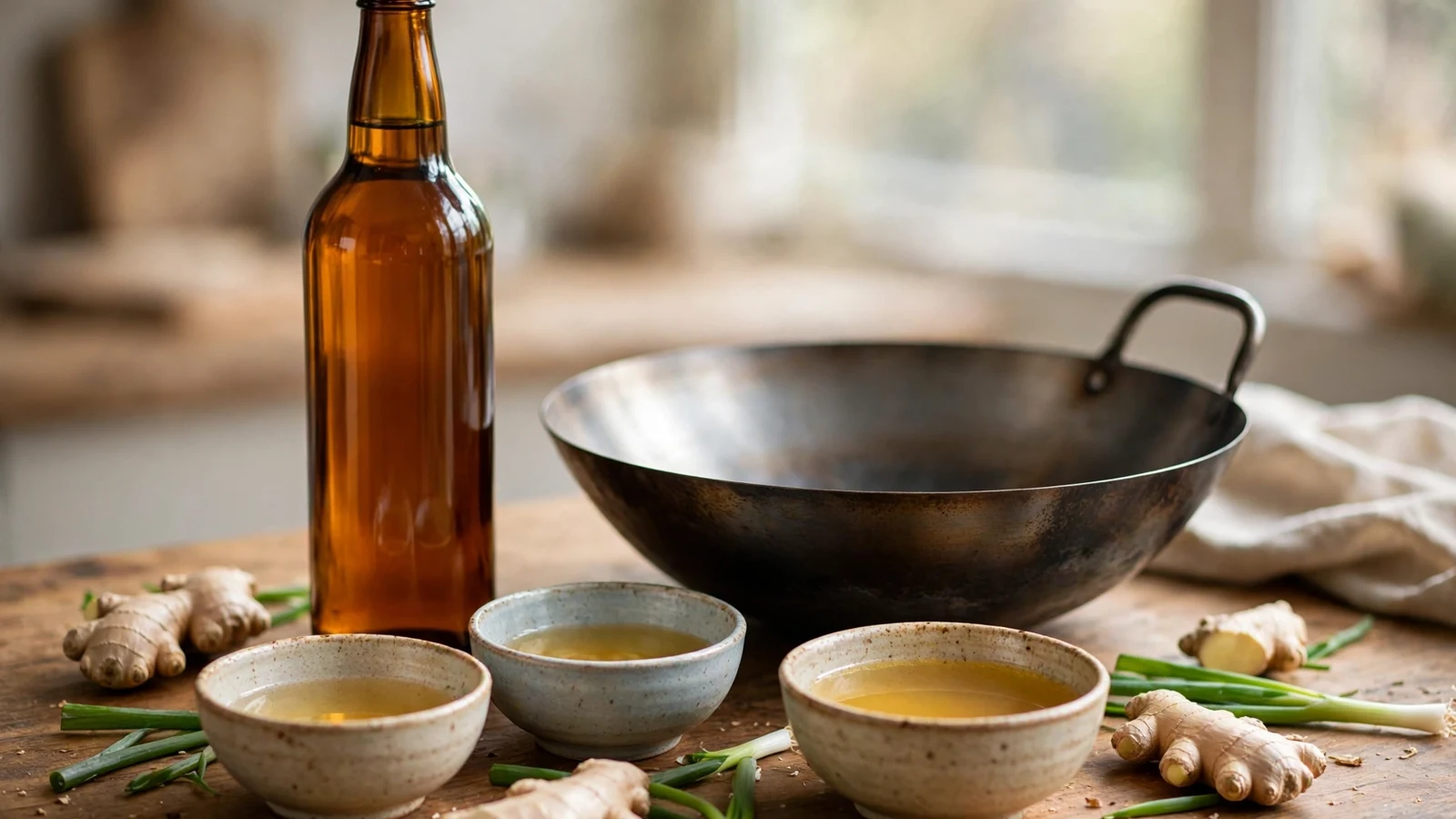
What Shaoxing Wine Actually Does in a Recipe
Shaoxing wine is a fermented rice wine from Shaoxing in eastern China. It does three jobs at once in a dish: it adds a warm, nutty depth you cannot get from water, its alcohol helps dissolve aromatic compounds in ginger, garlic, and spices so they spread through the dish, and it softens the raw edge of meat in marinades. The small splash that hits a hot wok mostly cooks off, but the body it leaves behind stays.
That is why a straight swap is not always about matching the flavor exactly. For a marinade, you need something with a little acidity and enough alcohol to do the tenderizing work — the same role the wine plays in How to Velvet Chicken for Stir-Fry. For a finished sauce, like the one in Kung Pao Chicken, you need depth and a hint of sweetness without extra salt. For a non-alcoholic swap, you give up the alcohol's solvent effect and make up for it with a rich broth and a tiny squeeze of acid at the end.
Quick Picker: Match the Substitute to the Job
| Substitute | Swap ratio (for 1 Tbsp Shaoxing) | Best for | Watch out for |
|---|---|---|---|
| Dry sherry | 1 Tbsp, 1:1 | Marinades, stir-fries, wonton fillings | Avoid "cooking sherry" — it is saltier and harsher |
| Mirin | 1 Tbsp, 1:1 | Sauces, glazes, anything a touch sweet | Adds real sweetness; cut other sugar slightly |
| Dry sake | 1 Tbsp, 1:1 | Delicate dishes, seafood, dumplings | Lighter body; fine in small amounts, thin in big ones |
| Dry white wine | 1 Tbsp, 1:1 | Braises and longer cooks | More acidic; a pinch of sugar rounds it out |
| Chicken broth + sugar | 1 Tbsp broth + pinch of sugar | Non-alcoholic marinades and sauces | No alcohol lift; add a drop of rice vinegar at the end |
| Water + rice vinegar | 1 Tbsp water + 1/4 tsp vinegar | Last-resort splash for deglazing | Thinnest option; only for small quantities |
| Shaoxing cooking wine (salted) | 1 Tbsp, 1:1 | Everyday stir-fries where you already own it | Contains added salt; reduce soy sauce a little |
If you cook Chinese food regularly, the honest first choice is dry sherry — it is the closest in body and nuttiness, and a bottle keeps for months in a cool cupboard. If you want the pantry stocked properly so you stop substituting, the wine sits on the core list in The Essential Asian Pantry: 20 Staples to Start With.
The Seven Substitutes, One by One
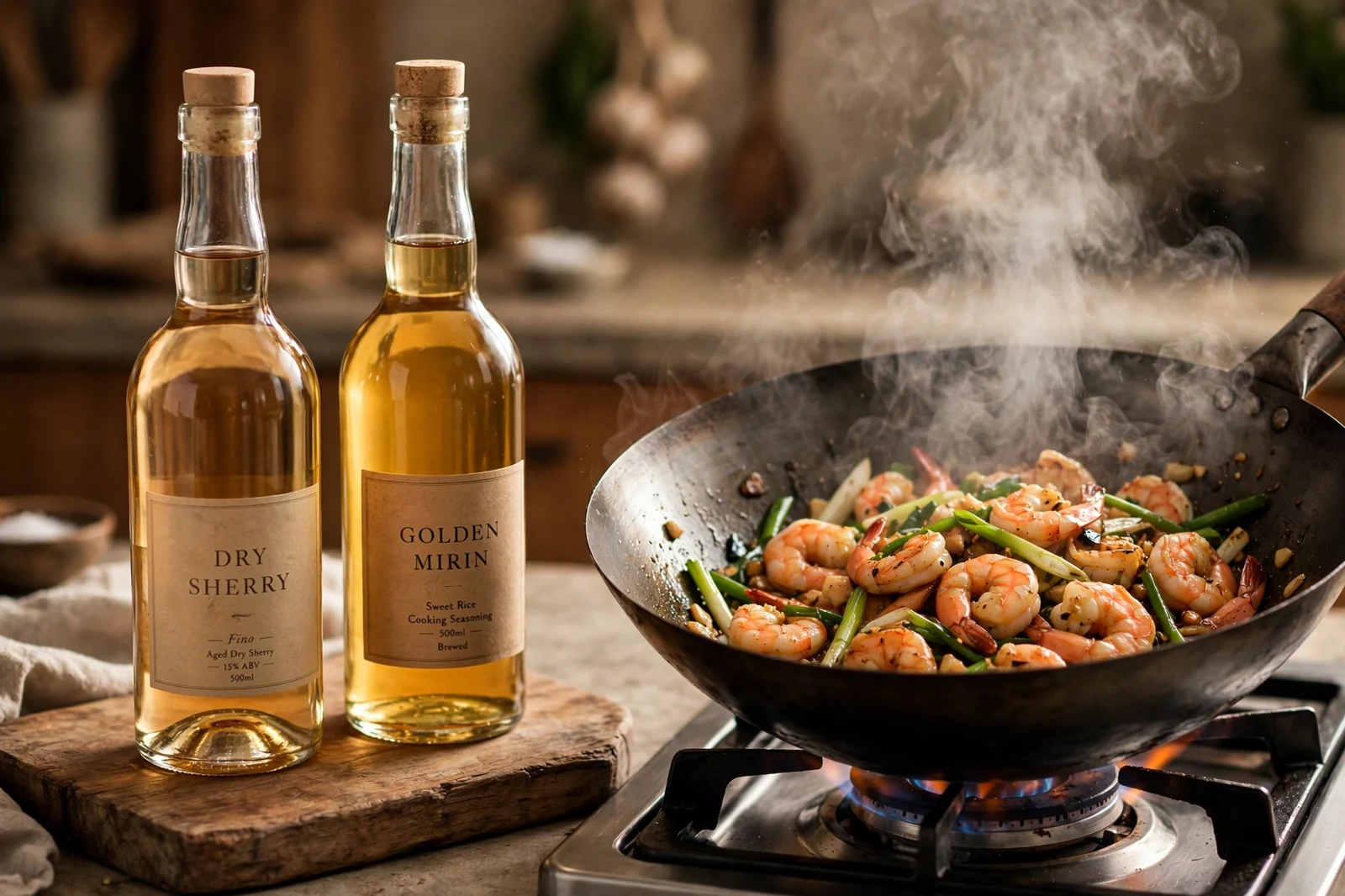
1. Dry Sherry — The Closest Swap
Dry sherry, especially a fino or amontillado, matches Shaoxing wine's nutty, slightly oxidized character better than any other bottle in the liquor cabinet. Use it 1:1 in marinades, stir-fry sauces, and dumpling fillings. The one trap is "cooking sherry" from the supermarket shelf: it is loaded with salt and tastes raw, so reduce any soy sauce in the recipe and expect a less clean finish.
2. Mirin — Sweet and Gentle
Mirin is another rice wine, but it is sweeter and lower in alcohol than Shaoxing. It works 1:1 in sauces and glazes where a little sweetness is welcome — char siu marinades like the one in Char Siu: Chinese BBQ Pork take to it naturally. In a savory stir-fry, cut the sugar in the recipe by about a teaspoon per tablespoon of mirin so the dish does not tip sweet.
3. Dry Sake — Clean and Light
Sake is also fermented rice wine, but it is cleaner and milder than Shaoxing. It is the swap to reach for in delicate food — steamed fish, shrimp dumplings, a light soup — where Shaoxing's depth might bulldoze the main ingredient. In a big, dark braise, sake reads a little thin; that is the one place dry sherry wins.
4. Dry White Wine — The Cupboard Standby
A dry white wine you would actually drink works fine in braises and longer cooks, where its extra acidity mellows out. Splash it 1:1, then taste at the end and add a pinch of sugar if the sauce tastes sharp. Skip sweet wines like Riesling unless you are making a sweet-savory glaze.
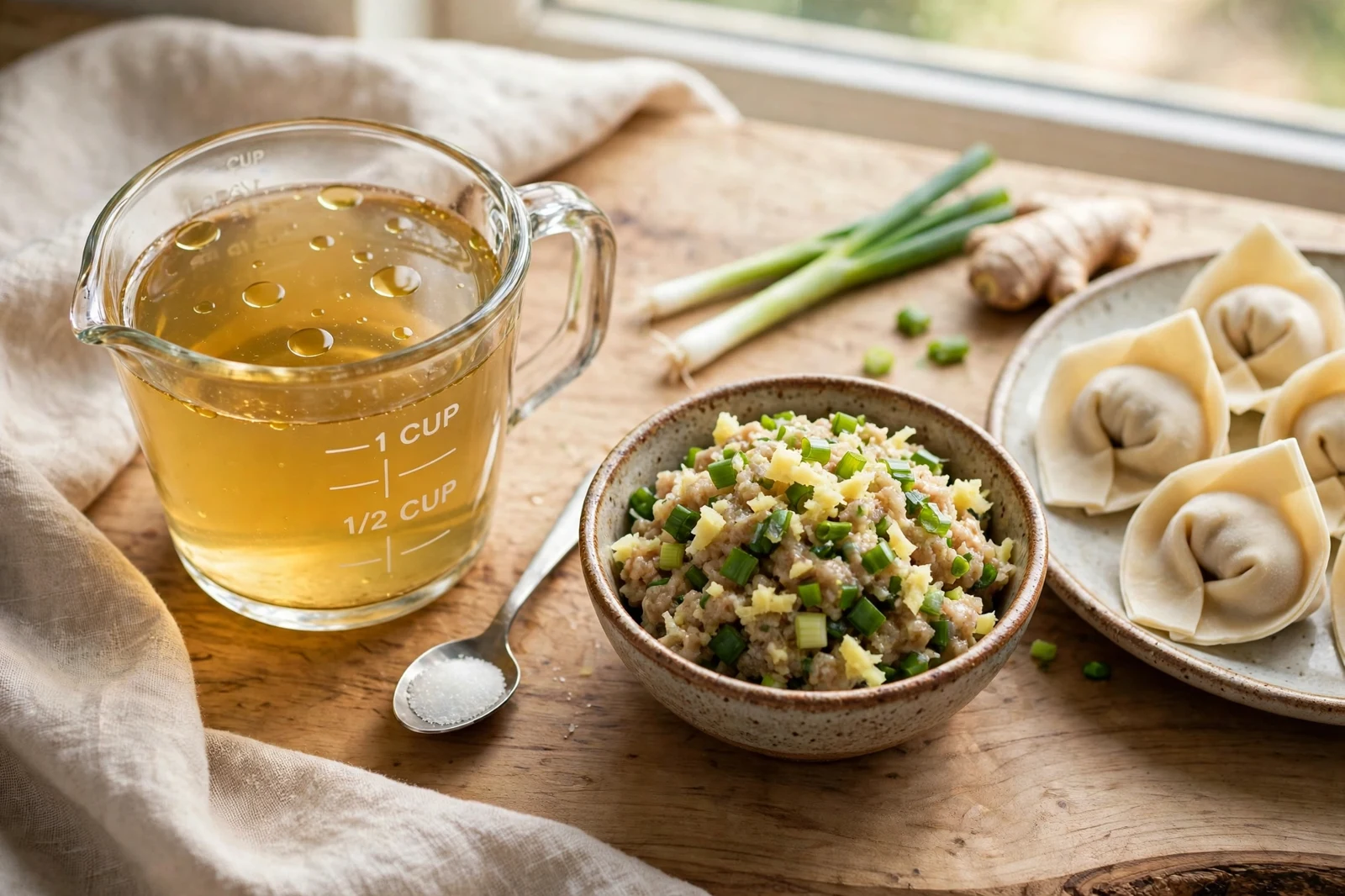
5. Chicken Broth With a Pinch of Sugar — The Non-Alcoholic Swap
For a non-alcoholic version, swap each tablespoon of Shaoxing wine for a tablespoon of good chicken broth plus a small pinch of sugar. You lose the alcohol's ability to carry aromatics, so help it along: bloom the ginger and garlic a few seconds longer in the oil, and finish the dish with a few drops of rice vinegar to wake it up. Vegetable broth works the same way for a vegetarian dish.
6. Water Plus Rice Vinegar — The Emergency Option
If the wok is already hot and there is nothing else in the house, a tablespoon of water with a quarter-teaspoon of rice vinegar gets a pan deglazed and adds a whisper of acidity. It will not give you depth, so keep it to recipes that call for a tablespoon or two — never as the base of a braise.
7. Salted Shaoxing Cooking Wine — Better Than Nothing
The "cooking wine" version sold next to the vinegars contains added salt. It is not the real thing, but it is closer than plain water. Use it 1:1 and pull back the soy sauce or salt in the recipe by roughly a quarter-teaspoon per tablespoon of cooking wine. If you are choosing between this and dry sherry, the sherry wins every time.
How to Swap in Three Common Situations
In a velveting or meat marinade (calls for 1–2 Tbsp with cornstarch and soy sauce): dry sherry or dry sake, 1:1. This is the same marinade base used in How to Velvet Chicken for Stir-Fry.
In a stir-fry sauce (calls for 1–2 Tbsp in a dark soy-based sauce): dry sherry 1:1, or mirin 1:1 with a teaspoon less sugar elsewhere in the sauce. For a non-alcoholic sauce, use broth plus a pinch of sugar and a final drop of vinegar.
In a wonton or dumpling filling (calls for 1–2 tsp mixed into ground meat): dry sake or dry sherry, measured the same. The alcohol keeps the filling from tasting flat; a tiny splash of broth is the alcohol-free fallback.
What to Buy If You Buy One Bottle
If you cook stir-fries even twice a month, buy the real Shaoxing wine once and the substitution problem mostly goes away — a bottle lasts a long time and a little goes a long way. Buy it at an Asian market, look for "Shaoxing wine" without added salt, and store it like sherry: sealed, cool, and away from the stove. If you cook a mix of Chinese and Japanese food, keep both Shaoxing (or dry sherry) and mirin; they cover nearly every recipe you will meet, and the Soy Sauce Guide: Light vs Dark vs Tamari will help you sort the other bottle you are probably also guessing about.
1 thought on “Shaoxing Wine Substitutes: 7 Swaps That Work”