
The Takeout Stir-Fry That Is Mostly About Texture
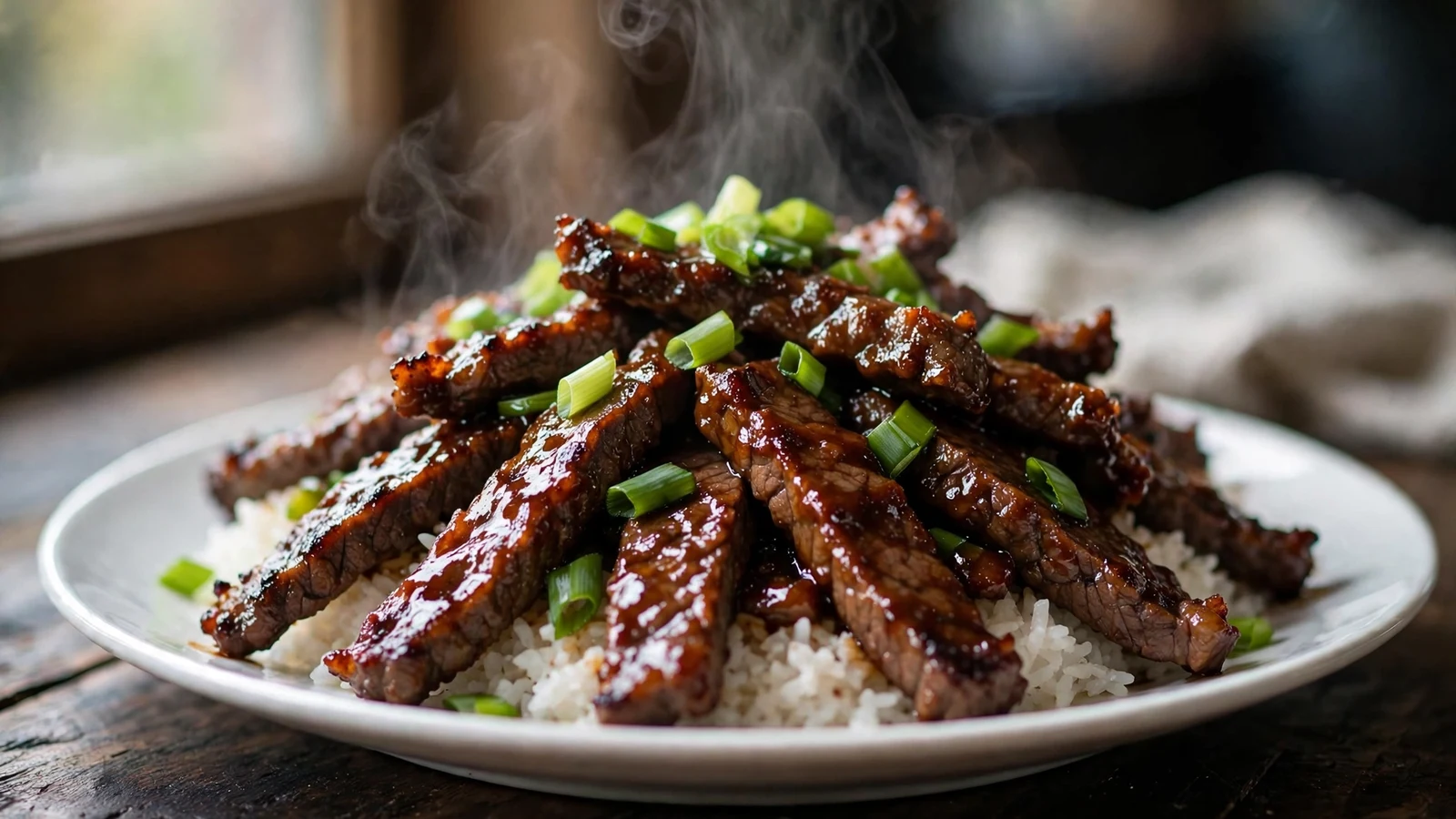
Mongolian beef has almost nothing to do with Mongolia. It is a Chinese-American takeout staple: thin slices of beef in a dark, glossy sauce that is sweet, salty, and just a little sticky, finished with a pile of scallions and served over rice. The sauce is simple. What makes a good version stand out is the beef itself — tender inside, lightly crisp at the edges, and coated so the sauce clings instead of pooling at the bottom of the plate.
Two things decide whether yours comes out that way. The first is the cut and the slice: flank steak cut thin across the grain stays tender even after a hard sear. The second is a thin cornstarch coating that protects the meat in hot oil and gives the sauce something to hold onto. The same basic idea shows up in How to Velvet Chicken for Stir-Fry — a light coating plus a quick, hot cook keeps stir-fried protein from going tough and dry.
Get those two right and the rest is a five-minute sauce and a wok that is hot enough to matter. If you want the high-heat, faintly smoky edge that good takeout has, the background in What Is Wok Hei and How to Get It at Home explains why pan temperature changes the result more than any extra ingredient does.
What Makes the Sauce and Coating Work
| Element | What it does | What goes wrong without it |
|---|---|---|
| Flank steak sliced across the grain | Shortens the muscle fibers so each bite stays tender | Slicing with the grain leaves the beef chewy no matter how good the sauce is |
| Thin cornstarch coating | Protects the beef in hot oil and helps the sauce cling | Uncoated beef steams, turns gray, and the sauce slides off |
| Soy sauce plus brown sugar | Gives the sauce its salty-sweet balance and dark color | Too much sugar makes it cloying; too little leaves it thin and sharp |
| Ginger and garlic | Add warmth behind the sweetness | Skipping them makes the sauce taste flat and one-note |
| Scallions added at the end | Bring freshness and a mild onion bite against the rich sauce | Cooking them from the start turns them limp and dull |
The sauce should taste a touch too sweet and salty on its own. Once it coats the beef and lands on plain rice, it balances out.
Ingredients
- 1 lb (450 g) flank steak
- 1/4 cup (30 g) cornstarch
- 1/2 teaspoon kosher salt
- 1/4 teaspoon black pepper
- 3 tablespoons neutral oil with a high smoke point, divided
- 4 scallions, cut into 2-inch pieces, white and green parts separated
- 3 garlic cloves, minced
- 1 tablespoon grated fresh ginger
- 1/2 teaspoon dried red pepper flakes, optional
- 1/3 cup (80 ml) low-sodium soy sauce
- 1/3 cup (80 ml) water
- 1/2 cup (100 g) packed dark brown sugar
- 1 teaspoon toasted sesame oil
- Cooked rice, for serving
- Toasted sesame seeds, optional, for serving
Prep: 20 minutes, including slicing and coating the beef. Cook: 10 minutes. Total: 30 minutes. Serves 4 with rice and a vegetable side, or 2 to 3 as the only dish.
How to Make It, Step by Step
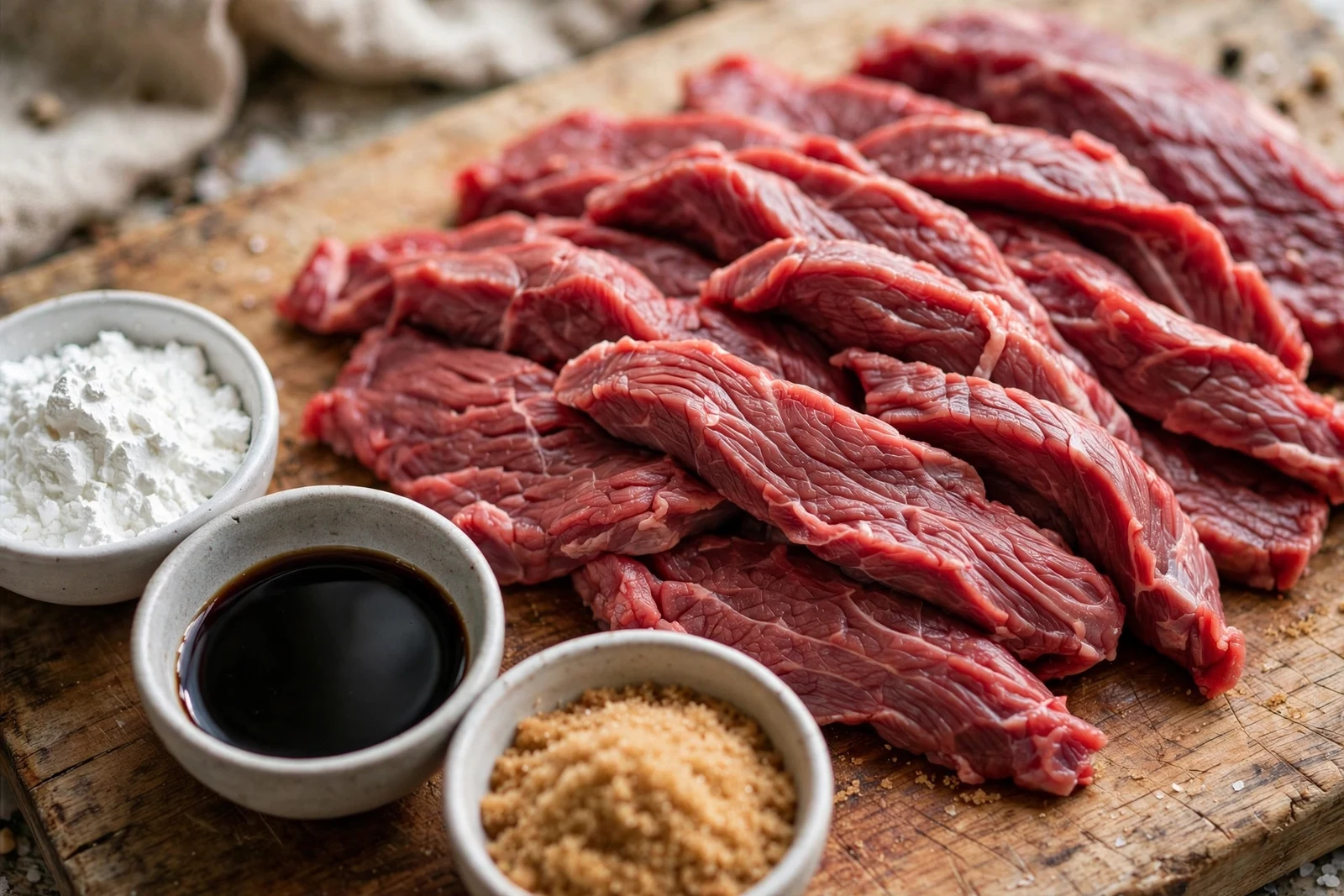
1. Slice the beef thin and across the grain. Pat the flank steak dry. Look for the long lines running through the meat — that is the grain. Slice across those lines into strips about 1/4 inch thick. If the steak is hard to slice thin, put it in the freezer for 20 to 30 minutes first. Toss the slices with the salt and pepper, then with the cornstarch until every piece has a thin, even coating. Let it sit while you mix the sauce.
2. Mix the sauce. In a small bowl or measuring cup, stir together the soy sauce, water, and brown sugar until the sugar dissolves. Set it near the stove. Once the wok is hot, there is no time to measure.
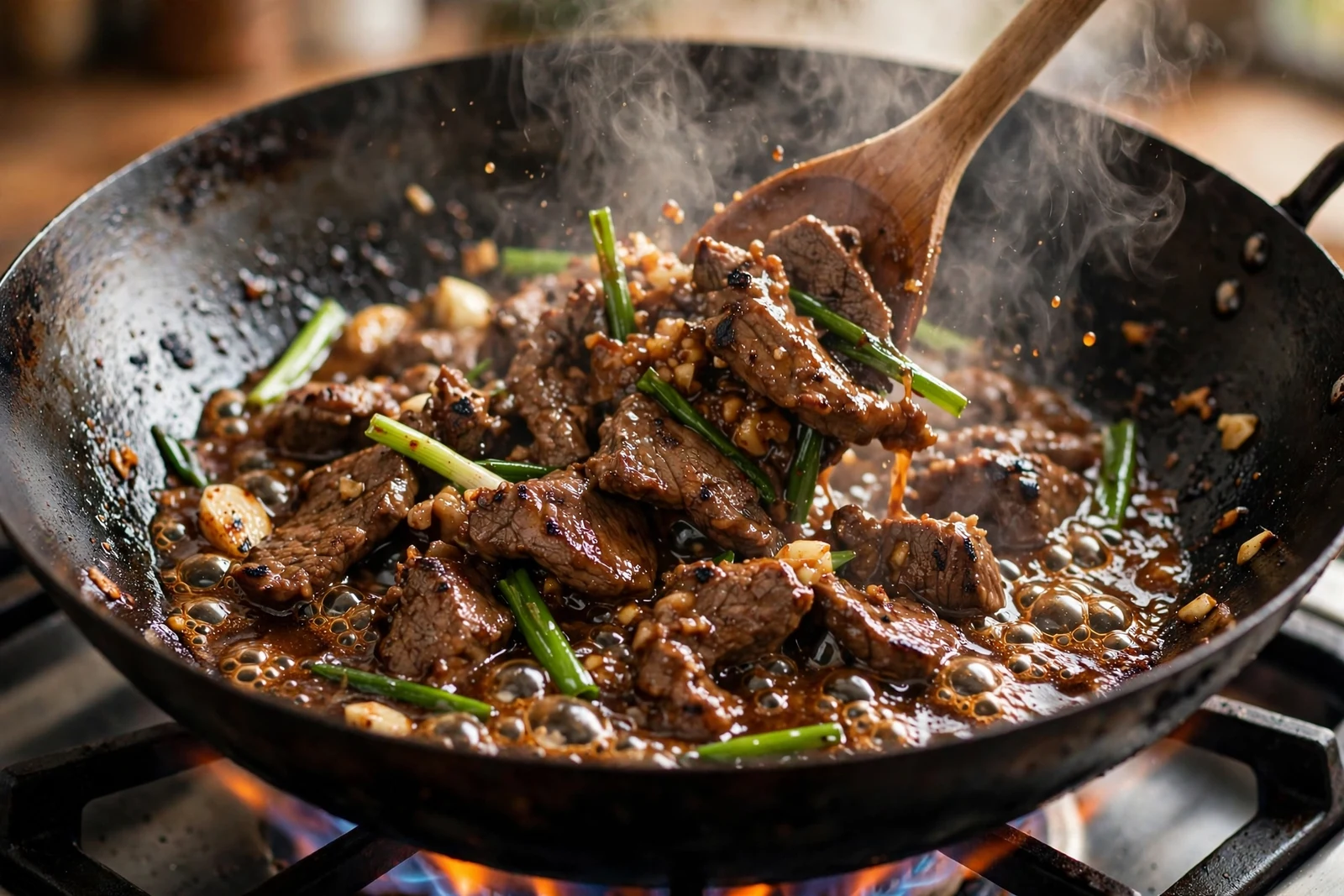
3. Sear the beef in batches. Heat a wok or large skillet over high heat until it just starts to smoke. Add 2 tablespoons of the oil and swirl to coat. Add half the beef in a single layer and let it sit, undisturbed, for 1 minute so a crust forms. Stir-fry for 1 to 2 minutes more until the edges are browned and crisp. Move the beef to a plate and repeat with the remaining beef, adding the last tablespoon of oil if the pan looks dry. Crowding the pan drops the temperature and the beef steams instead of searing.
4. Build the sauce in the same pan. Lower the heat to medium. Add the scallion whites, garlic, ginger, and pepper flakes if using. Stir for 30 seconds, just until fragrant. Pour in the sauce mixture and bring it to a simmer. Let it bubble for 1 to 2 minutes until it thickens slightly and looks glossy. It should coat the back of a spoon.
5. Bring it together. Return the beef and any juices on the plate to the pan. Toss for 1 minute until every piece is coated and the sauce clings. Add the scallion greens and the sesame oil and toss once more. Take the pan off the heat right away — the scallions should stay bright and just barely wilted.
6. Serve. Spoon the beef over hot rice and scatter sesame seeds over the top if you like. The fluffy, separate grains from How to Cook Perfect Jasmine Rice Every Time are the right base here, since they soak up the extra sauce without turning gummy. For more on choosing between regular, low-sodium, and dark soy sauce for a sauce like this one, see the Soy Sauce Guide: Light vs Dark vs Tamari.
Tips for Tender Beef Every Time
- Dry meat browns, wet meat steams. Pat the steak dry before slicing and again before coating if it looks wet. That thin cornstarch layer needs a dry surface to stick to.
- Do not move the beef too soon. Letting the first side sit for a full minute in a hot pan is what creates the crisp edges. Stirring right away gives you pale, soft beef.
- Keep the sauce ratio, adjust at the end. The 1:1 soy-to-water with a half cup of brown sugar is the baseline. If your soy sauce is very salty, add an extra tablespoon of water. If you want more heat, add pepper flakes or a spoonful of chili oil at the table rather than changing the sauce itself.
- Slice first, sauce second. The beef can sit coated for up to 30 minutes, but do not leave it much longer or the coating gets gummy. Mix the sauce while the beef rests and the whole dish moves fast once cooking starts.
Variations
- With broccoli: Blanch 2 cups of broccoli florets for 1 minute, drain well, and toss them into the pan when you return the beef to the sauce. They add color and soak up the extra sauce nicely.
- With bell peppers and onion: Stir-fry sliced bell pepper and onion wedges after the beef and before the sauce, then proceed as written. Keep the pieces large so they stay crisp.
- Less sweet: Drop the brown sugar to 1/3 cup (65 g) and add 1 teaspoon of rice vinegar at the end. The sauce will taste sharper and a little lighter.
- Different cut: Skirt steak and flat iron steak both work in place of flank. Slice them the same way, thin and across the grain, and watch the cook time — thinner cuts brown even faster.
What to Serve With It
Plain rice is the classic base, but the sweet-salty sauce is also good over Scallion Oil Noodles when you want something richer. On the side, a cool cucumber salad or a simple stir-fried green keeps the plate balanced. The beef is at its best right out of the pan, when the coating is still crisp at the edges. Leftovers keep for up to 3 days in the refrigerator; reheat them gently in a skillet with a splash of water so the sauce loosens without overcooking the beef.
Mongolian Beef
Ingredients
Method
- Slice the beef thin and across the grain: pat the flank steak dry, slice across the grain into strips about 1/4 inch thick. Toss with salt and pepper, then with cornstarch until every piece has a thin, even coating. Let sit while you mix the sauce.
- Mix the sauce: stir together the soy sauce, water, and brown sugar until the sugar dissolves. Set near the stove.
- Sear the beef in batches: heat a wok or large skillet over high heat until it just starts to smoke. Add 2 tablespoons oil and swirl. Add half the beef in a single layer, let sit undisturbed 1 minute, then stir-fry 1 to 2 minutes until browned and crisp at the edges. Move to a plate and repeat with remaining beef, adding the last tablespoon of oil if needed.
- Build the sauce: lower heat to medium. Add scallion whites, garlic, ginger, and pepper flakes if using. Stir 30 seconds until fragrant. Pour in the sauce and simmer 1 to 2 minutes until slightly thickened and glossy.
- Bring it together: return beef and any juices to the pan. Toss 1 minute until coated. Add scallion greens and sesame oil and toss once more. Remove from heat.
- Serve over hot rice, scattered with sesame seeds if you like.