
Kung pao chicken is the stir-fry that set the standard for every sweet-spicy stir-fry that came after it. Cubes of juicy chicken, charred at the edges from a screaming-hot wok, tumble with roasted peanuts and dried red chilies in a glossy sauce that balances sweet, sour, and salty in every bite. And underneath it all runs that quiet Sichuan pepper buzz — present enough to notice, gentle enough to keep you reaching for another piece.
The dish is named after Ding Baozhen, a 19th-century official in Sichuan province whose title, "gong bao," gives the dish its Chinese name: gong bao ji ding, or "palace guardian's chicken cubes." The original Sichuan version is fiercely savory with a lean, sharp sauce. The version most Americans know from Chinese restaurants is sweeter and heavier on the vegetables. This recipe sits closer to the Sichuan original — punchy and balanced — while staying weeknight-friendly.
What Makes Kung Pao Chicken Taste Right
Three ingredients define this dish, and skimping on any of them changes it into something else. First, dried red chilies — whole ones, fried briefly in hot oil until they darken and release their aroma. They are more about fragrance and heat than raw spice; a little charring is the point. Tian jing dried chilies or facing-heaven chilies are traditional, but any small, hot dried red chili from the Asian market works.
Second, Sichuan peppercorns — just a teaspoon, toasted and kept whole. This is a dry-fried application, so the peppercorns stay in the finished dish (you can push them aside as you eat, the way people do in Chengdu). They bring that signature tingle and a citrusy aroma that regular black pepper cannot touch. If you have only met them ground, as in our Mapo Tofu, this whole-peppercorn version tastes quite different — warmer and more perfumed.
Third, the sauce, and specifically the vinegar. Black vinegar — Chinkiang vinegar is the classic — brings a dark, malty sourness that rice vinegar or white vinegar cannot imitate. It is the single ingredient that makes homemade kung pao taste like the restaurant version instead of a generic stir-fry.
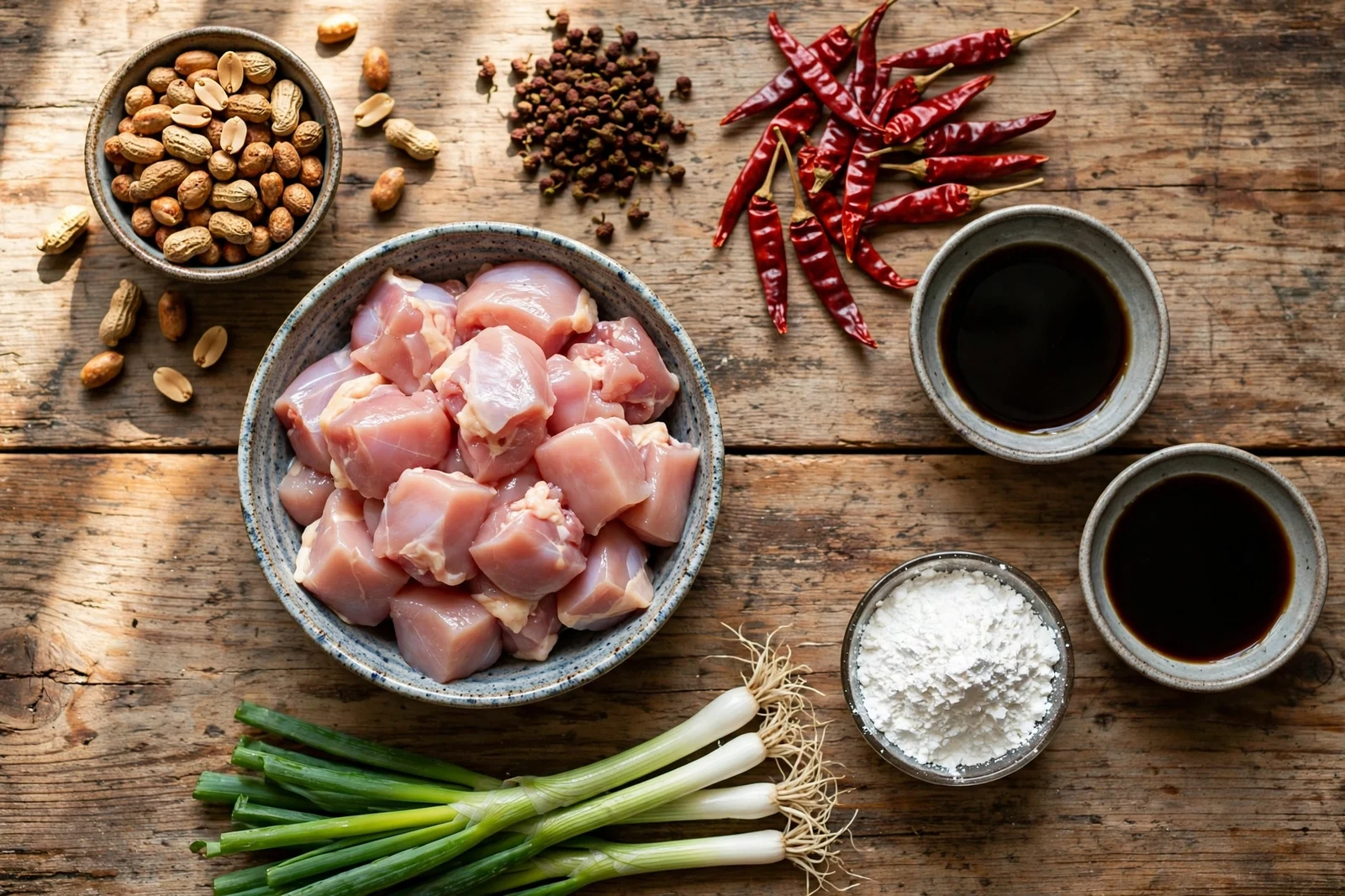
Ingredients
For the Chicken and Marinade
For the Sauce
For the Stir-Fry
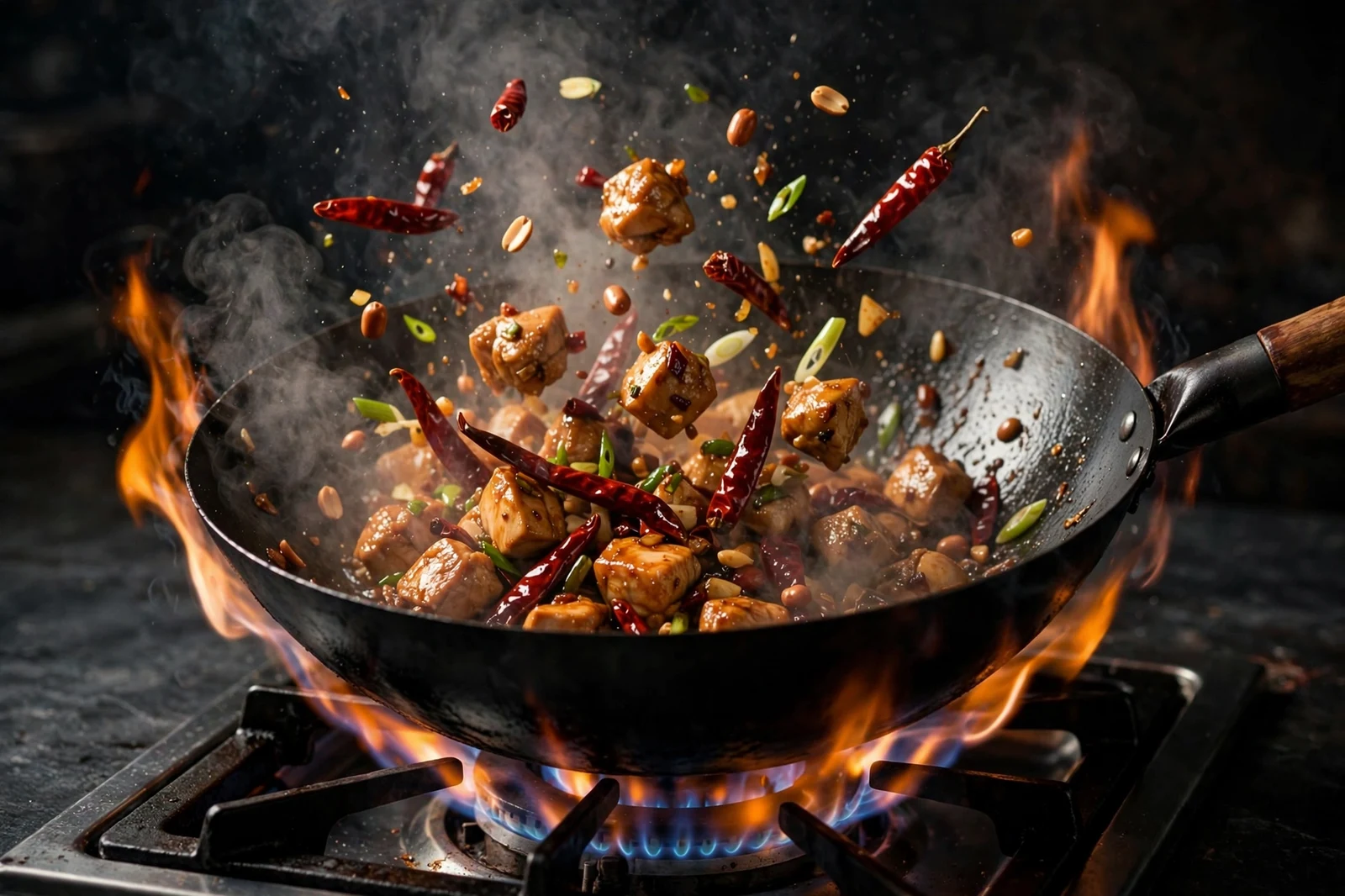
Instructions
Step 1. Marinate the chicken. Toss the chicken cubes with the Shaoxing wine, light soy sauce, cornstarch, and sesame oil in a bowl until every piece is lightly coated. Let it sit at room temperature for 15 minutes while you prep everything else. The cornstarch gives the chicken a thin velvety coating that stays juicy in the hot wok.
Step 2. Mix the sauce. Whisk together the black vinegar, light soy sauce, dark soy sauce, sugar, cornstarch, and water in a small bowl until the sugar and cornstarch dissolve. Stir it again right before you add it to the wok — cornstarch sinks fast.
Step 3. Prep the aromatics. Have everything within arm's reach of the stove: chilies, peppercorns, garlic, ginger, scallions, and peanuts. A wok stir-fry moves in minutes, not tens of minutes — there is no time to chop once the oil is hot.
Step 4. Sear the chicken. Heat 2 tablespoons of the oil in a wok or large skillet over high heat until it just starts to smoke. Add the chicken in a single layer (work in two batches if your pan is crowded) and sear 2 to 3 minutes without moving it, then stir-fry another 2 minutes until golden at the edges and just cooked through. Transfer to a clean plate.
Step 5. Bloom the chilies and peppercorns. Return the wok to high heat, add the remaining 1 tablespoon of oil, and toss in the dried chilies and Sichuan peppercorns. Stir-fry 30 to 45 seconds until the chilies darken a shade and smell intensely fragrant. This is where the dish's signature aroma comes from — do not skip or rush it.
Step 6. Add the aromatics. Stir in the garlic, ginger, and the white parts of the scallions. Cook 30 seconds, just until fragrant. Keep everything moving; garlic burns fast at this heat.
Step 7. Combine and sauce. Return the chicken to the wok along with the scallion greens and peanuts. Give the sauce one more stir, then pour it in. Toss everything for 1 to 2 minutes until the sauce thickens into a glossy coat on the chicken. If the sauce thickens too fast, splash in a spoonful of water.
Step 8. Serve. Tip the chicken into a serving dish and bring it to the table with hot jasmine rice. The chilies and peppercorns are edible but intense — eat around them, or pick out the worst offenders for spice-sensitive guests.
Tips and Variations
Do not skip the black vinegar. It is the difference between a good stir-fry and a kung pao that tastes like the one from your favorite Sichuan spot. Chinkiang vinegar is cheap and keeps for ages in the pantry.
Control the heat with the chilies. The seeds hold most of the fire. Shake most of them out before frying the chilies for a fragrant-but-moderate dish, or leave them in for a spicier version. The number of whole chilies matters less than the seeds.
Cashews instead of peanuts. Roasted cashews are a common restaurant substitution and taste excellent here — use the same half cup.
Chicken breast works too. Thighs stay juicier and forgive overcooking, which is why they are the default here. If you prefer breast, cut the cubes a little larger and pull the pan off the heat a minute sooner.
Vegetable add-ins. Diced bell peppers or water chestnuts are popular in American-style versions. If you add them, stir-fry them in step 6 with the aromatics for 1 to 2 minutes so they keep a little crunch.
Getting that wok flavor. A ripping-hot pan is non-negotiable for the charred edges and smoky aroma that make this dish special. If you are new to wok cooking, our guide on What Is Wok Hei and How to Get It at Home walks through pan choice, heat management, and the single-layer rule that keeps stir-fries from steaming.
How to Serve Kung Pao Chicken
Plain steamed jasmine rice is the classic partner — it soaks up the glossy sauce and cools the heat between bites. A simple cucumber salad on the side (our Japanese Cucumber Sunomono is a cool, vinegary counterpoint) turns it into a complete meal. Leftovers keep well in the fridge for 3 days; the peanuts lose a little crunch, but the flavors deepen overnight. Reheat quickly in a hot pan rather than the microwave for the best texture.
Common Questions
Is kung pao chicken supposed to be spicy? It should have noticeable heat from the dried chilies, but heat is only one thread — sweet, sour, and savory carry equal weight. If you want it milder, shake the seeds out of the chilies and reduce them to six.
Can I use bell peppers instead of dried chilies? Not as a substitute — dried red chilies provide the dish's defining aroma, not just heat. Add bell peppers as a bonus vegetable if you like, but keep the chilies.
Why did my sauce get too thick? Cornstarch thickens fast in a hot wok, and it keeps thickening off the heat. A spoonful of water loosens it back to a glossy coat. Next time, give the sauce a shorter tossing time — 1 minute is plenty.
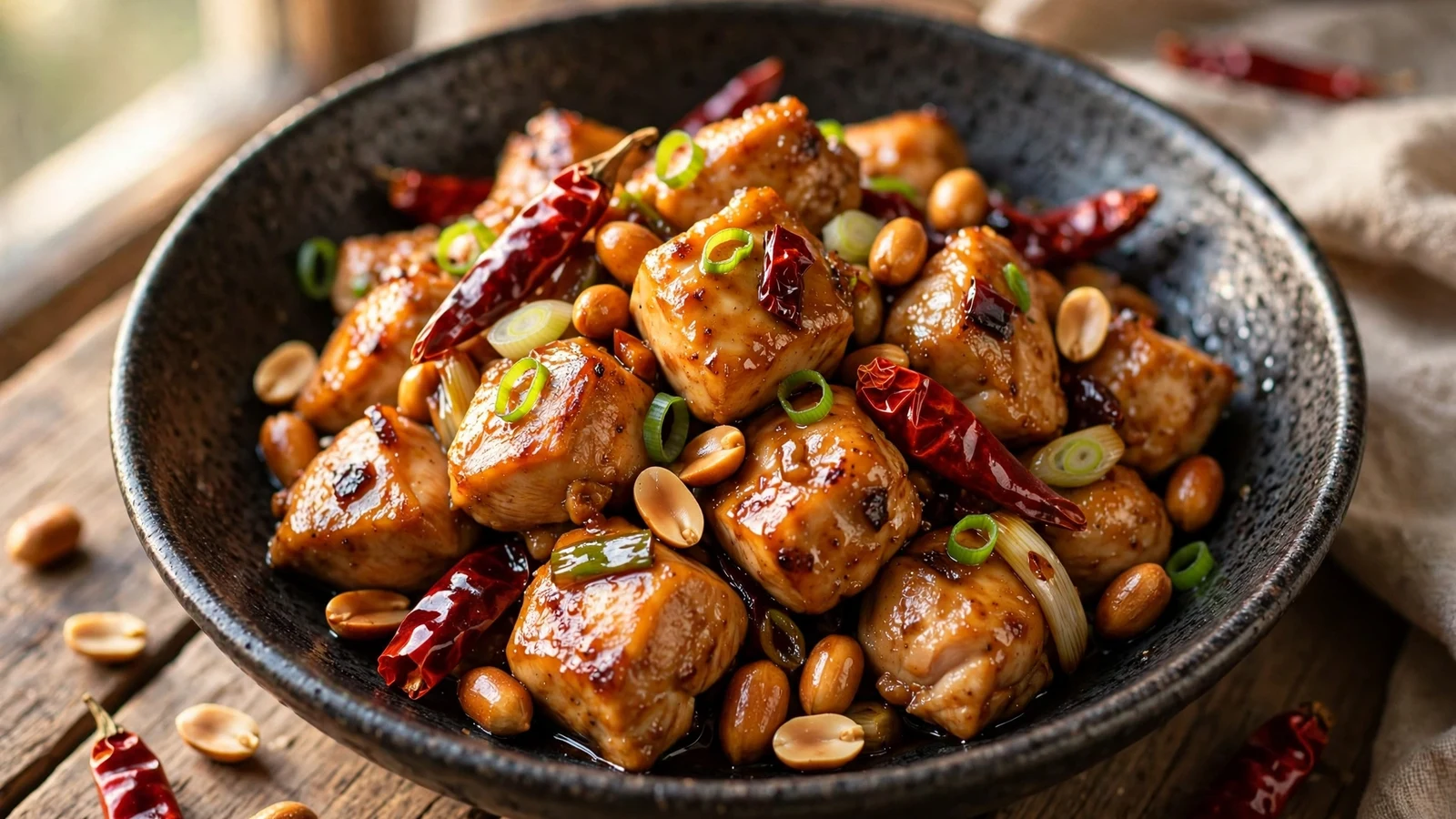
Kung Pao Chicken
Ingredients
Method
- Toss the chicken cubes with the Shaoxing wine, light soy sauce, cornstarch, and sesame oil. Rest at room temperature for 15 minutes.
- Whisk the black vinegar, light and dark soy sauces, sugar, cornstarch, and water until the sugar and cornstarch dissolve.
- Heat 2 tablespoons oil in a wok over high heat until just smoking. Sear the chicken in a single layer 2-3 minutes undisturbed, then stir-fry 2 minutes until golden and cooked through. Transfer to a plate.
- Return the wok to high heat, add the remaining 1 tablespoon oil, and stir-fry the dried chilies and Sichuan peppercorns 30-45 seconds until darkened and intensely fragrant.
- Add the garlic, ginger, and scallion whites; stir-fry 30 seconds until fragrant.
- Return the chicken to the wok with the scallion greens and peanuts. Stir the sauce once more, pour it in, and toss 1-2 minutes until glossy and thickened. Serve over hot jasmine rice.
1 thought on “Kung Pao Chicken”