
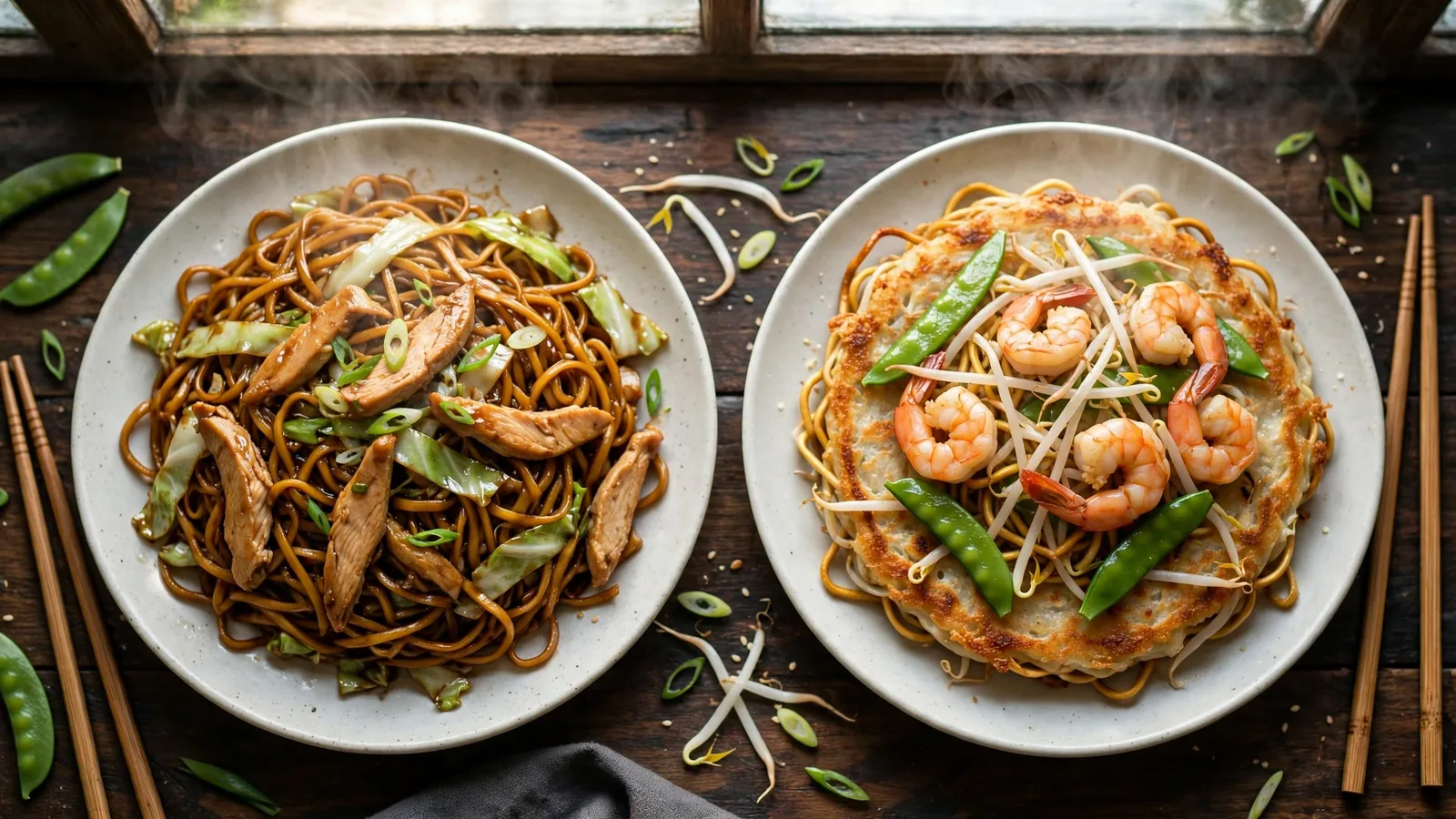
Order both at the same Chinese-American restaurant and you'll get two plates that look like cousins and eat like opposites. One is soft, glossy, and saucy, with the noodles front and center in every bite. The other arrives with crisp, golden edges, vegetables that still snap, and sauce that clings instead of pooling. That's the whole lo mein vs chow mein divide: tossed and soft versus fried and crisp.
The names point straight at the method. Lo mein means "tossed noodles" — fully cooked noodles folded through sauce and stir-fried ingredients at the end. Chow mein means "fried noodles" — noodles that spend real time in contact with a hot wok or pan until parts of them crisp. Once you know that, the texture difference stops being a menu mystery.
The Quick Verdict
- Reach for lo mein when you want a saucy, comforting noodle plate where tender noodles carry the flavor — the kind of dish that stays good as leftovers and reheats without a fight.
- Reach for chow mein when texture is the point: crisp noodle edges against tender centers, vegetables kept distinct, and a lighter coating of sauce.
- At home, your pan decides. A wide, ripping-hot wok favors chow mein's crisping. A smaller pan or a saucier stir-fry favors lo mein, which forgives crowding.
Lo Mein vs Chow Mein at a Glance
| Detail | Lo Mein | Chow Mein |
|---|---|---|
| Name means | "Tossed noodles" | "Fried noodles" |
| Noodle job | Boiled until tender, then tossed in sauce off the hardest heat | Par-cooked, then pan-fried or wok-fried until edges crisp |
| Texture | Soft, springy, fully tender | Crisp edges with tender middles; sometimes served as a crunchy noodle cake |
| Sauce amount | Generous — the noodles drink it in | Light coating — sauce seasons rather than soaks |
| Vegetable cut | Often mixed right through the noodles | Often stir-fried separately and spooned over the crisped noodles |
| Protein | Sliced thin and tossed through | Sliced thin and served through or over the top |
| Reheat quality | Excellent; a splash of water revives it | Crispness fades — best eaten right away |
| Classic restaurant style | Cantonese-American takeout staple | Two styles: steamed (soft) and crispy (Hong Kong style) |
One complication worth clearing up early: in many American takeout shops, "chow mein" has also been used for a saucy chop-suey-style dish served over crisp canned noodle sticks. The comparison below is about the wok-cooked noodle dish — noodles fried in the pan — which is what most home cooks mean when they choose between the two.
The Noodles Themselves
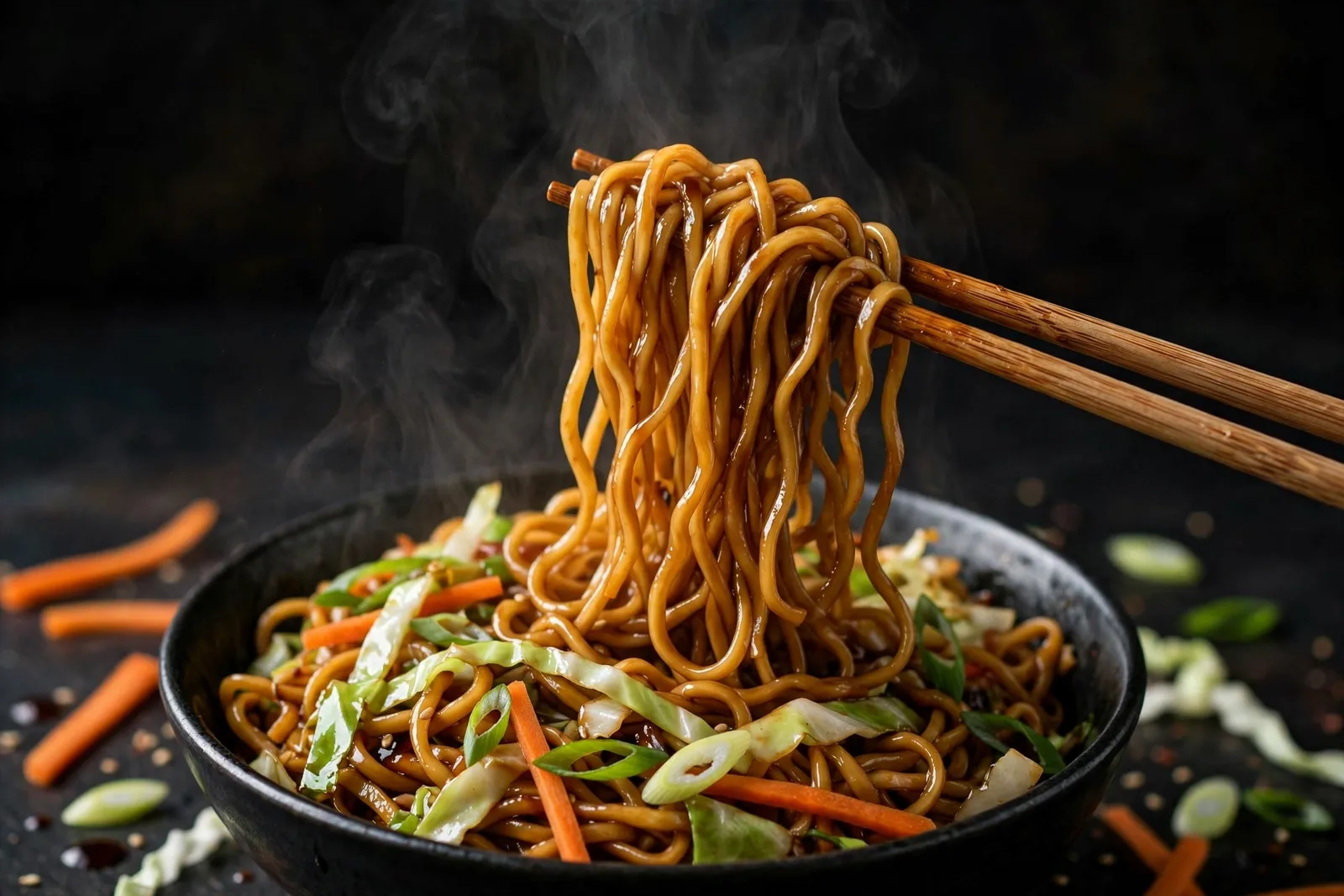
Both dishes start from the same family: wheat-and-egg Chinese noodles, sold fresh in nests or dried in bundles. The noodle isn't really what changes — it's what you do to it.
For lo mein, noodles are boiled until just tender, drained, and tossed with sauce while they're still hot and absorbent. Fresh noodles need only 2 to 3 minutes; dried ones take 4 to 5. Pull them about 30 seconds shy of done, because they'll finish in the sauce. The sauce ratio that works for a home batch is roughly 3 tablespoons of sauce per 8 ounces (225 g) of noodles, scaled up for a bigger wok — enough to gloss every strand without flooding the plate. If you like building noodle sauces from scratch, the balance in Scallion Oil Noodles shows how far a simple aromatic oil and soy can go.
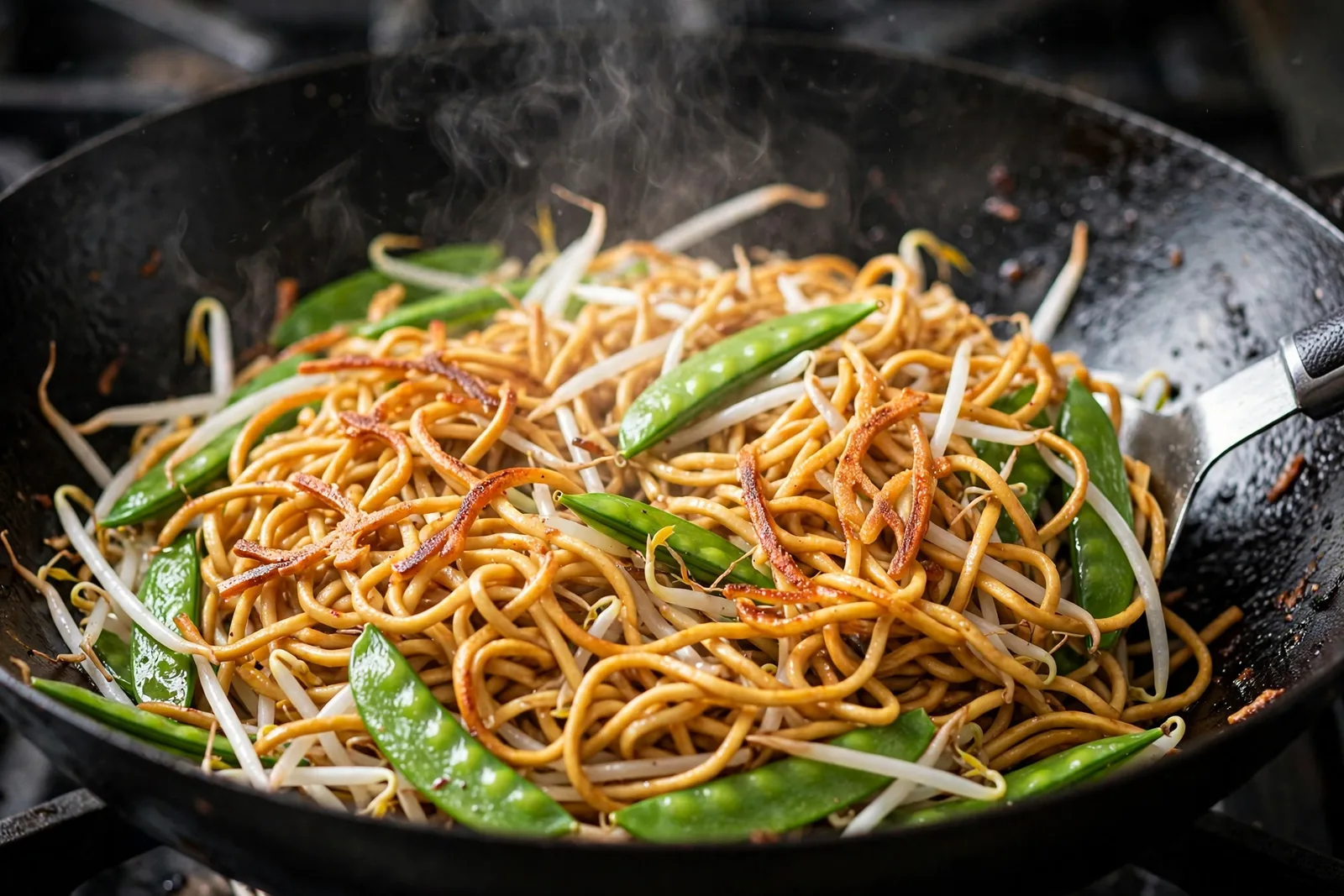
For chow mein, noodles are par-cooked, drained well, and spread out to dry a little — surface moisture is the enemy of crispness. Then they go into a hot, oiled wok in an even layer and sit undisturbed for 2 to 3 minutes per side until the bottom turns golden. That hands-off minute is where the wok hei — the faint smoky sear from a properly hot wok — actually happens. Crowd the pan and the noodles steam instead of frying, which quietly turns your chow mein into lo mein.
Sauce: Soaked In vs Seasoned On
A classic lo mein sauce leans on light soy sauce for salt, a touch of dark soy for color, oyster sauce for body, sesame oil at the end, and a pinch of sugar to round it out. Because the noodles are absorbent and served saucy, the sauce can be a little bold — the noodles will mellow it.
Chow mein uses a similar pantry, but less of it, and it usually goes over the stir-fried toppings rather than soaking the noodles. The noodles get their flavor from the fry itself: hot oil, seared edges, and whatever sauce clings from the vegetables and protein spooned over the top. That's why chow mein tastes lighter even when the ingredient lists look identical.
A useful rule when you're improvising: start either dish with the same base sauce, then use about two-thirds as much for chow mein and add a splash of water or stock to loosen it, since it needs to coat rather than pool.
Which One Should You Order (or Cook)?
| Situation | Better pick | Why |
|---|---|---|
| You want maximum sauce in every bite | Lo mein | Tender noodles absorb sauce instead of shedding it |
| You love crispy-chewy contrast | Chow mein | Fried edges against tender centers is the whole dish |
| Making it ahead or feeding a crowd | Lo mein | Holds and reheats well; crisp noodles don't |
| Vegetables should stay crisp and distinct | Chow mein | Toppings are cooked separately and served over |
| Small pan, modest burner | Lo mein | Forgiving of crowding; no crisping step to ruin |
| Big wok, high heat, cooking for two | Chow mein | Enough room and heat to actually fry the noodles |
| Saucy leftovers for tomorrow's lunch | Lo mein | A splash of water and a hot pan brings it back |
The pattern is simple: lo mein is the generous, sauce-first dish; chow mein is the texture-first dish. Neither is the "healthier" or more authentic choice in any absolute sense — both are long-standing Cantonese and Chinese-American staples, and plenty of restaurants serve a soft, steamed-noodle chow mein that lands somewhere between the two.
Making Each One at Home: The Moves That Matter
For lo mein:
1. Cook the noodles 30 seconds shy of the package time, drain, and rinse briefly so they don't clump while you stir-fry.
2. Stir-fry protein and hard vegetables first, in the hottest pan you have — this is where seasoning a carbon steel wok pays off, since noodles and eggs love to stick to a dry surface.
3. Add noodles and sauce together, toss for 1 to 2 minutes until glossy, then finish with sesame oil and scallions off the heat.
For chow mein:
1. Par-cook and drain the noodles, then spread them on a tray for 10 to 15 minutes so the surface dries — this step decides whether they crisp.
2. Fry the noodles in a wide, even layer with enough oil to coat the pan, undisturbed, until golden underneath; flip once and crisp the second side.
3. Stir-fry the toppings separately with their sauce, then spoon everything over the noodle cake (or toss just at serving, so the crisp survives to the table).
Both dishes take the same proteins well — sliced chicken, shrimp, char siu, or tofu — and both welcome the same vegetables: cabbage, bean sprouts, carrots, snap peas, and scallions. If soft, sauce-heavy noodles are your thing generally, Pad See Ew scratches a similar itch with wide rice noodles and dark soy; if you want heat with your chew, Dan Dan Noodles go the other direction — saucy, spicy, and unapologetically bold.
The One-Minute Test
Still torn at the menu? Ask yourself one question: do I want to twirl, or do I want to crunch? Twirl — lo mein, soft and saucy. Crunch — chow mein, crisped in the wok and eaten the moment it lands. Pick by texture, and you'll order the right plate every time.