
What Malabar Spinach Actually Is
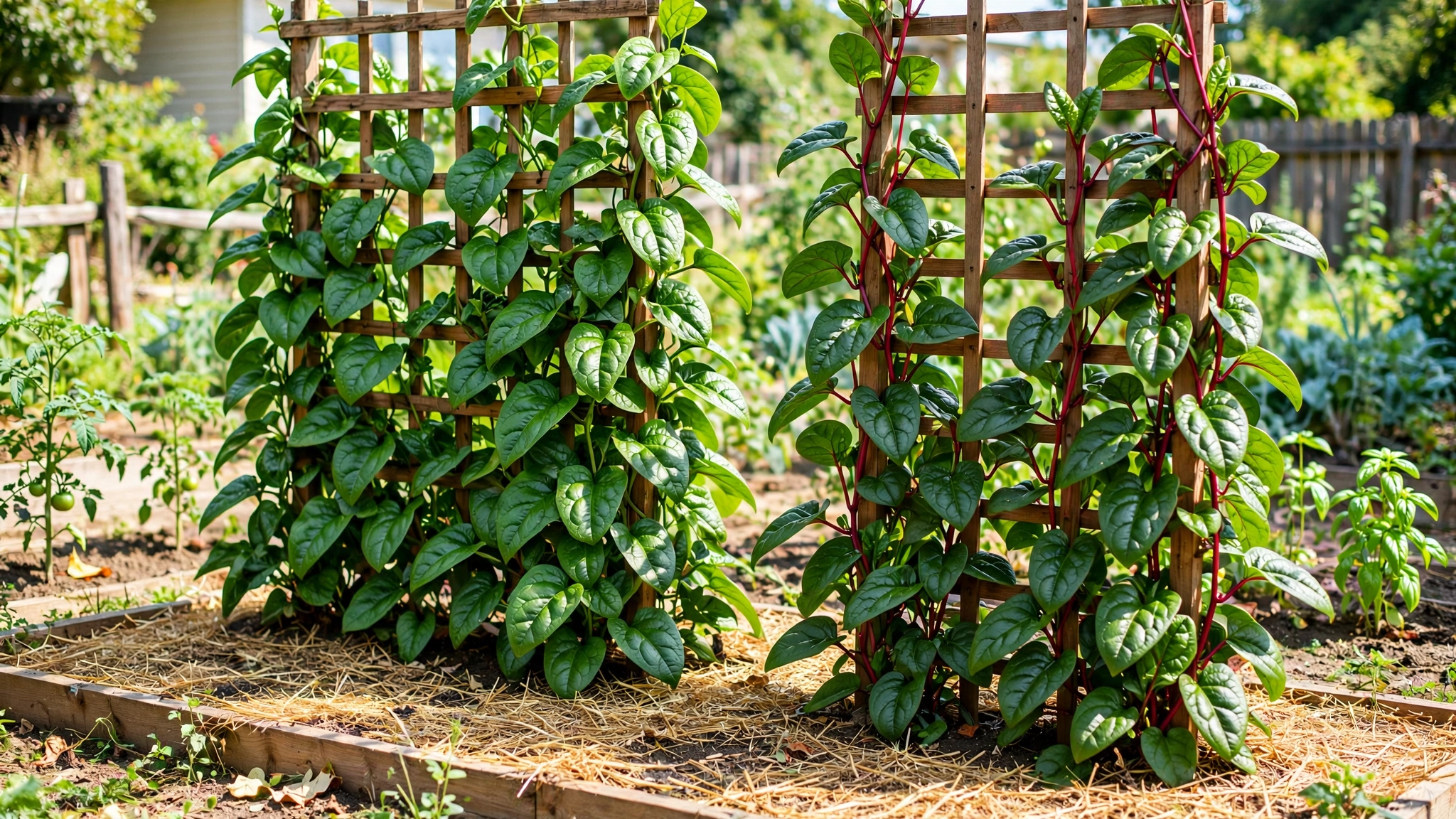
Malabar spinach (Basella alba, and the red-stemmed Basella rubra) is not true spinach at all. It is a heat-loving tropical vine with thick, glossy leaves that stay tender in weather that makes real spinach bolt and turn bitter. That is the whole reason to grow it: when your spring greens quit in June, Malabar spinach is just getting started.
The flavor is mild and green, close to spinach with a hint of citrus and pepper, and the leaves have a slightly mucilaginous texture that thickens soups and stir-fries the way okra does. Picked young and cooked fast, that texture stays pleasant. Left to grow old and thick on the vine in brutal heat, the leaves get slimy and strong, which is the complaint most people have with this plant. Nearly every fix in this guide comes back to one habit: harvest young, harvest often.
If you already grow warm-weather Asian greens, the seasonal picture in When to Plant Asian Greens: A Seasonal Calendar shows where Malabar spinach fits: it is the last green you plant in spring and one of the last still standing in early fall.
When to Plant It
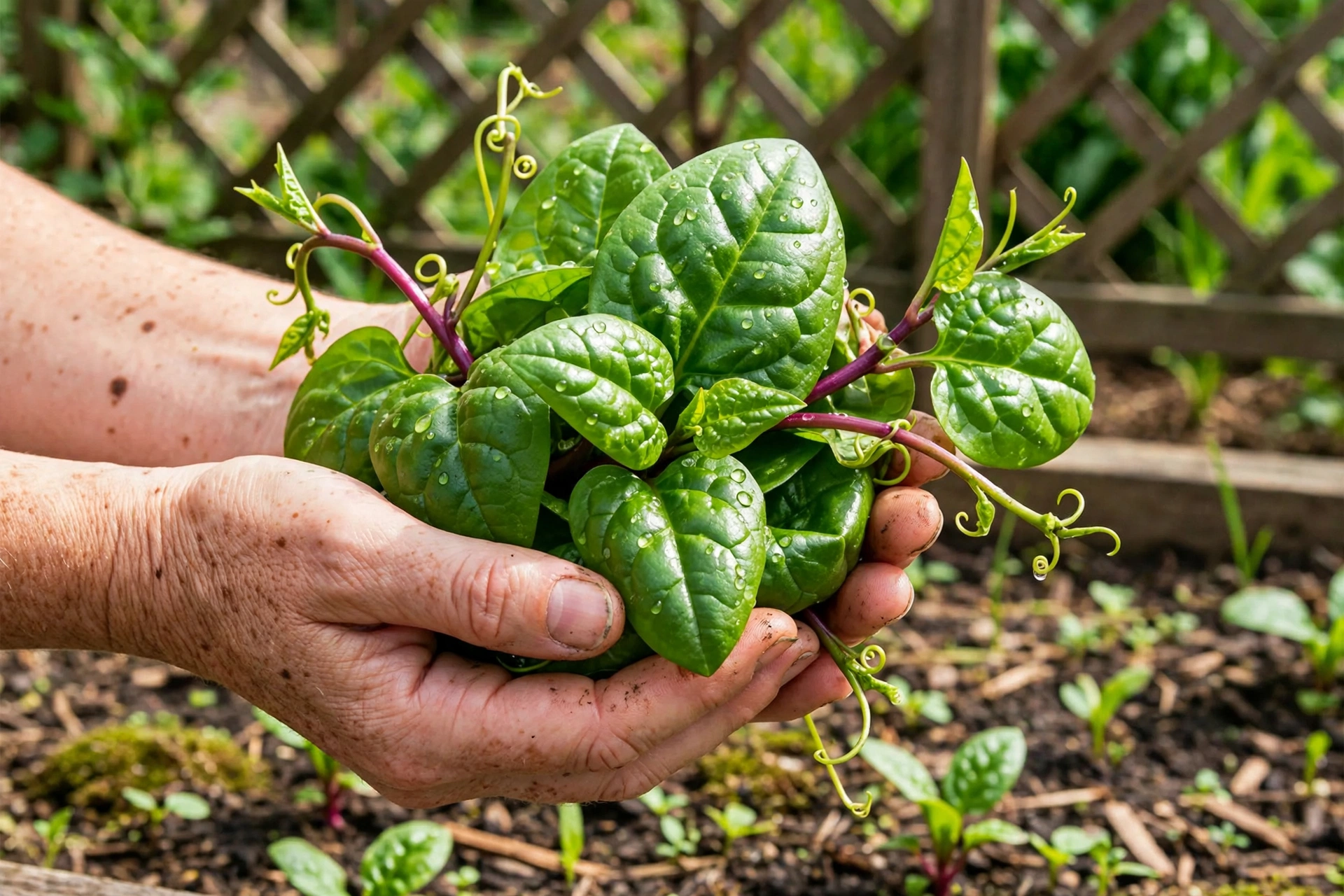
Malabar spinach wants real warmth. Seeds sulk in cool soil and seedlings stall below about 60°F at night.
- Soil temperature: Sow when soil is at least 70°F, ideally 75–85°F. In most of the U.S. that means late spring, a week or two after your last frost date.
- Direct sow or transplant: Both work. Starting seeds indoors 4–6 weeks before the last frost and transplanting after nights stay warm gives the vines a head start in short-season climates. In long, hot summers, direct sowing is simpler and the plants catch up fast.
- Where it shines: Zones 7 and warmer get a long season outdoors. In zones 5–6, grow it as a summer annual started indoors. In frost-free climates it can behave like a short-lived perennial.
- Fall note: The first frost kills it outright. Plan to take your last big harvest before frost, because cold-damaged leaves turn mushy on the plant.
Because it needs heat to germinate, Malabar spinach is a poor candidate for the cool spring slots in a container plan. Give those to bok choy and herbs first, then let this vine take over a pot when summer settles in — the rotation in Balcony Wok Garden: 8 Plants for Small Spaces works well for timing which pot gets which crop.
Give It Something to Climb
Left alone, Malabar spinach sprawls along the ground, where the leaves pick up soil splash and slugs find them first. Trained up, it is a tidy, productive vine that can reach 6–10 feet in a hot summer.
- In beds: A trellis, fence, or tomato cage along the north side of the bed keeps the vine from shading shorter crops. Space plants 12 inches apart along the support.
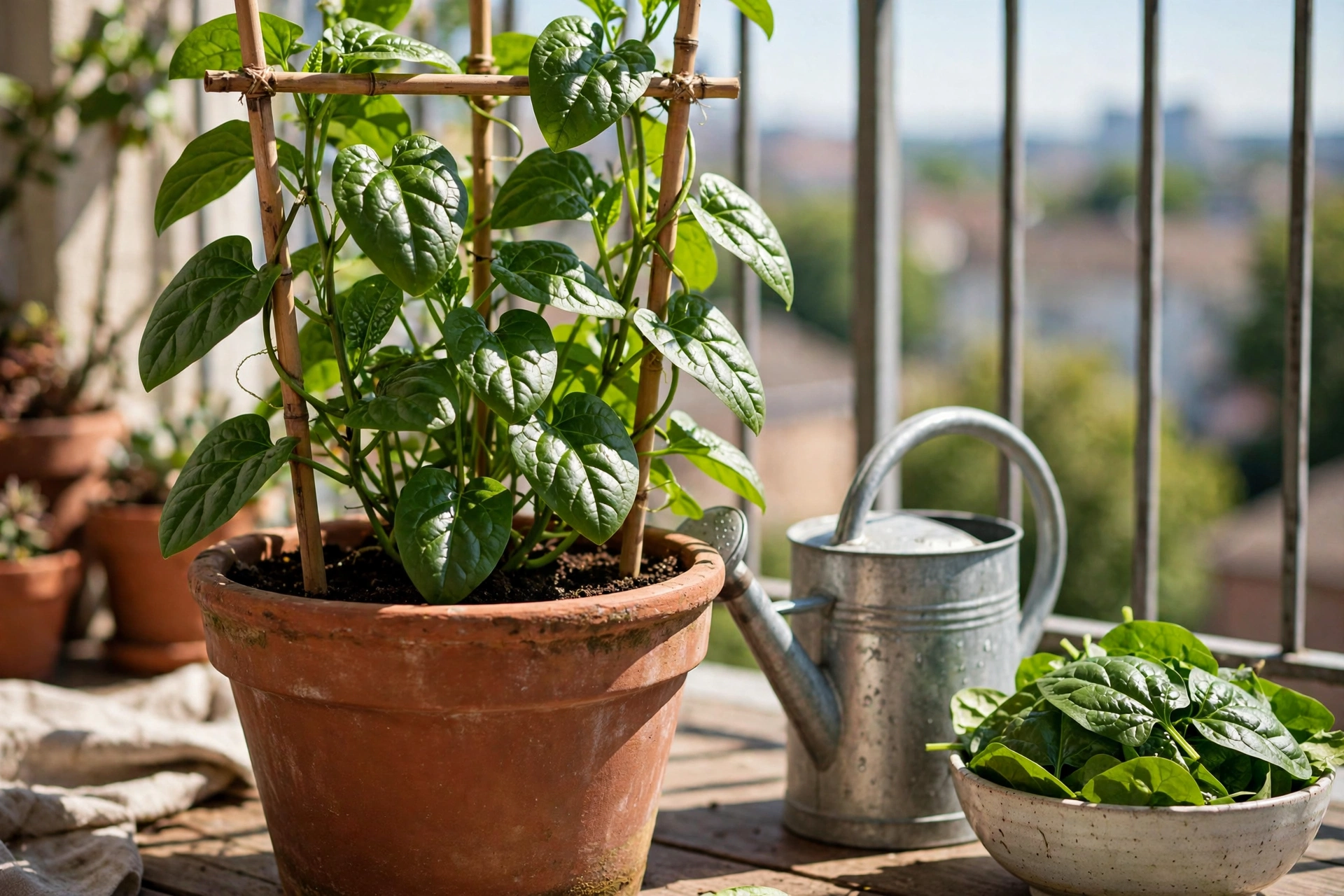
- In pots: A 5-gallon pot is the practical minimum for one plant; 10 gallons grows a noticeably bigger vine. Push a 4–5 foot stake, small trellis, or tomato cage into the pot at planting time, not after the vine is already wandering.
- Sun: Six or more hours of direct sun. It tolerates light afternoon shade in very hot climates, but deep shade makes thin, pale vines with small leaves.
- Soil: Rich and moisture-retentive beats lean and sandy. Work compost into beds, and use a good potting mix with compost in containers. A pH anywhere from 6.0 to 7.5 is fine.
Red-stemmed types are ornamental enough for a front-yard trellis, with pink flowers and dark purple berries later in the season. The berries stain, so keep them off pale paving.
Water, Food, and Day-to-Day Care
This is a thirsty vine. The thick leaves that make it heat-proof also mean it drinks steadily, and drought-stressed plants produce smaller, tougher leaves.
- Water: Keep soil evenly moist, roughly 1–1.5 inches per week in beds, and check pots daily in midsummer — a 5-gallon pot in full sun can need water every day. Mulch beds and pots with 2–3 inches of straw or shredded leaves to slow evaporation.
- Feeding: Work compost in at planting, then feed every 3–4 weeks with a balanced liquid fertilizer at half strength, or side-dress with more compost. Heavy nitrogen pushes leafy growth, which is what you want, but overfeeding makes soft growth that aphids love.
- Pinching: Pinch the growing tips once the vine is about a foot tall. That forces side shoots, and side shoots are where most of your harvest comes from. Keep pinching tips all season — the pinched tips themselves are edible and tender.
- Pests: Fewer than most greens. Watch for aphids on soft new growth and leaf-chewing caterpillars in late summer. A hard spray of water handles most aphid problems. Hand-pick caterpillars; the crop is not worth spraying for a home gardener's usual level of damage.
Like its warm-weather cousin in Growing Water Spinach (Kangkong) at Home, Malabar spinach rewards heat and steady water more than fussing. Set up the moisture and the trellis, then mostly leave it alone.
How and When to Harvest
Start picking when the vine is about 2 feet tall and has plenty of side shoots. The rule is simple: take young leaves and tender tips, and never strip a stem bare.
- What to pick: Leaves 3–4 inches long are the sweet spot — thick enough to hold up in a stir-fry, young enough to stay mild. Snap or cut off the top 4–6 inches of each shoot as your main harvest; that tip cut doubles as your pinching.
- How often: Every few days in peak heat. This vine grows fast enough that a weekly harvest lets leaves get old and slimy, which is where the bad reputation comes from.
- How much at once: Take up to a third of the plant at a time. It regrows quickly in hot weather.
- Seeds: Let a vine or two flower in late summer if you want seed. The berries ripen to dark purple-black; dry them and store the seed cool and dry for next year. Be aware it self-sows freely in warm climates — pull volunteers where you do not want them.
Using the Harvest in the Kitchen
Treat Malabar spinach like a sturdier spinach. The leaves hold their shape in hot dishes instead of melting away, and they release a gentle thickening into broths.
- Stir-fries: Add whole young leaves in the last minute of cooking, the way you would finish the greens in Sambal Kangkong: Water Spinach with Chili. The same garlic-chili treatment suits Malabar spinach, and the leaves will not shrink to a spoonful.
- Soups: Drop leaves into hot broth right before serving. They thicken the broth slightly and stay silky rather than stringy — a good stand-in when a soup wants spinach in midsummer.
- Eggs and curries: Fold chopped leaves into scrambled eggs, or simmer them briefly in a coconut curry where their body holds up against the sauce.
- What to avoid: Long boiling. Ten minutes in a rolling pot turns the texture gluey. Short cooking is the difference between a pleasant green and the slimy version people warn you about.
Use leaves the day you pick them when you can. If you must store them, wrap unwashed leaves in a dry towel inside a sealed container in the fridge and use within 2–3 days — the storage habits in How to Store Fresh Herbs So They Last Longer apply here too, with the towel on the drier side since these leaves hold so much water of their own.
Quick Troubleshooting
| Problem | Likely cause | Fix |
|---|---|---|
| Seeds never sprouted | Soil too cool, or old seed | Re-sow once soil is above 70°F; soak fresh seed overnight first |
| Seedlings sit still for weeks | Nights still below 60°F | Wait for warm nights; do not feed harder to compensate |
| Leaves taste slimy and strong | Harvested too old, or cooked too long | Pick at 3–4 inches, cook briefly |
| Pale, small leaves | Too much shade or hungry soil | Move to more sun; feed and mulch |
| Vines everywhere except the trellis | Tips not guided early | Weave young shoots through the support weekly; pinch strays |
| Plant vanished overnight in fall | First frost | Expected — take the final harvest before frost is forecast |
Grow it warm, grow it up a trellis, keep it watered, and pick it young and often. Do that, and Malabar spinach covers the exact weeks when every other leafy green in the garden has given up on summer.