
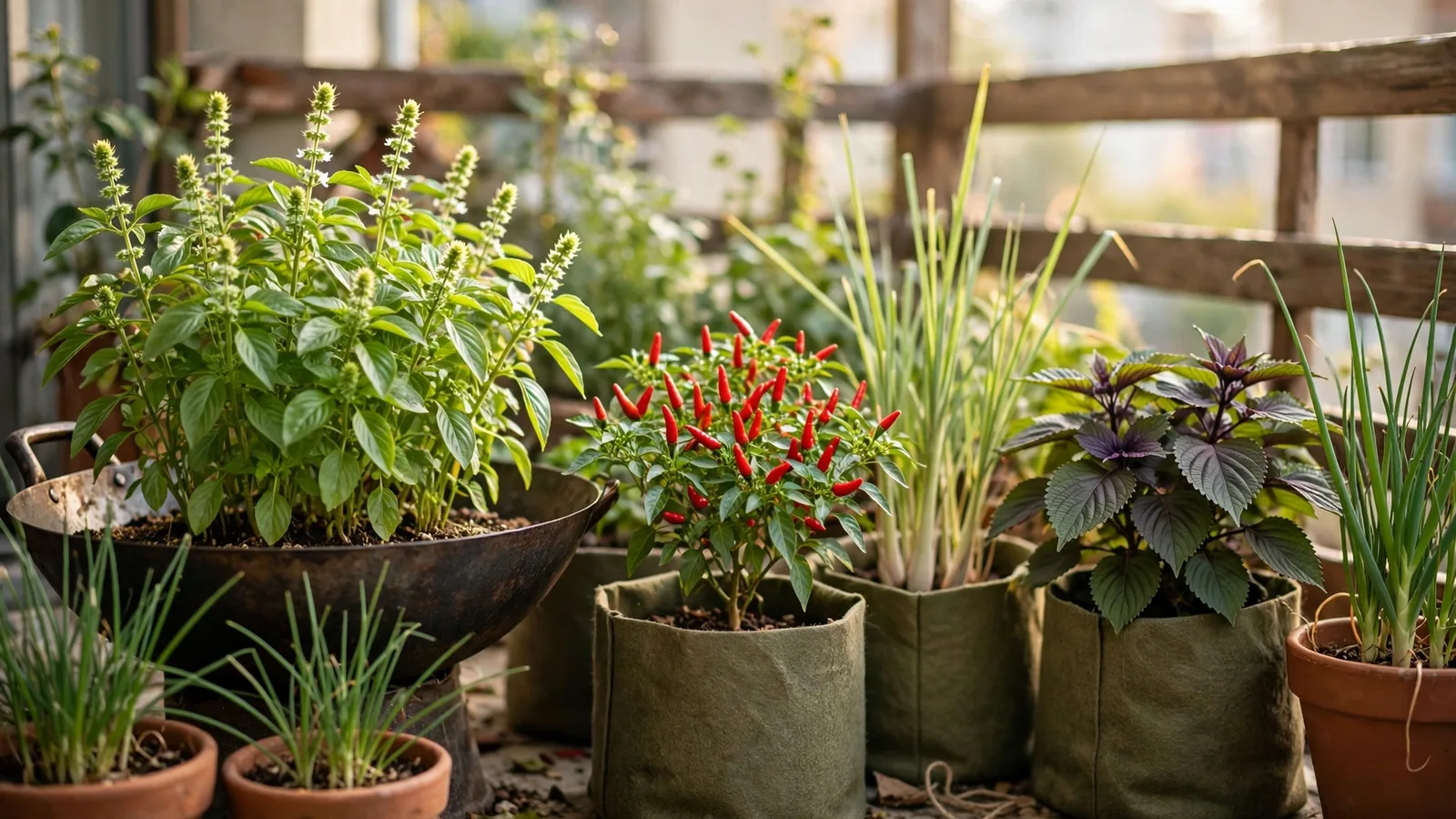
A balcony does not need to be big to feed your stir-fry habit. A sunny rail or a five-by-five corner can hold enough herbs and chilies to change how a weeknight wok tastes. Fresh Thai basil torn over hot noodles, garlic chives snipped into eggs, a couple of bird’s eye chilies sliced over rice — those small additions are hard to match with store-bought herbs that have sat in a clamshell for a week.
This guide walks through eight plants that earn their space on a small balcony, how to arrange them so nothing gets crowded out, and the soil and watering habits that keep them producing. For a broader plan, see the Vietnamese herb container garden plan.
Why a Balcony Wok Garden Works So Well
Most classic stir-fry aromatics are naturally suited to pots. They grow fast, they like heat, and you harvest them a little at a time — exactly how you cook with them. A big garden bed is nice, but it is not required. What these plants really need is sun, warm air, and soil that drains freely.
A balcony also gives you control. You can move a pot to catch more light, pull a tender herb under cover before a storm, and keep thirsty plants separate from those that prefer things drier.
What You Need Before You Plant
You do not need much gear, but a few choices up front save trouble later.
Containers. Five- to seven-gallon fabric grow bags suit larger herbs like Thai basil and lemongrass. They breathe well, they are light, and they fold flat in winter. For smaller herbs, one- to three-gallon pots are plenty. Every container needs drainage holes.
Soil. Use a quality potting mix, not garden soil. Potting mix drains properly and does not compact in a container. Stir in a handful of perlite if your mix feels heavy, and a slow-release organic fertilizer at planting time.
A watering can with a narrow spout. This lets you aim at the soil line instead of soaking leaves and the patio below.
One tray or saucer per pot. This protects your balcony floor and shows whether you are overwatering.
With those basics covered, here are the eight plants that give you the most stir-fry value per square foot.
Sun: Read Your Balcony First
Stand on your balcony at midday and look at where the sun falls. Most of the plants below want at least six hours of direct sun. South- or west-facing is ideal. East-facing works too, especially in hot climates where a break from afternoon sun keeps leaves tender. If your space gets fewer than five hours, lean on the shade-tolerant picks — culantro and perilla — and expect slower growth.
The 8 Plants for Your Balcony Wok Garden
1. Thai Basil
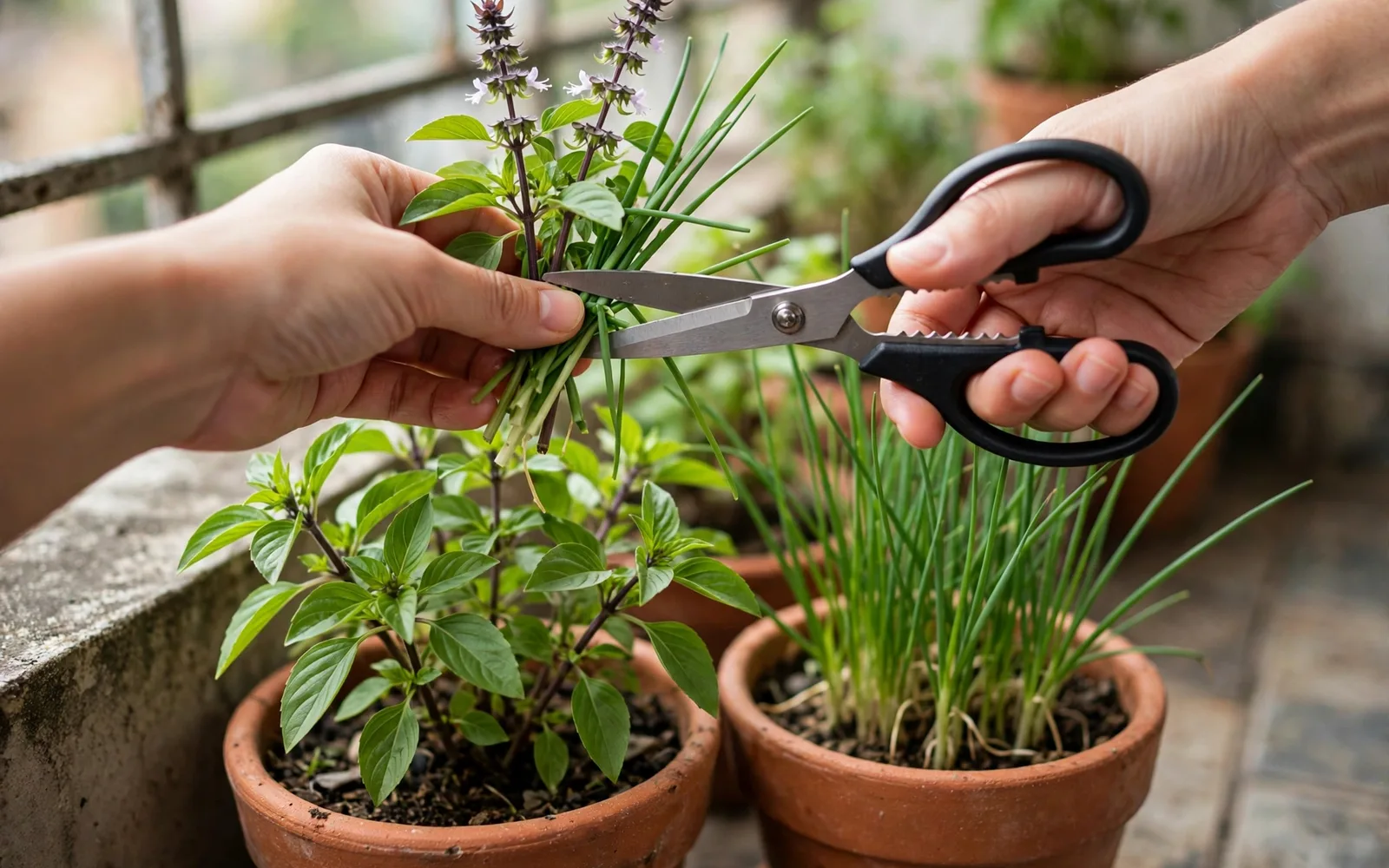
Thai basil is the backbone of this garden. It has a warm, anise-like flavor that holds up in hot oil, which is why it shows up in dishes like drunken noodles and Thai basil chicken. Grow it in a three- to five-gallon pot in full sun. Pinch the growing tips every week or so, even if you are not cooking with it that day. Pinching keeps the plant bushy and delays flowering, and once Thai basil flowers heavily, the leaves get smaller and the flavor turns bitter. Harvest from the top down, always leaving a set of leaves below your cut.
2. Garlic Chives
Garlic chives (sometimes called Chinese chives) give you a mild garlic flavor without peeling a single clove. They grow in neat grassy clumps, shrug off heat, and come back year after year in mild climates. A two-gallon pot is enough for a steady supply. Snip what you need with scissors, cutting a few inches above the soil, and the clump refills itself in a couple of weeks. If you want a deeper walk-through, the guide to growing garlic chives in containers covers spacing and feeding in detail.
3. Thai Chili Peppers
A single Thai chili plant can produce more heat than a small household can use. The peppers are tiny, fiery, and perfect for slicing over fried rice or pounding into a quick chili sauce. Give the plant your sunniest spot and a three-gallon pot. Support it with a small stake once it loads up with fruit. Pick peppers often — the more you pick, the more the plant sets. For variety selection and heat management, see how to grow Thai chili peppers in pots.
4. Culantro
Culantro is cilantro’s tougher cousin. It handles heat without bolting in a week, and a few serrated leaves chopped fine can stand in for a whole handful of cilantro in soups and salads. Culantro prefers a little afternoon shade and consistently moist soil, so place it where taller pots cast light cover at the hottest hour. It grows slowly at first, so start early or buy a nursery plant. More detail lives in the guide to growing culantro at home.
5. Lemongrass
Lemongrass looks dramatic and earns it. The stalks flavor soups, curries, and marinades, and the plant doubles as a privacy screen on a balcony rail. It needs room: use a seven-gallon bag at minimum and expect it to reach three feet tall in a good summer. Water deeply and feed monthly. In colder zones, bring the whole bag indoors before the first frost or treat it as a summer annual. The guide to overwintering lemongrass indoors walks through the indoor routine.
6. Perilla (Shiso)
Perilla grows fast, self-seeds freely, and gives you big, fragrant leaves that wrap rice, garnish noodles, or get shredded into salads. It tolerates partial shade better than most herbs here, so it is a good pick for the less sunny end of the balcony. Grow it in a two- to three-gallon pot and stay ahead of the flowers if you do not want seedlings in every neighboring pot next spring. See how to grow perilla in pots for red and green varieties.
7. Scallions
Scallions may be the highest-return plant on this list. Save the white root ends from a grocery bunch, stand them in water for a few days until new roots show, then plant them in a long, shallow container. They regrow fast, and you can harvest the green tops again and again. Tuck a scallion box along a rail where a round pot will not fit. They ask for little: sun, regular water, and a pinch of fertilizer now and then.
8. Water Spinach (Kangkong)
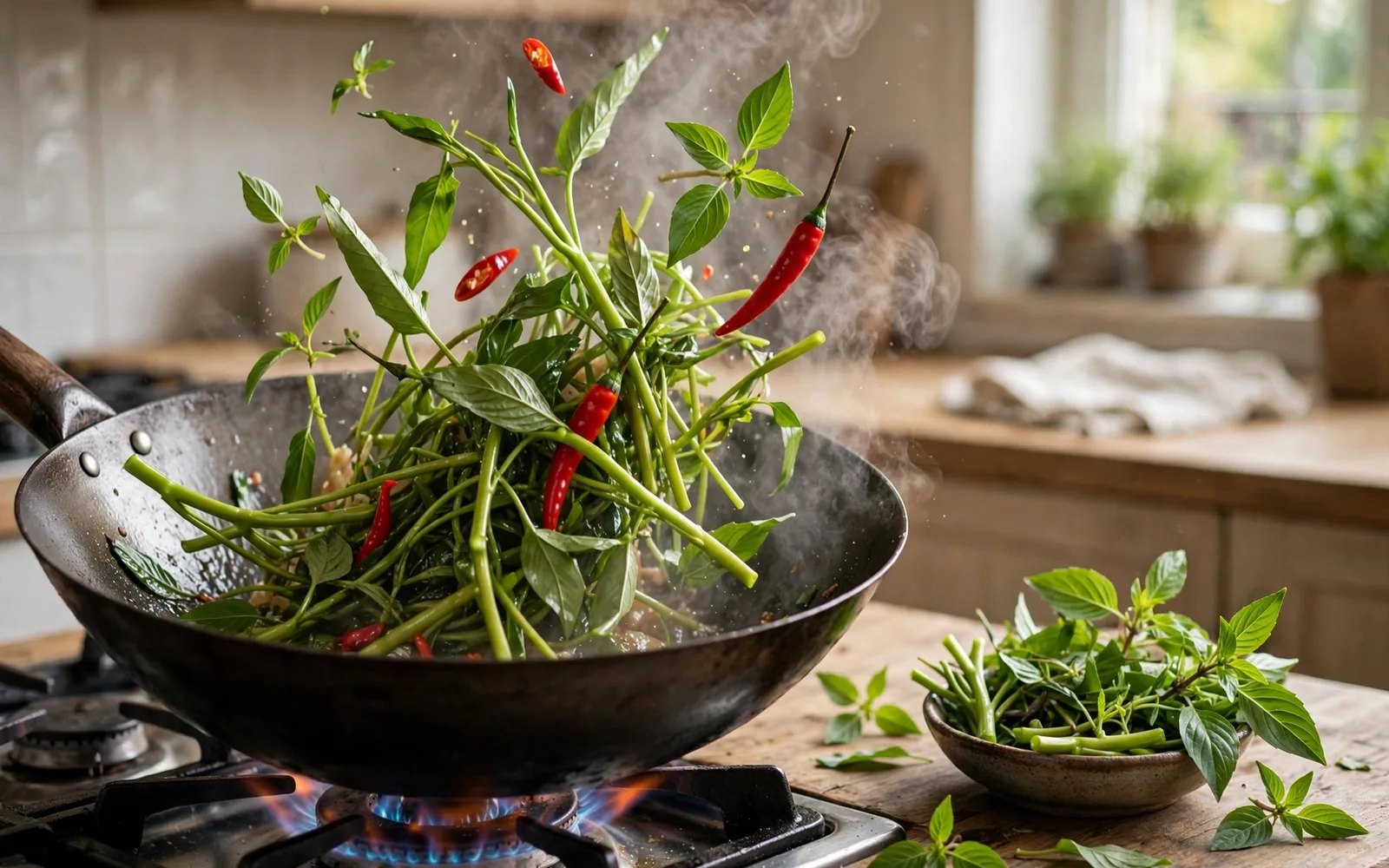
Water spinach is the green that makes a stir-fry feel complete, and it grows astonishingly fast in warm weather. It loves water, so it breaks the usual container rule: keep the soil consistently moist, even wet. A deep five-gallon bucket without a drainage hole near the bottom (or with the saucer kept full) suits it well in summer heat. Harvest by cutting stems a few inches above the base and it rebounds within days. The full setup is in growing water spinach at home.
Layout for Tight Balconies
Arrangement matters as much as plant choice. Put the tall plants — lemongrass and Thai chilies — at the back or along the rail so they do not shade the shorter herbs. Basil and perilla sit in the middle row. Keep culantro where it catches a little shade from its neighbors at midday.
Use vertical space. A tiered stand or a railing planter box can double your growing area without touching your floor space. Scallions and garlic chives work well in long, narrow boxes that would be wasted on round pots. Just check your building rules before hanging anything on an outside rail, and make sure every pot is secure before a windy night.
Group plants by thirst. Water spinach and culantro want steady moisture; lemongrass and chilies prefer a drink, then a brief dry-down. Grouping by water needs makes your routine simpler and your plants steadier.
Watering and Feeding Through the Season
Balcony pots dry out faster than garden beds, sometimes twice a day in a heat wave. Check soil with your finger: if the top inch is dry, water deeply until it runs from the drainage holes. Morning watering is best — leaves dry quickly in the early sun, and the plant heads into the hot part of the day fully hydrated.
Feed lightly but regularly. A balanced liquid fertilizer at half strength every two weeks keeps leafy herbs producing. Go easy on high-nitrogen feed for chili plants once they start flowering; too much nitrogen gives you a gorgeous green plant with very few peppers.
Harvest Habits That Keep Plants Producing
Most of these plants reward regular picking. Basil, perilla, and water spinach all grow bushier and last longer when you harvest from the top and the outside. Garlic chives and scallions prefer the cut-and-come-again approach: take what you need, leave the base intact, and let the plant refill.
Harvest in the morning when leaves are crisp and full of flavor. Bring a small bowl to the balcony, snip what tonight’s stir-fry calls for, and you are done in two minutes. That short distance from pot to wok is the whole point of this garden. Once you have fresh herbs on hand, storage tricks like those in how to store fresh herbs matter less — though they still help with generous harvests — and a batch of homemade chili oil becomes an easy way to use a pile of fresh chilies.
Common Mistakes to Skip
The most common balcony problem is pots that are too small. A basil plant in a four-inch nursery pot will sulk by June. Size up at planting time and the plant thanks you all season. The second mistake is skipping drainage. It feels tidy to use a pretty pot with no hole, but roots sitting in water rot quietly and the plant collapses fast. The third is planting everything on the same day in spring and expecting it all to peak together. Stagger your scallions and water spinach sowings by a few weeks and you stretch the harvest instead of drowning in it.
Start with three or four plants if eight feels like a lot. Thai basil, garlic chives, Thai chilies, and scallions alone will change your weeknight cooking. Add the others as you find the space and the appetite. A small garden you tend is worth far more than a crowded one you ignore — and a balcony full of wok-ready herbs is one of the most useful small gardens a home cook can grow.
1 thought on “Balcony Wok Garden: 8 Plants for Small Spaces”