
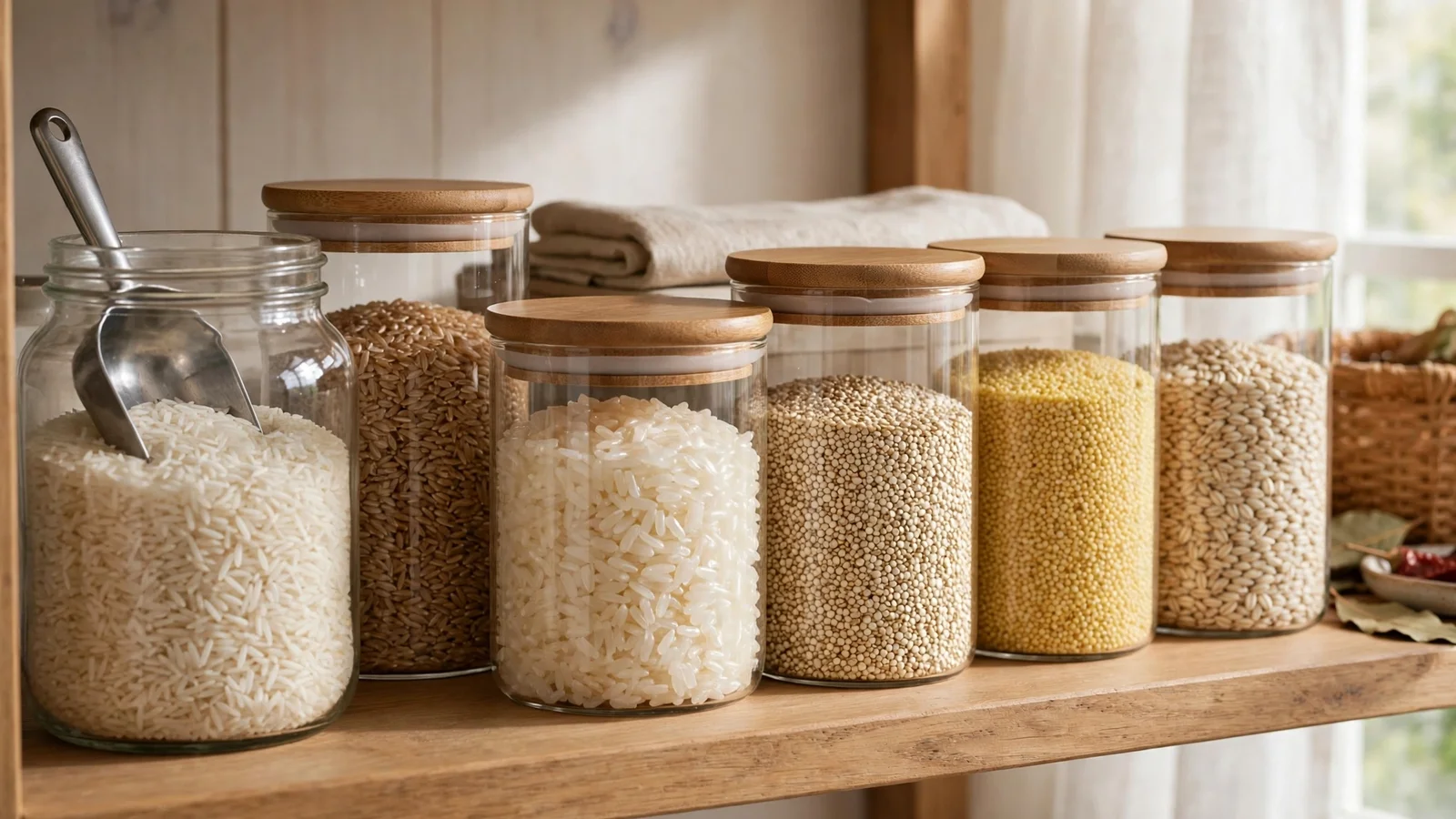
The Four Things That Ruin Stored Rice and Grains
Rice and grains look shelf-stable, and white rice nearly is. But four quiet problems shorten their life at home: heat, moisture, air, and pantry pests. Heat speeds up staleness, especially in brown rice, where the natural oils in the bran can turn rancid. Moisture invites mold and makes grains clump and smell musty. Air slowly dulls flavor. And tiny pantry moths or weevils can arrive in a bag from the store long before you ever see them.
Good storage is simpler than most people make it. Keep grains dry, cool, dark, and sealed, and use the oldest bag first. The right container and spot matter more than any special trick. If your pantry staples need a reset, The Essential Asian Pantry: 20 Staples to Start With is a handy place to check what you actually reach for week after week.

Shelf Life by Type, in Plain Terms
Not all rice stores the same way. White grains keep far longer than brown or other whole grains because the oily bran and germ have been milled away.
| Grain | Pantry, sealed and cool | Fridge or freezer note | Watch for |
|---|---|---|---|
| White jasmine, basmati, and other white long-grain rice | 1 year or more for best flavor; safe much longer if dry and pest-free | Freezer is for pest prevention, not everyday storage | Musty smell, bugs, clumping from moisture |
| Sticky (glutinous) white rice | About 1 year for best flavor | Same as white rice | Old grains cook up less glossy; buy in amounts you will use |
| Brown rice | About 3 to 6 months | Fridge extends to about 6 months; freezer up to about 12 months | Rancid, paint-like, or sharp smell from bran oils |
| Black, red, and other whole-grain rice | About 3 to 6 months | Fridge or freezer recommended if you buy in bulk | Same rancid note as brown rice, only slower |
| Wild rice | About 6 months in the pantry | Freezer for longer bulk storage | Dry, dusty smell when past its best |
| Millet, quinoa, barley, and farro | About 6 months to 1 year, sealed | Freezer for bulk bags you open rarely | Bitter or stale taste in older whole grains |
| Oats | About 6 months to 1 year, sealed | Freezer helps if your kitchen runs warm | Stale, cardboard flavor |
| Rice flour and other grain flours | About 3 to 6 months | Fridge or freezer once opened is a smart default | Clumping, sour or stale smell |
These are quality windows, not hard safety cutoffs. Dry white rice kept sealed, cool, and bug-free stays usable well past a year, though the cooked texture and aroma are best in the first year. Brown and whole-grain rice are different: trust your nose. If it smells sharp or like old oil, it is time to replace it even if the bag looks fine.
For the cooking side once storage is sorted, How to Cook Perfect Jasmine Rice Every Time covers the water ratios and resting time that make those stored grains worth keeping well.
Pick a Container That Actually Seals
The original bag is fine for a week or two. For anything longer, move rice and grains into a container with a real seal.
- Glass jars with gasket lids: Easy to clean, you can see what is inside, and the seal keeps pests out. Best for smaller amounts you use often.
- Sturdy plastic containers with locking lids: Light, stackable, and good for a 5- to 10-pound bag of jasmine rice. Look for a silicone gasket in the lid.
- Ceramic crocks with tight lids: Pretty on a counter, but only choose one if the lid truly seals. A loose wooden lid is decoration, not storage.
- The original bag, clipped, inside a sealed bin: A practical bulk setup. Roll the bag down, clip it, and drop it into a lidded bin so a spill or a pest in one bag does not spread.
Skip thin zip-top bags for long storage. They tear, they rarely seal perfectly after the first few uses, and pests can chew through them. Whatever you choose, start with a clean, completely dry container. Even a spoonful of old grain dust left in the bottom can carry stale flavor (and, if you ever had pests, eggs) into a fresh bag.
Label each container with the grain and the date you opened it. A strip of painter's tape and a marker are enough. Memory is not a storage system, and two white rices look identical by month three.
Where to Keep Them: Pantry, Fridge, or Freezer
The pantry is right for most white rice and dry grains
A cool, dark cupboard away from the stove is the best everyday home for white rice, sticky rice, and most dry grains. Aim for a spot that stays under about 75°F and does not swing hot and cold. Keep containers off a warm garage floor, out of direct sun, and away from the heat blast above a refrigerator or next to an oven.
Store grains in the container you scoop from, and keep a dry measuring cup or scoop inside only if you wash and dry your hands before reaching in. A damp scoop is the fastest way to invite moisture into the whole bin.
The fridge is for brown and whole-grain rice you will use slowly
If you buy brown, black, or red rice and it takes you months to finish a bag, the fridge slows the bran oils and buys you time. Seal it especially well here: fridge air is moist, and unsealed grains pick up odors from everything around them.
The freezer is your pest-prevention and bulk-storage tool
Freezing does two jobs. First, for long bulk storage, it pauses staleness for brown and whole grains. Second, it can help stop a pest problem before it starts. A common home practice is to freeze a newly bought bag of rice or grain, sealed in a freezer bag, for 3 to 4 days before moving it to the pantry. Cold kills insects at all life stages, including eggs you cannot see. Let the bag come back to room temperature while still sealed before you open it, so condensation forms on the outside of the bag instead of on the grains.
That one habit pairs well with Sticky Rice 101: Soak, Steam, Serve, because sticky rice is often bought in larger Asian-market bags that sit around longer between uses.
Pantry Pests: How to Spot Them and What to Do
Pantry moths and rice weevils are a storage problem, not a cleanliness verdict. They often ride in from the store in flour, grain, pet food, or dried fruit.
Signs to look for:
- Tiny moths fluttering when you open a cupboard, especially in the evening
- Fine webbing in corners of a bag or container, or grains stuck together in wispy clumps
- Small dark beetles in rice, or tiny holes in grains
- A dusty residue at the bottom of a container that was not there before
If you find them in one container, do not just toss that bag and move on. Check every nearby grain, flour, nut, and dried good. Throw out anything infested, vacuum cupboard corners and shelf seams, wipe shelves and let them dry fully, and only then bring clean containers back in. Freeze new replacements for a few days before they join the pantry. It feels like a lot for a small bug, but a half-cleanup is how they come back in two weeks.
Do not try to wash or pick through infested rice to save it. Once webbing or live insects are in the container, replace it. Prevention is cheaper than a second infestation: sealed hard containers, the freeze-first habit for bulk bags, and using older stock first.
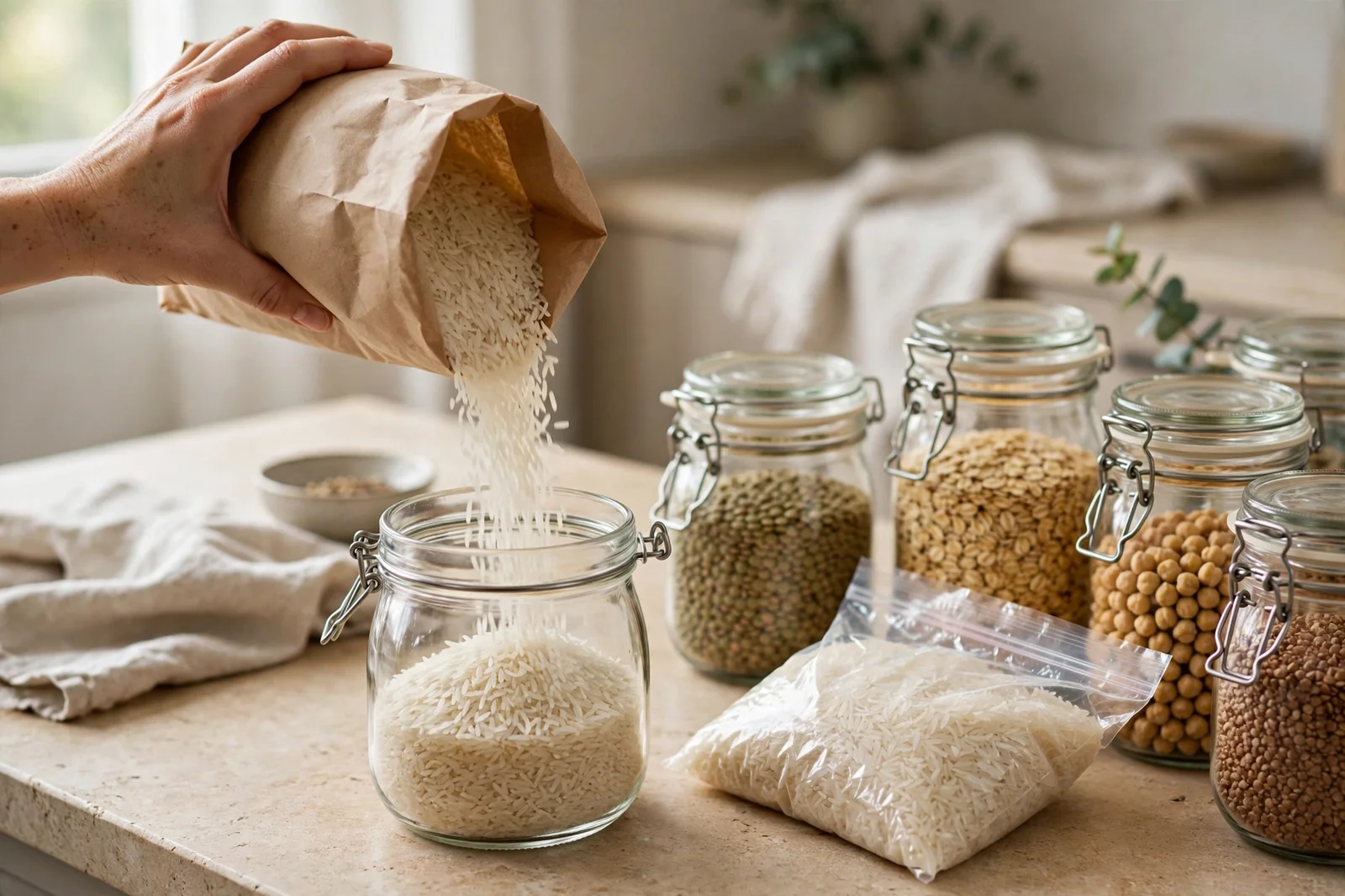
A Simple Rotation System That Keeps Stock Fresh
Home pantries fail on rotation more than on temperature. A bag gets pushed behind a newer bag, and six months later you are cooking the oldest rice last.
- One open container per grain. Do not top up an open container with a new bag until the old grain is gone, or the old and new get mixed and the date on the lid means nothing.
- First in, first out. Put the new bag behind or below the open one, so the oldest is the one your hand reaches first.
- Buy the size you finish in the quality window. A 25-pound bag is only a bargain if you cook rice several times a week. For an occasional pot, a 5-pound bag that stays fresh beats a giant bag that goes stale.
- Write the open date, not just the purchase date. Shelf life at home runs from when air and a scoop start going in and out of the container.
This same first-in, first-out thinking helps across the pantry. The herbs in How to Store Fresh Herbs So They Last Longer live in the fridge, not the cupboard, but the rule is identical: use the oldest first, and label what you open.
Special Cases Worth Knowing
- Aromatic rice (jasmine and basmati): The fragrance fades with time and air. Seal it well, keep it away from spices and coffee, and buy in amounts you will finish within a few months of opening if aroma is the whole point for you. The differences between the two most common choices are covered in Jasmine Rice vs Sticky Rice: Differences and Best Uses if you are deciding which bag deserves the good container.
- Sticky rice: White glutinous rice stores like white rice, but older grains absorb soak water less evenly. If a bag has been open a long time, extend the soak and check texture as it steams.
- Pre-washed and enriched rice: Store the same way as regular white rice. Check the bag for any shorter use-by guidance, since some specialty rices are milled or coated differently.
- Cooked rice: This is a fridge food, not a pantry one. Cool it promptly, refrigerate in a sealed container, and use it within 3 to 4 days. Freeze cooked rice in flat portions if you want it longer; it reheats well for fried rice.
- Grains bought from bulk bins: Get them into a sealed container the day you bring them home, and consider the 3- to 4-day freeze before pantry storage, since bulk bins are the highest-risk source for pests.
Quick Checklist Before You Put a New Bag Away
- Container is clean, dry, and seals with a gasket or locking lid
- Grain smells fresh, with no musty, sour, or sharp oil note
- Bulk or suspect bag gets 3 to 4 days in the freezer first
- Container is labeled with the grain name and open date
- It lands in a cool, dark spot away from the stove, not on a hot floor
- The older open container is in front, so it gets used first
Get those six things right and rice and grains stop being a pantry gamble. White rice stays ready for a weeknight pot, brown rice keeps its nutty flavor instead of turning on you, and you open the cupboard to clean, labeled containers instead of a row of half-rolled bags quietly going stale.