
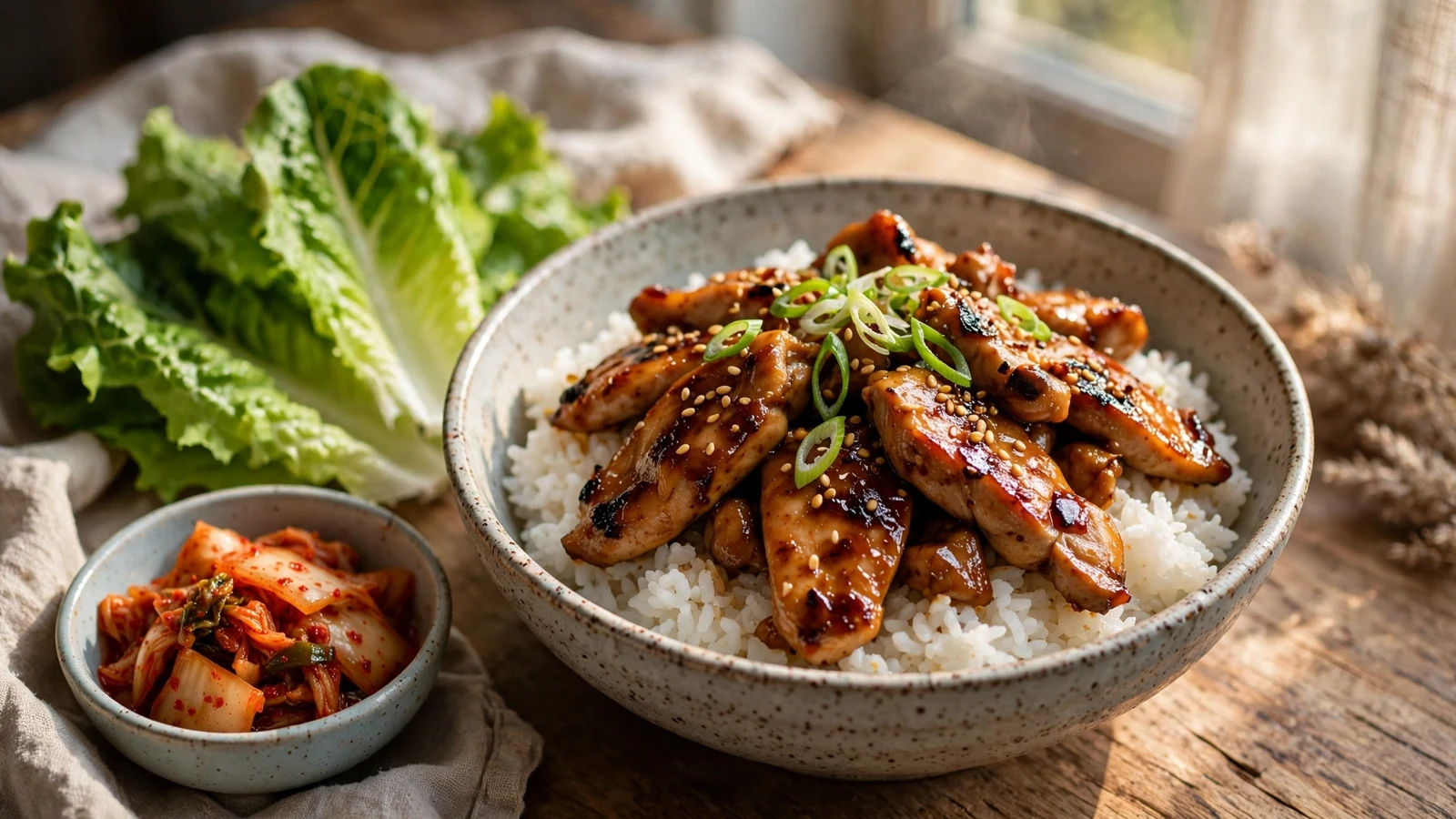
Sweet, Savory, and Kissed with Char
Bulgogi is best known with thinly sliced beef, but the same marinade works beautifully on chicken — especially boneless thighs, which stay juicy under high heat and pick up the sweet-savory glaze without drying out. Soy sauce brings the salt, grated pear and a little sugar help the edges caramelize, and garlic, ginger, black pepper, and toasted sesame oil round it into something that smells as good as it tastes.
Slice the chicken thin, give it time in the marinade, then cook it hot and fast in a wide pan so the pieces sear instead of steam. The goal is glossy chicken with browned, slightly crisp edges and a sauce that clings instead of pooling.
Serve it over How to Cook Perfect Jasmine Rice Every Time with scallions and sesame seeds on top, or tuck it into lettuce leaves with rice and kimchi. It sits naturally next to Kimchi Fried Rice for a Korean-leaning spread, and the leftovers make an easy rice bowl the next day. If you want to understand the soy sauce you are using, Soy Sauce Guide: Light vs Dark vs Tamari is a useful companion before you shop.
Why Chicken Thighs Win Here
Breast meat can work, but it gives you a much smaller window before it turns dry. Thighs forgive an extra minute in a hot pan, and that extra minute is often where the caramelized edges happen.
| Cut | Texture after searing | Marinade time | Best approach |
|---|---|---|---|
| Boneless skinless chicken thighs | Juicy, tender, browned edges | 30 minutes to overnight | Slice 1/4 inch thick across the grain; first choice |
| Chicken breast | Lean, can dry out fast | 30 minutes to 4 hours | Slice thin, cook just until opaque, pull early |
| Chicken tenderloins | Tender, smaller pieces | 20 to 30 minutes | Leave whole or halve lengthwise; watch closely |
Whatever cut you choose, partial freezing helps with slicing. Put the chicken in the freezer for 20 to 30 minutes until it feels firm at the edges but not solid. A sharp knife will glide through it, and you will get the thin, even pieces that cook fast and stay tender.
Cutting across the grain matters too. Look for the lines running through the meat and slice perpendicular to them. Shorter fibers mean a softer bite, even after a hard sear.
The Marinade, Ingredient by Ingredient
Bulgogi marinade is a balance problem: salty, sweet, aromatic, and just rich enough to coat. Grated Asian pear is the classic sweetener in many Korean marinades — it brings a clean fruit sweetness and helps the surface brown. If you do not have one, a sweet apple or a little extra sugar gets you close.
| Component | Amount | What it does |
|---|---|---|
| Light soy sauce | 1/3 cup (80 ml) | Salty depth and the main savory base |
| Grated Asian pear | 1/2 cup (about 1/2 pear) | Gentle sweetness; helps browning and tenderness |
| Brown sugar or honey | 1 tablespoon | Deeper caramel notes at the edges |
| Toasted sesame oil | 1 tablespoon | Nutty aroma; add at the end of mixing so it coats evenly |
| Garlic | 4 cloves, grated or minced | Sharp, warm backbone |
| Fresh ginger | 1 teaspoon grated | Bright heat that keeps the sweetness from going flat |
| Black pepper | 1/2 teaspoon | Mild bite and warmth |
| Scallions | 2, whites in marinade, greens for serving | Fresh onion note without raw harshness |
Mix the marinade until the sugar dissolves, then taste a tiny drop before the chicken goes in. It should read sweet first, then salty, with garlic and sesame coming through at the end. Remember that it will taste stronger once it reduces in the pan, so do not add extra soy sauce to make it taste fully seasoned as a raw marinade.
A practical note on sesame oil: a little goes a long way. More than a tablespoon can turn the whole dish perfumed and heavy. If you are doubling the recipe, keep the sesame oil at 1 tablespoon plus 1 teaspoon rather than doubling it outright.
Ingredients
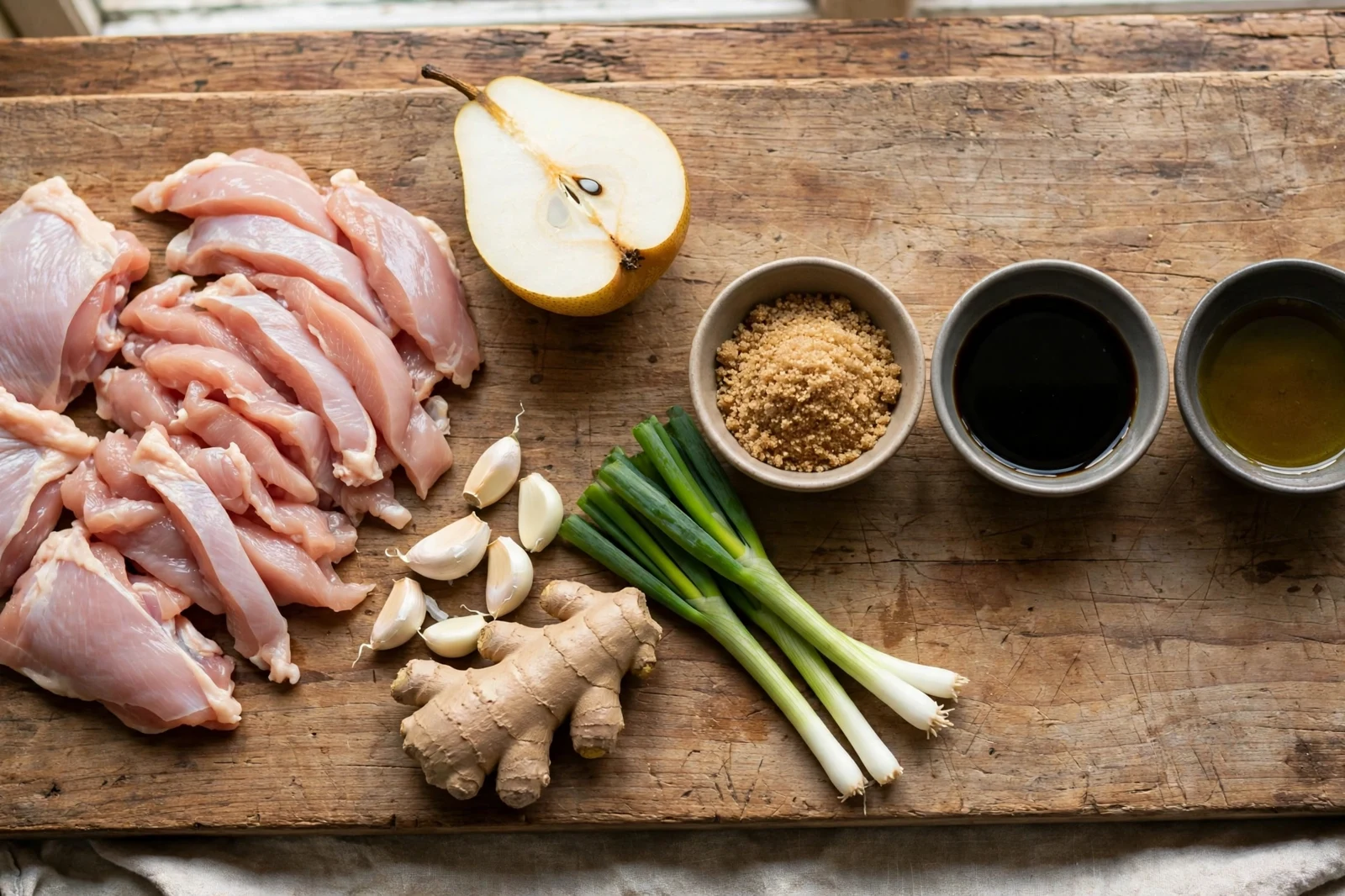
- 1 1/2 lb (680 g) boneless skinless chicken thighs, sliced 1/4 inch thick across the grain
- 1/3 cup (80 ml) light soy sauce
- 1/2 cup grated Asian pear (about 1/2 pear), or grated sweet apple
- 1 tablespoon brown sugar or honey
- 1 tablespoon toasted sesame oil
- 4 cloves garlic, grated or finely minced
- 1 teaspoon grated fresh ginger
- 1/2 teaspoon black pepper
- 2 scallions, whites thinly sliced, greens cut into 1-inch pieces, divided
- 1 tablespoon neutral oil with a high smoke point (avocado, grapeseed, or peanut)
- 1 teaspoon toasted sesame seeds, for serving
- Cooked jasmine rice, for serving
- Lettuce leaves and kimchi, for serving (optional)
Prep: 40 minutes, including 30 minutes marinating. Cook: 10 minutes. Total: 50 minutes. Serves 4 over rice.
How to Make It, Step by Step
1. Slice the chicken. If the thighs feel very soft, firm them in the freezer for 20 to 30 minutes first. Slice across the grain into pieces about 1/4 inch thick and 2 inches long. Even thickness matters more than perfect shape — thin pieces cook fast and get more marinade on every bite.
2. Mix the marinade. In a large bowl, stir the soy sauce, grated pear, brown sugar or honey, sesame oil, garlic, ginger, black pepper, and scallion whites until the sugar dissolves. The grated pear will make the mix look pale and a little pulpy; that is right.
3. Marinate. Add the chicken and toss until every piece is coated. Cover and refrigerate for at least 30 minutes and up to overnight. Longer marinating deepens the flavor, but after about 12 hours the texture can start to feel soft, so overnight is the practical limit for thighs.
4. Drain, but do not dry. Lift the chicken from the marinade with tongs and let the excess drip back into the bowl. You want the pieces damp, not dripping. Too much liquid in the pan drops the temperature and the chicken steams. Reserve the leftover marinade if you want a quick pan sauce.
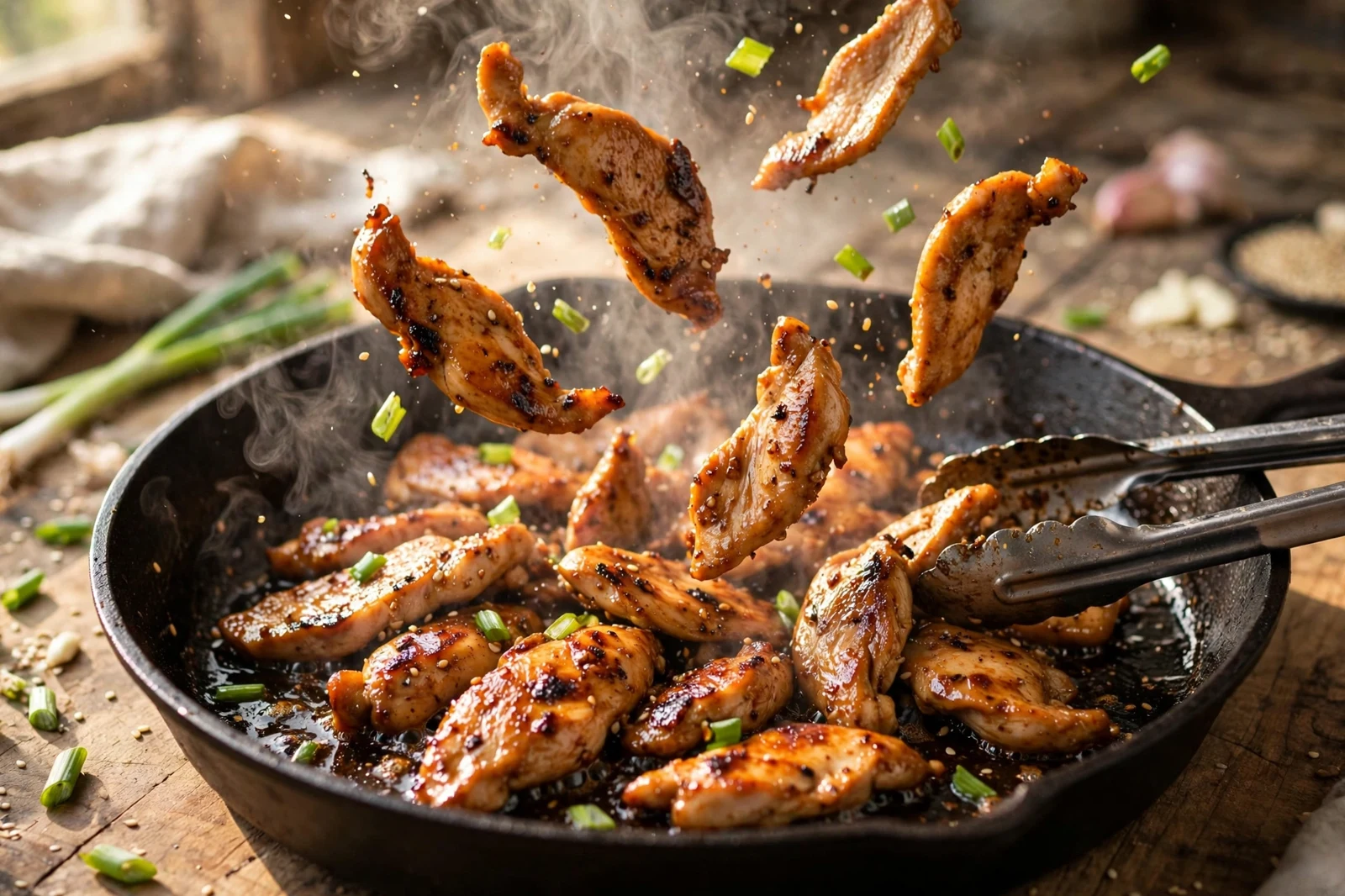
5. Sear in batches. Heat a large cast-iron skillet, heavy stainless pan, or wok over high heat until very hot. Add the neutral oil and swirl. Lay in half the chicken in a single layer and leave it alone for 2 minutes so the underside browns. Flip and cook 2 to 3 minutes more until the edges look caramelized and the chicken is cooked through. Move to a plate and repeat with the second batch.
6. Glaze and finish. Return all the chicken to the pan. If you reserved marinade, add 2 to 3 tablespoons of it and let it bubble for 30 to 60 seconds until it turns glossy and coats the chicken. Toss in the scallion greens, take the pan off the heat, and sprinkle with sesame seeds. Serve at once over rice.
Getting the Caramelized Edges Right
The chicken steamed and stayed pale: the pan was crowded or the chicken went in dripping wet. Cook in two batches, let the excess marinade drip off, and give the first side a full 2 minutes without moving it. Browning needs contact and patience.
The sauce tastes too sweet: pear ripeness varies. Next time, cut the sugar to 2 teaspoons and add a pinch more black pepper. A small squeeze of lime over the finished bowl can also lift the sweetness without changing the marinade.
The sauce tastes flat and salty: it probably needed more time to reduce, or the garlic and ginger were old and dull. Fresh aromatics matter here because the ingredient list is short. Let the final glaze bubble until it looks shiny and clings to a spoon.
The chicken is tough: it was sliced with the grain, cut too thick, or cooked well past opaque. Thin slices across the grain, plus pulling the chicken as soon as it loses its pink center, keep thighs tender.
Variations Worth Knowing
- Spicy bulgogi chicken: add 1 to 2 teaspoons gochugaru (Korean chili flakes) or 1 teaspoon gochujang to the marinade. Gochugaru keeps the flavor clean and bright; gochujang makes the glaze thicker and a little sweeter.
- With mushrooms and onions: sear 8 oz (225 g) sliced mushrooms and half a sliced onion in the pan after the chicken, then return everything together for the final glaze. They soak up the sauce and stretch the dish for a bigger table.
- Lettuce-wrap style: serve the hot chicken with butter lettuce or perilla leaves, small scoops of rice, kimchi, and extra scallions. Everyone builds their own, and the cool leaves balance the warm, sweet glaze.
- Meal-prep rice bowls: divide the chicken over rice with steamed broccoli, shredded carrots, or a simple cucumber salad. The sauce reheats well and keeps the rice from tasting dry on day two.
The noodle lover's version is worth a mention too: serve a smaller portion of bulgogi chicken beside Japchae: Korean Glass Noodle Stir-Fry and let the two dishes share the table. The sweet potato noodles and the caramelized chicken use similar flavors in very different textures, which keeps the meal from feeling repetitive.
Serving and Leftovers
Serve bulgogi chicken straight from the pan while the edges are still crisp and the glaze is shiny. A bowl of rice underneath is the simplest move. Add kimchi for acidity, a cucumber salad for crunch, or lettuce leaves if you want to eat it by hand.
Leftovers keep in a covered container in the refrigerator for up to 3 days. Reheat in a skillet over medium-high heat with a teaspoon of water until hot and glossy again, about 3 to 4 minutes. The microwave works, but the edges will soften. Cold leftovers are also good sliced over a salad or tucked into a wrap with rice and pickled vegetables.
You can freeze the raw chicken in its marinade for up to 2 months. Thaw it overnight in the refrigerator, drain off the excess, and cook as written. Cooked bulgogi chicken freezes for up to 2 months as well, though the texture is best when it is eaten fresh.
Recipe Card Summary
Korean bulgogi chicken: thin-sliced chicken thighs in a pear-soy marinade with garlic, ginger, black pepper, and toasted sesame oil, seared hot in batches until the edges caramelize and the glaze clings. Drain the chicken well, do not crowd the pan, and let the first side brown before you move it. Prep 40 minutes including marinating, cook 10 minutes. Serves 4.
Korean Bulgogi Chicken
Ingredients
Method
- Slice the chicken: if the thighs feel very soft, firm them in the freezer for 20 to 30 minutes first. Slice across the grain into pieces about 1/4 inch thick and 2 inches long.
- Mix the marinade: in a large bowl, stir the soy sauce, grated pear, brown sugar or honey, sesame oil, garlic, ginger, black pepper, and scallion whites until the sugar dissolves.
- Marinate: add the chicken and toss until every piece is coated. Cover and refrigerate for at least 30 minutes and up to overnight.
- Drain, but do not dry: lift the chicken from the marinade with tongs and let the excess drip back into the bowl. Reserve the leftover marinade if you want a quick pan sauce.
- Sear in batches: heat a large cast-iron skillet, heavy stainless pan, or wok over high heat until very hot. Add the neutral oil and swirl. Lay in half the chicken in a single layer and leave it alone for 2 minutes. Flip and cook 2 to 3 minutes more until the edges look caramelized and the chicken is cooked through. Move to a plate and repeat with the second batch.
- Glaze and finish: return all the chicken to the pan. If you reserved marinade, add 2 to 3 tablespoons of it and let it bubble for 30 to 60 seconds until glossy. Toss in the scallion greens, take the pan off the heat, and sprinkle with sesame seeds. Serve at once over rice.