
Thin Rice Noodles, Cooked Right in the Broth
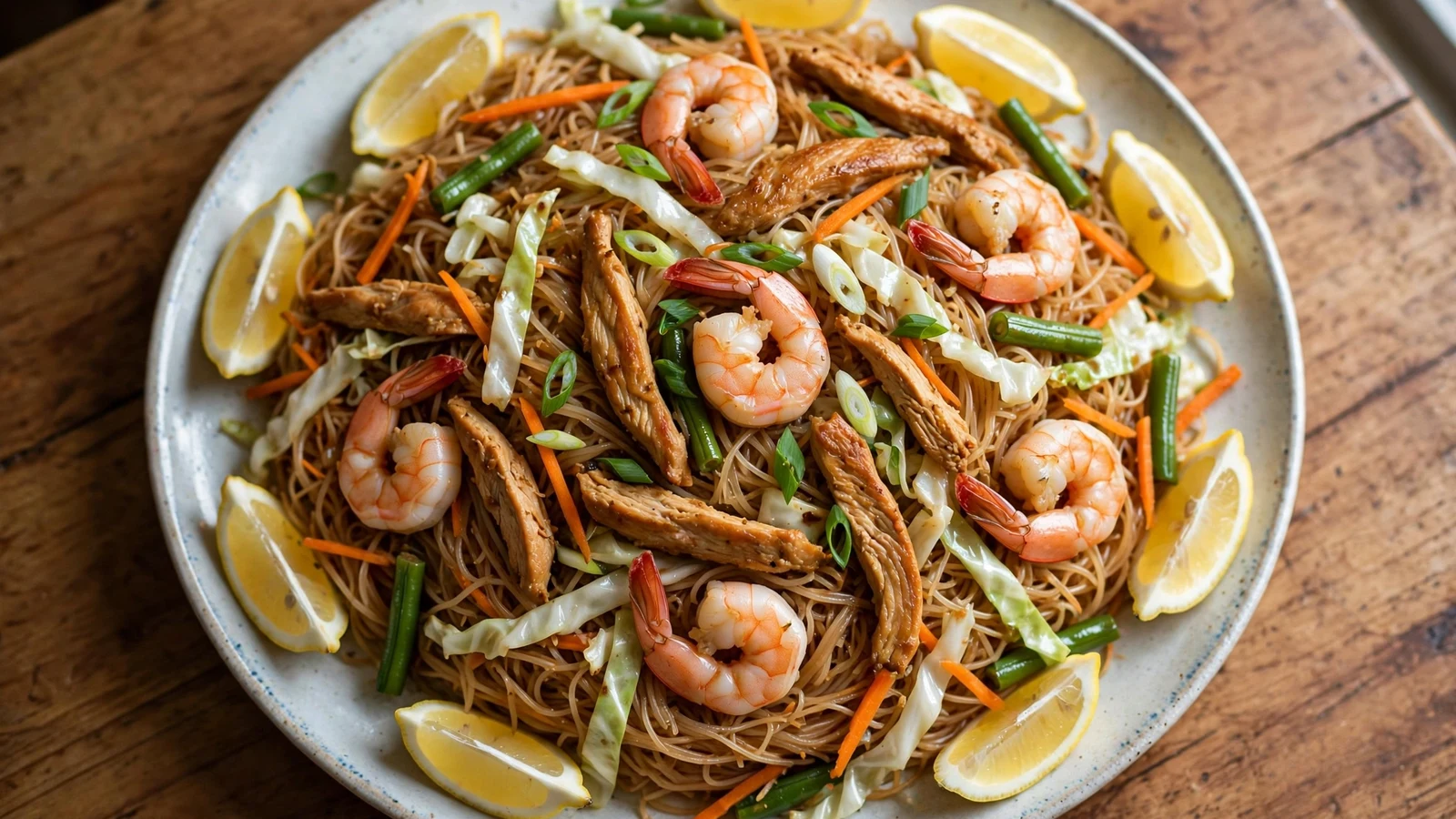
Pancit bihon is the Filipino rice-noodle stir-fry that shows up at birthdays, office lunches, and Sunday tables, usually in a wide platter with lemon wedges tucked around the edge. The noodles are fine rice vermicelli — bihon — and the trick that separates a good batch from a gummy one is simple: the noodles never get boiled in plain water. They soak briefly, then finish cooking directly in seasoned chicken broth in the wok, drinking up soy sauce, fish sauce, garlic, and the juices from the chicken, shrimp, and vegetables as they soften. Every strand comes out flavored, not just coated.
That method also makes the dish forgiving on a weeknight. The vegetables cook in the same pan in stages, the proteins go in and come out fast, and the noodles absorb exactly the liquid they need. Keep the cabbage and carrots a little crisp, finish with black pepper and scallions, and let people squeeze their own lemon over the top. If you are building a Filipino spread, a platter of pancit bihon next to Lumpia: Filipino Spring Rolls is the classic pairing — crisp rolls for crunch against soft, savory noodles.
Bihon, Canton, or Sotanghon? Picking the Pancit Noodle
"Pancit" covers a whole family of Filipino noodle dishes, and the noodle decides the dish. This recipe uses bihon, but the same broth-and-vegetable base adapts if you know what changes.
| Noodle | What it is | Texture in the pan | Broth for 8 oz (227 g) |
|---|---|---|---|
| Bihon | Thin dried rice vermicelli | Soft, springy, drinks up sauce; this recipe | About 2 1/2 cups |
| Pancit canton | Wheat flour noodles, often pre-fried in cakes | Chewier, bouncier bite; stands up to longer tossing | About 2 cups — canton absorbs less |
| Sotanghon | Mung bean glass noodles | Slippery, translucent, very absorbent | About 3 cups, added in stages |
Bihon is the one to reach for when you want the noodles themselves to carry the seasoning — rice vermicelli soaks up broth like a sponge, so the flavor has to be right before the noodles go in. Taste the broth first: it should read a touch saltier than you want the finished dish, because the noodles will dilute it as they absorb. Our Soy Sauce Guide: Light vs Dark vs Tamari helps if you are choosing between the Filipino, Chinese, and Japanese bottles on your shelf — a regular all-purpose soy sauce is what you want here, not a sweet or dark one.
Ingredients
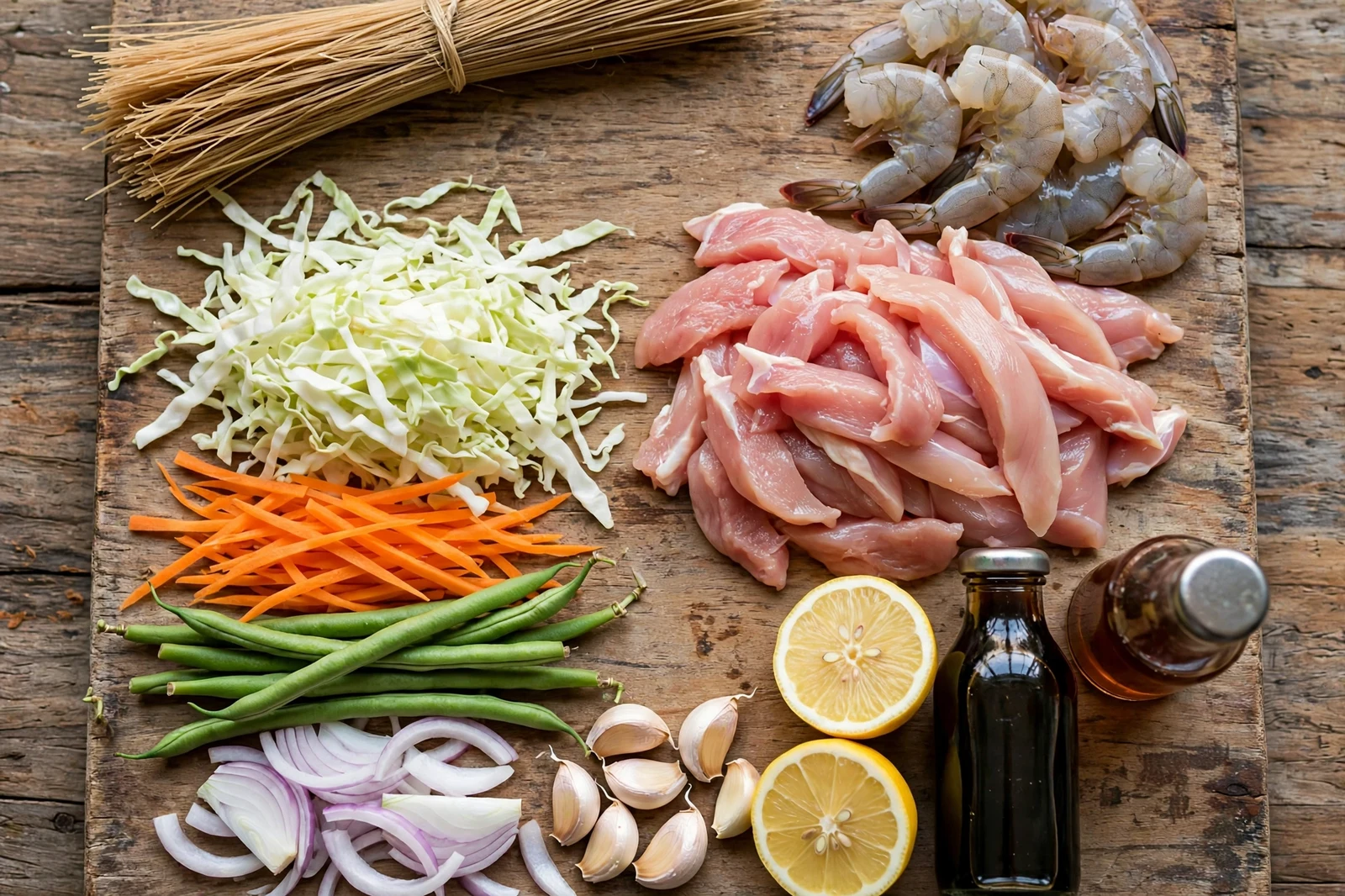
- 8 oz (227 g) dried rice vermicelli (bihon)
- 2 1/2 cups (600 ml) low-sodium chicken broth, plus more as needed
- 2 tablespoons neutral oil with a high smoke point (avocado, grapeseed, or peanut), divided
- 6 oz (170 g) boneless skinless chicken thigh or breast, sliced into thin strips
- 6 oz (170 g) medium shrimp, peeled, deveined, and patted dry
- 1 medium yellow onion (about 6 oz / 170 g), thinly sliced
- 4 cloves garlic, finely minced
- 1 medium carrot (about 4 oz / 115 g), cut into thin matchsticks
- 2 cups (140 g) green cabbage, cut into thin ribbons
- 4 oz (115 g) green beans, trimmed and cut into 1-inch pieces (or a handful of snow peas)
- 3 tablespoons soy sauce, plus more to taste
- 1 tablespoon fish sauce (patis), plus more to taste
- 1/2 teaspoon ground black pepper, plus more for serving
- 2 scallions, thinly sliced
- 1 lemon, cut into wedges (calamansi if you can get it)
- Optional garnishes: crushed chicharon (pork rinds), wedges of hard-boiled egg, extra sliced scallions
Prep: 20 minutes (including the noodle soak). Cook: 15 minutes. Total: 35 minutes. Serves 4.
How to Make It, Step by Step
1. Soak the noodles. Put the rice vermicelli in a large bowl, cover with lukewarm water, and soak for 8 to 10 minutes, until pliable but still firm in the center — they finish cooking in the broth later. Drain well. Noodles soaked to full softness now will turn mushy in the pan, so err on the firm side.
2. Sear the chicken and shrimp. Heat a wok or a large, wide skillet over medium-high heat. Add 1 tablespoon of the oil, then the chicken in a single layer. Cook for 2 to 3 minutes until lightly golden and just cooked through; move it to a plate. Add the shrimp and cook 1 to 2 minutes, just until pink and curled. Add them to the plate with the chicken, leaving any flavored oil behind.
3. Build the aromatic base. Add the remaining 1 tablespoon oil to the pan. Add the onion and cook for 2 minutes until softened at the edges. Add the garlic and stir for 30 seconds, just until fragrant — garlic goes bitter if it browns hard here.
4. Cook the vegetables in stages. Add the carrot and green beans first and stir-fry for 2 minutes. Add the cabbage and toss for 1 more minute. The vegetables should be bright and crisp-tender; they soften a little more when the noodles and broth go in, so pull them back now rather than cooking them through.
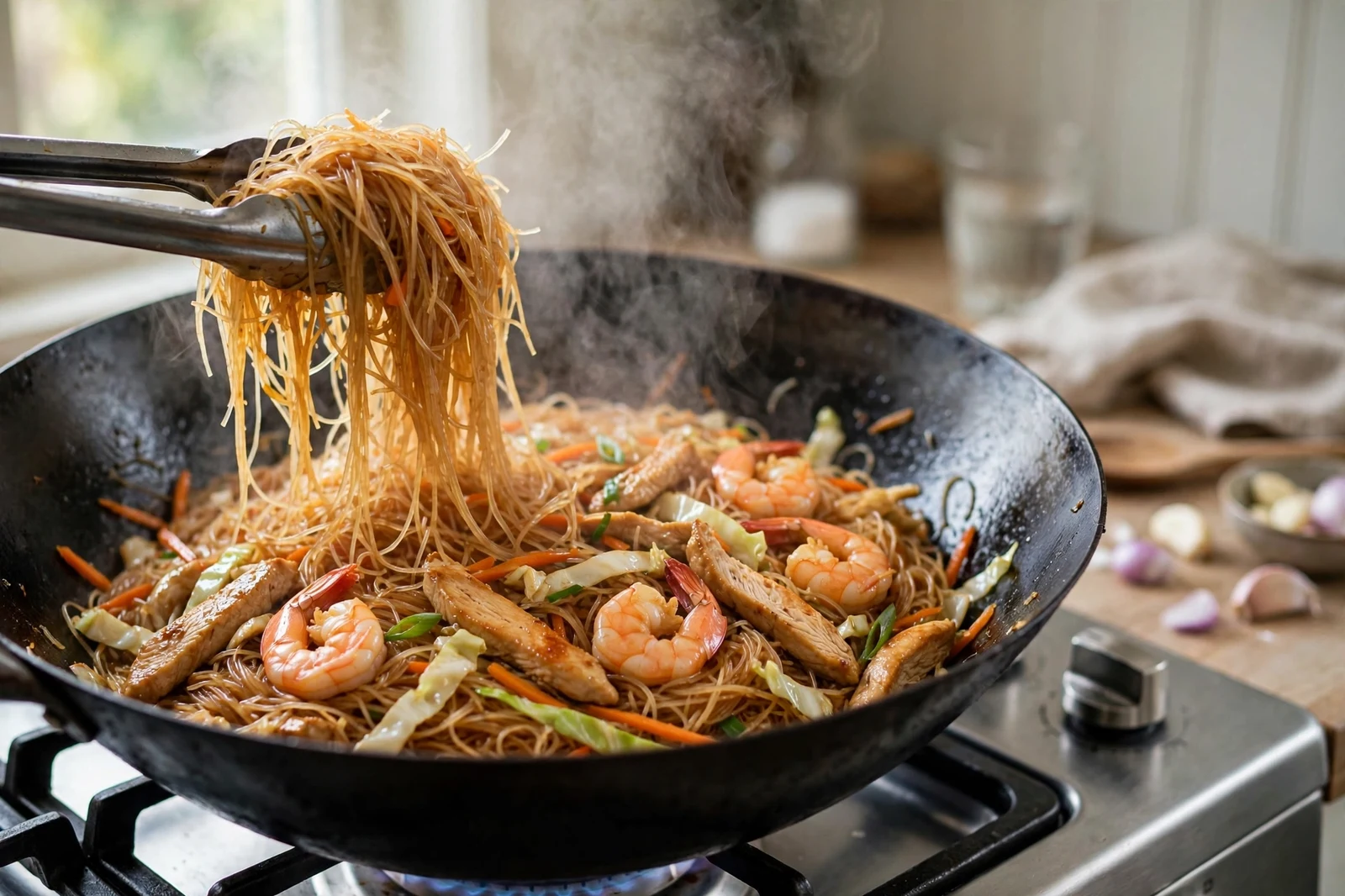
5. Season the broth, then add the noodles. Pour in the chicken broth, soy sauce, fish sauce, and black pepper. Bring it to a lively simmer and taste — it should be a little saltier than the finished dish. Add the drained noodles and toss with tongs, lifting and turning so every strand meets the broth. Cook for 3 to 4 minutes, tossing often, until the noodles have absorbed the liquid and turned supple and glossy. If the pan dries out before the noodles soften, splash in broth 1/4 cup at a time.
6. Bring it together and serve. Return the chicken, shrimp, and any juices to the pan and toss for 1 minute to warm through. Taste and adjust: more fish sauce for salt and depth, more soy sauce for color, a pinch of sugar only if your broth tastes sharp. Pile the pancit onto a warm platter, scatter the scallions over the top, and serve right away with lemon wedges and extra black pepper. The squeeze of citrus at the table is not decoration — it lifts the whole plate.
Troubleshooting: The Three Ways Pancit Bihon Goes Wrong
The noodles turned to mush. They were soaked too long, or the broth sat at a hard boil while they cooked. Soak only until pliable, keep the pan at a lively simmer rather than a rolling boil, and stop tossing the moment the liquid is absorbed. Leftover pancit firms up as it sits, so a batch that looks slightly loose in the pan is usually perfect on the platter.
The noodles are bland even though the sauce tasted strong. The broth was not seasoned enough before the noodles went in — rice vermicelli absorbs a lot of liquid and dilutes as it goes. Season the broth until it tastes a shade too salty, then fix the balance at the end with lemon rather than more soy sauce.
The vegetables went limp. They were cooked through in step 4 instead of just started. Keep them crisp-tender before the broth goes in; the steam from the noodles finishes them. Cabbage cut in ribbons wilts fastest, so it goes in last of the vegetables.
Variations Worth Knowing
- Pancit bihon guisado, pork version: swap the chicken and shrimp for 8 oz (227 g) pork belly or shoulder cut into small strips. Brown it well in step 2 and let its fat join the oil — the dish gets richer, and a handful of crushed chicharon on top leans into it.
- Seafood pancit: use all shrimp plus 4 oz (115 g) squid rings added for the last minute of step 2. Keep the fish sauce, skip nothing else, and serve with extra lemon.
- Vegetarian pancit: use vegetable broth, swap the fish sauce for an extra tablespoon of soy sauce plus 1/2 teaspoon mushroom powder if you have it, and replace the proteins with 7 oz (200 g) extra-firm tofu, pressed and cut into strips and browned in step 2. Fried garlic on top adds the savory hit tofu cannot.
- With sinangag the next morning: leftover pancit reheats well in a hot wok with a teaspoon of oil, and it sits happily next to a mound of Sinangag: Filipino Garlic Fried Rice and a fried egg for a very good breakfast plate.
Serving and Leftovers
Serve pancit bihon family-style, straight onto a wide platter while the noodles are hot and glossy, with lemon wedges around the edge and the scallions scattered last so they stay green. For a fuller Filipino table, it pairs naturally with Chicken Adobo — the adobo's vinegar-soy braising liquid spooned over a forkful of noodles is a combination worth trying at least once.
Leftovers keep in a covered container in the refrigerator for up to 3 days. The noodles firm up as they chill; reheat them in a wok or wide skillet over medium heat with a splash of water or broth, tossing for 2 to 3 minutes until steaming and supple again. The microwave works in a pinch — cover the bowl so the noodles steam rather than dry at the edges. Freezing is not recommended; rice vermicelli turns brittle and breaks into short pieces after thawing.
Recipe Card Summary
Filipino pancit bihon: thin rice vermicelli soaked, then finished in seasoned chicken broth with chicken, shrimp, cabbage, carrots, and green beans, seasoned with soy sauce, fish sauce, and black pepper, and served with lemon wedges and scallions. Prep 20 minutes, cook 15 minutes. Serves 4.
Filipino Pancit Bihon
Ingredients
Method
- Soak the noodles: put the rice vermicelli in a large bowl, cover with lukewarm water, and soak for 8 to 10 minutes, until pliable but still firm in the center — they finish cooking in the broth later. Drain well. Noodles soaked to full softness now will turn mushy in the pan, so err on the firm side.
- Sear the chicken and shrimp: heat a wok or a large, wide skillet over medium-high heat. Add 1 tablespoon of the oil, then the chicken in a single layer. Cook for 2 to 3 minutes until lightly golden and just cooked through; move it to a plate. Add the shrimp and cook 1 to 2 minutes, just until pink and curled. Add them to the plate with the chicken, leaving any flavored oil behind.
- Build the aromatic base: add the remaining 1 tablespoon oil to the pan. Add the onion and cook for 2 minutes until softened at the edges. Add the garlic and stir for 30 seconds, just until fragrant — garlic goes bitter if it browns hard here.
- Cook the vegetables in stages: add the carrot and green beans first and stir-fry for 2 minutes. Add the cabbage and toss for 1 more minute. The vegetables should be bright and crisp-tender; they soften a little more when the noodles and broth go in, so pull them back now rather than cooking them through.
- Season the broth, then add the noodles: pour in the chicken broth, soy sauce, fish sauce, and black pepper. Bring it to a lively simmer and taste — it should be a little saltier than the finished dish. Add the drained noodles and toss with tongs, lifting and turning so every strand meets the broth. Cook for 3 to 4 minutes, tossing often, until the noodles have absorbed the liquid and turned supple and glossy. If the pan dries out before the noodles soften, splash in broth 1/4 cup at a time.
- Bring it together and serve: return the chicken, shrimp, and any juices to the pan and toss for 1 minute to warm through. Taste and adjust: more fish sauce for salt and depth, more soy sauce for color. Pile the pancit onto a warm platter, scatter the scallions over the top, and serve right away with lemon wedges and extra black pepper.