
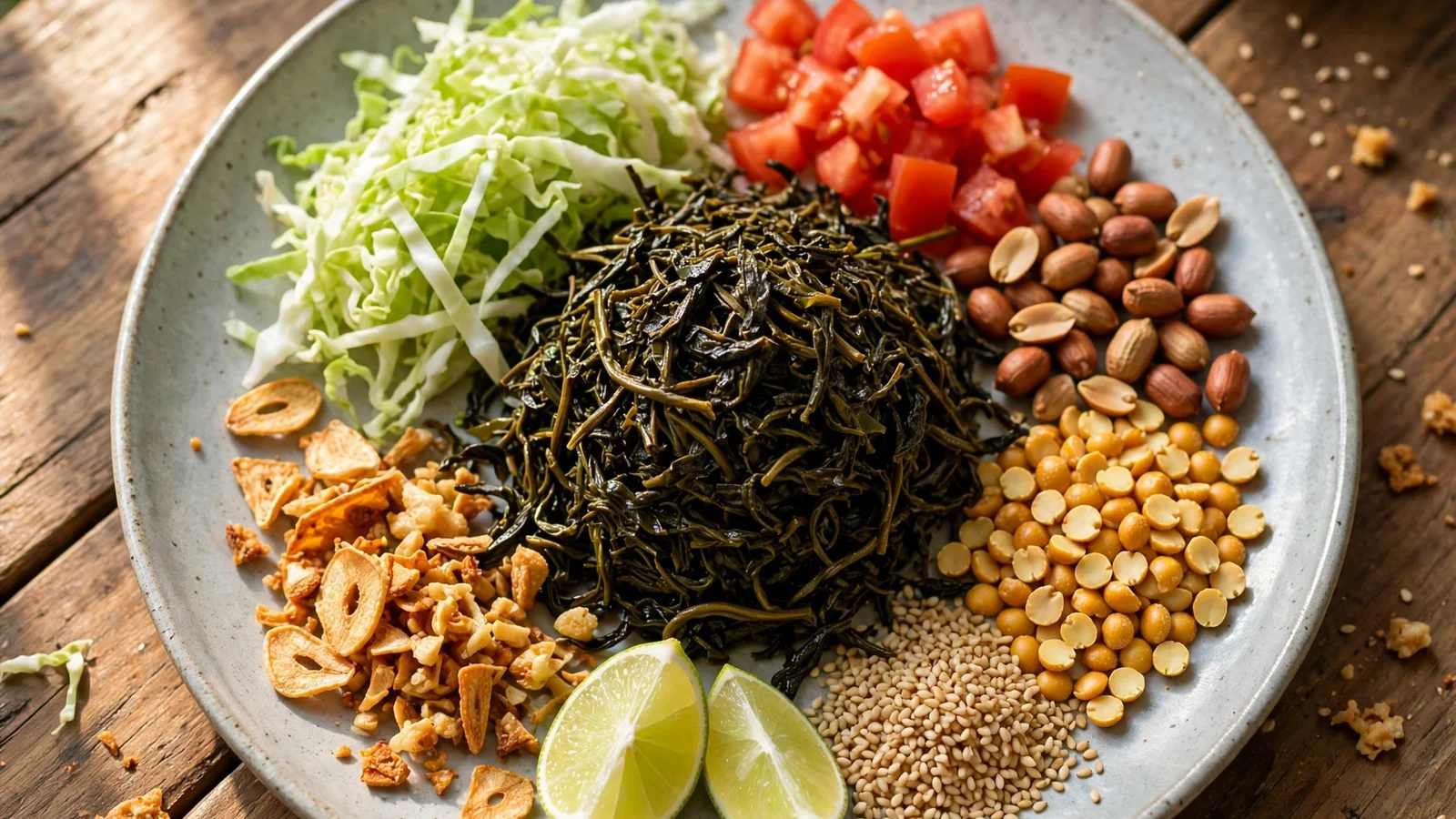
A Salad Built on Fermented Tea Leaves
In Myanmar, lahpet — pickled, fermented tea leaves — is not a garnish. It is the center of the plate. Lahpet thoke, the tea leaf salad, tosses those dark, tangy leaves with shredded cabbage, tomato, roasted peanuts, toasted sesame, crisp fried garlic, and fried split peas, all slicked with garlic oil and brightened with lime and fish sauce. Every bite lands in several places at once: soft and crunchy, sour and savory, earthy from the tea and fresh from the raw vegetables. It is served at tea shops across the country, often in a lacquered tray with the components in separate piles so you mix only what you eat.
What makes it work at home is the contrast. The tea leaves themselves are soft and deeply flavored, almost like a savory pickle. The cabbage and tomato stay raw and crisp. The nuts, seeds, and fried legumes bring the crunch that carries the whole dish. If you like the pounded brightness of Som Tum: Thai Green Papaya Salad, you will recognize the logic here — but where som tum leans sweet-sour and fiery, lahpet thoke is funkier, nuttier, and built more like a composed salad you toss at the table.
Finding Lahpet, and What to Do First
Fermented tea leaves are sold in Burmese and Southeast Asian markets as lahpet, laphet, or pickled tea leaf, sometimes as a plain fermented leaf and sometimes as a ready-dressed salad kit with the crunchy toppings packed separately. Either works for this recipe.
- Plain fermented leaves: These are whole or coarsely chopped leaves packed in oil or brine. Drain them, chop finely if whole, and massage with a spoonful of neutral or peanut oil and a pinch of salt. If they taste very bitter or astringent straight from the jar, soaking in warm water for 10 minutes, draining well, and squeezing dry softens the edge without washing away the ferment.
- Dressed lahpet or salad kits: These already include oil, salt, and sometimes chili and garlic. Taste before you add fish sauce or lime — kits vary a lot in salt, and it is easier to season up than to fix an over-salted bowl.
- No lahpet nearby: There is no perfect grocery-store stand-in for fermented tea leaf, but the closest practical swap is finely chopped pickled mustard greens or pickled collard greens, well-drained and tossed with a little oil. The flavor will be brighter and less earthy, but the salad structure — crunchy toppings over a tangy green base — still reads clearly.
However you source them, keep the tea portion modest. Lahpet is intense by design; in the salad it seasons the cabbage and tomato the way a pickle or olive would, not as a leafy green base.
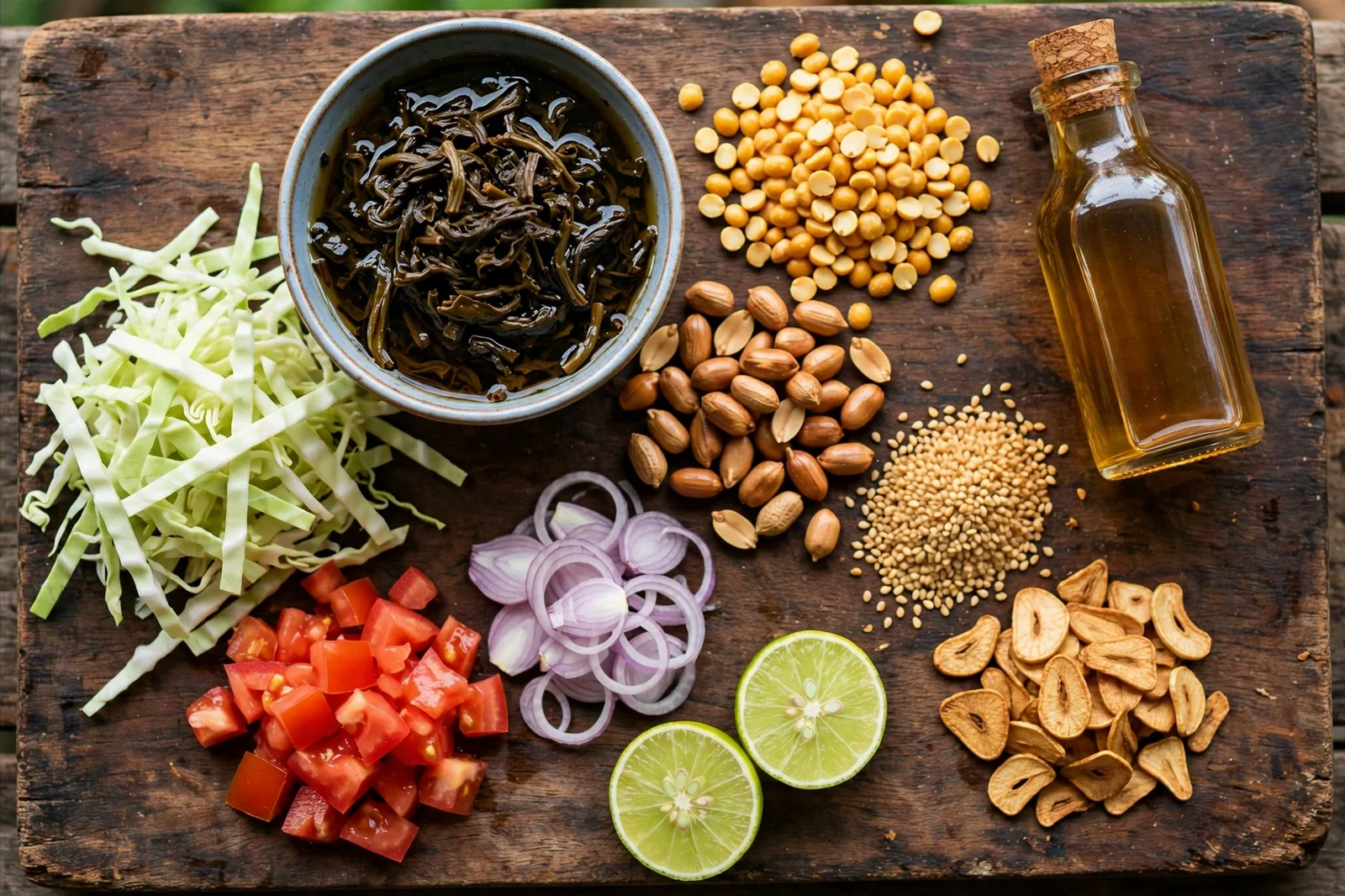
Ingredients
- 1 cup (about 160 g) fermented tea leaves (lahpet), drained and finely chopped if whole
- 3 tablespoons garlic oil or peanut oil, divided (plus the fried garlic from making it, if homemade)
- 3 cups (210 g) green cabbage, finely shredded
- 2 medium Roma tomatoes (about 10 oz / 280 g), seeds scooped out and flesh diced
- 1/2 small red onion or 2 shallots (about 2 oz / 60 g), thinly sliced and rinsed under cold water
- 1/2 cup (75 g) roasted unsalted peanuts, coarsely crushed
- 1/4 cup (35 g) fried split peas or fried yellow lentils (store-bought or homemade; fried chickpeas work too)
- 2 tablespoons toasted sesame seeds
- 3 tablespoons crisp fried garlic slices
- 1 fresh red or green Thai chili, thinly sliced (optional, to taste)
- 1 tablespoon fish sauce, plus more to taste
- 1 tablespoon fresh lime juice (about 1/2 lime), plus lime wedges for serving
- 1/2 teaspoon fine sea salt, plus more to taste
- 2 tablespoons dried shrimp, lightly pounded (optional, traditional in many versions)
- Fresh cilantro leaves or whole green chilies, for serving (optional)
Prep: 20 minutes. Cook: 5 minutes (for the fried toppings if making them). Total: 25 minutes. Serves 4 as a side or shared starter.
How to Make It, Step by Step
1. Prep the tea leaves. Drain the lahpet well. If the leaves are whole, chop them finely. Put them in a small bowl with 1 tablespoon of the garlic or peanut oil and a pinch of salt, then mash and stir with the back of a spoon for about a minute — you want a coarse, spreadable paste rather than loose leaves. Taste: if the leaves are sharply bitter, let them sit in warm water for 10 minutes first, drain, squeeze dry, and then dress with the oil.
2. Crisp the toppings if you are making them. If your fried garlic and fried split peas are store-bought, skip to step 3. Otherwise, heat the remaining 2 tablespoons oil in a small skillet over medium heat. Fry thin garlic slices for 1 to 2 minutes until pale gold, then lift them out to drain — they keep browning off the heat. In the same oil, fry soaked-and-dried split peas for 2 to 3 minutes until crisp. Keep the flavored oil; it dresses the salad.
3. Soften the onion. Put the sliced onion or shallot in a bowl of cold water for 5 minutes, then drain and pat dry. This short soak keeps the bite but takes off the raw harshness that would otherwise sit on top of the tea leaves.
4. Build the base. In a wide serving bowl or on a platter, spread the shredded cabbage in an even layer. Scatter the diced tomato and the drained onion over it. Spoon the dressed tea leaves into the center in a mound — the traditional presentation keeps the piles separate until the last moment, which also helps if you are serving people who want to control how much lahpet lands in each bite.
5. Add the crunch. Scatter the crushed peanuts, fried split peas, sesame seeds, fried garlic, dried shrimp (if using), and sliced chili over the salad. Nothing here should be ground to a powder; pea- to lentil-sized pieces are what give the salad its texture.
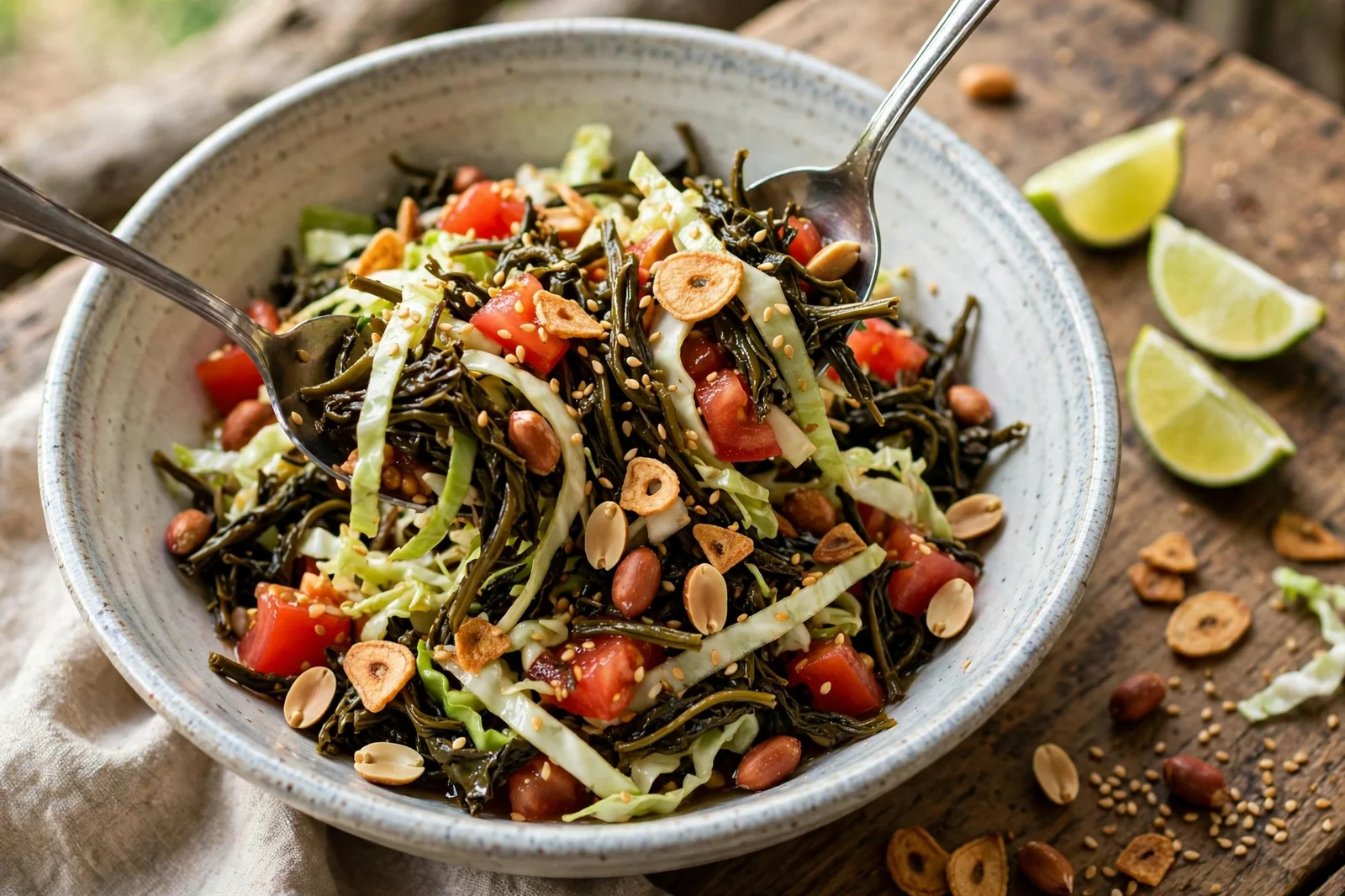
6. Dress and toss at the table. Drizzle the remaining garlic oil over everything, then add the fish sauce, lime juice, and salt. Toss thoroughly with two spoons, folding the tea paste up through the cabbage so the shreds take on color and the tomato juices join the dressing. Taste and adjust: more lime if it feels flat, more fish sauce for depth, a little more salt if your lahpet was mild. Serve right away with lime wedges — like our Vietnamese Green Papaya Salad, this is a salad that is at its best in the first minutes after tossing, before the cabbage softens.
Getting the Balance Right
Too bitter. Your leaves were likely very lightly fermented or packed without much oil. A longer warm soak, a little extra oil worked into the paste, and one more squeeze of lime usually bring the salad back. A pinch of sugar is not traditional in most versions, but 1/4 teaspoon stirred into the dressing can round a harsh batch without making it sweet.
Too salty. This usually comes from a pre-dressed kit plus the full measure of fish sauce. Add more cabbage and tomato rather than rinsing the leaves — bulk is the fix — and hold the extra fish sauce for the table. Our Fish Sauce vs Soy Sauce guide is helpful here: fish sauce brings the fermented depth this salad wants, and soy sauce is not a clean 1-to-1 swap.
Soggy instead of crunchy. The tomato seeds were left in, or the salad sat dressed. Scoop the seeds out before dicing, keep the fried toppings separate until serving, and toss no more than a few minutes before the salad goes down. Lahpet thoke waits for no one.
Variations Worth Knowing
- Tea-shop style, more toppings: Add fried broad beans, toasted sunflower seeds, or a small handful of shredded fresh coconut alongside the peanuts. The spirit of the dish is abundance of textures, so one or two extra crunchy elements fit naturally.
- Vegetarian version: Skip the fish sauce and dried shrimp; season with salt and an extra squeeze of lime, and add 1 teaspoon of light soy sauce to the dressing for color and depth. Check your lahpet, too — some dressed kits already contain shrimp or fish sauce.
- With rice: In Myanmar the salad is often eaten on its own or with plain rice alongside. A small bowl of steamed jasmine rice next to a shared plate of lahpet thoke makes a light lunch. Our guide to cooking jasmine rice will help you get it right: How to Cook Perfect Jasmine Rice Every Time.
- Softer, chopped version: Chop the cabbage more finely and toss everything a full 5 minutes before serving. The leaves wilt slightly into the tea dressing, closer to the texture you get from street stalls that pre-mix their salads.
Serving and Leftovers
Serve lahpet thoke family-style, mounded on a wide plate with the toppings visible and lime wedges at the edge. It is a side and a starter more than a main: put it next to grilled fish, a mild curry, or plain rice and let the salad be the loudest flavor on the table. Whole fresh chilies on the side are traditional for anyone who wants to take bites of chili between spoonfuls.
Leftovers keep, covered, in the refrigerator for up to 1 day, but expect change: the cabbage softens, the tomato weeps, and the fried toppings lose their crispness. If you know you will have extra, hold back a spoonful each of peanuts, peas, and fried garlic to scatter over the leftovers before serving. The undressed components — cabbage, tomato, and dressed tea paste stored separately — hold well for 2 days and can be tossed fresh.
Recipe Card Summary
Burmese tea leaf salad (lahpet thoke): fermented tea leaves mashed with garlic oil and tossed with shredded cabbage, seeded tomato, red onion, roasted peanuts, fried split peas, sesame seeds, fried garlic, fish sauce, and lime. Prep 20 minutes, cook 5 minutes. Serves 4.
Burmese Tea Leaf Salad (Lahpet Thoke)
Ingredients
Method
- Prep the tea leaves: Drain the lahpet well. If the leaves are whole, chop them finely. Put them in a small bowl with 1 tablespoon of the garlic or peanut oil and a pinch of salt, then mash and stir with the back of a spoon for about a minute — you want a coarse, spreadable paste rather than loose leaves. Taste: if the leaves are sharply bitter, let them sit in warm water for 10 minutes first, drain, squeeze dry, and then dress with the oil.
- Crisp the toppings if you are making them: If your fried garlic and fried split peas are store-bought, skip to the next step. Otherwise, heat the remaining 2 tablespoons oil in a small skillet over medium heat. Fry thin garlic slices for 1 to 2 minutes until pale gold, then lift them out to drain — they keep browning off the heat. In the same oil, fry soaked-and-dried split peas for 2 to 3 minutes until crisp. Keep the flavored oil; it dresses the salad.
- Soften the onion: Put the sliced onion or shallot in a bowl of cold water for 5 minutes, then drain and pat dry. This short soak keeps the bite but takes off the raw harshness that would otherwise sit on top of the tea leaves.
- Build the base: In a wide serving bowl or on a platter, spread the shredded cabbage in an even layer. Scatter the diced tomato and the drained onion over it. Spoon the dressed tea leaves into the center in a mound — the traditional presentation keeps the piles separate until the last moment.
- Add the crunch: Scatter the crushed peanuts, fried split peas, sesame seeds, fried garlic, dried shrimp (if using), and sliced chili over the salad. Nothing here should be ground to a powder; pea- to lentil-sized pieces are what give the salad its texture.
- Dress and toss at the table: Drizzle the remaining garlic oil over everything, then add the fish sauce, lime juice, and salt. Toss thoroughly with two spoons, folding the tea paste up through the cabbage so the shreds take on color and the tomato juices join the dressing. Taste and adjust: more lime if it feels flat, more fish sauce for depth, a little more salt if your lahpet was mild. Serve right away with lime wedges.
1 thought on “Burmese Tea Leaf Salad (Lahpet Thoke)”