
Pressing tofu is the single highest-leverage thing you can do for any stir-fried, pan-fried, or baked tofu dish. An unpressed block of firm tofu is roughly 80% water by weight, and that water has two jobs once the tofu hits hot oil: it turns to steam, which fights the browning reaction, and it leaks into the pan and drops the temperature. Press the water out first and everything changes — the cubes brown in half the time, seasonings actually stick instead of sliding off in a puddle, and the crust stays crisp instead of going limp on the plate.
I press tofu every time a dish calls for a sear, and I’ve done it every way there is. Here’s what actually matters, including the timing numbers I landed on after running the same test a few too many times.
Which Tofu Should You Press?
Press firm and extra-firm tofu — that’s where the water lives and where pressing pays off. Medium-firm benefits modestly if you keep it gentle. Silken and soft tofu should never be pressed: they’re set like custard, and any real pressure turns them to mush.
The labels aren’t regulated, so firmness varies between brands — I cover how to read the texture across the whole range in my Tofu Guide: Silken vs Soft vs Firm vs Extra-Firm. The rule of thumb for this post: if the block holds its shape when you slice it and bounces back slightly when you poke it, press it. If it jiggles, leave it alone.
How Much Water Actually Comes Out
I weighed a 14-ounce block of extra-firm tofu before and after a standard 30-minute press (two dinner plates, one heavy cookbook, paper towels swapped once). It dropped 1.9 ounces — about 14% of its weight — in plain drained water. Firm tofu from the same brand gave up closer to 2.3 ounces, roughly 16%. That’s not trivia: it’s the same water that would otherwise turn to steam in your pan. A block that gives up almost nothing after 30 minutes is telling you it was already well-pressed at the factory, or that it’s secretly silken in a firm wrapper.
Three Ways to Press Tofu
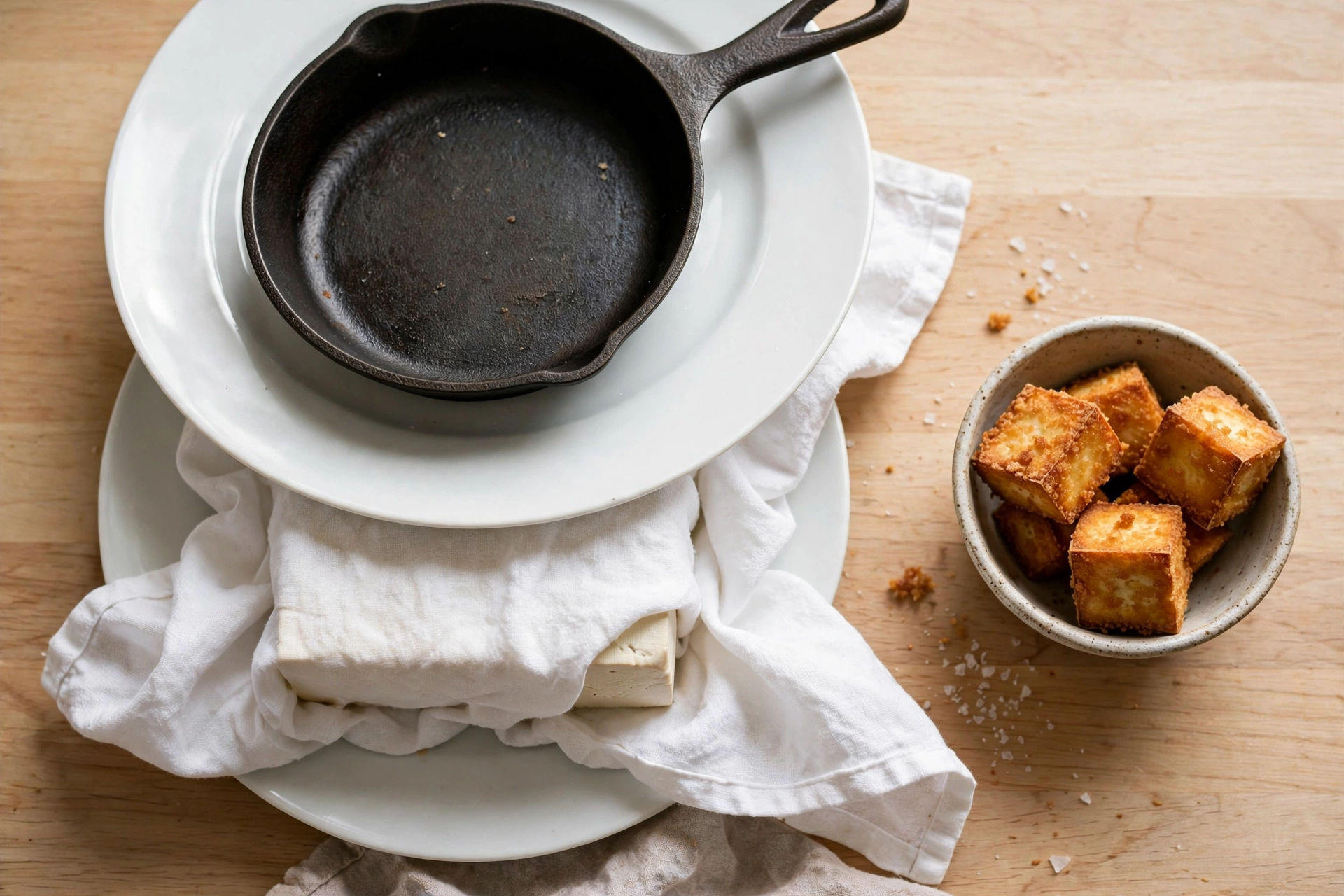
Method 1: The plate stack (no special equipment). Drain the block, wrap it in a clean kitchen towel or three layers of paper towel, and set it on a rimmed plate or shallow baking dish — the rim catches the water. Put a flat plate on top, then weight it with something heavy and stable: a cast-iron skillet, a couple of cans of tomatoes, a heavy cookbook. Twenty to thirty minutes is the sweet spot for extra-firm; firm tofu wants the full thirty.
Method 2: A tofu press. Purpose-built presses are two plates joined by springs or screws that apply even pressure. They’re faster (15 minutes is usually enough), they press both faces evenly so the block doesn’t wedge, and they contain the mess. If you cook tofu more than twice a week, the thirty-odd dollars pays for itself in saved counter time. The spring type beats the screw type for not crushing the corners.
Method 3: Freeze, thaw, squeeze. Tofu freezes beautifully, and freezing does half the pressing for you: ice crystals puncture the protein network, so when it thaws the water runs out freely. Freeze the block solid (at least 8 hours), thaw it completely, then give it a gentle press with your hands over the sink or a light plate stack for 10 minutes. Bonus: the thawed tofu develops a chewier, almost meaty sponge texture that soaks up marinades like nothing else. Downside: it takes planning, and the texture change isn’t right for every dish — great for a stir-fry, wrong for a delicate soup.
How Long Should You Press?
More isn’t always better. Pressing works on a curve: the first 15 minutes remove most of the easy water, and each additional 15 minutes buys you less.
- Extra-firm: 20–30 minutes under a plate stack, 15 in a press
- Firm: 30 minutes under a plate stack, 20 in a press
- Medium-firm: 15 minutes, light weight only — heavy weights crush it
- Minimum effective: 15 minutes. Less than that and you’re mostly draining surface water, which the pan would have handled anyway.
Past 45 minutes, returns turn negative: the block goes spongy and starts to crumble when you slice it, and it absorbs marinade so fast it turns out salty. I once pressed a block for an hour while dinner ran late — the cubes held, but they drank a whole soy-ginger marinade in ten minutes and cooked up briny. If you’re running long, lighten the weight rather than stopping the clock.
How to Tell It’s Done
Three checks, in order:
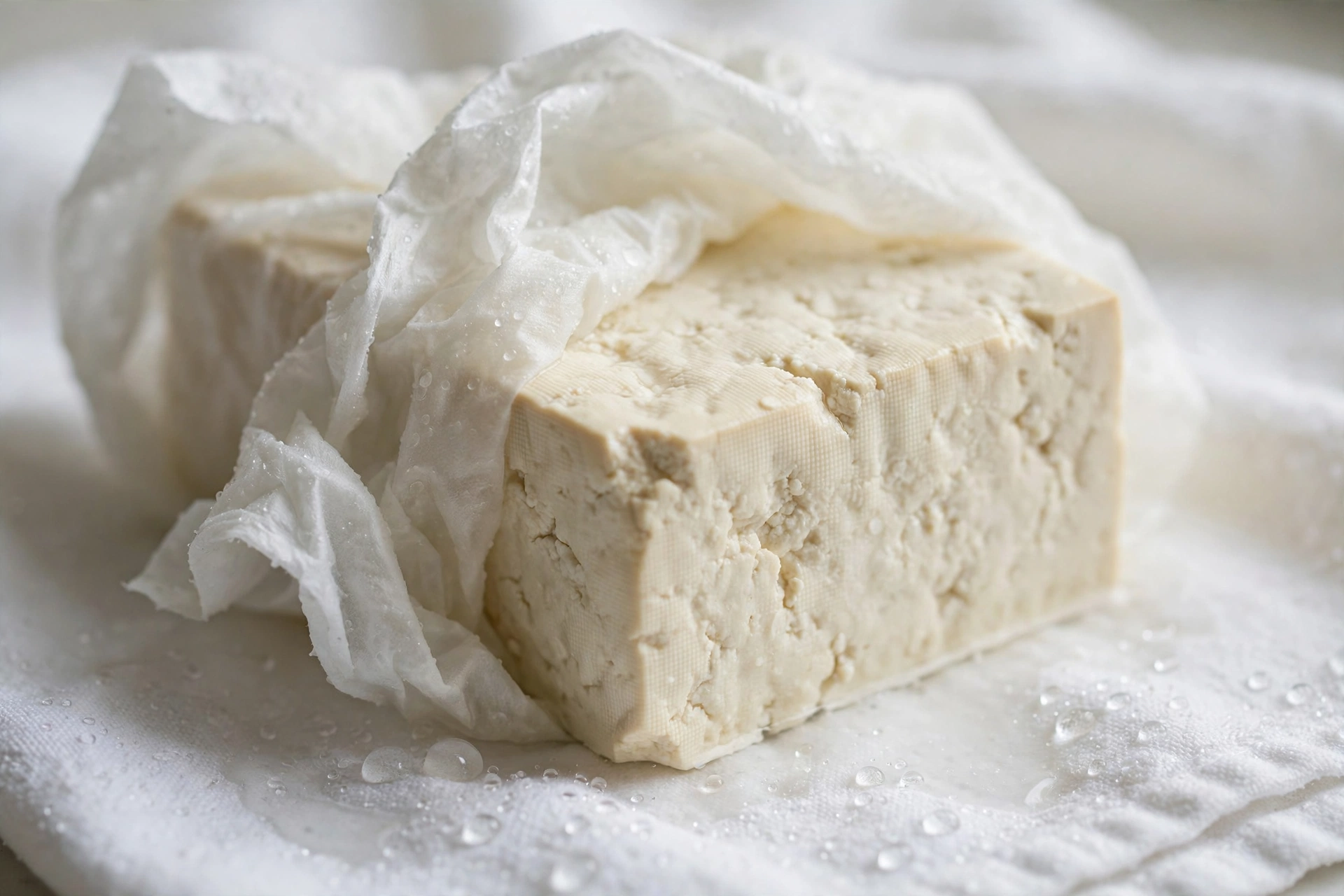
- The towel test. Swap the towels once, about ten minutes in. When the second set of towels comes out barely damp instead of soaked, the easy water is gone.
- The squeeze test. Press the block gently with your palm. Done tofu feels dense and gives only slightly, like a ripe avocado. If it still squishes and weeps water freely, give it ten more minutes.
- The weight test. A pressed 14-ounce block of extra-firm should feel noticeably lighter — that 1.9 ounces of water is missing. If you have a kitchen scale, weigh it the first few times; you’ll calibrate your hands fast.
After pressing, don’t rinse. Pat the block dry, cut it, and salt it before it goes in the pan — the dry surface takes seasoning properly now, and the cubes are ready for the oil.
Common Pressing Mistakes
Pressing silken tofu. I mention this twice because it’s the mistake that ruins dinner. Silken tofu is a custard, not a sponge. If a recipe says press the tofu and the block says silken, the recipe is wrong for your tofu — swap in firm.
Weighting it like it’s a gym session. A stack of heavy cans warps the block into a wedge and cracks the top face. The weight should be enough that water beads out of the surface within five minutes — if you see that, it’s enough. More weight doesn’t mean more water, it means a broken block.
Skipping the towel swap. A saturated towel stops wicking. One swap at the ten-minute mark roughly doubles the water you remove in a 30-minute press — it’s the easiest efficiency win in this whole post.
Pressing on a flat cutting board. The water has to go somewhere. Without a rimmed plate or tray, it pools under the block and the tofu sits in its own drain-off. Rimmed or bust.
Put It to Work
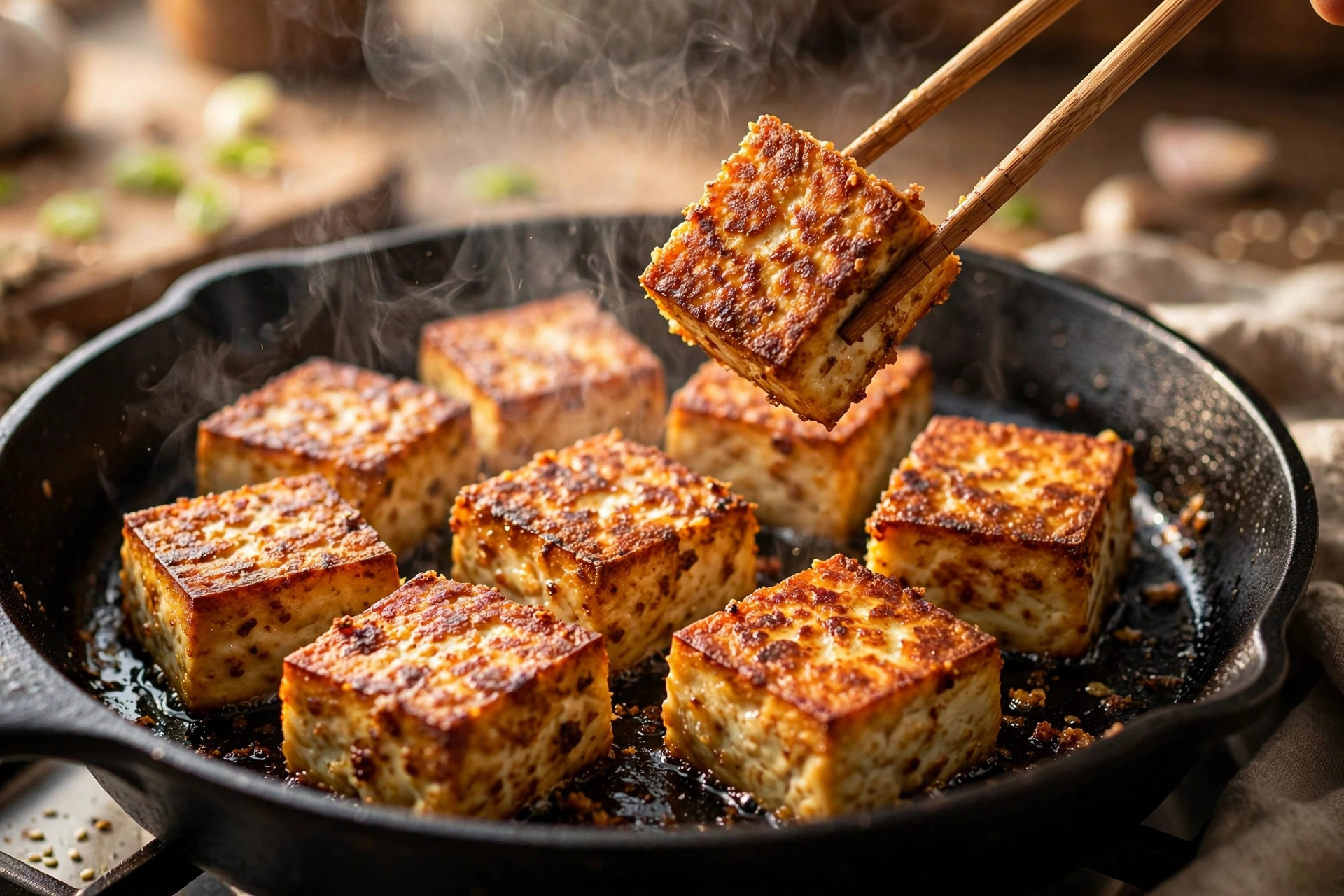
Pressing is prep, not dinner — so cook something that shows off the difference. My Thai Basil Tofu and Green Bean Stir-Fry is the classic case: pressed cubes sear golden before the sauce goes in, instead of steaming in it. Lemongrass Tofu gets its crisp edges the same way. And if you’re working with the softer end of the family, Tofu in Tomato Sauce shows what happens when you match the method to the texture — no press required.
Once you’ve pressed a few blocks, you’ll feel the difference before you even light the burner. The tofu is lighter in your hand, the towel is wet, and the pan stays hot. That’s the whole trick.
1 thought on “How to Press Tofu for Crispy, Golden Results”