

Kinpira gobo is the side dish I make when I want something salty-sweet on the table with almost no planning. One burdock root, one carrot, pantry seasonings, and about twenty-five minutes. The strands come out chewy-crisp with a glossy coat that tastes like soy sauce and toasted sugar, and the whole bowl keeps for days in the fridge.
It is also a good teacher. Burdock root is unforgiving if you skip the prep, and rewarding if you don't. Cut it fine, soak the harshness out, drive the water off before the sauce goes in, and you get that lacquered look you see in Japanese home kitchens.
What is kinpira gobo?
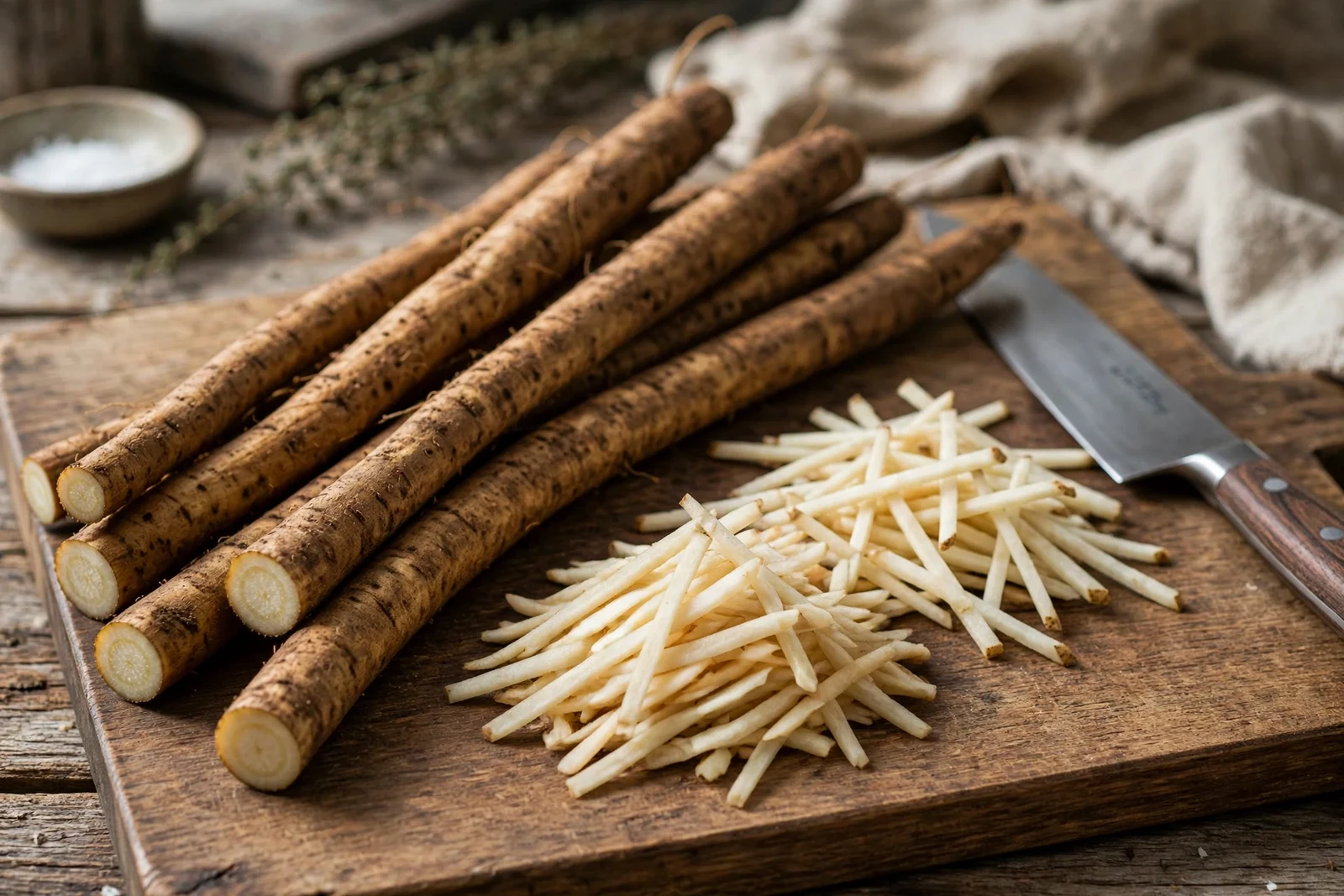
Kinpira gobo means braised burdock root, and it is one of the everyday sides, or okazu, that fill out a Japanese home meal. Burdock root, called gobo, is a long brown root vegetable with ivory flesh. Raw, it tastes earthy and a little harsh, which is why Japanese cooks soak the cut strips in water first. Cooked, it turns chewy-crisp and soaks up seasoning like a sponge.
The flavor formula is simple: julienned burdock and carrot, tossed in sesame oil, glazed with soy sauce, mirin, and sugar, finished with sesame seeds. The word kinpira covers the technique itself: thin vegetables sauteed and simmered in sweet soy until the liquid cooks off. Carrots, lotus root, and even burdock peels all get the same treatment. I reach for it when the main dish is mild, because kinpira gobo is the salty-sweet accent next to a bowl of rice and something like my classic miso soup.
The two steps that decide the texture
First, the soak. Cut the burdock into matchsticks and drop them straight into cold water, then let them sit while you prep everything else. After ten minutes the water turns dark brown with a reddish tint. That color is the harsh, tannic bite leaving the root. Skip this and the dish tastes like raw potato, no matter how good your glaze is. Rinse, drain, then shake the sieve hard to knock the surface water off. Wet strands steam in the pan instead of browning.
Second, the order of the sauce. I use 1 1/2 tablespoons of soy sauce, 1 tablespoon of mirin, and 1 tablespoon of sugar for about 300 grams of vegetables, and the soy sauce goes in last, not first. Here is why: sugar and mirin melt into a syrup that clings to the strands, and when the soy sauce hits the hot pan at the end, it caramelizes in about ten to fifteen seconds and smells toasty. If the soy goes in early and boils with everything else, it just reduces flat and dark, and you never get that smell.
Ingredients
For the vegetables: – 1 large burdock root (about 7 oz / 200 g), scrubbed well – 1 medium carrot (about 3 1/2 oz / 100 g)
For the seasoning: – 1 tablespoon toasted sesame oil, for the pan – 1/4 teaspoon red chili flakes (optional) – 1 tablespoon sugar – 1 tablespoon mirin – 1 1/2 tablespoons Japanese soy sauce (koikuchi)
To finish: – 1 tablespoon toasted white sesame seeds – 1/2 teaspoon toasted sesame oil
A note on the burdock root: scrub it with a stiff brush under running water and skip the peeler. The skin is thin and edible, and peeling throws away flavor. If the root is limp or smells sour, it is past its prime; a fresh one snaps cleanly when you bend it.
How to make kinpira gobo
1. Cut the burdock root into 5 cm (2-inch) sections. Halve each section lengthwise, then slice into matchsticks about 3 to 4 mm thick. Drop them into a bowl of cold water as you cut so they don't brown. Let them soak 10 to 15 minutes, change the water once, then rinse. 2. Peel the carrot and cut it into matchsticks the same size as the burdock. Stir the sugar and mirin together in a small bowl. Keep the soy sauce in its own little dish; it goes in last. 3. Pour the burdock into a sieve over the sink and shake it hard to get the water off. This step matters more than it looks: water on the strands will splash in the hot oil and keep everything steaming instead of frying. 4. Heat the sesame oil in a wide skillet or wok over medium-high heat. Add the chili flakes if using, then the burdock and carrot. Toss constantly for 3 to 4 minutes, until the edges of the strands start to catch a little color.
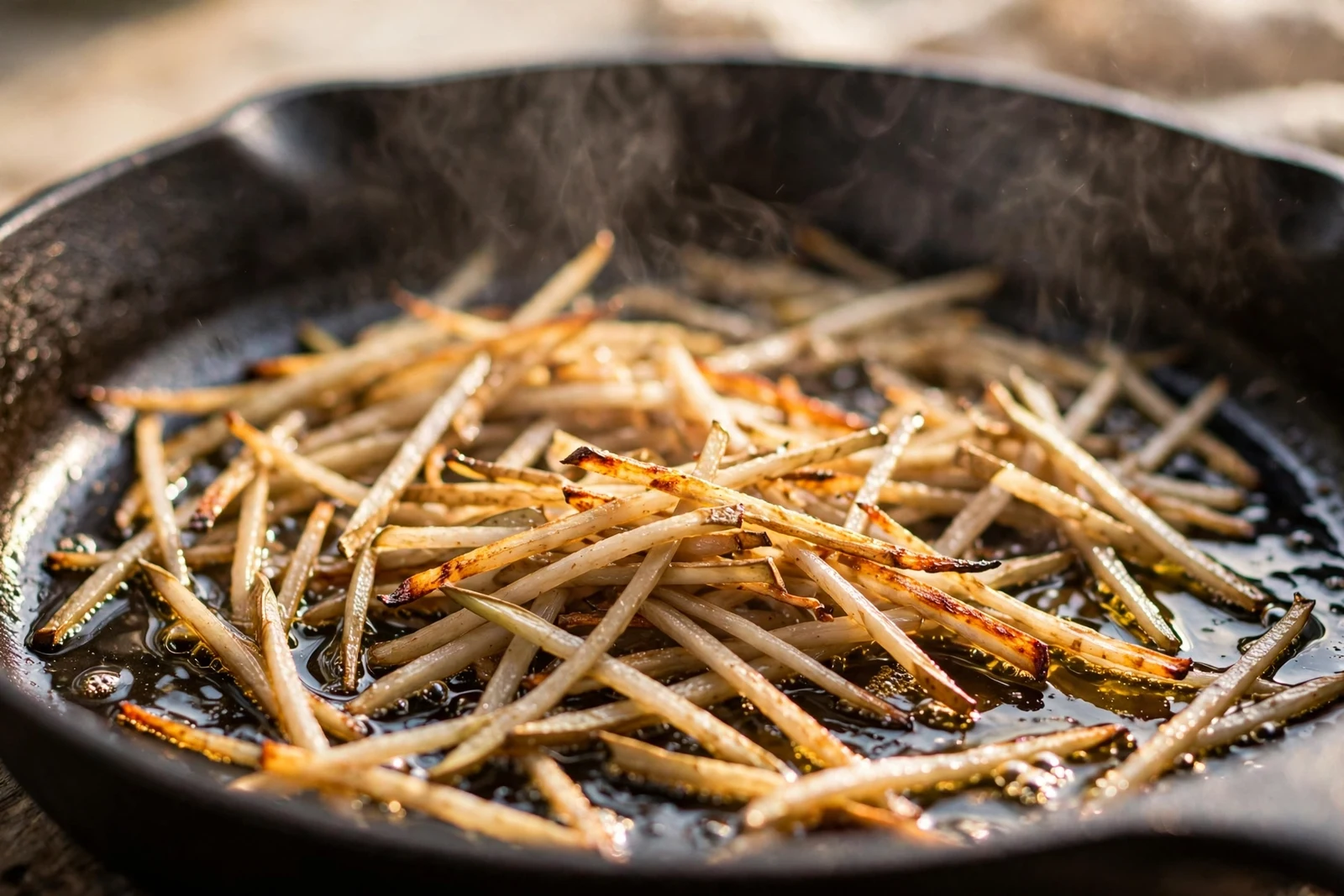
5. Pour in the sugar-mirin mix and keep tossing for 1 to 2 minutes. The liquid will turn syrupy and start to cling to the strands in a glossy coat. Taste one: the burdock should be tender with a little chew left. 6. Pour the soy sauce around the edge of the pan. Toss for 10 to 15 seconds, until you smell a toasted, almost smoky note, then take the pan off the heat. 7. Scatter the sesame seeds over the top and drizzle with the 1/2 teaspoon of sesame oil. Serve warm or at room temperature.

That toasted smell at the end is the tell. If you add the soy sauce and smell nothing, the pan was too cool. If you smell burning, the sugar sat too long before you tossed. Either way the fix is the same next time: hot pan, constant motion, soy last.
Tips and variations
Carrot ratio: I use half as much carrot as burdock by weight. More carrot makes it sweeter and milder, which some kids prefer. Less makes it more intensely burdock, which I like.
Make it ahead: kinpira gobo keeps 3 to 4 days in an airtight container in the fridge and the flavor deepens overnight. Eat it cold straight from the container, or warm it in a dry skillet for a couple of minutes. It also freezes for up to a month.
No mirin: stir 1/2 teaspoon of sugar into 1 tablespoon of sake, or use 1 tablespoon of rice vinegar mixed with 1/2 teaspoon of sugar. The vinegar version is a touch sharper, so add it with the sugar-mirin step and let it cook off fully.

Other vegetables for the same technique: the kinpira treatment works on julienned lotus root, parsnips, and salsify. The soaking rule applies to all of them: cut fine, soak out the harshness, dry before they hit the pan.
Troubleshooting: Fix My Kinpira Gobo
Burdock root punishes shortcuts, but every failure mode has a clear cause. Pick what happened below and you will get the cause, what to do tonight, and how to stop it next time.
HERB & LIME · KITCHEN HELP
Fix My Kinpira Gobo
Choose what went wrong to see a practical next step.
Possible cause
What to try next
For next time
From Paul's kitchen. Results vary with burdock root size, pan, and stove heat, adjust timing to your setup.
Quick reference (also works without JavaScript)
The burdock tastes harsh or bitter
Cause: The harsh tannins were never soaked out. Raw burdock has a sharp, earthy bite that only a cold-water soak removes.
Try: For tonight, toss the finished dish with an extra pinch of sugar and a drizzle of sesame oil to round the edge off. Next time, cut the strips finer (3 mm) and soak 10 to 15 minutes with one water change before cooking.
Prevent: Julienne to 3 to 4 mm, drop the strips straight into cold water, and soak with one water change. The soak water turns dark brown with a reddish tint; that is the harsh, tannic bite leaving the root.
The glaze turned watery instead of glossy
Cause: Wet strands went into the pan, so the soy-mirin mixture boiled in released water and never thickened into a glaze.
Try: Turn the heat up to medium-high and keep tossing until the excess liquid steams off and the glaze starts to cling. Next batch, dry-fry the drained strands 60 to 90 seconds before the sauce goes in.
Prevent: Shake the drained burdock hard in a sieve, then saute it in hot oil until the pan stops hissing before adding any sauce. Surface water boils the sauce instead of letting it coat.
The burdock is still tough and crunchy
Cause: The strips were cut too thick or pulled off the heat before the fiber softened. Burdock is dense and needs a full saute plus a glaze stage to turn tender.
Try: Add 2 to 3 tablespoons of water, put a lid on the pan, and steam 2 to 3 minutes over medium heat until the strands give under a fork. Lift the lid for the last minute so the glaze thickens again.
Prevent: Cut every strip to the same 3 to 4 mm thickness so nothing finishes late, and taste one before the soy sauce goes in. Thicker strips need a longer covered steam finish.
Too salty, or too sweet and flat
Cause: The soy sauce went in early and reduced too far, concentrating the salt, or the sugar went in without enough soy to balance it.
Try: Next time, season in this order: sugar and mirin first, let them melt into a syrup, then pour the soy sauce around the edge of the pan for only 10 to 15 seconds so it caramelizes instead of reducing.
Prevent: Keep the ratio at 1 1/2 tablespoons soy sauce to 1 tablespoon mirin to 1 tablespoon sugar for about 300 g of vegetables, and add the soy sauce last. Early soy just boils away flat; late soy toasts on the hot pan and smells nutty.
The sugar scorched and the pan burned black
Cause: The sugar sat still over high heat and caramelized past the point of no return, burning onto the pan.
Try: Scoop the unburned strands into a clean bowl and leave anything stuck to the pan behind. Next batch, add the sugar-mirin over medium heat and keep the strands moving constantly.
Prevent: Keep the pan at medium heat once the sugar goes in, and toss constantly. The glaze should stay a syrup; if it goes from syrup to dark spots in seconds, the heat is too high.
Kinpira Gobo (Japanese Braised Burdock Root)
Ingredients
Method
- Cut the burdock root into 5 cm (2-inch) sections. Halve each section lengthwise, then slice into matchsticks about 3 to 4 mm thick. Drop the strips into a bowl of cold water as you cut so they do not brown. Soak 10 to 15 minutes, change the water once, then rinse.
- Peel the carrot and cut it into matchsticks the same size as the burdock. Stir the sugar and mirin together in a small bowl. Keep the soy sauce in its own dish; it goes in last.
- Pour the burdock into a sieve over the sink and shake hard to get the surface water off.
- Heat the tablespoon of sesame oil in a wide skillet or wok over medium-high heat. Add the chili flakes if using, then the burdock and carrot. Toss constantly for 3 to 4 minutes, until the edges of the strands start to catch a little color.
- Pour in the sugar-mirin mix and keep tossing for 1 to 2 minutes, until the liquid turns syrupy and clings to the strands in a glossy coat. Taste one strand; the burdock should be tender with a little chew left.
- Pour the soy sauce around the edge of the pan. Toss for 10 to 15 seconds, until you smell a toasted, almost smoky note, then take the pan off the heat.
- Scatter the sesame seeds over the top, drizzle with the 1/2 teaspoon of sesame oil, and serve warm or at room temperature.
Notes
More Japanese recipes
– Classic Miso Soup: the soup bowl this side dish was made to sit next to. – Homemade Gyoza with Pork and Cabbage: crisp-bottomed dumplings that pair well with something sweet-salty. – Nasu Dengaku: Miso-Glazed Japanese Eggplant: another glossy, caramelized Japanese side. – Tamagoyaki: Japanese Rolled Omelet: mild rolled eggs to balance the bold seasoning.