
Nasu dengaku is the eggplant dish that converts eggplant skeptics. Halved Japanese eggplant goes onto the grill or into a hot pan until the flesh turns silky and collapses under a fork, then each half gets brushed thickly with a sweet-savory miso glaze and slid under the broiler. The glaze bubbles and chars in spots, turning jammy and caramelized, while toasted sesame seeds finish the top. It is rich, salty-sweet, and deeply savory — and it takes about 30 minutes start to finish.
The name tells you the story: *nasu* is eggplant in Japanese, and *dengaku* refers to the old custom of skewering tofu and glazing it with miso, named for street performers called dengaku dancers whose stilts the skewers resembled. These days dengaku is most often a miso glaze, and eggplant is its most famous partner. It shows up as an appetizer at izakaya, a side dish in home cooking, and — when you want something truly good with minimal effort — a main over rice.
What Makes the Miso Glaze Work
The glaze is the whole dish, so it pays to understand it. The classic dengaku miso is built on shiro miso (white miso), which is fermented for a short time and tastes mellow and slightly sweet, then sweetened further with sugar and thinned with mirin and a splash of sake. Simmered gently for a few minutes, it thickens into something you could spread on toast — glossy, clingy, and balanced.
Balance is the key word. White miso is still salty, so the sugar and mirin pull it toward sweet, and you land somewhere between salted caramel and savory jam. If your miso leans saltier than expected (miso varies by brand), add another teaspoon of sugar and taste again — the glaze should taste bold and a little too intense on its own, because it mellows against the mild eggplant. A tiny spoonful on the tip of your finger should make you nod, not wince.
Red miso (aka miso) makes a darker, punchier glaze that some people prefer, but it can turn bitter under the broiler if it chars too much. For this recipe, white miso is the safer, more traditional choice. Look for it in the refrigerated section of Asian grocery stores — it keeps for months.
Choosing the Eggplant
Long, slender Japanese or Chinese eggplants are the right shape for nasu dengaku: their skin is thin, their seeds are few, and the flesh cooks up creamy rather than spongy. One medium eggplant per person is a good rule of thumb — they shrink more than you expect.
Globe eggplants (the big teardrop kind) work in a pinch if you cut them into thick rounds or wedges, but the texture is less silky and the shape is less elegant. If the store only has globe eggplant, salt the cut pieces for 20 minutes and blot them dry first; this draws out bitterness and helps them cook up creamier. With Japanese eggplant, you can skip the salting entirely.
Score the cut face of each eggplant half in a shallow crosshatch pattern before cooking. This is not decoration — it lets heat penetrate, gives the flesh somewhere to go as it softens, and creates little pockets that catch the glaze. Cut about a quarter inch deep without piercing the skin.
Ingredients
For the eggplant:
- 4 Japanese or Chinese eggplants (about 8 to 10 ounces each)
- 2 tablespoons neutral oil (canola or vegetable)
- 1 tablespoon toasted sesame seeds, for serving
- 2 scallions, thinly sliced, for serving (optional)
For the dengaku miso glaze:
- 1/4 cup shiro (white) miso
- 2 tablespoons sugar
- 1 tablespoon mirin
- 1 tablespoon sake
- 1 teaspoon toasted sesame oil (optional, for extra nuttiness)
Instructions
Step 1. Heat the grill or pan. If grilling, heat a grill or grill pan over medium-high. If using the oven method, heat the oven to 425°F (220°C) and line a baking sheet with foil. The eggplant needs real heat to collapse properly — timid heat makes it tough.
Step 2. Prep the eggplant. Trim the stems and halve each eggplant lengthwise. Score the cut side in a crosshatch pattern about 1/4 inch deep, taking care not to cut through the skin. Brush the cut faces generously with the neutral oil — the flesh drinks it up, and this is what makes the interior custardy instead of dry.
Step 3. Cook until silky. Place the halves cut-side down on the hot grill or in a large skillet over medium-high heat. Cook for 5 to 7 minutes without moving them until the cut side is deeply browned, then flip and cook skin-side down for another 4 to 5 minutes, until a fork slides into the flesh with no resistance. (Oven method: roast cut-side up for 18 to 20 minutes, until completely soft.) If the eggplant is still firm anywhere, it is not done — undercooked eggplant is rubbery, and the glaze cannot save it.
Step 4. Make the glaze. While the eggplant cooks, combine the miso, sugar, mirin, sake, and sesame oil (if using) in a small saucepan. Stir over low heat for 2 to 3 minutes until the sugar dissolves and the mixture is smooth and glossy. Do not let it boil hard — a gentle simmer is all it needs. Set aside; it will thicken slightly as it cools.
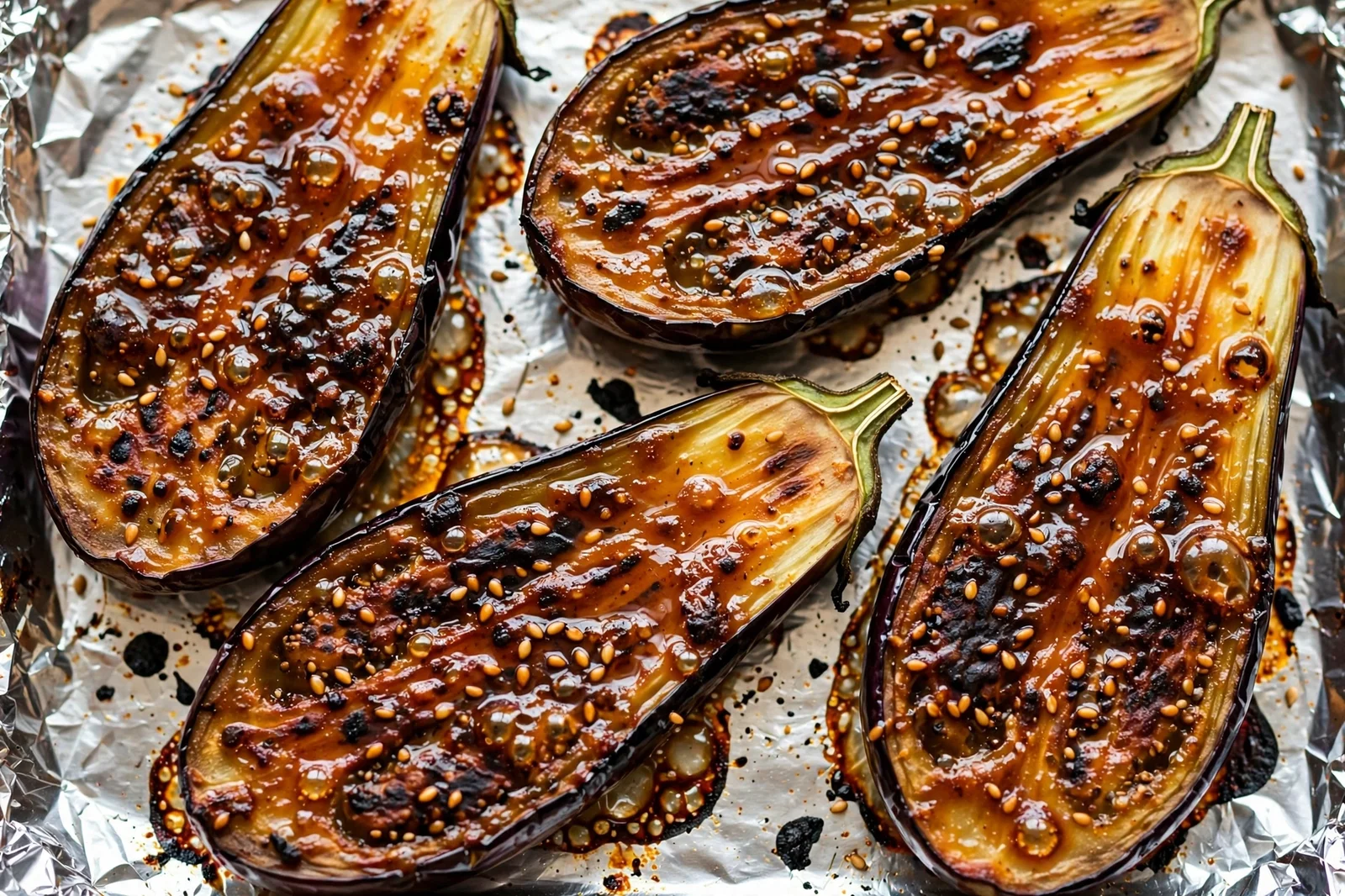
Step 5. Glaze and broil. Heat the broiler to high and position a rack about 6 inches from the element. Arrange the cooked eggplant halves cut-side up on a foil-lined baking sheet. Spread the glaze thickly over each half — about a tablespoon per half, covering the whole cut surface. Broil for 3 to 5 minutes, watching closely, until the glaze bubbles, caramelizes, and chars in spots. Miso burns fast at the end, so do not walk away.
Step 6. Finish and serve. Sprinkle with toasted sesame seeds and scallions. Serve hot or warm — nasu dengaku is at its best within minutes of the broiler, while the glaze is still glossy and the eggplant is molten inside.
Tips and Variations
- Do not skimp on the oil in step 2. Eggplant flesh acts like a sponge, and a generous brush of oil is what turns it creamy. The glaze is flavorful but it cannot rescue dry, tough flesh.
- Watch the broiler like a hawk. The difference between caramelized and burnt is about 60 seconds under a hot broiler. When the glaze starts bubbling and catching color at the edges, it is nearly done.
- Make it gluten-free. Miso is generally gluten-free, but some brands add barley — check the label. Tamari is not needed here since there is no soy sauce, which makes this naturally an easy dish for gluten-free eaters.
- Add heat. Stir a teaspoon of shichimi togarashi or a dab of yuzu kosho into the glaze for a spicy version. Or drizzle the finished dish with a little chili oil.
- Top it differently. A sprinkle of sansho pepper adds a citrusy tingle that is very Japanese. Yuzu zest is another classic finishing touch.
- Grill-first method. If you have a real outdoor grill, cook the eggplant over direct medium heat, then glaze and return it to the grill, glaze-side up, for the caramelization. The smoky char takes the dish up another notch.
- Leftovers. Refrigerate for up to 2 days and rewarm under the broiler or in a hot oven. The glaze firms up when cold and loosens again with heat. It is also surprisingly good at room temperature tucked into a bento box.
What to Serve with Nasu Dengaku
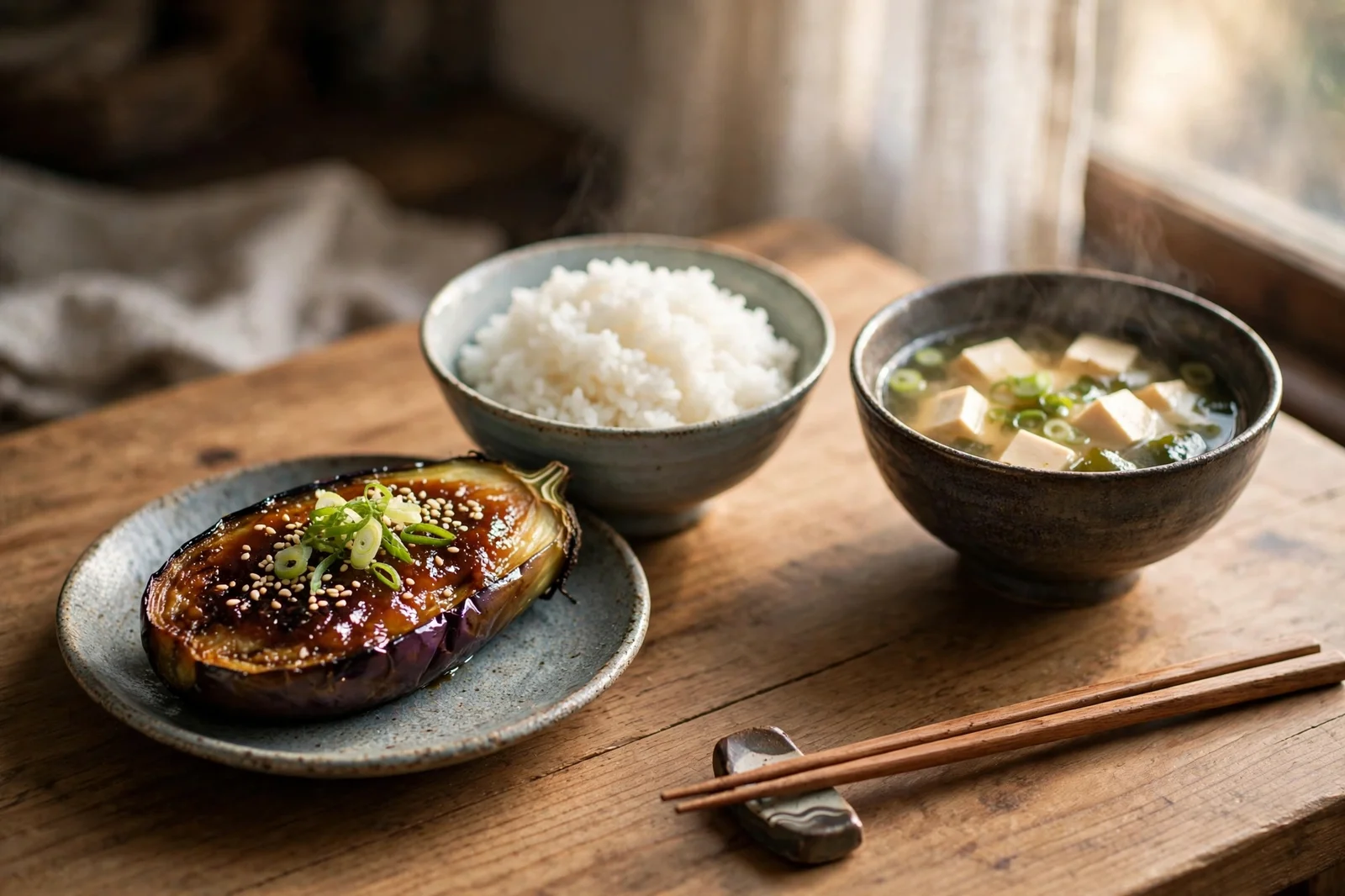
Nasu dengaku shines as part of a Japanese-style spread. Pair it with a bowl of classic miso soup and steamed rice for a simple, satisfying dinner — the soup's lightness plays nicely against the glaze's richness. If you want eggplant two ways on the table, Chinese garlic eggplant makes a fun contrast: garlicky and fiery where the nasu dengaku is sweet and mellow. It also works beautifully as a side next to grilled fish or chicken, or as an appetizer before a bigger meal.
Recipe Card
Prep time: 10 minutes · Cook time: 20 minutes · Total time: 30 minutes · Servings: 4
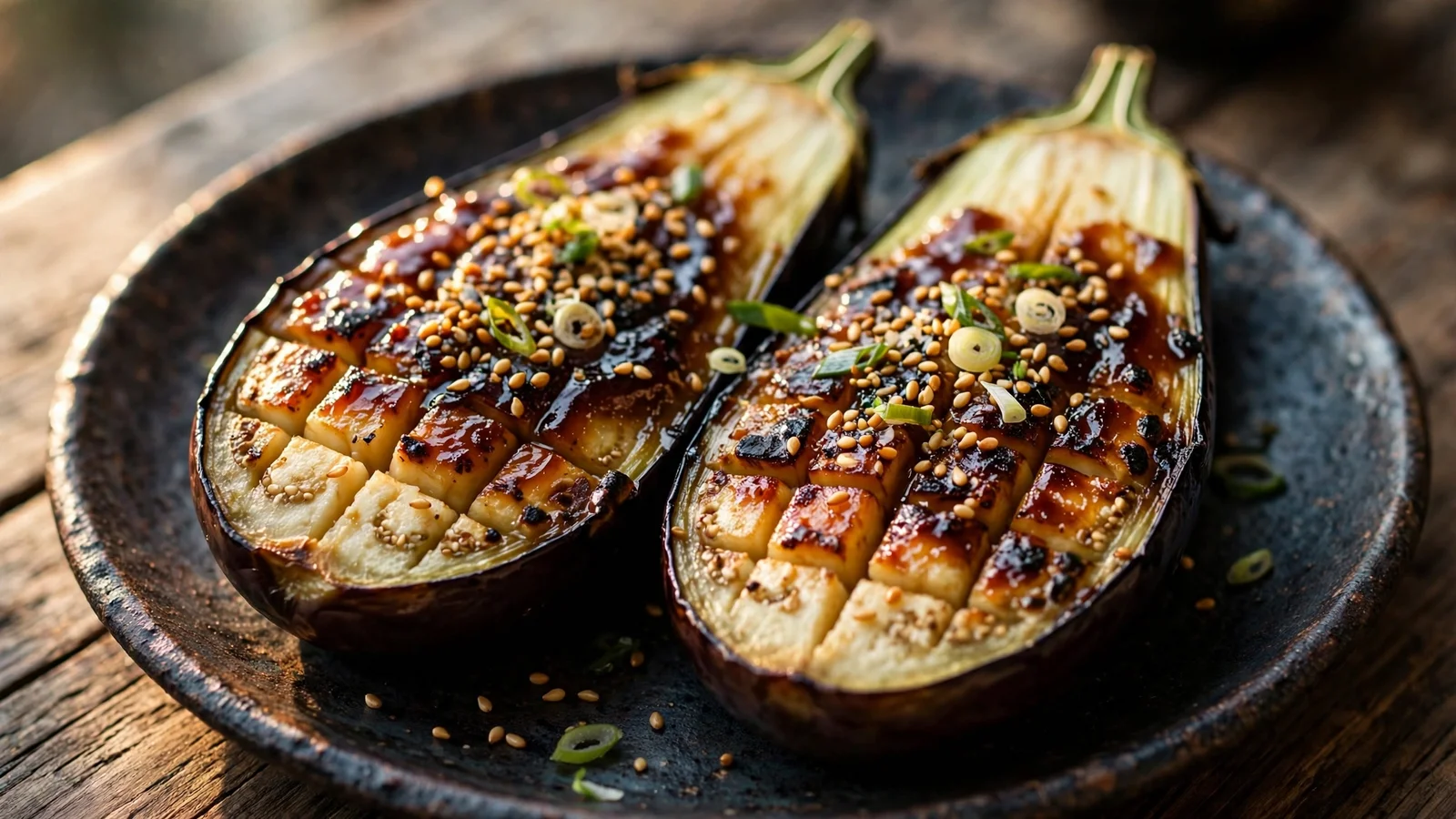
Nasu Dengaku: Miso-Glazed Japanese Eggplant
Ingredients
Method
- Heat a grill or grill pan over medium-high, or heat the oven to 425F (220C) with a foil-lined baking sheet.
- Trim the stems and halve each eggplant lengthwise. Score the cut side in a 1/4-inch-deep crosshatch without piercing the skin. Brush the cut faces generously with the neutral oil.
- Grill cut-side down 5-7 minutes until deeply browned, flip and cook skin-side down 4-5 minutes more until a fork slides into the flesh with no resistance. (Oven: roast cut-side up 18-20 minutes until completely soft.)
- Meanwhile, stir the miso, sugar, mirin, sake and sesame oil in a small saucepan over low heat 2-3 minutes until the sugar dissolves and the glaze is smooth and glossy. Do not boil hard.
- Heat the broiler to high with a rack about 6 inches from the element. Arrange the eggplant cut-side up on the baking sheet and spread the glaze thickly over each half, about 1 tablespoon per half. Broil 3-5 minutes, watching closely, until the glaze bubbles, caramelizes and chars in spots.
- Sprinkle with toasted sesame seeds and scallions. Serve hot or warm.