
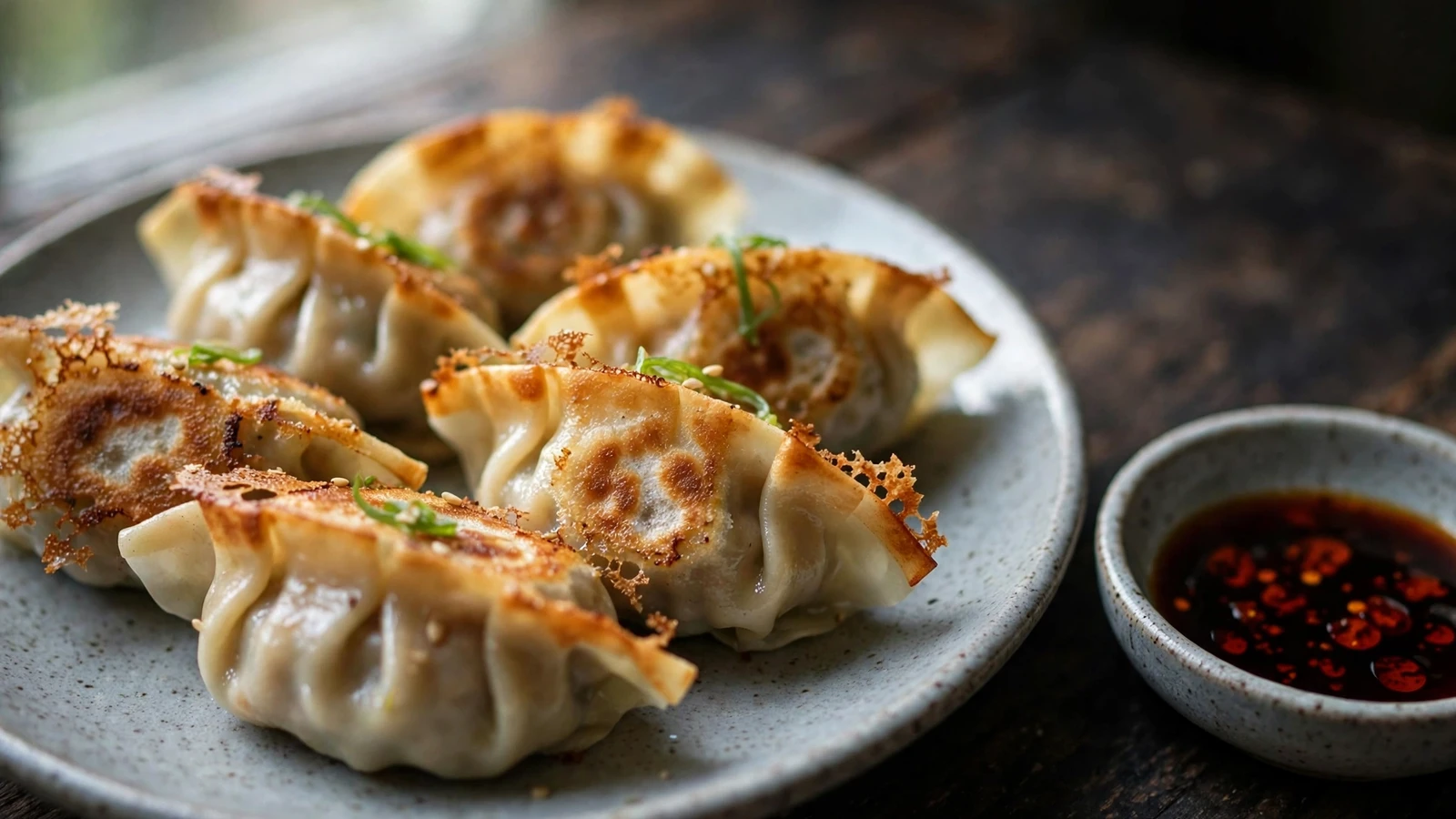
There’s a specific sound a great gyoza makes: the crackle when the crispy bottom meets the plate. These pork and cabbage gyoza deliver it every time — golden, lacy bottoms on one side, juicy filling on the other, and a dipping sauce that hits all three notes (salty, tangy, spicy) in one dunk. The recipe is built around three things I measured and tested until they were repeatable: a 1-to-1 pork-to-cabbage ratio that keeps the filling juicy without weeping, the classic fry-steam-crisp pan sequence timed to the minute, and a pleating method that seals wrappers without tearing them.
What Is Gyoza?
Gyoza (餃子) are Japan’s take on the Chinese jiaozi — pan-fried dumplings that Japanese settlers brought home from Manchuria after World War II and turned into one of the country’s most beloved home-cooking dishes. The Japanese version is lighter than its Chinese ancestor: a thin wheat wrapper, a filling that’s often more cabbage than meat, and the signature cooking method — fried on one side, steamed with the lid on, then crisped again.
A proper gyoza is judged by contrast: a crisped, golden bottom, a tender steamed top, and a filling that’s juicy but never watery. They’re traditionally served as a side dish (rarely the main event) — next to ramen, rice, or a cold beer at an izakaya. Expect about 30 of these from one batch; they go fast, and they freeze beautifully, so the leftovers plan writes itself.
The 1-to-1 Ratio and the Fry-Steam-Crisp Sequence
Two numbers make this recipe work. The first is the filling ratio: 1 part ground pork to 1 part cabbage by weight (roughly 225 g of each). More cabbage and the filling turns lean and bland; more pork and it goes dense and greasy. At 1-to-1, the cabbage melts into the pork and the fat from the pork coats the cabbage — juicy without being wet. Traditional recipes push toward more cabbage; I landed here after batches that leaned both directions, and this one survives the freezer best.
The second is the pan sequence, timed out: fry 2–3 minutes over medium heat until the bottoms are golden → add 60 ml (1/4 cup) water, lid on, steam 3 minutes → lid off, drizzle in a teaspoon of sesame oil, crisp 1–2 minutes more. The sesame oil trick matters: added after the water evaporates, it re-fries the bottoms instead of just reheating them. And once the bottoms are golden, the gyoza release themselves from a nonstick pan — don’t force them off early. The pleats, by the way, aren’t decoration: they let each gyoza stand upright on a flattened bottom so the whole base crisps evenly.
One more observation from my kitchen: salt the cabbage first, every time. Ten minutes of salting pulls out roughly a tablespoon of water per 225 g of cabbage — water that would otherwise end up inside your wrappers as sog. The filling goes from puddly to tight, and the wrappers stay intact through the freeze.
Ingredients
For the filling
- 225 g (1/2 lb) ground pork
- 225 g (1/2 lb) green cabbage (about 1/4 large head), finely chopped
- 2 green onions, minced
- 2 shiitake mushrooms, stems removed, caps minced
- 1 teaspoon grated fresh ginger (with juice)
- 2 cloves garlic, minced
- 2 teaspoons sake
- 2 teaspoons toasted sesame oil
- 2 teaspoons soy sauce
- 1/8 teaspoon freshly ground black pepper
- 1 teaspoon kosher salt (for wilting the cabbage)
For folding
- 30 gyoza wrappers (store-bought is fine)
- Water, for sealing
For cooking
- 2 tablespoons neutral oil (per batch)
- 1 teaspoon toasted sesame oil (per batch, for the final crisp)
- 60 ml (1/4 cup) water (per batch, for steaming)
For the dipping sauce
- 3 tablespoons soy sauce
- 3 tablespoons rice vinegar (unseasoned)
- La-yu (Japanese chili oil), to taste
How to Make Gyoza
- Wilt the cabbage. Chop the cabbage fine — the thick ribs especially, minced small. Toss with the kosher salt, rub it in with your hands, and let it sit 10 minutes until wilted. Then grab handfuls and squeeze out the liquid firmly over the sink. You’ll pull out a surprising amount — that’s the step that separates juicy gyoza from soggy ones.
- Mix the filling. In a large bowl, combine the pork, green onions, shiitake, ginger, garlic, sake, sesame oil, soy sauce, and black pepper. Knead with your hand (not a spoon) until the mixture turns sticky and pale — about a minute of mixing. That kneading binds the meat proteins so the filling sets springy instead of crumbly. Squeeze the cabbage dry one more time, add it in, and mix until evenly distributed. Cover and chill 15 minutes if your kitchen is warm.
- Set up the folding station. Line a baking sheet with parchment. Fill a small bowl with water. Open the wrapper package and keep the stack covered with a damp towel — the edges dry out within minutes and then nothing seals.
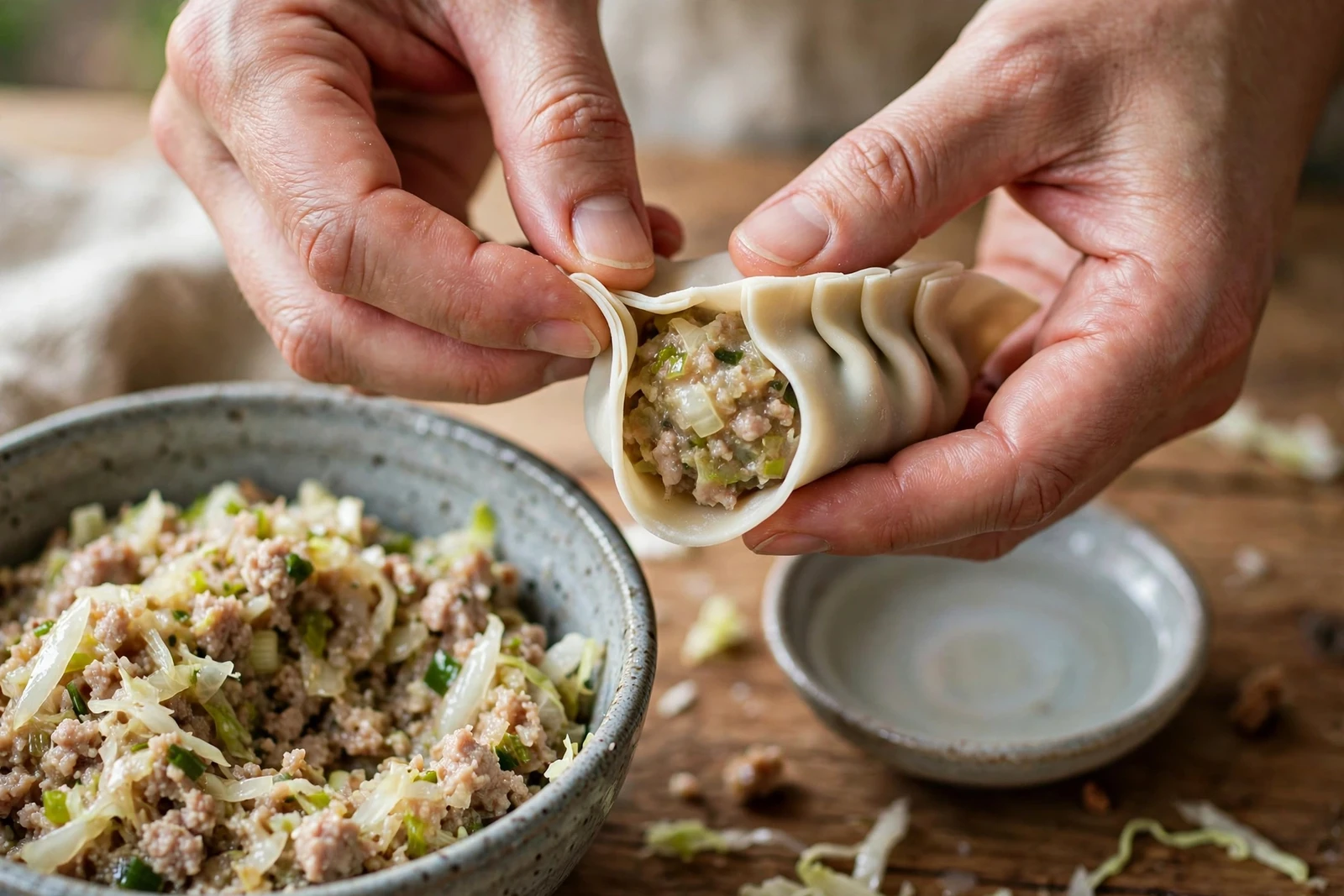
- Fill and pleat. Hold a wrapper in your non-dominant hand. Place 1 level tablespoon of filling in the center (no more — overfilling is the #1 cause of burst wrappers). Wet the outer edge with a fingertip of water, fold in half, and make 5–6 small pleats on one side only, pressing each pleat firmly against the back half. Flatten the bottom so the gyoza stands upright, and set it on the parchment. Cover the finished ones with plastic wrap as you go.
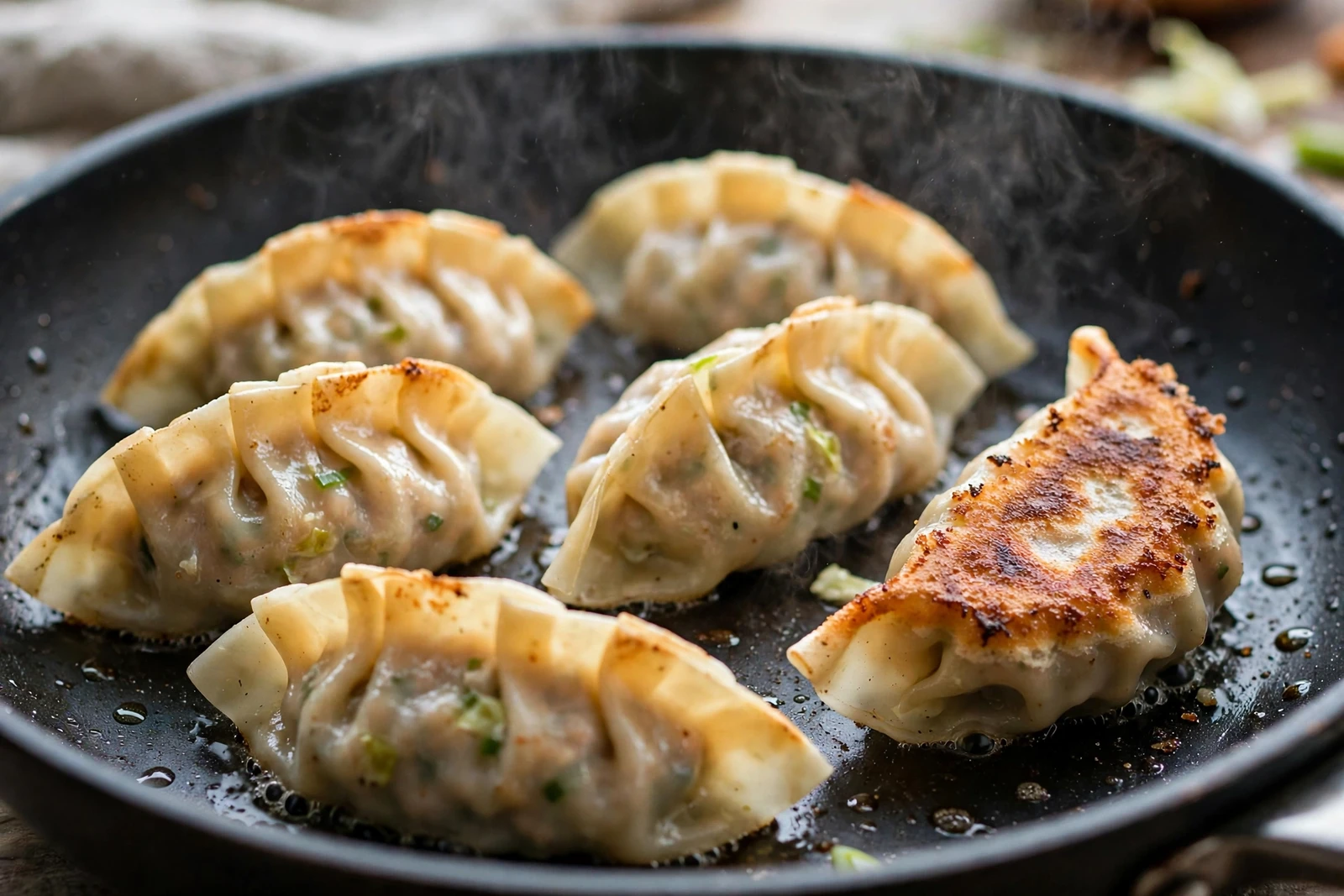
- The fry. Heat 2 tablespoons neutral oil in a large nonstick skillet with a lid over medium heat. Arrange the gyoza flat-side down in a single layer, leaving space between them. Fry 2–3 minutes undisturbed until the bottoms are deep golden — peek by lifting one with a spatula; they should release on their own.
- The steam. Pour 60 ml water into the pan (stand back — it spatters), cover immediately, and steam 3 minutes until the water evaporates and the tops turn translucent.
- The crisp. Uncover, drizzle 1 teaspoon sesame oil around the pan, and cook 1–2 minutes more until the bottoms re-crisp and sizzle. Slide onto a plate, crispy side up.
- Sauce and serve. Stir the soy sauce, rice vinegar, and a few drops of la-yu in a small dish. Serve the gyoza hot, with a refreshing side like Japanese cucumber sunomono to cut the richness — the same contrast trick that makes chicken karaage sing next to something cool and sharp.
To freeze: flash-freeze the folded, uncooked gyoza on the parchment-lined sheet until solid (about an hour), then transfer to a freezer bag. They keep up to a month. Cook straight from frozen with the same method, adding 1–2 extra minutes to the steaming step.
Troubleshooting: Fix My Gyoza
Bottoms that never crisped, wrappers that burst in the pan, or filling that wept all over the wrappers — each one has a cause and a fix. Tell the tool what went wrong:
HERB & LIME · KITCHEN HELP
Fix My Homemade Gyoza
Choose what went wrong to see a practical next step.
Possible cause
What to try next
For next time
From Paul's kitchen. Results vary with wrapper brand, pan heat, and portion size — adjust timing to your setup.
Quick reference (also works without JavaScript)
The filling turned watery and the wrappers went soggy
Cause: Cabbage releases a surprising amount of water once salted and heated, and if it isn't squeezed dry first, that moisture soaks straight into the thin wrappers.
Try: For this batch, drain the pan of pooled liquid, finish cooking, and serve with extra sauce to compensate. Next time, salt the chopped cabbage and let it wilt 10 minutes, then squeeze it dry in handfuls before mixing it into the pork.
Prevent: Salt the cabbage and squeeze out the liquid before it meets the pork, and don't let folded gyoza sit around — cook or freeze them right away so the moist filling doesn't soften the wrappers.
The wrappers burst open while folding or cooking
Cause: Overfilled wrappers can't seal fully, and steam pressure inside a packed dumpling finds the weak spot and blows it open.
Try: Pinch out the extra filling from the burst ones and re-seal any gaps with wet fingers, then handle gently in the pan. For the next batch, drop back to a level tablespoon of filling per wrapper.
Prevent: Keep the filling to one level tablespoon per wrapper — a heaped scoop pushes the pleats open — and flatten the filling slightly to press out trapped air before sealing.
The wrapper edges dried out and wouldn't seal
Cause: Gyoza wrappers are thin wheat sheets with no fat, so their exposed edges lose moisture to the air fast and stop sticking to themselves.
Try: Re-wet the dried edge generously and press the seal again; if the wrapper cracked, wrap it in a fresh wrapper or cook it as-is and eat the broken ones first. For the next ones, keep the stack covered with a damp towel between folds.
Prevent: Keep the wrapper stack under a damp cloth or plastic wrap at all times while folding — the thin edges dry out within minutes.
The gyoza stuck to the pan and tore
Cause: Too little oil, a pan that wasn't hot enough on entry, or moving the dumplings before the crust sets lets the wet starch of the wrapper glue itself to the metal.
Try: Add a little more oil, turn the heat down slightly, and let the bottoms finish setting — a properly seared gyoza releases itself when the crust is golden. If one is truly welded on, slide a thin spatula under it rather than pulling the wrapper off.
Prevent: Start with a generous layer of oil in a properly hot pan, arrange the gyoza with space between them, and don't touch them until the bottoms are fully golden.
The folded gyoza went soft and flabby after sitting
Cause: The moist filling keeps releasing liquid into the raw wrappers, and thawed wrappers turn gummy and tear under pan heat instead of holding their pleats.
Try: Put them back on the tray and freeze them solid first, then cook straight from frozen with an extra 1–2 minutes of steaming — don't try to cook the flabby ones now.
Prevent: Flash-freeze folded gyoza on a parchment-lined tray until solid before bagging, and cook them directly from frozen; never thaw them first.
Homemade Gyoza with Pork and Cabbage
Ingredients
Method
- Wilt the cabbage. Chop the cabbage fine, mincing the thick ribs small. Toss with the kosher salt, rub it in, and let sit 10 minutes until wilted. Grab handfuls and squeeze out the liquid firmly over the sink.
- Mix the filling. Combine the pork, green onions, shiitake, ginger, garlic, sake, sesame oil, soy sauce, and black pepper. Knead by hand until sticky and pale. Squeeze the cabbage dry once more, add it in, and mix until evenly distributed. Chill 15 minutes if the kitchen is warm.
- Set up the folding station. Line a baking sheet with parchment, fill a small bowl with water, and keep the wrapper stack covered with a damp towel at all times.
- Fill and pleat. Place 1 level tablespoon of filling in the center of a wrapper — no more. Wet the outer edge, fold in half, and make 5–6 small pleats on one side only, pressing each pleat firmly. Flatten the bottom so the gyoza stands upright. Cover finished ones with plastic wrap.
- The fry. Heat the neutral oil in a large nonstick skillet with a lid over medium heat. Arrange gyoza flat-side down with space between them. Fry 2–3 minutes undisturbed until the bottoms are deep golden and release on their own.
- The steam. Pour in 60 ml water, cover immediately, and steam 3 minutes until the water evaporates and the tops turn translucent.
- The crisp. Uncover, drizzle 1 teaspoon sesame oil around the pan, and cook 1–2 minutes more until the bottoms re-crisp and sizzle. Slide onto a plate, crispy side up. Serve hot with the dipping sauce.
Notes
Paul’s Notes
- The wrinkle test for wrappers. If the wrapper edge won’t stick when you press it, it’s dried out — don’t fight it. Re-wet the edge, seal what you can, and fold the next one faster. The stack should never sit uncovered.
- 1 tablespoon means level, not heaped. Heaped filling forces the pleats open in the pan. If your wrappers keep bursting, you’re overfilling, not under-sealing.
- Don’t crowd the pan. Gyoza steamed too close together fuse at the wrappers and tear when separated. Two batches beats one fused sheet.
- From frozen is a feature, not a compromise. Freshly folded gyoza go into the freezer; nothing thaws. Thawed gyoza get flabby wrappers that tear under heat — the frozen ones hold their pleats and steam perfectly.
- Shiitake is worth it. The two minced mushrooms add a savory depth the pork alone doesn’t have. Dried shiitake, soaked and squeezed, work too — just mince them fine.
Variations
- Garlic chive (nira) version: add 50 g minced garlic chives to the filling — the classic izakaya-style gyoza.
- Seafood gyoza: swap half the pork for finely minced shrimp; steam 1 minute longer.
- Spicy: mix 1 tablespoon chili oil into the filling and increase the la-yu in the sauce.
- Miso dipping sauce: whisk 1 tablespoon miso and 1 teaspoon sugar into the soy-vinegar sauce for a richer dunk.
More Japanese Recipes
Keep the Japanese kitchen going: Yakisoba: Japanese Stir-Fried Noodles for the festival-stall classic with the 3-2-1-1 sauce ratio, Okonomiyaki: Japanese Savory Cabbage Pancakes for another cabbage hero, Chicken Karaage: Japanese Fried Chicken for the crispiest fried chicken at home, and Tamagoyaki: Japanese Rolled Omelet — the sweet rolled egg that belongs beside almost any Japanese meal.