
Type: recipe
Category: Thai (44)
Tags: thai (1133), chicken (1134), curry (1139)
Panang is the thick one. Where Thai red and green curries stay brothy, panang fries its paste in coconut cream until the red oil separates, then simmers down into a glossy sauce that coats the chicken instead of pooling around it. The flavor leans sweet and peanutty, with makrut lime leaves cutting through the richness. It cooks in one pan in about 30 minutes, and the only real skill it asks for is patience during the first five.

What is panang curry?
Panang, or gaeng panang, is a Thai curry named after Penang Island on the Malaysia-Thailand border, where the style took shape. The paste starts with the same dried red chilies, lemongrass, and galangal as red curry paste, but adds roasted peanuts, coriander seed, and cumin, which is where the nutty, almost dry-spice sweetness comes from. Compared with my Thai green curry with chicken, which is thinner and more herb-forward, panang is thicker, sweeter, and milder. Traditional versions use little or no vegetables: the curry is the whole show, served over plain rice.
Expect a deep red-orange sauce, thick enough to cling to a spoon, that tastes sweet first, salty second, and warm with chili third. The makrut lime leaf garnish is not decoration: torn or julienned, it adds the citrus perfume that keeps a rich curry from feeling heavy.
Fry the paste in cracked coconut cream
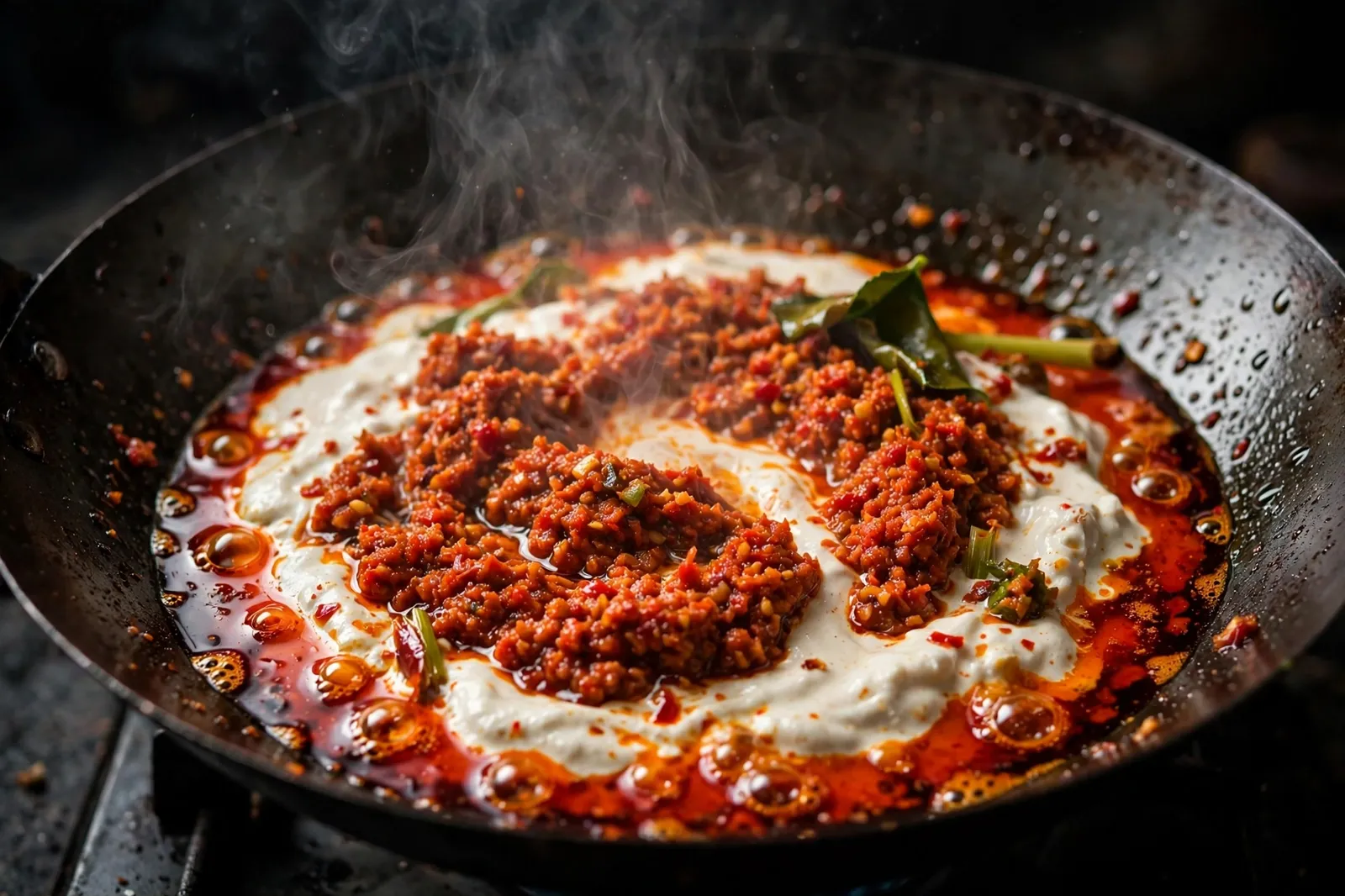
This step decides the whole dish. Do not shake the coconut milk can. Open it and spoon off the thick cream sitting on top, about half a cup, into a wok or deep skillet over medium-high heat. Stir it as it heats: after 2 to 3 minutes the fat separates from the water and the cream turns grainy, then glossy, with red-tinted oil pooling at the edges. That separation is called cracking, and it is what you want. The oil that comes out is the frying medium for the paste.
Add 3 tablespoons of panang curry paste and fry it in that oil, stirring and breaking it up, for another 2 to 3 minutes. It should smell sharp and toasty, darken one shade, and show red oil beading on the surface. Paste stirred into liquid without this fry tastes flat and raw; the same paste fried in coconut fat turns aromatic. If your brand of coconut milk has stabilizers and the cream refuses to split, stir in a tablespoon of coconut oil and keep going.
Build the sauce and season it right
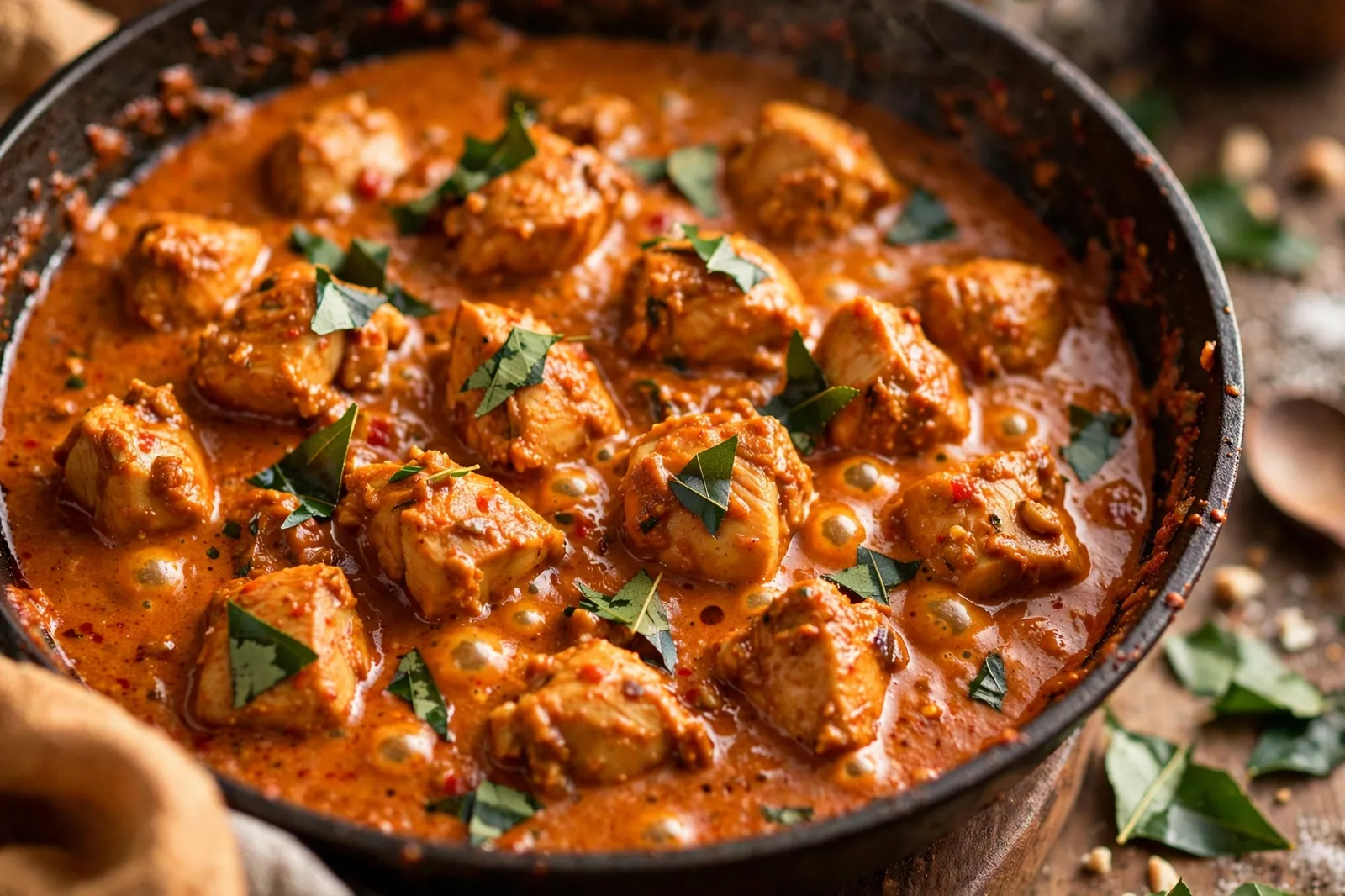
Add the chicken pieces and torn makrut lime leaves to the wok and toss to coat in the fried paste, then pour in the rest of the coconut milk. Bring it to a bare simmer, not a boil, and let it cook uncovered for 12 to 15 minutes. The sauce thickens as the water leaves; you will see it turn from soupy to glossy and start clinging to the chicken. A hard boil at this stage can split the sauce into a grainy mess, so keep the bubbles small.
Season at the end, off full heat, with a starting ratio of 2 tablespoons palm sugar to 2 tablespoons fish sauce. Panang leans sweeter than most Thai curries, but pastes differ in salt, so taste after each addition: more fish sauce for salt, more palm sugar for sweetness, and if the heat is low, fry another spoonful of paste in a little coconut oil and stir it in. The finished sauce should coat the back of a spoon and taste balanced in three passes: sweet, salty, warm.
Troubleshooting: Fix My Panang Curry
Most panang problems trace back to the coconut milk or the seasoning balance, and both are fixable before the pot leaves the stove. Pick what went wrong below for a concrete next step.
HERB & LIME · KITCHEN HELP
Fix My Panang Curry
Choose what went wrong to see a practical next step.
Possible cause
What to try next
For next time
From Paul's kitchen. Results vary with curry paste brand, coconut milk, and stove heat, adjust timing to your setup.
Quick reference (also works without JavaScript)
The sauce came out thin and watery
Cause: Too much liquid and not enough reduction: panang is meant to be a thick, clinging sauce, and reduced-fat coconut milk never builds that body.
Try: Simmer the curry uncovered over medium heat until it reduces to a sauce that coats the back of a spoon, 5 to 10 more minutes; the ground peanuts in the paste help it thicken.
Prevent: Use full-fat coconut milk, add no extra water, and simmer uncovered; light coconut milk is too thin to reduce properly.
The coconut milk split into a grainy mess
Cause: Boiling coconut milk too aggressively breaks the emulsion, the water evaporates faster than the fat can hold together, leaving a grainy texture.
Try: Take the pan off the heat and stir in a splash of cold coconut milk, or whisk in a teaspoon of cornstarch mixed with cold water to re-bind the sauce.
Prevent: Keep the simmer gentle after the paste is fried; never boil the sauce hard once the full coconut milk is in.
The curry tastes bland and raw
Cause: The paste went into liquid without being fried, so the fat-soluble aromatics in the chilies and spices never bloomed; unfried paste tastes flat.
Try: Fry the paste longer in the separated coconut cream before adding the chicken: push it until it darkens a shade, smells sharp and toasty, and shows red oil beading on the surface.
Prevent: Fry the paste in the cracked coconut oil for a full 2 to 3 minutes every time, before any liquid goes in.
The seasoning tastes off: too sweet, too salty, or flat
Cause: The sweet-salty balance was never adjusted to the paste: some brands are saltier than others, and sugar added early caramelizes while fish sauce added late tastes harsh.
Try: Pull the pan off the heat and taste: add palm sugar a teaspoon at a time for sweetness or fish sauce a teaspoon at a time for salt until the balance returns.
Prevent: Season at the end with a 1:1 starting ratio of palm sugar to fish sauce (2 tablespoons each), then adjust by taste, since paste brands vary in salt.
The chicken turned out dry and rubbery
Cause: The chicken was simmered too long or at too hard a boil after the paste step, which squeezes the moisture out of the meat.
Try: Cut one piece open to check; if it is already cooked, stop. For the next batch, pull the chicken when just cooked through rather than letting it simmer on.
Prevent: Bring the sauce to a bare simmer, not a boil, and cook the chicken just until done, about 12 to 15 minutes.
Panang Curry with Chicken
Ingredients
Method
- Spoon the thick coconut cream off the top of the can into a wok or deep skillet. Fry over medium-high heat, stirring, until the fat separates and the cream turns grainy, then glossy, with red-tinted oil pooling at the edges, 2 to 3 minutes.
- Add the panang curry paste and fry in the separated oil, stirring and breaking it up, until deeply fragrant, darkened one shade, and showing red oil beading on the surface, 2 to 3 minutes.
- Add the chicken pieces and torn makrut lime leaves; toss to coat in the fried paste. Pour in the remaining coconut milk.
- Bring to a bare simmer, not a boil, and cook uncovered 12 to 15 minutes, until the chicken is cooked through and the sauce thickens enough to coat the back of a spoon. Keep the bubbles small; a hard boil can split the sauce.
- Stir in the palm sugar and fish sauce and simmer 1 minute more. Taste and adjust: more fish sauce for salt, more palm sugar for sweetness, or another spoonful of paste fried in a little coconut oil for more heat.
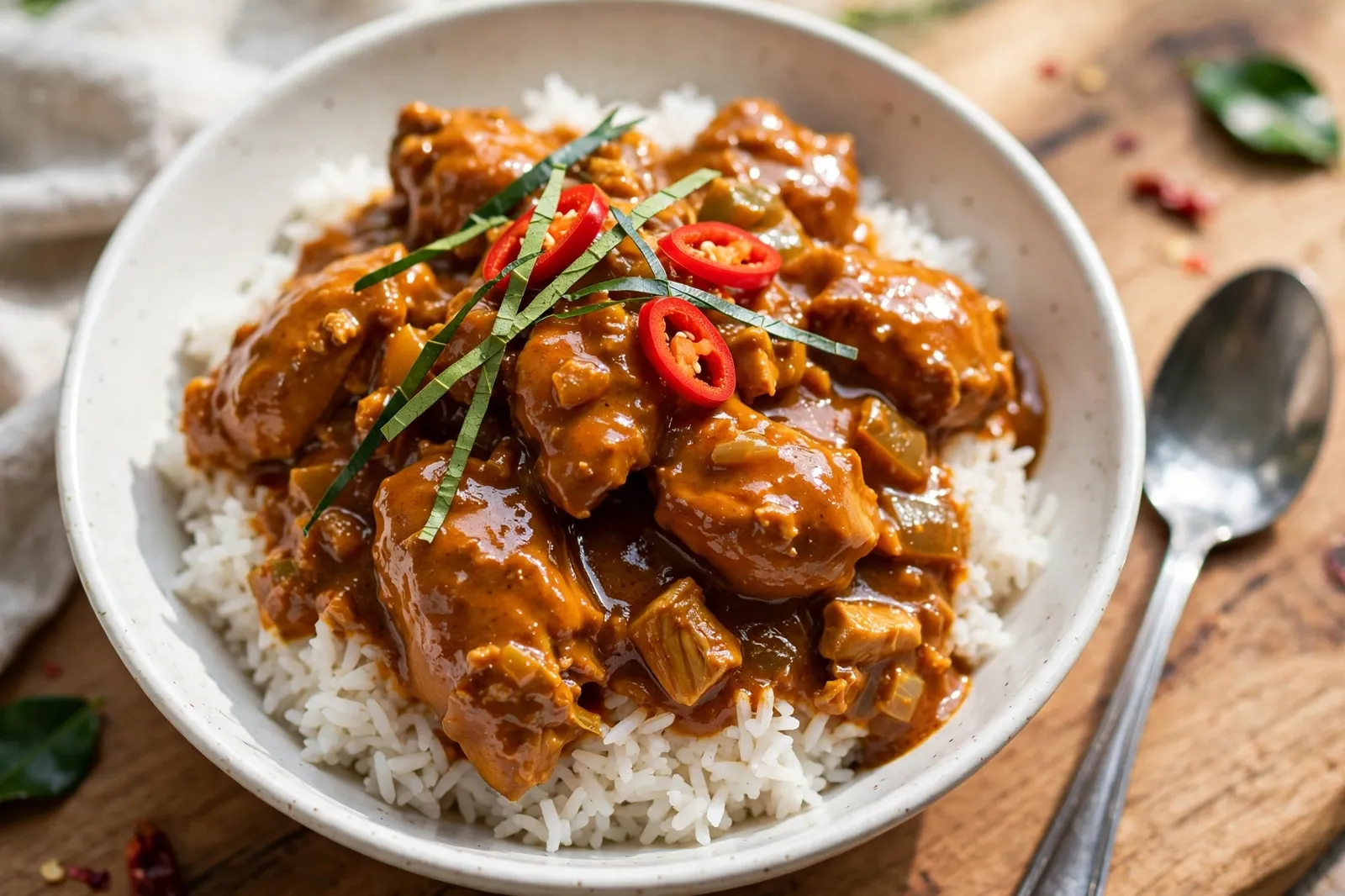
- Serve over steamed jasmine rice, topped with the sliced red chili, julienned makrut lime leaves, and Thai basil if using.
Notes
What to serve with panang curry
Plain steamed jasmine rice is the right partner: the sauce is thick and rich, and it needs the rice to carry it. My guide to cooking jasmine rice covers the water ratio that keeps the grains separate. On the side, a crisp vegetable dish works well, and if you like this thick curry style, massaman curry with beef is the other rich, peanut-scented Thai curry worth knowing. Leftovers keep well: refrigerate and reheat gently over medium-low heat with a splash of coconut milk. The flavors actually deepen overnight, so a batch made the evening before often tastes better than the day it was cooked.
More Thai recipes
If this one worked for you, three more from the same shelf: Tom Yum Goong is the hot and sour shrimp soup that starts any Thai meal right; Pad Thai with Shrimp uses the same sweet-salty balance in noodle form; and Chicken Satay with Peanut Sauce is the other dish where roasted peanuts do the heavy lifting.
From the garden
The sliced red chili on top is the one part of this recipe you can grow yourself in a pot. My guide to growing Thai chili peppers in pots covers the variety that ripens to exactly this red, and a single plant gives you more chilies than a curry household can use.