
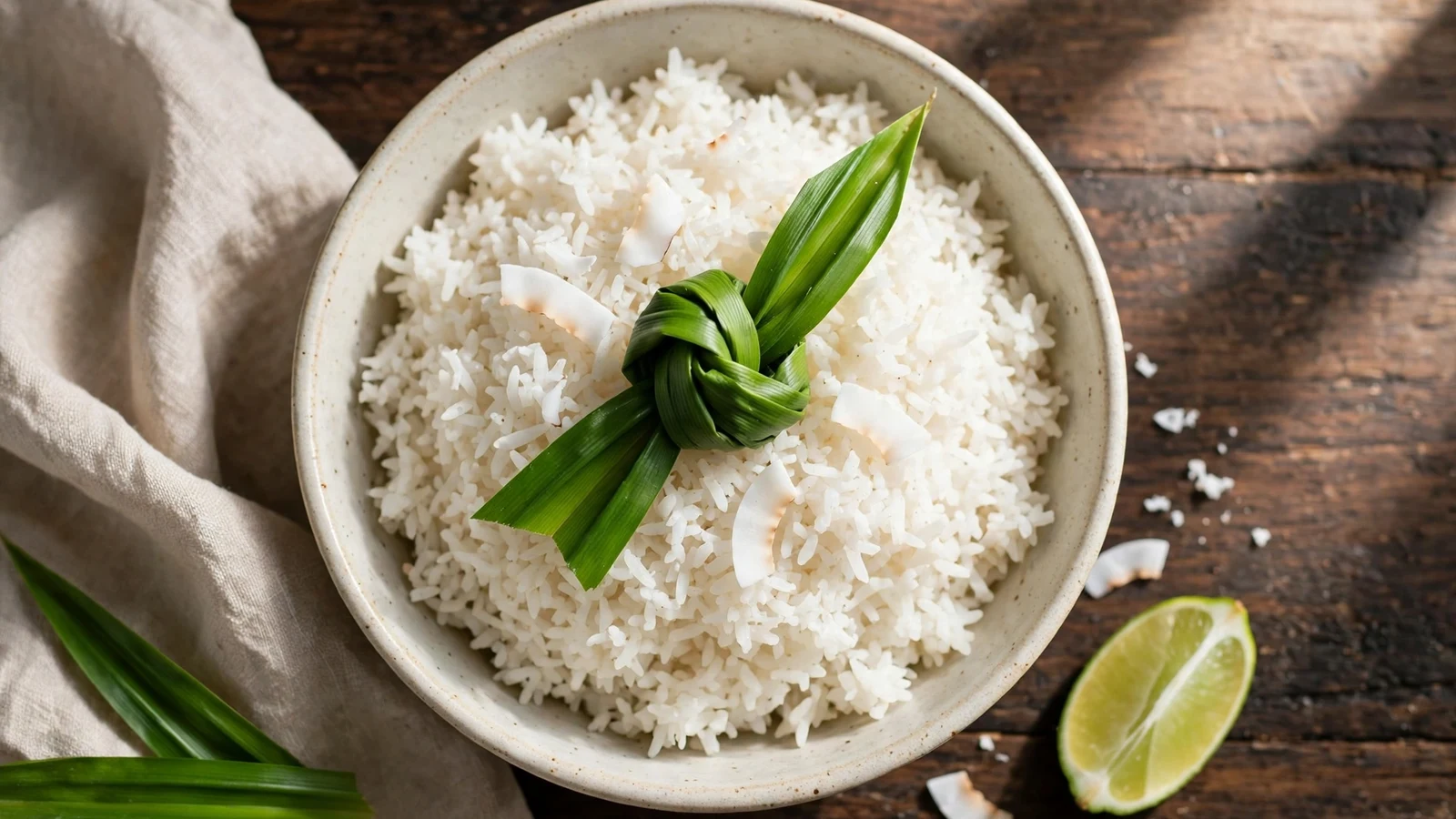
There is a particular smell that tells me dinner is almost ready: sweet coconut steam coming off a pot of rice, a little salty underneath, with pandan if I remembered to grab a leaf from the plant by the door. That is coconut rice, and the stovetop version below is the one I make most weeks. It takes the same 25 minutes as plain rice and turns an ordinary Tuesday plate into something people ask about.
What is coconut rice?
Coconut rice is jasmine rice cooked in coconut milk instead of plain water, with salt and a little sugar. It shows up all over Southeast Asia under different names: khao man in Thailand, nasi lemak in Malaysia (where it is practically the national dish), nasi uduk in Indonesia. The method is the same everywhere: the fat in the coconut milk coats each grain, so the rice cooks up tender and separate with a rich coconut aroma you can smell from the next room.
It is a side dish, not a main. It belongs next to things with strong flavors: grilled chicken, a spoonful of curry, fried fish, anything with chili. Plain coconut rice with a fried egg on top is also a completely respectable dinner, and I say that from experience.
The ratio: half coconut milk, half water
The ratio I use for 2 cups of jasmine rice is 1 cup full-fat coconut milk plus 1 cup water, with 1/2 teaspoon fine sea salt and 1 teaspoon sugar. Total liquid stays at 2 cups, the same as plain jasmine rice, because coconut milk is roughly two-thirds water and the rest fat. Swap all 2 cups for coconut milk and the rice turns heavy and greasy; use light coconut milk and the flavor barely shows up.
One thing that matters more than it should: shake the can hard, or whisk the milk smooth before measuring. Coconut milk separates in the can, and if you pour off the thin watery part while the thick cream stays stuck at the bottom, the fat never distributes. The top of the pot ends up oily while the bottom grains stay dry. Thirty seconds of shaking fixes it.
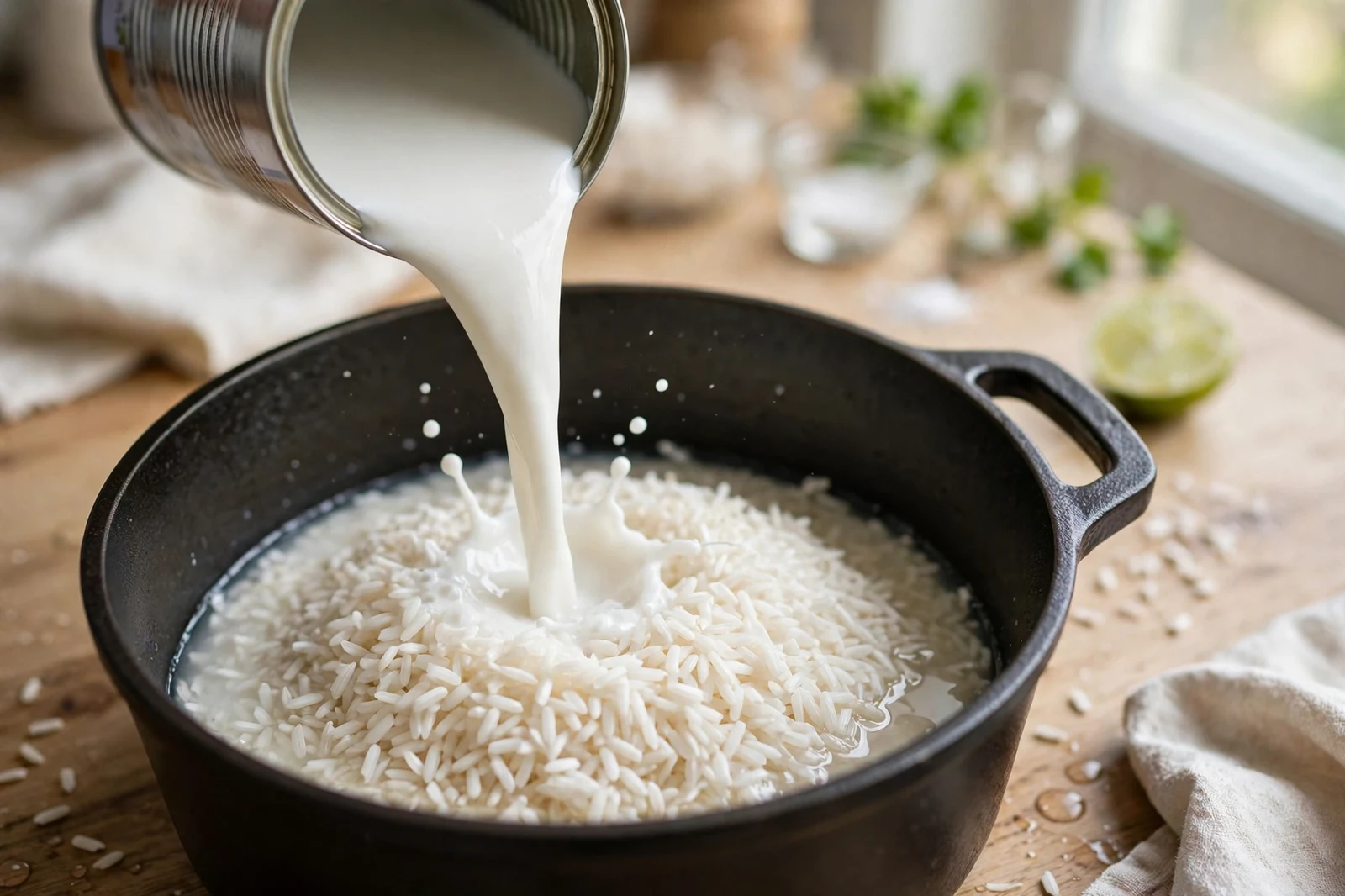
Rinse the rice until the water runs mostly clear. I know rinsing is a step people skip, but with coconut rice it is not optional: the surface starch on unrinsed rice plus the natural sugars in coconut milk cook into a gummy layer. Rinsed rice gives you distinct, glossy grains.
Low heat is the whole trick
Coconut milk has more sugar than water, and sugar catches on the bottom of the pot. The single most common way this recipe goes wrong is cooking it the way you cook plain rice, at a confident simmer. Over anything above the lowest heat, the bottom forms a scorched, bitter crust while the top is still chalky.
So: bring the pot to a gentle boil over medium heat, give it one stir to lift any settled grains, clamp the lid on, and drop the burner to its lowest setting. Ten to twelve minutes, no peeking. Then take the pot off the heat entirely and leave it alone, lid still on, for ten full minutes. That rest finishes the steaming and lets the moisture even out. It is the difference between rice that is done and rice that is good.
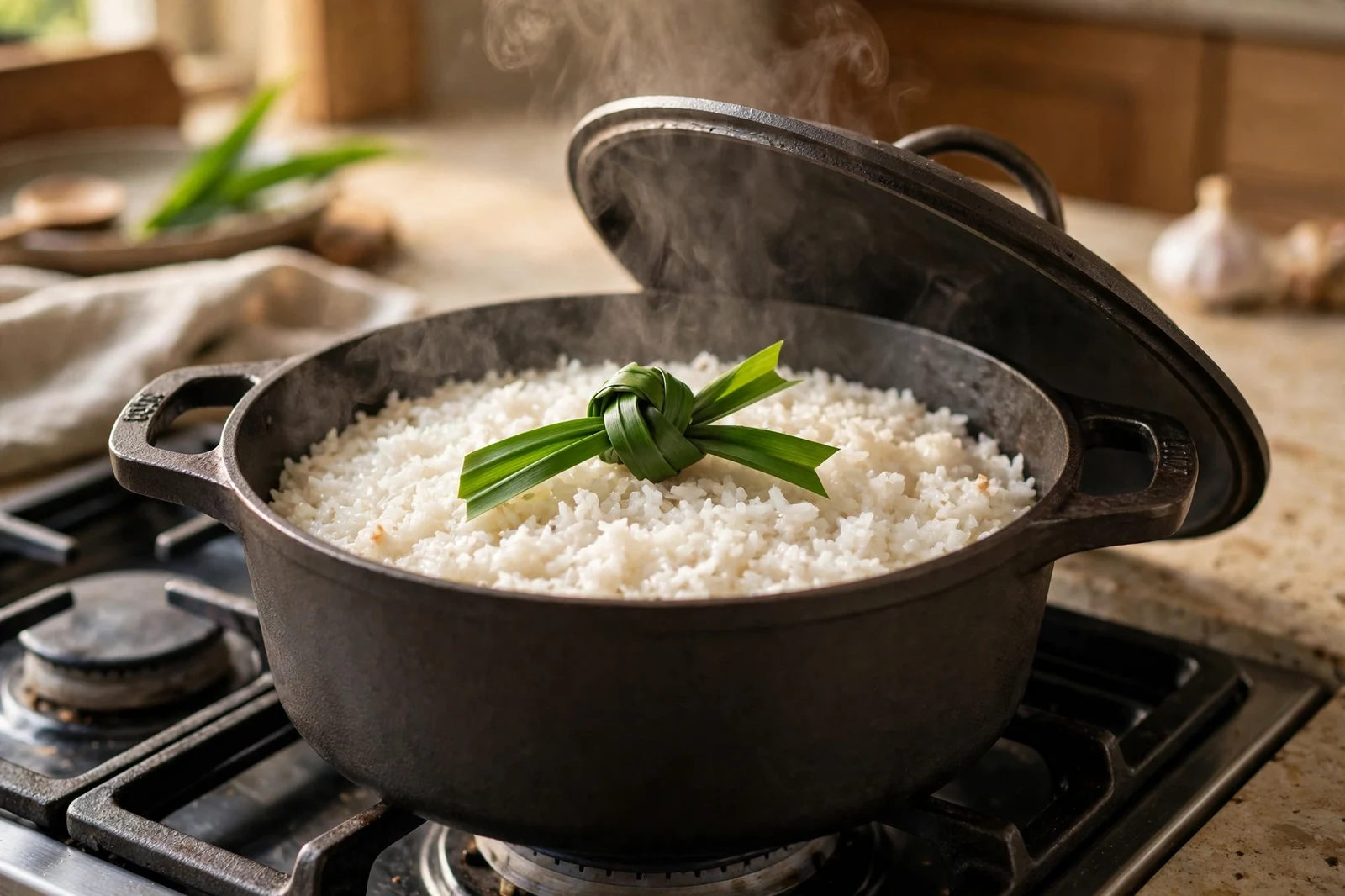
A heavy-bottomed saucepan or Dutch oven helps a lot here. Thin pots develop hot spots, and hot spots are where coconut milk burns first. If your rice cooker has a white-rice setting, it works fine with the same ratio: just add the salt and pandan to the cooker pot.
Ingredients
For the rice:
- 2 cups jasmine rice, rinsed until the water runs mostly clear
- 1 cup full-fat coconut milk, shaken or whisked smooth
- 1 cup water
- 1/2 teaspoon fine sea salt
- 1 teaspoon sugar
- 1 fresh or frozen pandan leaf, tied in a loose knot (optional but recommended)
To serve (optional):
- Toasted shredded coconut
- Lime wedges
- Sliced scallions
How to make coconut rice
Prep time: 5 minutes
Cook time: 20 minutes (10 to 12 minutes simmering, 10 minutes resting off heat)
Total time: 25 minutes
Servings: 4 (about 5 cups cooked)
- Rinse and combine. Put the rinsed rice in a heavy-bottomed saucepan. Add the coconut milk, water, salt, sugar, and the knotted pandan leaf. Stir once to dissolve the salt and sugar.
- Bring to a gentle boil. Set the pan over medium heat and bring it to a soft boil, stirring once more to lift any grains stuck to the bottom.
- Simmer low. Cover with a tight lid, reduce the heat to the lowest setting, and cook 10 to 12 minutes without lifting the lid.
- Rest off heat. Remove the pan from the burner and let it stand, still covered, for 10 minutes. Do not skip this; the grains finish steaming and the texture evens out.
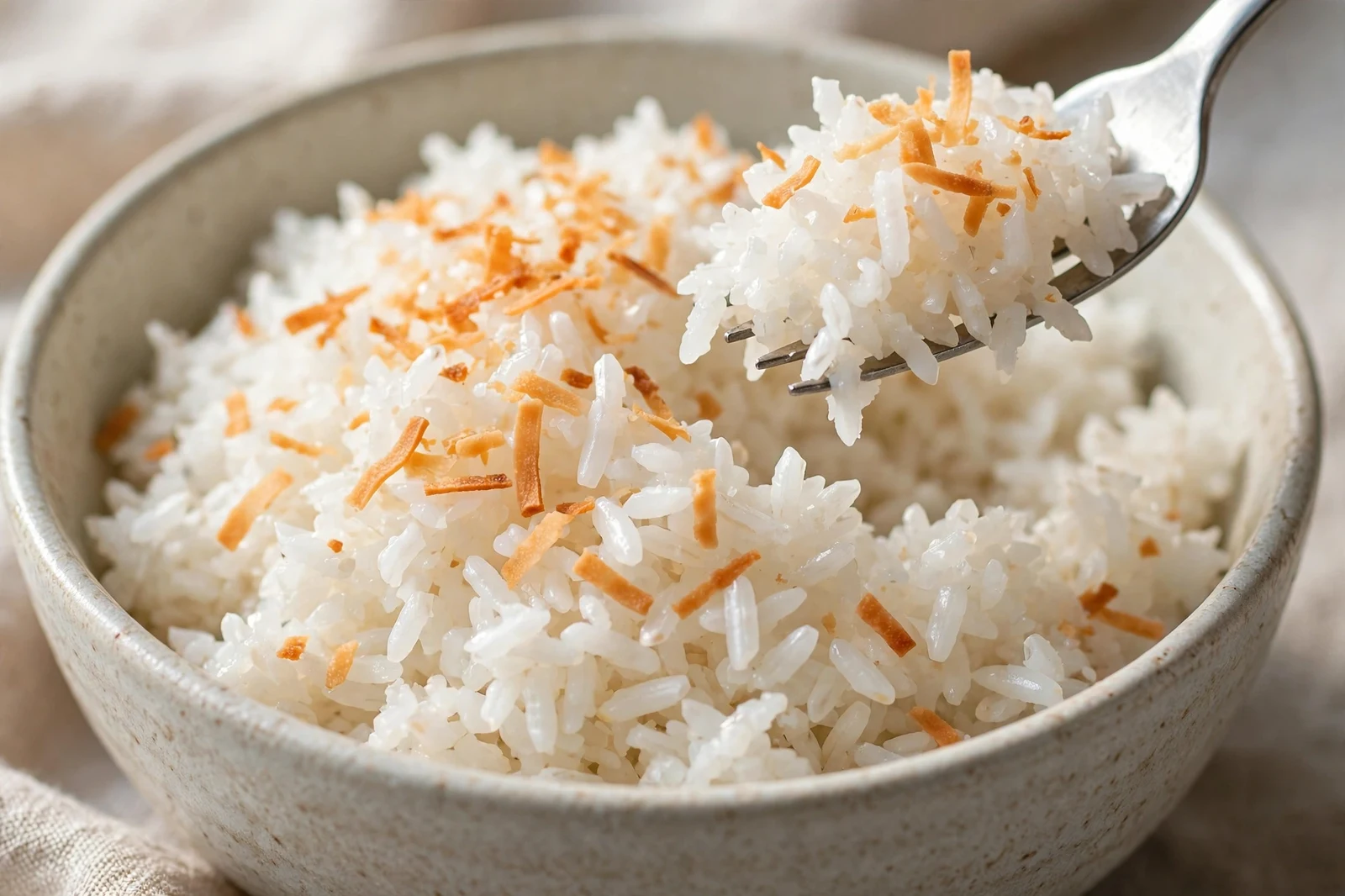
- Fluff and serve. Pull out the pandan leaf, fluff the rice gently with a fork or rice paddle, and serve hot. Top with toasted coconut and scallions if you like.
Troubleshooting: Fix My Coconut Rice
Most coconut rice batches go wrong in one of five ways: gummy grains, a scorched bottom, no coconut flavor, an oily layer on top, or hard undercooked grains. Pick what went wrong below for a concrete next step.
HERB & LIME · KITCHEN HELP
Fix My Coconut Rice
Choose what went wrong to see a practical next step.
Possible cause
What to try next
For next time
From Paul's kitchen. Results vary with coconut milk brand, rice, and stove heat, adjust timing to your setup.
Quick reference (also works without JavaScript)
The rice came out gummy and mushy
Cause: Excess surface starch from unrinsed rice plus too much liquid turns the grains gluey instead of separate.
Try: Spread the rice on a baking sheet to cool and dry out, then pan-fry it with a little oil into crispy rice cakes, or pivot it into a sweet rice pudding.
Prevent: Rinse the rice until the water runs mostly clear, measure exactly 2 cups total liquid for 2 cups rice, and never stir once the lid goes on.
The bottom scorched and smells burnt
Cause: The natural sugars in coconut milk caramelize and then burn where the heat is strongest, especially in thin-bottomed pots over high heat.
Try: Do not stir the pot, stirring spreads the burnt flavor through the whole batch. Lay a slice of white bread on top of the rice, replace the lid for ten minutes, and the bread absorbs much of the scorched aroma.
Prevent: Use a heavy-bottomed pot, keep the burner at its lowest setting once covered, and bring the pot only to a gentle simmer, never a hard boil.
It tastes bland, barely any coconut flavor
Cause: Light coconut milk is mostly watered-down milk with far less fat, and too little salt leaves the coconut flavor flat.
Try: Stir in a teaspoon of unrefined coconut oil at the end and garnish with toasted shredded coconut for an immediate flavor lift.
Prevent: Use full-fat canned coconut milk and a full 1/2 teaspoon of fine sea salt for 2 cups of rice, salt is what makes the coconut flavor come through.
An oily layer sits on top while the bottom grains are dry
Cause: The coconut milk separated in the can and only the thin watery part was poured in, leaving the thick cream behind.
Try: Gently fold the rice with a fork to redistribute the fat, then cover and rest five more minutes so it absorbs evenly.
Prevent: Shake the can hard before opening, or whisk the milk smooth before measuring, so the cream and liquid go in together.
The grains are hard and undercooked
Cause: Lifting the lid let the steam escape before the top layer finished cooking, or the lid was not tight enough to hold the steam.
Try: Sprinkle 2 tablespoons of hot water over the rice, cover tightly, and cook on the lowest heat for 5 more minutes without stirring.
Prevent: Do not lift the lid during the simmer, use a tight-fitting lid, and give the pot the full 10-minute covered rest off the heat.
Coconut Rice
Ingredients
Method
- Rinse and combine. Put the rinsed rice in a heavy-bottomed saucepan. Add the coconut milk, water, salt, sugar, and the knotted pandan leaf. Stir once to dissolve the salt and sugar.
- Bring to a gentle boil. Set the pan over medium heat and bring it to a soft boil, stirring once more to lift any grains stuck to the bottom.
- Simmer low. Cover with a tight lid, reduce the heat to the lowest setting, and cook 10 to 12 minutes without lifting the lid.
- Rest off heat. Remove the pan from the burner and let it stand, still covered, for 10 minutes.
- Fluff and serve. Pull out the pandan leaf, fluff the rice gently with a fork or rice paddle, and serve hot.
Notes
What to serve with it
Coconut rice wants bold company. It is the classic partner for gai yang and mango sticky rice’s savory cousin at the table, and it sits beautifully under Thai green curry with chicken. For a simple plate, top it with a fried egg and a spoonful of homemade chili oil. Leftover rice keeps 4 days in the fridge; reheat it with a splash of water in a covered pan so the grains loosen up again.
More Thai recipes
If this one worked for you, four more from the same kitchen: Pad Thai with Shrimp is the wok-tossed noodle classic; Tom Yum Fried Rice turns the famous hot-and-sour flavors into a weeknight pan; Thai Basil Fried Rice is the fastest thing in my rotation; and Mango Sticky Rice closes the meal the way Thai restaurants do.
From the garden
The pandan leaf I knot into the pot comes from the plant on my patio. One leaf per batch, and the plant barely notices. If you have the space for a pot, the full method is in my pandan growing guide.
2 thoughts on “Coconut Rice”