
Of all the fish preparations in my regular rotation, this is the one with the fewest ingredients and the least room to hide. Saba shioyaki is mackerel, salt, and heat. That is the whole ingredient list. The fish comes out with blistered, crackly skin and flesh that stays rich and juicy, and the only thing standing between you and that result is a 20-minute salting step that does most of the work while you do nothing.
What is saba shioyaki?
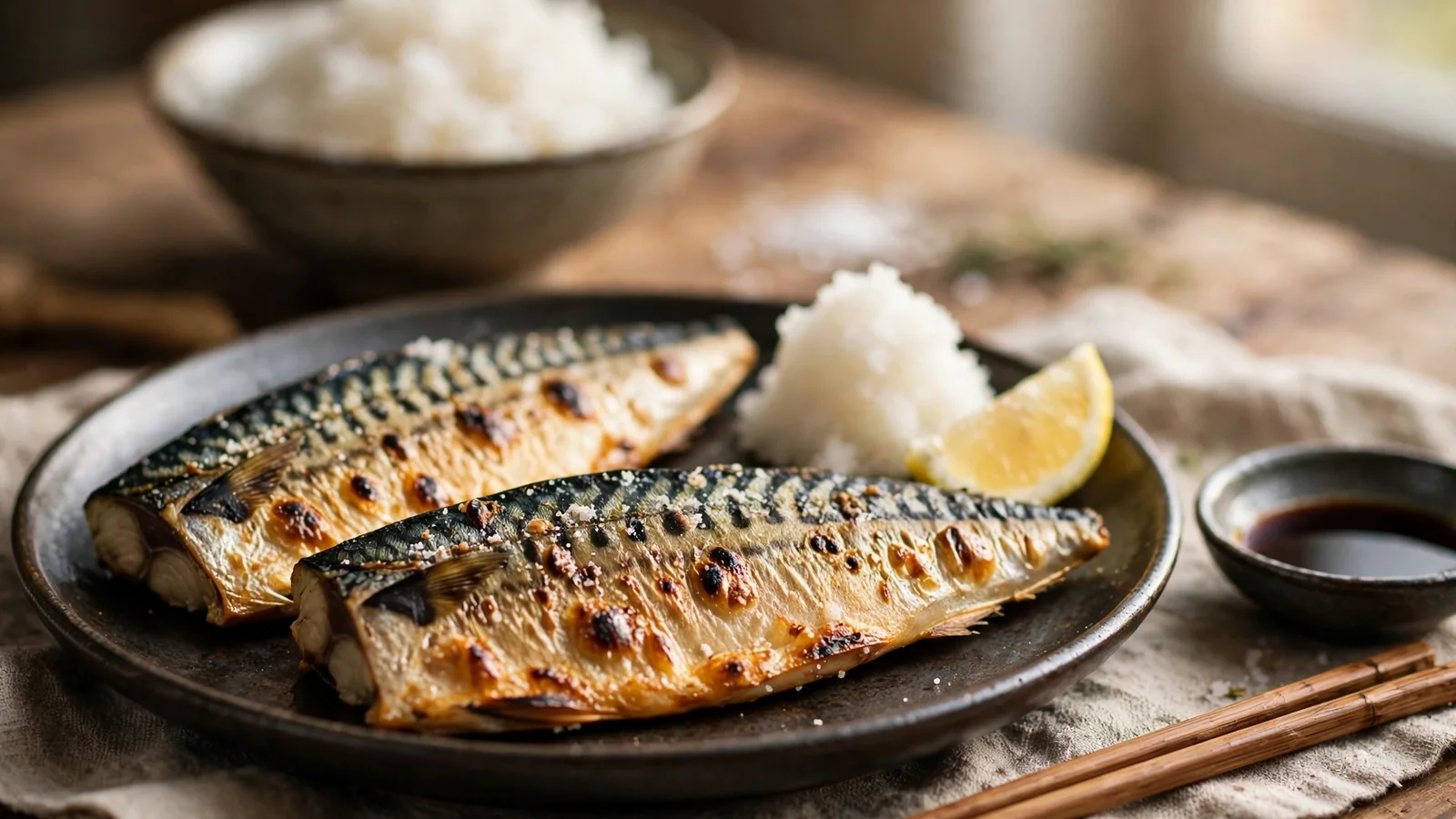
Saba (鯖) is mackerel, and shioyaki (塩焼き) means salt-grilled: shio for salt, yaki for grilled. It is one of Japan's oldest fish preparations, and you will find it everywhere from izakaya menus to bento boxes to weeknight home dinners. A whole mackerel is usually butterflied open (hiraki style) or cut into fillets, salted, and grilled or broiled.
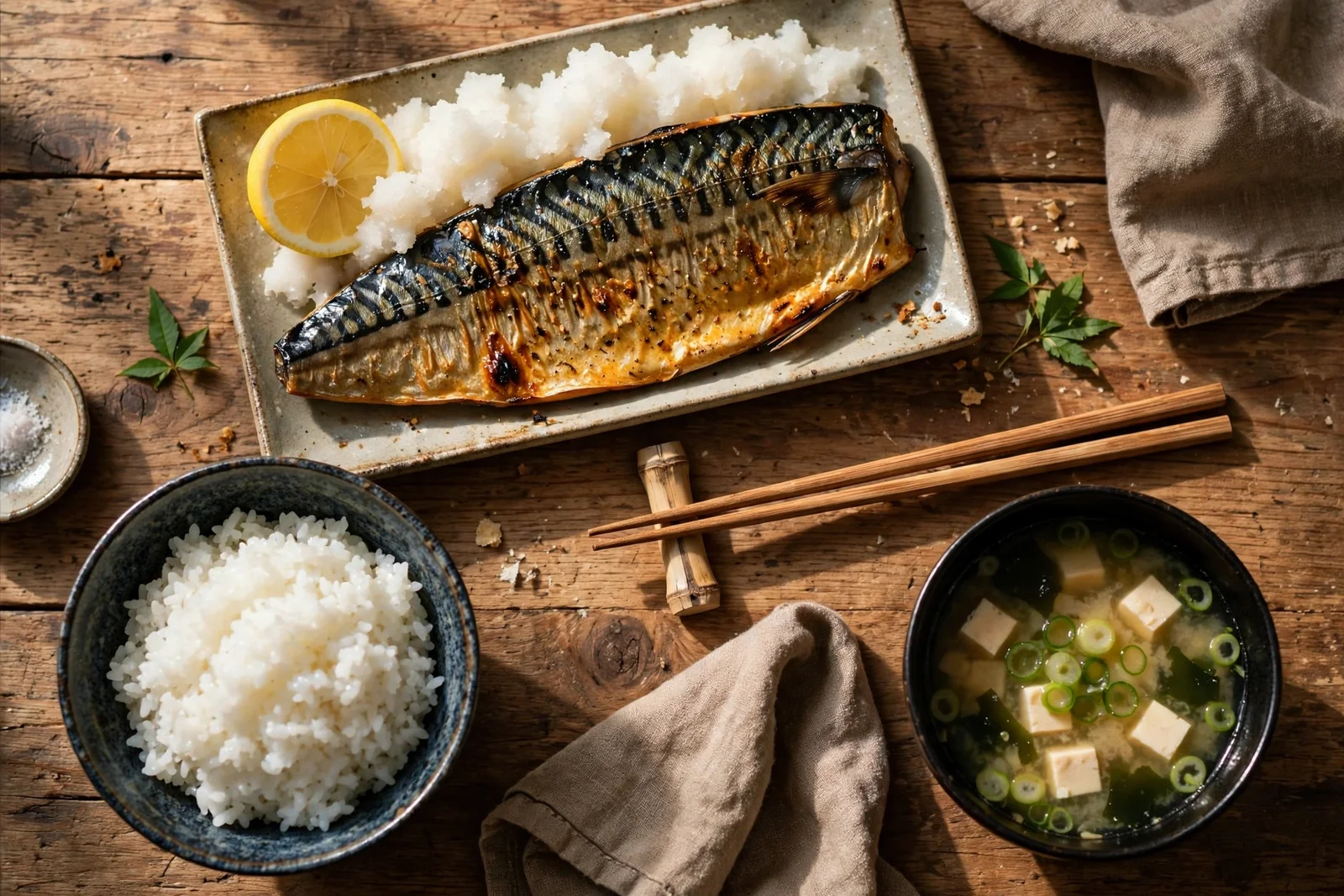
Expect contrast. Mackerel is a rich, oily fish, and the salt does two jobs at once: it seasons the flesh and draws out surface moisture and the compounds that give mackerel its fishy smell. What lands on the plate is deeply savory, with skin that crackles and flesh that flakes in clean layers. The standard accompaniments are not decoration: grated daikon with a little soy sauce and a squeeze of lemon cut the richness and keep the oily fish balanced. If you have only ever eaten mackerel from a can, this is the version that shows you what the fish tastes like fresh.
The 20-minute salting step
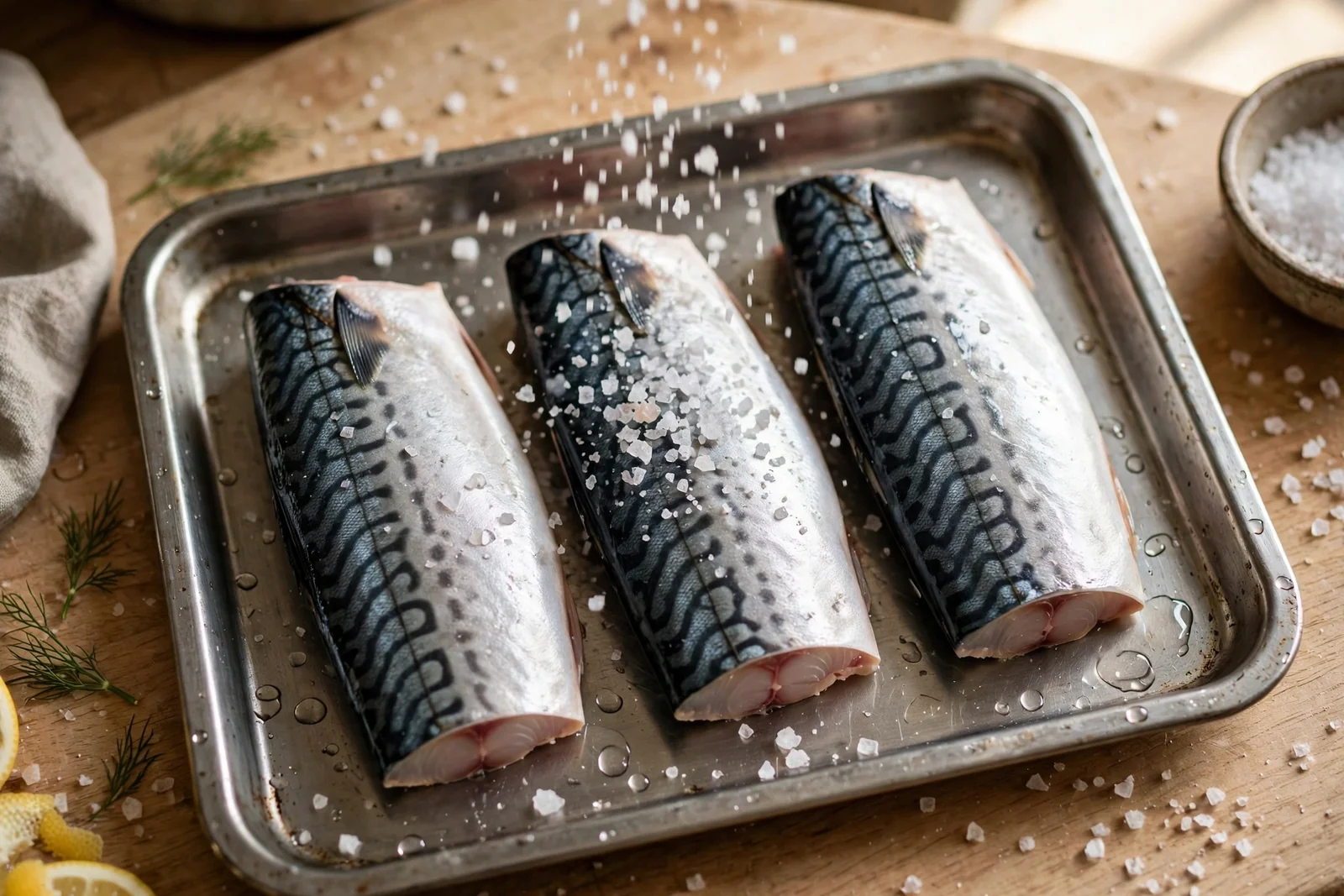
This is the step the whole dish depends on, and the timing is not a suggestion. After salting, the fish rests for exactly 20 minutes. Less than that and the salt has not done its work: the seasoning stays on the surface and the fishy smell lingers. More than that and the salt starts pulling too much moisture, leaving the flesh tight and firm instead of juicy. Twenty minutes is the window where the fish is seasoned through, the smell is gone, and the texture stays tender.
Then the salt comes off. Rinse it under cold water and pat the fish completely dry, skin and flesh, with paper towels. This second drying is what makes the skin crisp instead of soggy: any moisture left on the skin turns to steam under the broiler and works against you. Dry fish, hot heat, and you get blistered skin.
One more measurement that matters: I use Diamond Crystal kosher salt, and if your box says Morton, use less by volume. Diamond Crystal flakes are lighter, so 1 1/2 teaspoons of Diamond Crystal is about the same salt as 1 teaspoon of Morton. Swapping them one-for-one is how mackerel ends up too salty.
Ingredients
For the fish:
- 4 mackerel fillets (about 1 1/2 lb / 680 g total), skin on
- 1 tablespoon sake
- 1 1/2 teaspoons Diamond Crystal kosher salt (or 1 teaspoon Morton kosher salt)
For serving:
- 1/4 daikon radish (about 4 oz / 115 g), peeled and finely grated
- 1 lemon, cut into wedges
- Soy sauce, at the table
- Steamed rice and miso soup, to round out the meal
How to make saba shioyaki
Prep time: 30 minutes (20 minutes hands-off salting) Cook time: 8 minutes Total time: 38 minutes Servings: 2 as a main dish
- Rinse the mackerel fillets under cold water and pat them dry with paper towels. Lay them skin-side up on a tray or rimmed plate.
- Sprinkle the sake over both sides of the fish and let it sit for 10 minutes. The sake helps pull out any fishy odor and plumps the flesh slightly. Pat the fish dry again.
- Salt both sides of each fillet evenly with the kosher salt. Set a timer for exactly 20 minutes and rest the fish in the fridge.
- Rinse the salt off under cold water. Pat the fish completely dry, skin and flesh, with fresh paper towels. Do not skip this: the second drying is what gives you crisp skin.
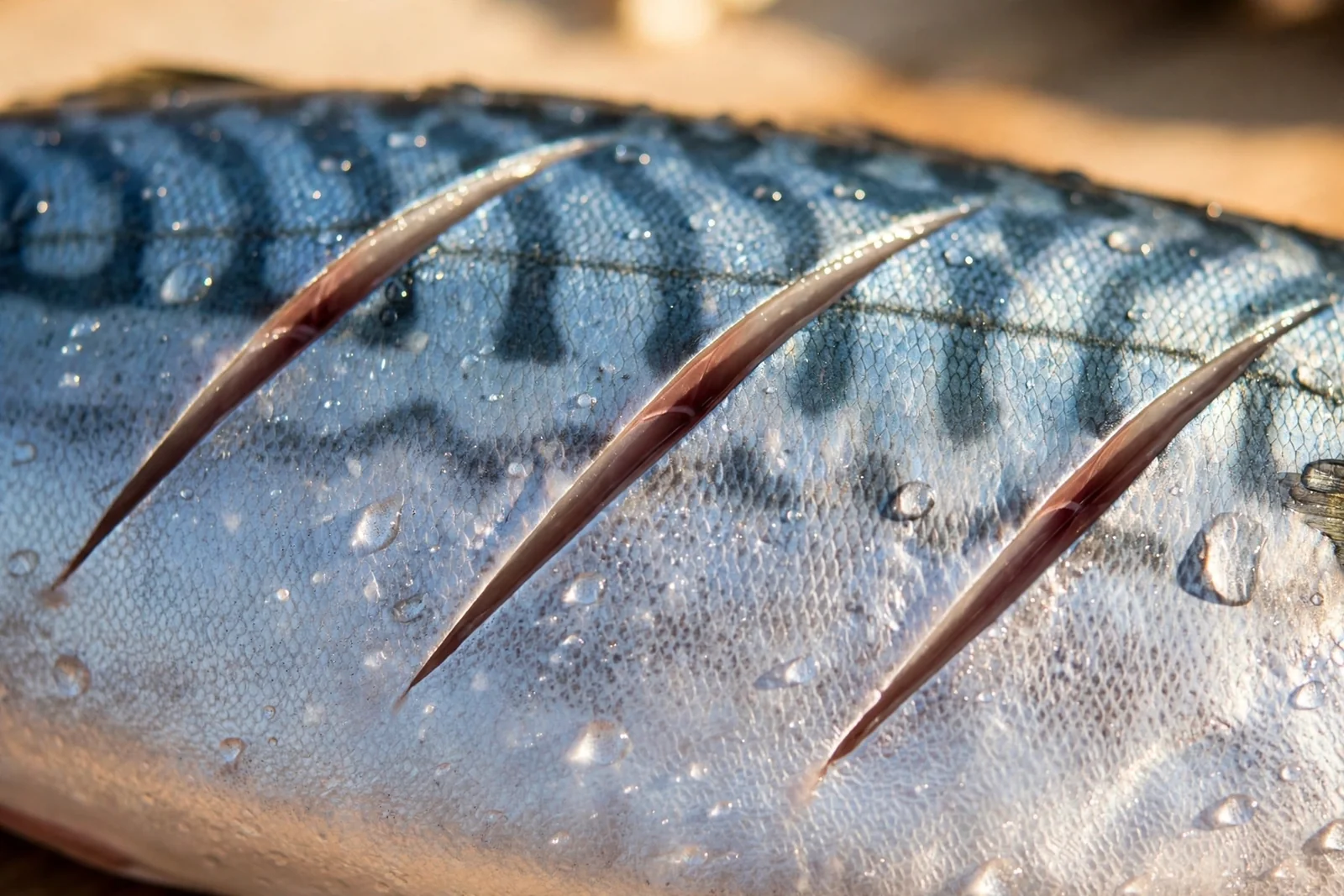
- Score the skin of each fillet with 2 or 3 shallow diagonal slashes, just through the skin. This keeps the fillets from curling under the heat and lets the fat under the skin render out.
- Preheat the broiler on high for 5 minutes. Line a baking sheet with foil and rub it lightly with oil so the skin does not stick.
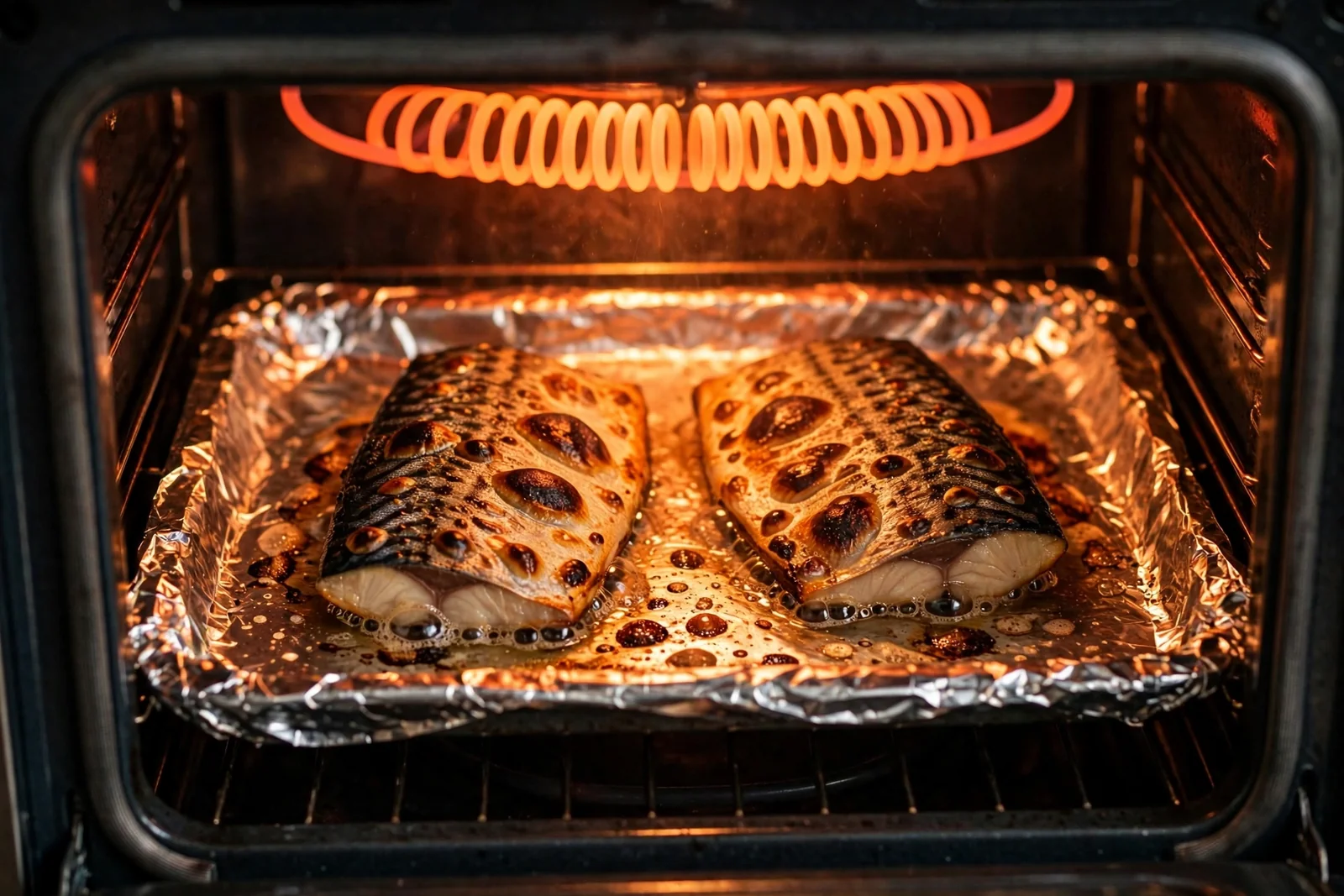
- Place the fillets skin-side up on the tray, about 5 to 6 inches from the heat. Broil for 7 to 9 minutes, until the skin is blistered and browned and the flesh flakes easily. It is done at 145°F (63°C) in the thickest part.
- Serve right away with the grated daikon, lemon wedges, and soy sauce at the table. Put a small spoonful of daikon on the plate, drizzle a little soy over it, and eat the fish with rice.
Tips for crackly skin and juicy flesh
- Buy firm, fresh-smelling mackerel. The flesh should spring back when pressed and smell clean, like the ocean, not like fish. Frozen mackerel works fine: thaw it overnight in the fridge and pat it very dry before you start.
- Do not move the fish once it is under the broiler. The skin needs undisturbed contact with the hot air to blister. If it sticks to the foil, it was not oiled enough; a thin metal spatula will free it.
- Watch the distance to the heat. If the skin is browning too fast while the flesh still looks raw, lower the rack one notch. If nothing is happening after a few minutes, move it one notch closer.
- Grate the daikon just before serving and give it a light squeeze. Daikon releases a lot of water, and unsqueezed daikon waters down the soy sauce on the plate.
- Eat it hot. The contrast of hot, crisp fish against cool daikon is the point of the dish, and the skin softens as it sits.
Variations to try
- Pan-fried saba shioyaki. No broiler? Cook the salted, dried, scored fillets skin-side down in a lightly oiled nonstick or cast-iron skillet over medium-high heat for 4 to 5 minutes, until the skin crisps and releases easily. Flip once and cook 2 minutes more on the flesh side. Our toasted sesame oil guide covers why high heat and a light oil matter here, though I use a neutral oil for the fish itself.
- Shio koji mackerel. Rub the fillets with shio koji at 10% of the fish's weight (20 g koji for 200 g fish), refrigerate overnight, wipe it off, then broil the same way. The koji adds a gentle sweetness and keeps the flesh extra tender.
- Other fish, same method. The salt-and-broil approach works for salmon fillets, sea bream, or sardines. Adjust the time to the thickness: sardines need 4 to 5 minutes, thick salmon fillets need 10 to 12. A fillet like salmon teriyaki uses a different glaze, but the broiler timing logic is the same.
- Ponzu instead of soy. The citrus edge of ponzu suits the oily fish, especially with the grated daikon. Use the same small drizzle over the daikon.
Troubleshooting: Fix My Saba Shioyaki
Most saba shioyaki problems trace back to the salting step or the drying step. If your fish smells off, the skin tore, or the flesh dried out, find your fix below.
HERB & LIME · KITCHEN HELP
Fix My Saba Shioyaki
Choose what went wrong to see a practical next step.
Possible cause
What to try next
For next time
From Paul's kitchen. Results vary with fillet thickness, salt brand, and broiler heat, adjust timing to your setup.
Quick reference (also works without JavaScript)
The fish still smells fishy
Cause: The salt rest was too short to draw out the odor compounds, or the sake rinse was skipped.
Try: For the batch in front of you, squeeze lemon over the fish and serve with extra grated daikon, both cut the smell on the plate. Next time, salt for the full 20 minutes and rinse the salt off, and add the sake step before salting.
Prevent: Start with firm, fresh-smelling mackerel. If using frozen, thaw overnight in the fridge and pat very dry. Salt exactly 20 minutes, rinse, and pat dry again before broiling.
The skin stuck to the tray and tore
Cause: The foil was not oiled, or the fish was moved before the skin set and released on its own.
Try: Slide a thin metal spatula under the fillet to free it, and serve the torn side down so the presentation still looks clean.
Prevent: Rub the foil lightly with oil before the fish goes on, and leave the fillets completely undisturbed under the broiler until the skin blisters and releases.
The skin burned before the flesh cooked through
Cause: The rack was too close to the broiler element, so the skin took direct heat while the center stayed raw.
Try: Lower the rack one notch and give the flesh a few more minutes. If the skin is already dark, tent it loosely with foil so it stops browning while the fish finishes.
Prevent: Start with the tray 5 to 6 inches from the heat. Move the rack closer only if the skin needs more color after the flesh is cooked.
The flesh came out dry
Cause: The fish broiled past 145°F in the thickest part. Mackerel is oily but dries out fast once overdone.
Try: There is no way to re-moisten overcooked fish, so flake this batch over rice with extra daikon and soy, and adjust the next one.
Prevent: Set a timer for 7 minutes and check: the flesh should flake easily and read 145°F (63°C) at its thickest point. Thicker fillets may need 8 to 9 minutes, thinner ones less.
The fish tastes too salty
Cause: The fillets sat in salt longer than 20 minutes, the salt was never rinsed off, or a denser salt was swapped in at the same volume.
Try: Rinse the cooked fillets briefly under cold water to wash surface salt, then serve with plenty of unsalted rice and grated daikon to balance each bite.
Prevent: Salt for exactly 20 minutes, then rinse and pat dry. Measure 1 1/2 teaspoons Diamond Crystal or 1 teaspoon Morton per 1 1/2 pounds of fish, never swap them one-for-one.
Saba Shioyaki: Japanese Salt-Grilled Mackerel
Ingredients
Method
- Rinse the mackerel fillets under cold water and pat them dry with paper towels. Lay them skin-side up on a tray or rimmed plate.
- Sprinkle the sake over both sides of the fish and let it sit for 10 minutes. The sake helps pull out any fishy odor and plumps the flesh slightly. Pat the fish dry again.
- Salt both sides of each fillet evenly with the kosher salt. Set a timer for exactly 20 minutes and rest the fish in the fridge.
- Rinse the salt off under cold water. Pat the fish completely dry, skin and flesh, with fresh paper towels. Do not skip this: the second drying is what gives you crisp skin.
- Score the skin of each fillet with 2 or 3 shallow diagonal slashes, just through the skin. This keeps the fillets from curling under the heat and lets the fat under the skin render out.
- Preheat the broiler on high for 5 minutes. Line a baking sheet with foil and rub it lightly with oil so the skin does not stick.
- Place the fillets skin-side up on the tray, about 5 to 6 inches from the heat. Broil for 7 to 9 minutes, until the skin is blistered and browned and the flesh flakes easily. It is done at 145°F (63°C) in the thickest part.
- Serve right away with the grated daikon, lemon wedges, and soy sauce at the table. Put a small spoonful of daikon on the plate, drizzle a little soy over it, and eat the fish with rice.