
Yudofu might be the gentlest dish in all of Japanese cooking. Cubes of silken tofu are slipped into a pot of lightly seasoned kombu dashi and simmered until they quiver, then lifted out one by one and dipped in citrusy ponzu sauce. That is the whole recipe — no searing, no thickeners, no heavy seasoning. What you get is something quiet and deeply comforting: warm tofu with the texture of custard, a clean savory broth, and bright little dips of soy, citrus, and scallion.
The dish comes from Kyoto's temple kitchens, where vegetarian cooking has been refined over centuries. In autumn and winter, Kyoto restaurants still serve yudofu in small pots steaming at the table. When the weather turns cold and you want something warm that will not weigh you down, this is the pot to reach for.
Why Simmering Works Better Than Boiling
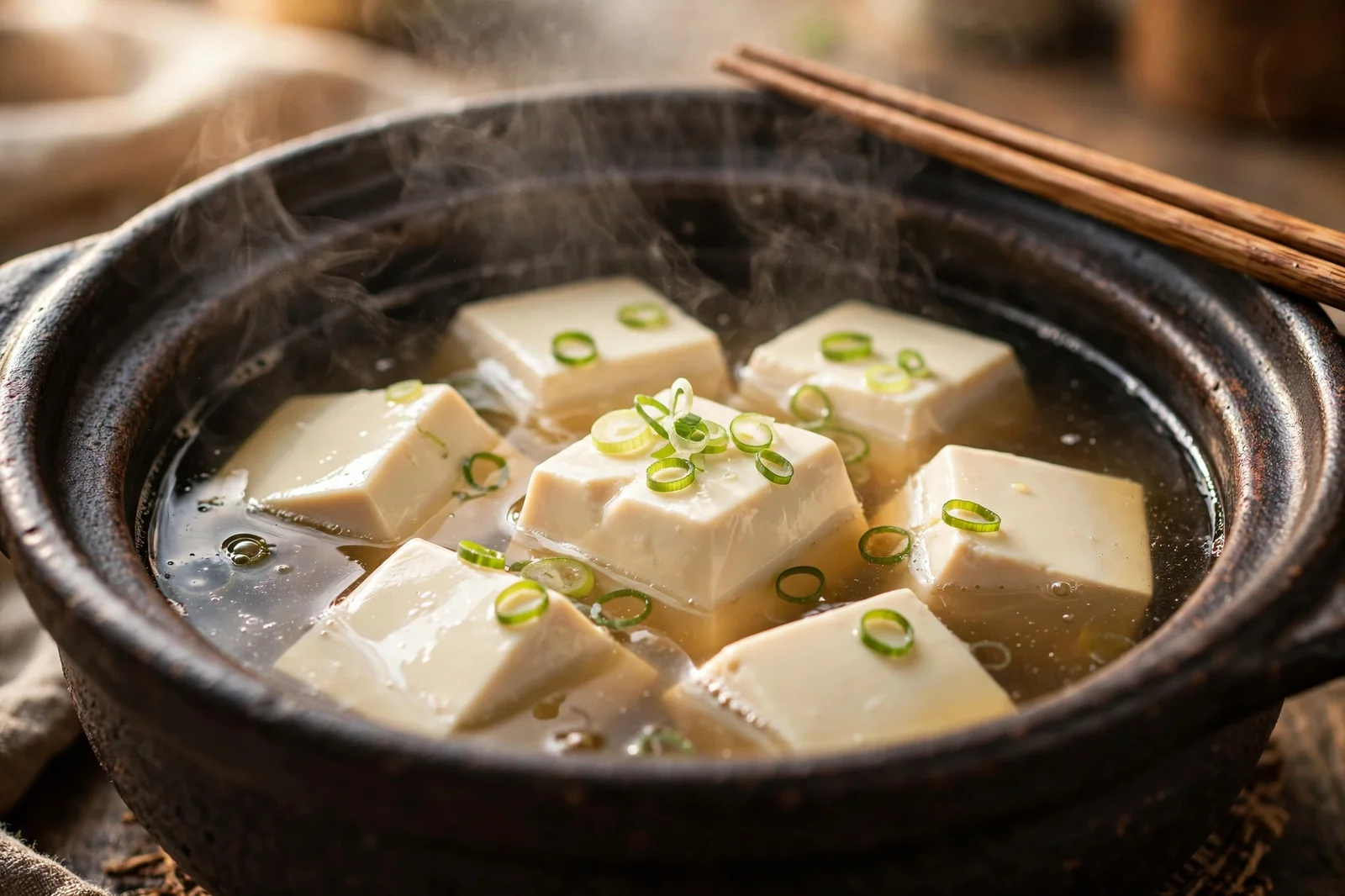
Tofu is delicate, and a rolling boil treats it roughly. They bump against each other, break apart, and release liquid into the pot, turning cloudy and misshapen. A gentle simmer — just enough heat that the surface of the dashi trembles — warms the tofu through without tearing it. The result is glossy, smooth tofu with a soft sheen, still perfectly cubed, that jiggles when you pick it up.
There is a second reason for the gentle heat: the kombu. Dashi made from kombu releases its umami best below a boil. Boiling kombu can draw out bitter, slimy notes; steeping it in hot water just shy of bubbling gives you a clear, clean, savory broth. The same logic that shapes a proper bowl of classic miso soup applies here: kombu wants warmth, not violence.
Cut a 14-ounce block into eight or twelve large pieces — they warm through quickly and are easier to fish out whole with a slotted spoon. Keep the pot uncovered; the broth should never churn.
The Tofu: Choose Silken or Soft
The tofu is the star, so it is worth choosing well. Silken tofu (often labeled "kinugoshi") has a creamy, almost pudding-like texture that turns lush and custardy when warmed. Soft tofu is a touch firmer and holds its shape more reliably. Both work beautifully in yudofu; the difference is a matter of preference.
Avoid firm or extra-firm tofu: their pressed, dense crumb sits in the broth like a sponge rather than melting into it. Buying the right tofu matters more here than any technique. When you are comparing options at the store, reach for the softest block in the refrigerated case.
Check the sell-by date and choose the freshest tofu you can find. Tofu is at its best within a few days of opening, and in a dish this simple, its freshness shows.
The Broth: Kombu Dashi in Ten Minutes
Real kombu dashi needs nothing but kombu and water. Wipe a 4-inch square of kombu with a damp cloth — do not rinse it under the tap, since the white powder on the surface is concentrated umami. Combine it with 4 cups of water in the pot you will serve from, bring it up slowly until small bubbles form at the edges, then hold it there for 10 minutes. Pull the kombu out before adding the tofu. That is dashi.
A splash of light soy sauce and a pinch of salt give the broth just enough seasoning to taste lightly savory — it is a poaching liquid, not a drinking soup, so the ponzu dip brings the rest of the flavor.
In a hurry, stir a teaspoon of instant dashi into the water and adjust the salt — weeknight yudofu beats no yudofu.
Ingredients
For the hot pot:
- 2 blocks (14 ounces each) silken or soft tofu
- 4 cups water
- 1 piece kombu (about 4 inches square)
- 1 tablespoon light soy sauce (usukuchi preferred)
- 1/2 teaspoon fine sea salt
For the dipping sauce:
- 1/3 cup ponzu sauce (store-bought is fine)
- 2 scallions, thinly sliced
- 1 teaspoon grated fresh ginger
- 1/2 teaspoon shichimi togarashi, plus more for serving (optional)
To serve (optional):
- Steamed jasmine rice
- Extra scallions and toasted sesame seeds
How to Make Yudofu
Cook time: 20 minutes Total time: 25 minutes Servings: 4
Step 1. Drain the tofu and cut each block into 4 to 6 large cubes. Handle them gently — silken tofu cracks if you press down hard, so slice with a slow, sawing motion.
Step 2. Wipe the kombu with a damp cloth and place it in a medium pot or donabe with the 4 cups of water. Set over medium heat and bring up slowly until tiny bubbles form around the edges of the pot, about 5 to 7 minutes.
Step 3. Let the kombu steep at that gentle heat for 10 minutes, then remove it with tongs or a slotted spoon and discard. Stir in the soy sauce and salt. The broth should look almost clear and taste lightly savory.
Step 4. Slip the tofu cubes into the broth with a spoon or your hands, keeping them in a single layer if you can. Adjust the heat so the surface just trembles — no rolling bubbles.
Step 5. Simmer gently for 8 to 10 minutes, until the tofu is warmed all the way through. You will see the cubes swell slightly and develop a soft sheen. Do not stir; if you need to move a cube, nudge it with the back of a spoon.
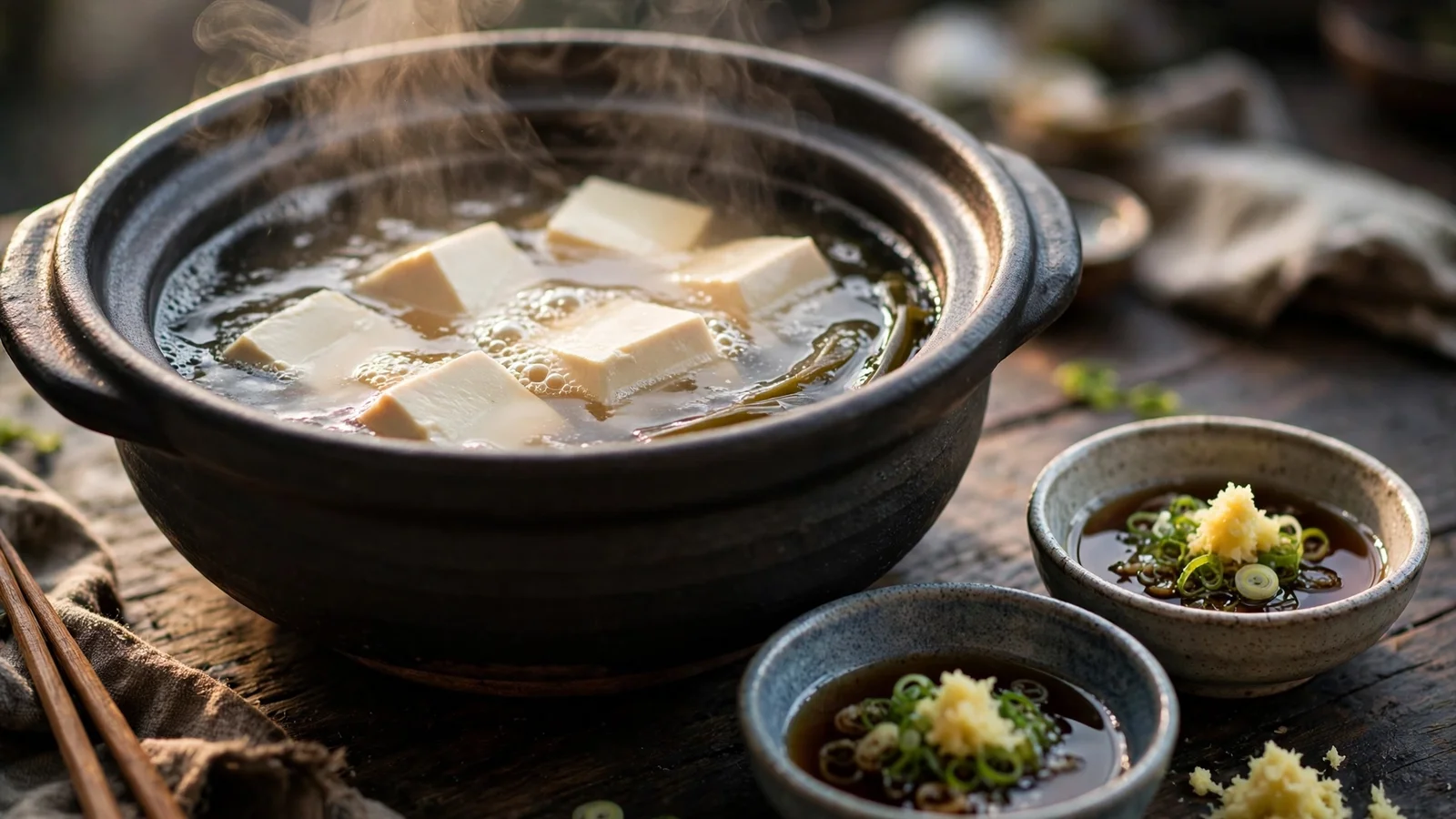
Step 6. While the tofu simmers, divide the ponzu among 4 small dipping bowls and top each with scallions, grated ginger, and a pinch of togarashi if you like.
Step 7. Bring the pot to the table. Lift out the tofu cubes with a slotted spoon, letting the broth drain off, and set 2 or 3 cubes into each person's dipping bowl. Pour a little of the warm broth over the tofu in each bowl, or ladle broth into separate small cups alongside.
Step 8. Serve immediately with steamed rice. Refill the pot with more tofu cubes as you eat — this is one of those dishes that keeps going until the tofu runs out.
The Ponzu Dip Makes It Sing
Ponzu is the non-negotiable partner here. Its soy-and-citrus brightness cuts through the tofu's milky richness and wakes up the whole bowl. A squeeze of fresh yuzu juice is traditional in Kyoto, but store-bought ponzu — most are built on sudachi, yuzu, or kabosu citrus — tastes excellent as is.
Set out the toppings family-style so everyone seasons their own bowl: scallions for bite, grated ginger for warmth, togarashi for heat. Some people add grated daikon for peppery freshness — the fun is in tuning each cube.
Taste your ponzu straight first. Bottled ponzu varies in saltiness — if yours is very sharp, thin it with a spoonful of the warm tofu broth. If it tastes flat, add a squeeze of lemon juice.
Tips for the Silkiest Tofu
- Warm, don't shock. Let cold tofu sit on the counter 10 to 15 minutes first — dropping ice-cold tofu into hot broth can split the cubes.
- One layer, no crowding. Stacked tofu cubes press on each other and break. If your pot is small, cook in two rounds — the first batch stays warm in a covered bowl.
- Keep it uncovered. A lid traps steam that condenses and drips back down, agitating the surface. The gentle tremble of an uncovered simmer is what you want.
- Fish cubes out with a wide spoon. Chopsticks can pierce silken tofu; a slotted spoon or a small mesh strainer lifts each cube cleanly.
- Save the leftover broth. It is still delicious the next day as a base for classic miso soup, or sipped from a mug with scallions.
Variations to Try
- Mushroom yudofu: Add a handful of sliced shiitake or enoki mushrooms to the broth for the last 5 minutes. They turn silky in the dashi and add a second texture.
- Napa cabbage yudofu: Tuck 2 cups of chopped napa cabbage into the broth before the tofu. It wilts into sweet ribbons and makes the pot feel more like a full meal.
- Sesame dipping sauce: Swap the ponzu for a mix of 3 tablespoons tahini, 2 tablespoons soy sauce, 1 tablespoon rice vinegar, and 2 tablespoons warm dashi, whisked smooth. Rich, nutty, and completely different.
- Yudofu with udon: When the tofu is gone, the seasoned broth is perfect for a quick bowl of udon. Drop in a portion of frozen udon, simmer 2 minutes, and finish with scallions.
What to Serve with Yudofu
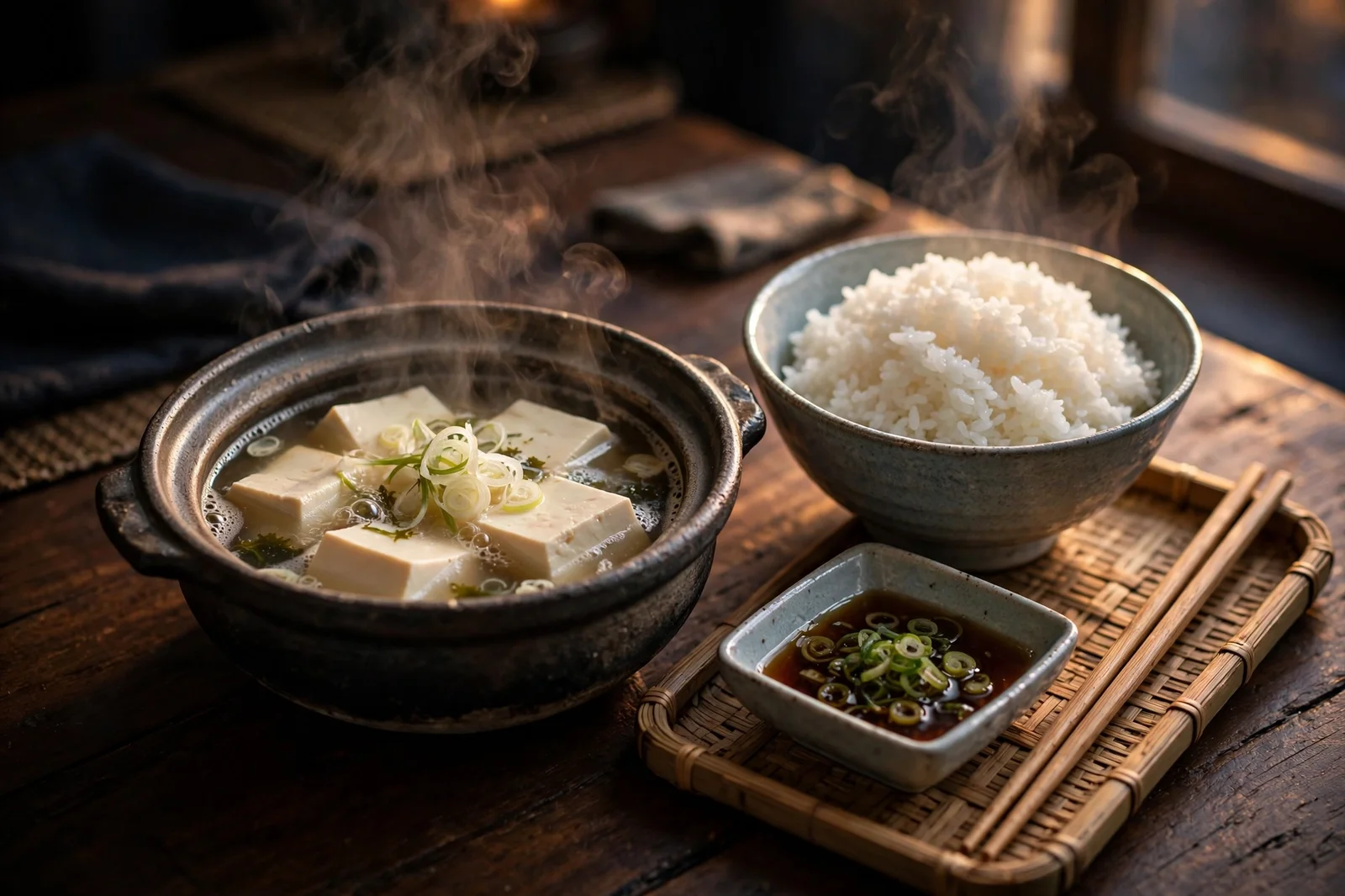
Yudofu is a centerpiece, but it is a light one — most meals pair it with something more substantial. Steamed rice is the obvious companion, and something pickled (tsukemono, kimchi, or even a quick cucumber pickle) adds the crunch and acidity the meal wants. For a fuller spread, add a protein side like agedashi tofu or a simple grilled fish, plus a bowl of miso soup to bookend the tofu theme. Finish with something warm to drink — green tea or a light barley tea suits the mood perfectly.
Yudofu: Japanese Simmered Tofu Hot Pot
Ingredients
Method
- Drain the tofu and cut each block into 4 to 6 large cubes, slicing gently with a slow sawing motion so the silken tofu does not crack.
- Wipe the kombu with a damp cloth and place it in a medium pot or donabe with the 4 cups of water. Set over medium heat and bring up slowly until tiny bubbles form around the edges of the pot, about 5 to 7 minutes.
- Let the kombu steep at that gentle heat for 10 minutes, then remove and discard it. Stir in the soy sauce and salt.
- Slip the tofu cubes into the broth in a single layer. Adjust the heat so the surface just trembles, with no rolling bubbles.
- Simmer gently for 8 to 10 minutes, until the tofu is warmed through and has developed a soft sheen. Do not stir.
- Divide the ponzu among 4 small dipping bowls and top each with scallions, grated ginger, and a pinch of togarashi if using.
- Bring the pot to the table. Lift out the tofu cubes with a slotted spoon, set 2 or 3 into each person's dipping bowl, and pour a little warm broth over. Serve immediately with steamed rice.