
A teaspoon of toasted sesame oil can make a plain bowl of rice taste like you meant it. The same teaspoon, added to a screaming-hot wok at the start of a stir-fry, turns harsh and bitter in under a minute, and the whole dish picks up that scorched edge. The oil itself is not fussy — it just has one job, and that job is finishing, not frying.
If you stock it from our essential Asian pantry staples, you already know it sits alongside soy sauce and rice vinegar as a reach-for-it-often bottle. This guide covers the part the label never tells you: the exact moment to add it, how much is enough, and how to keep that deep, nutty aroma from going flat in the cupboard.
Toasted vs. Regular Sesame Oil: They Are Not Interchangeable
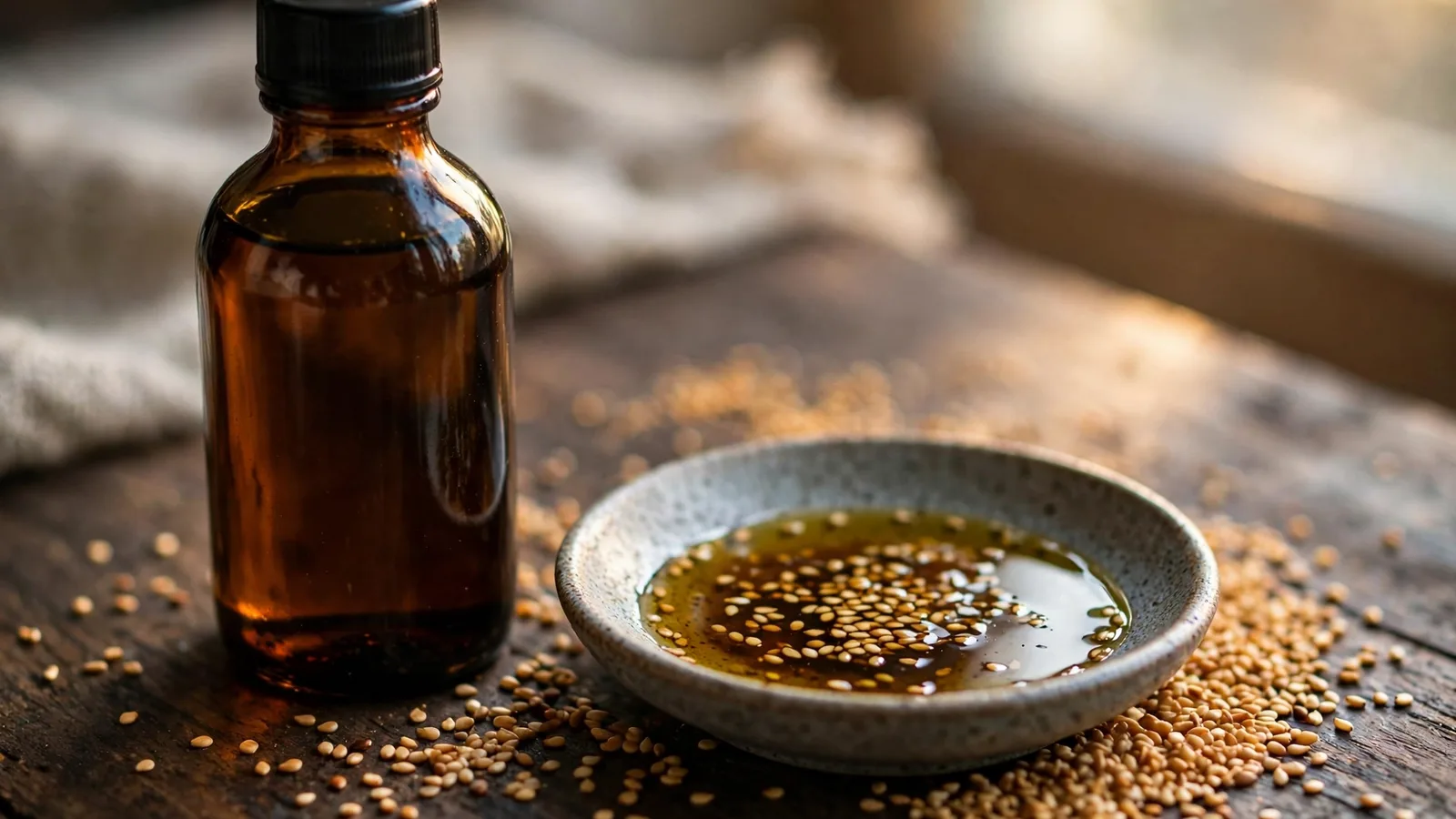
Toasted sesame oil is pressed from roasted sesame seeds. It is dark amber, almost the color of strong tea, and it smells warm and nutty the second you open the bottle. A little goes a long way. This is the bottle used in Japanese, Korean, and Chinese home cooking as a seasoning.
Regular (untoasted) sesame oil is pressed from raw seeds. It is pale gold, milder, and has a higher smoke point, so it can take more heat. You will see it in some South Asian cooking and in blends meant for frying.
Check the bottle before you cook. If it pours dark and smells like toasted nuts, treat it as a finishing oil no matter what the front label says. If it is light and neutral, it can handle gentle sautéing — but it will never give you that roasted depth, so do not swap them one-for-one and expect the same result.
Why Toasted Sesame Oil Burns So Fast
Two things work against it in a hot pan.
First, its smoke point sits around 350°F (175°C), well below the 450–500°F a wok hits for a good stir-fry. Once it smokes, the flavor compounds break down and the oil turns acrid.
Second, the flavor you want comes from volatile aromatic compounds created during roasting. Heat drives those off quickly, even before the oil visibly smokes. Leave toasted sesame oil over high heat for 60 to 90 seconds and most of the aroma you paid for is gone, replaced by a flat, slightly bitter taste.
That is why recipes that list it with the cooking oil at the start often disappoint. The writer meant well, but the timing works against the ingredient.
The Golden Rule: Finish, Don’t Fry
Add toasted sesame oil in the last 30 seconds of cooking, or off the heat entirely. The residual warmth of the food is enough to bloom the aroma without burning it.
In practice, that looks like this:
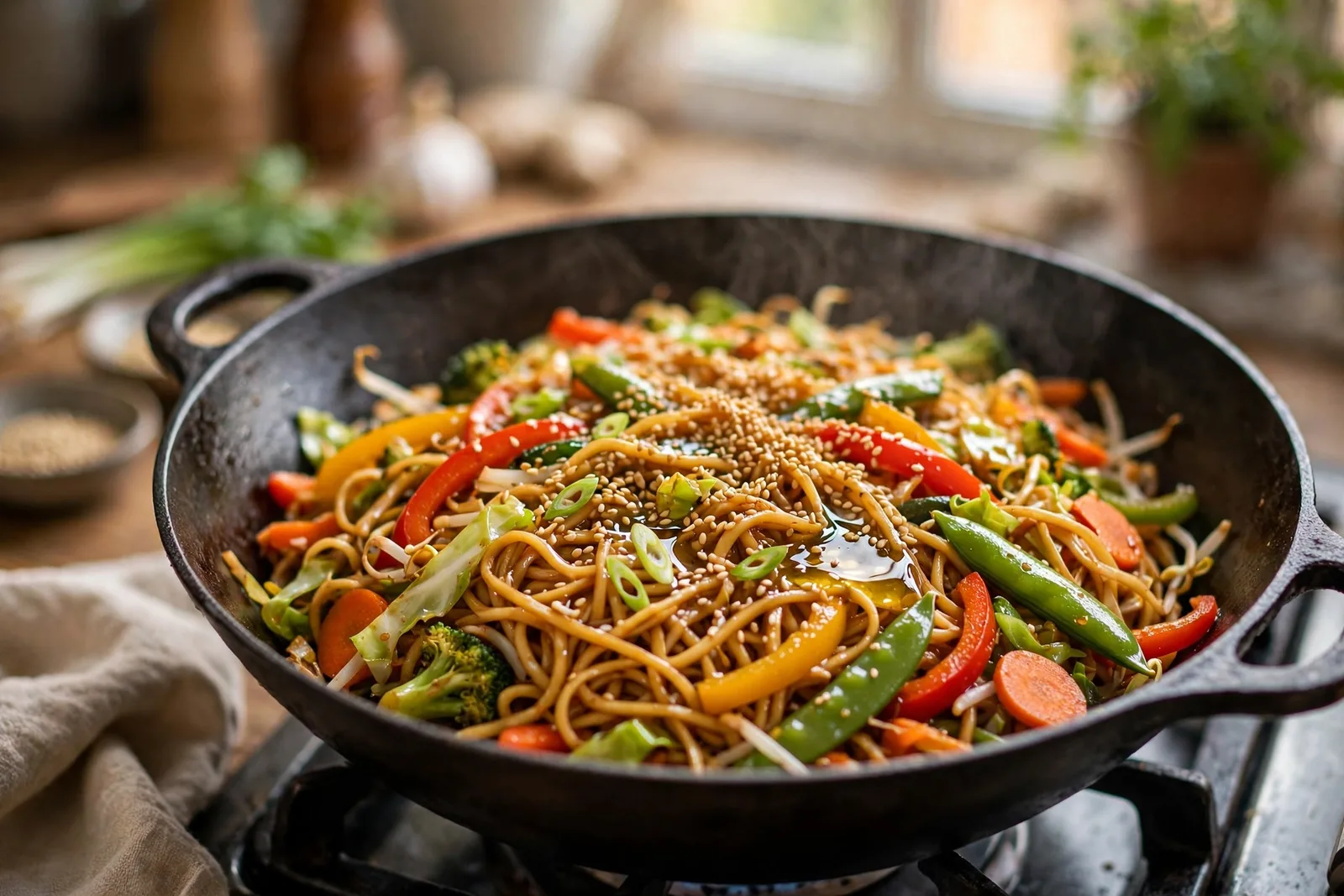
- Stir-fries: Cook everything in a neutral high-heat oil (peanut, avocado, or grapeseed). Kill the heat, drizzle in the sesame oil, toss once or twice, and serve. The toss coats everything while the pan is already cooling.
- Soups and congee: Ladle the soup into bowls first, then add 1/4 to 1/2 teaspoon per bowl and swirl. Adding it to a rolling boil for 10 minutes cooks the aroma right out.
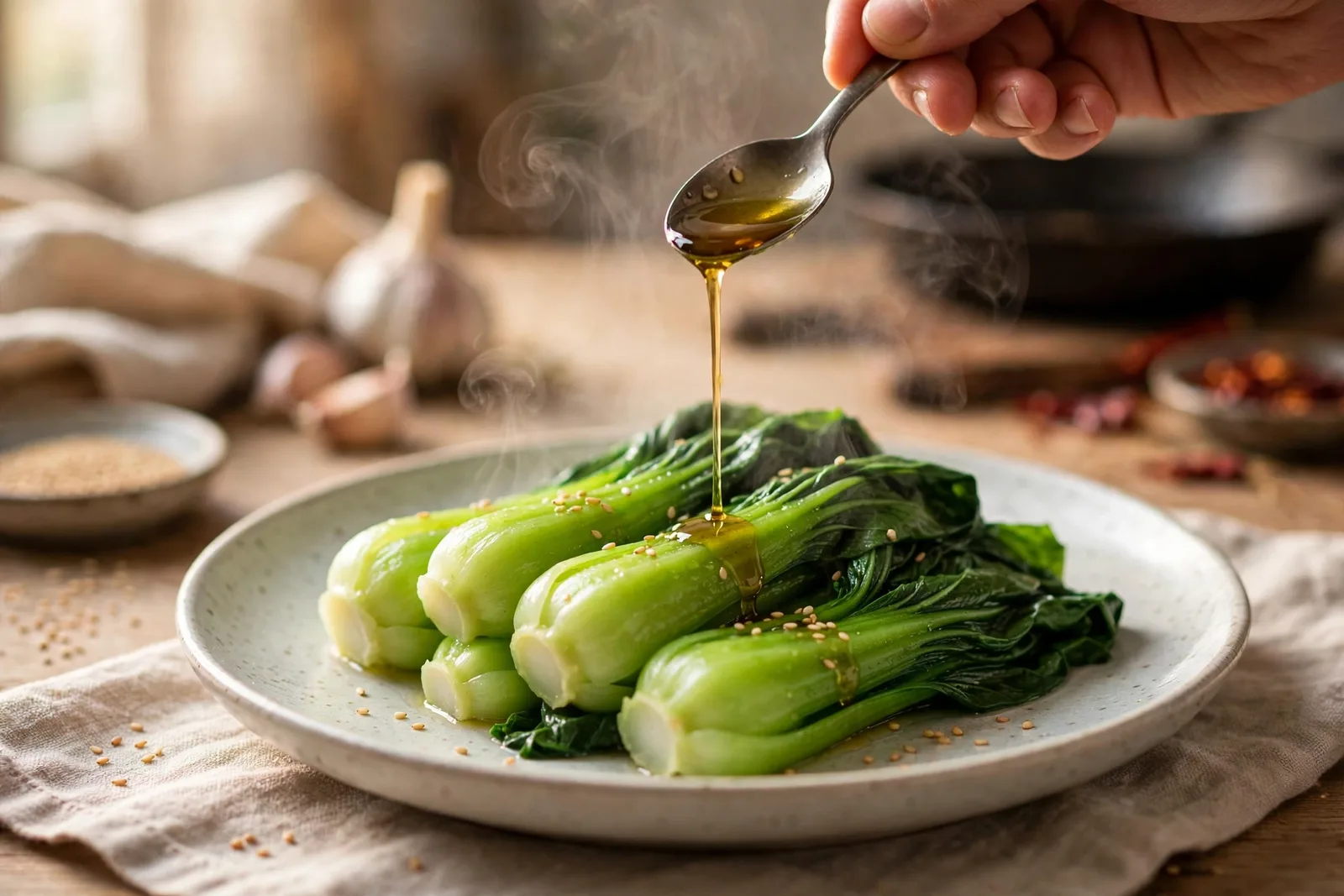
- Blanched and steamed vegetables: Dress them while they are still warm. Our method for blanching Asian greens so they stay bright finishes with exactly this move — a sesame and soy drizzle over warm greens so the oil clings instead of pooling.
- Cold dishes and salads: Whisk it into the dressing last. In Japanese cucumber sunomono, a few drops round out the vinegar without any heat at all.
- Marinades: It works in a marinade that will be cooked — some aroma survives and the rest seasons the meat — but you will get more flavor if you save half and brush it on after grilling or pan-frying.
One exception proves the rule: gentle warmth is fine. Warming sesame oil in a pan that is already off the burner, or stirring it into hot rice, keeps the temperature well under the danger zone. What you want to avoid is direct, sustained high heat.
How Much to Use: A Little Is the Whole Point
Because the flavor is concentrated, amounts stay small. Use this as a starting map, then adjust to your bottle — some brands run stronger than others.
| Dish (serves 4 unless noted) | Amount | When to add |
|---|---|---|
| Stir-fried vegetables or noodles | 1 to 1 1/2 teaspoons | Off heat, final toss |
| Fried rice | 1 teaspoon | After the rice leaves the wok |
| Soup or congee, per bowl | 1/4 to 1/2 teaspoon | In the serving bowl |
| Dumpling dipping sauce, per small dish | 1/2 teaspoon | Whisked in cold |
| Cucumber or seaweed salad | 1 to 2 teaspoons | In the dressing |
| Marinade for 1 lb meat | 1 tablespoon | In the marinade, plus a fresh drizzle after cooking if you like |
| Plain steamed rice, per cup cooked | 1/2 teaspoon | Folded in while hot |
If you cannot taste it, add another 1/4 teaspoon at the table rather than doubling it in the pan. You can always add more; you cannot take back too much, and an over-oiled dish tastes heavy and one-note.
Step by Step: A Stir-Fry That Ends Right
- Heat your wok or skillet until it just starts to smoke, then add 1 to 2 tablespoons of neutral oil and swirl.
- Cook in your usual order — aromatics like garlic and ginger first for 20 to 30 seconds, then protein, then vegetables, saucing as you go.
- When everything is cooked and glossy, turn off the heat. Wait about 10 seconds so the pan drops below a hard sizzle.
- Drizzle 1 to 1 1/2 teaspoons of toasted sesame oil in a circle over the food.
- Toss 4 or 5 times to coat, then plate right away. Serve within a few minutes, while the aroma is still lifting off the dish.
That 10-second pause is the whole trick. The food stays hot, the oil warms through, and nothing scorches.
Pairings That Make It Sing
Toasted sesame oil loves salty, acidic, and gently sweet partners. A few combinations to keep in your back pocket:
- Soy sauce + rice vinegar + a pinch of sugar: the base for dozens of cold dishes and dipping sauces.
- Chili crisp or homemade chili oil: layer nutty depth under the heat. If you make our chili oil at home, try a half-and-half drizzle of chili oil and sesame oil over wontons or noodles.
- Garlic, raw or lightly warmed: raw grated garlic in a dressing, or garlic warmed in neutral oil first and finished with sesame off the heat.
- Toasted sesame seeds: oil plus seeds doubles down on the same flavor in two textures. Add the seeds at the very end so they stay crisp.
- Citrus, especially yuzu or lemon: a few drops brighten the richness in dressings for greens and seafood.
Go easy when the dish already has strong roasted or smoky flavors — charred eggplant, for instance, needs only a whisper, or the two smoky notes blur together.
How to Store It So It Stays Nutty
Sesame oil goes rancid faster than neutral oils because roasting creates compounds that oxidize with light, heat, and air. A bottle that smells flat, paint-like, or vaguely like old nuts has turned, and no cooking trick will save it.
- Buy small. A 5 to 8 ounce bottle you finish in 3 to 6 months beats a giant jug that sits for a year.
- Store it dark and cool. A cupboard away from the stove is fine for a fresh bottle. Once opened, the refrigerator is the safer home — it may pour a little cloudy when cold, which clears at room temperature and does not hurt quality.
- Keep the cap tight and wipe the lip. Air is the enemy, and a sticky, exposed rim oxidizes first and flavors every pour.
- Smell before you measure. Fresh toasted sesame oil smells like warm nuts and toast. If the aroma is gone or sharp, replace the bottle. One rancid drizzle can take down an otherwise good dish.
Mistakes That Make It Taste Bitter
Using it as your stir-fry oil. This is the big one. It smokes, it burns, and it costs more than the neutral oil that should be doing that job.
Adding it with the garlic at the start. Garlic needs 20 to 30 seconds in hot oil; sesame oil needs none. Cook the garlic in neutral oil, add sesame at the end.
Boiling it in soup. A long simmer strips the aroma and can leave a bitter thread through the broth. Bowl by bowl, at serving, is the fix.
Storing it next to the stove. The warmest, brightest spot in the kitchen is the worst home for this bottle. Heat speeds up rancidity even when the cap stays on.
Using a heavy hand to compensate for an old bottle. If you need a tablespoon to taste anything, the oil has faded. A fresh bottle at 1 teaspoon will taste stronger and cleaner.
A Quick Checklist to Tape Inside the Cupboard
- Dark bottle? Finishing oil. Light bottle? Can take gentle heat.
- Neutral oil cooks; sesame oil finishes.
- Off heat, last 30 seconds, then toss and serve.
- Start with 1 teaspoon for a family-size dish; add more at the table.
- Fridge after opening, small bottle, smell check every time.
Get the timing right and toasted sesame oil becomes one of the most reliable flavor moves in a pan-Asian kitchen — a 5-second finish that makes plain rice, blanched greens, soups, and noodles taste complete. Keep the bottle fresh, keep it off the flame, and let that last drizzle do the work it was made for.