
Every Korean birthday table has a bowl of miyeok-guk. I learned it the way most Korean home cooks do: watching someone older make it and asking why they bother sauteing the seaweed first. The answer shows up in the bowl. This is a soup with almost no spices, just miyeok, beef, sesame oil, and salt, so the technique carries the whole flavor.
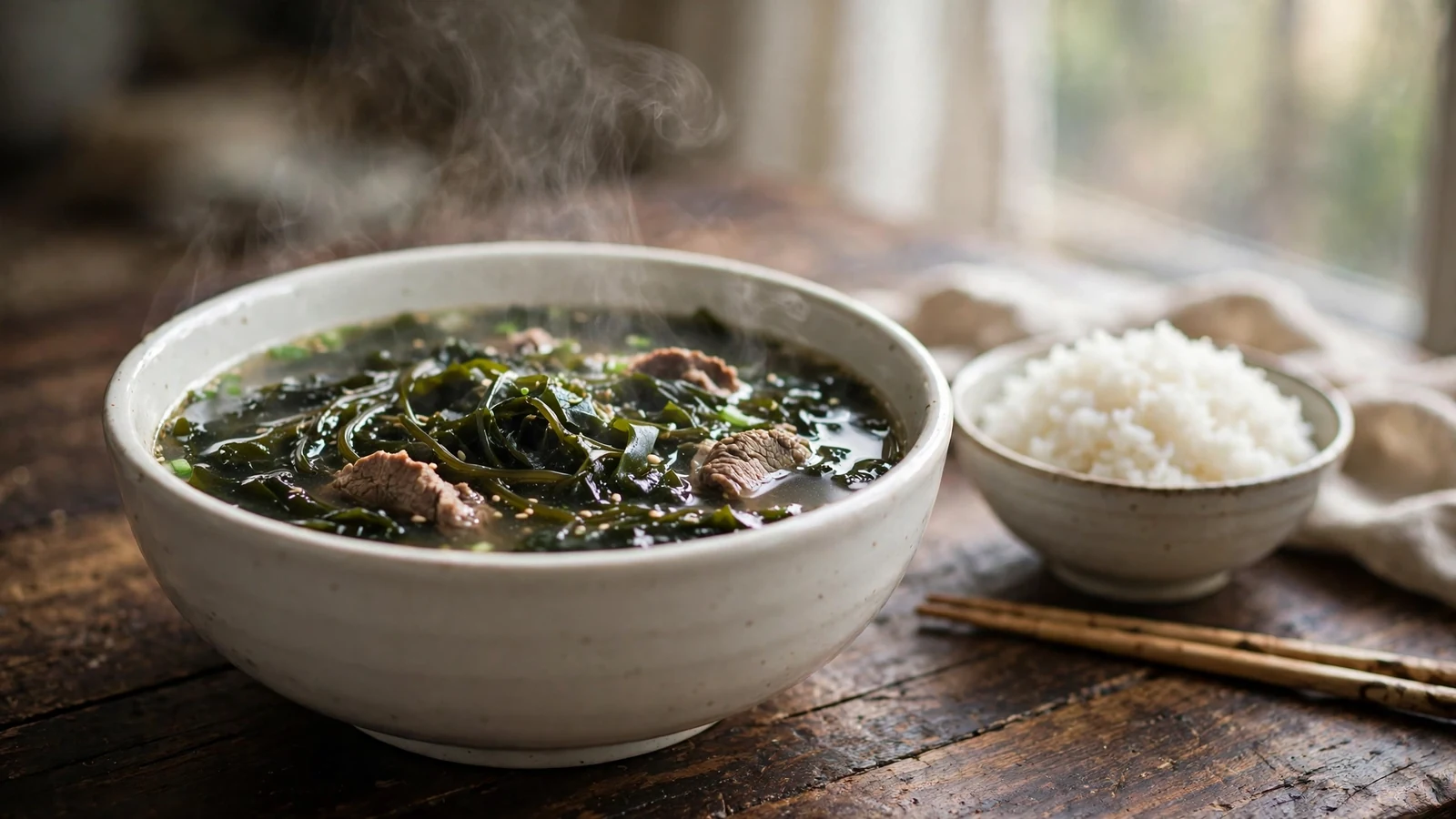
What is miyeok-guk?
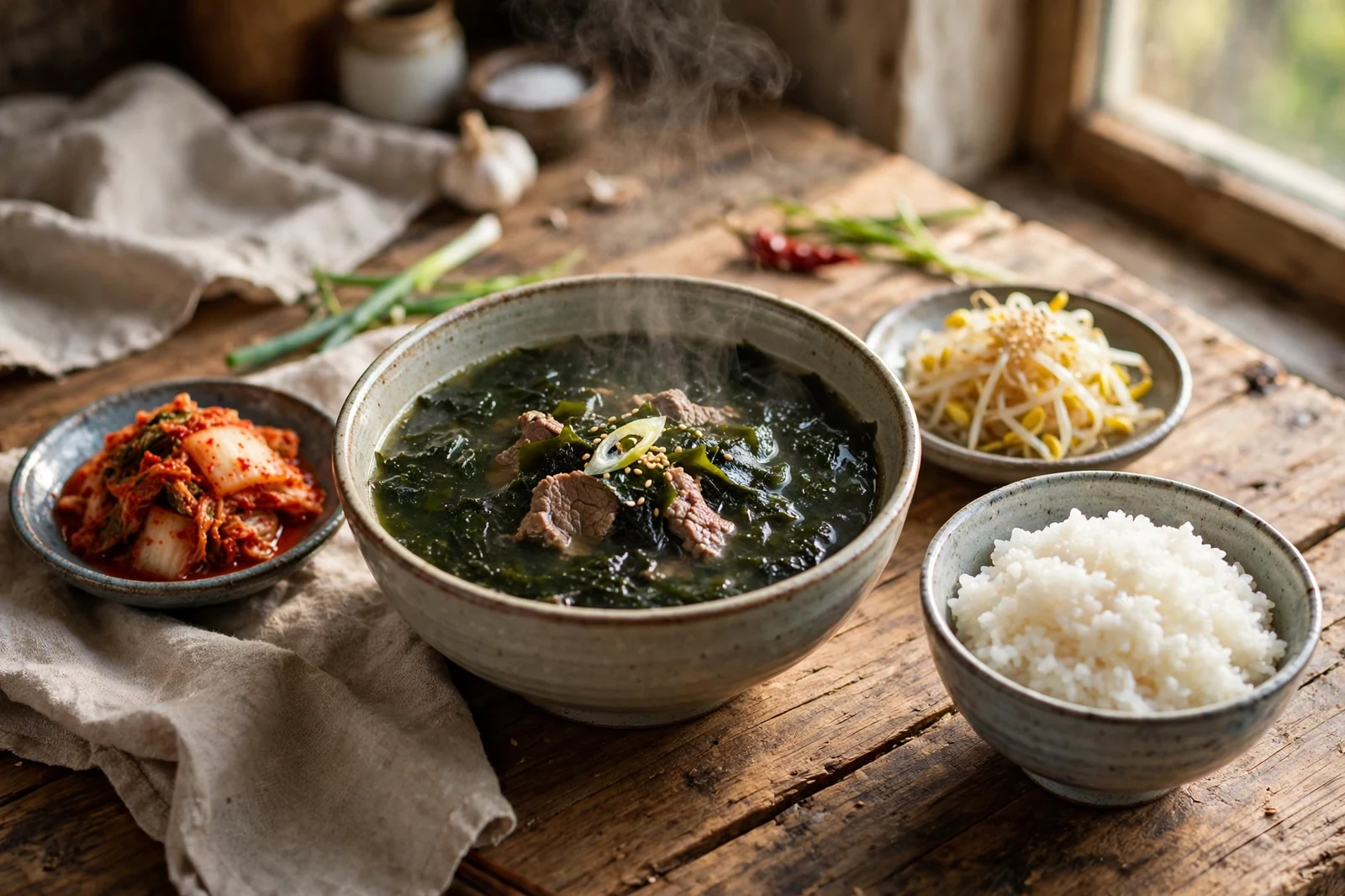
Miyeok-guk is a Korean seaweed soup made from dried miyeok (brown seaweed, close to wakame) simmered with beef in a light, savory broth. Koreans eat it on birthdays, and new mothers eat it for weeks after giving birth, because the seaweed is rich in minerals like iodine, calcium, and iron. The classic version uses beef, though seafood versions with mussels or clams are common along the coast. The broth stays clear and gentle, not spicy, with the seaweed giving it a soft ocean flavor that sesame oil rounds out.
Buy the right miyeok
Dried miyeok comes in two forms: long whole ribbons or pre-cut pieces. Either works. Look for packages labeled miyeok or "brown seaweed" at a Korean grocery; the pieces should be dark green, not pale or yellowed. One ounce (about a cup of dried flakes) sounds small, but it expands to roughly four cups once soaked, which is enough for four generous servings.
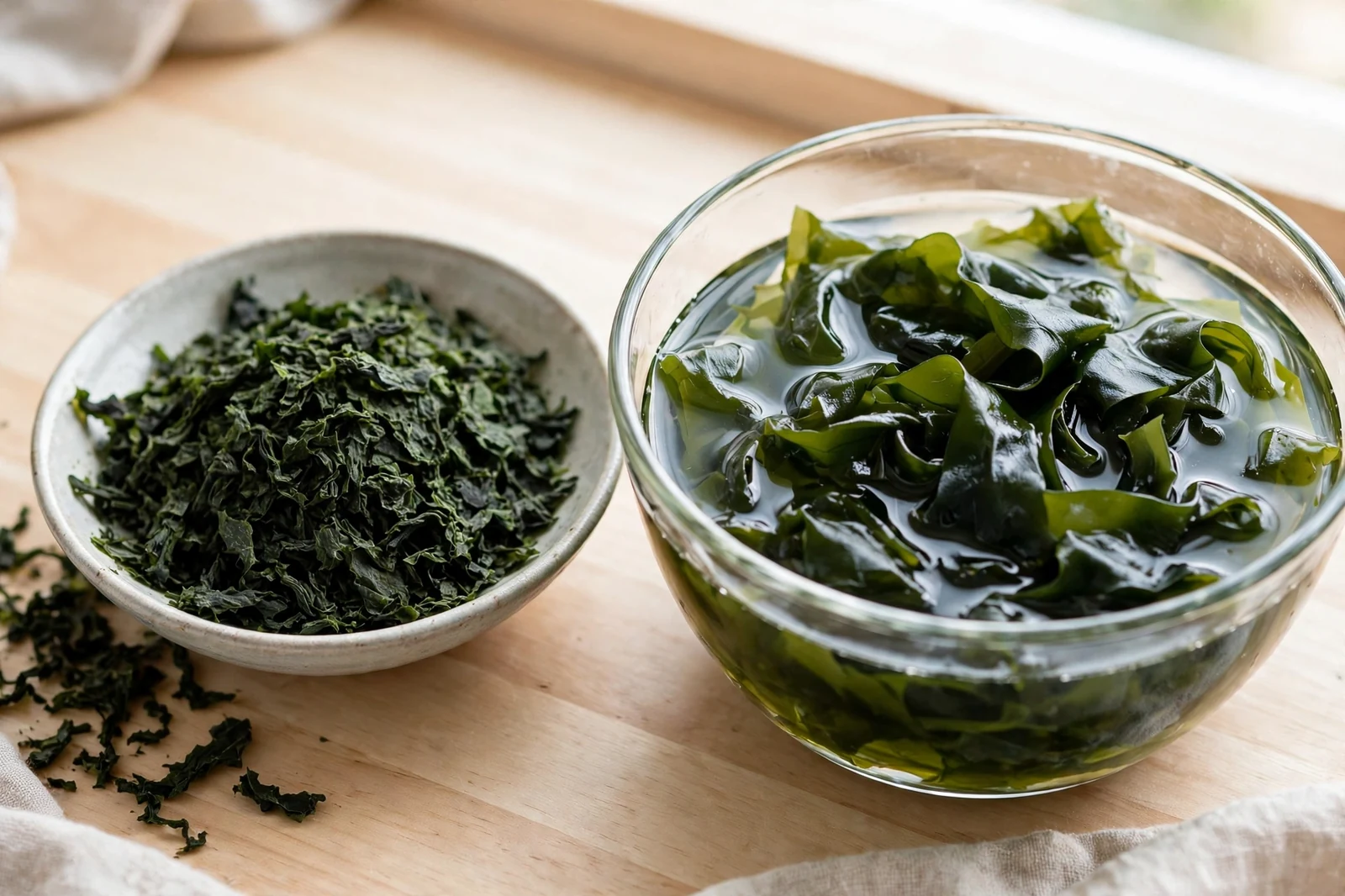
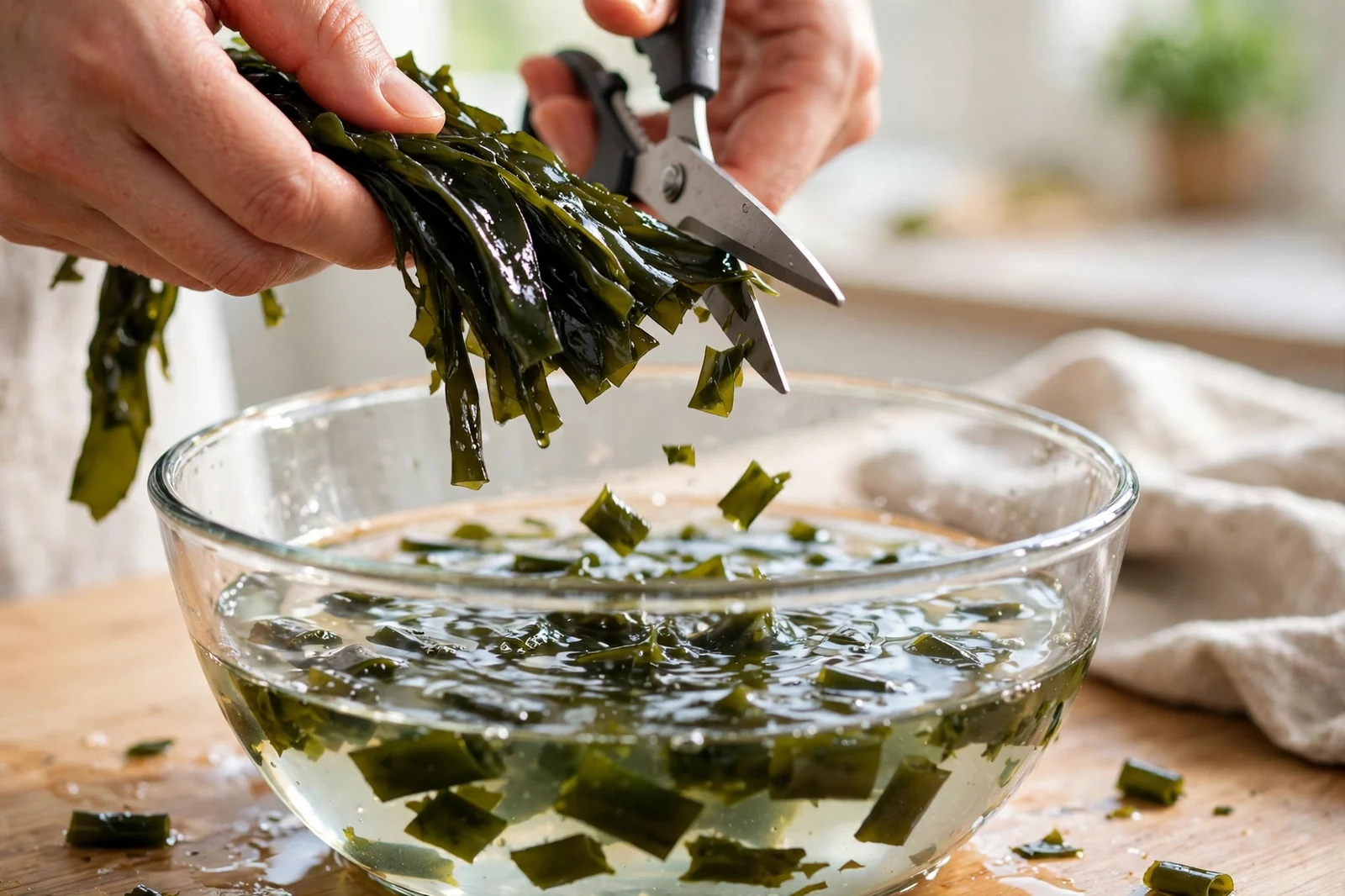
Soak the seaweed in cold water for 30 to 40 minutes. Warm water speeds things up but gives a softer texture; cold water keeps the strands springy. After soaking, lift the seaweed out, squeeze out the water, and cut it into 2-inch pieces with kitchen scissors. This step matters more than it sounds. Uncut strands tangle into long slippery ribbons that are awkward to eat and that is the most common complaint about homemade miyeok-guk.
The beef decision
Thinly sliced chuck or brisket is the cut for this soup. Cut it against the grain into bite-size slices about 1/8 inch thick. Ground beef is a poor substitute here: the small bits go mealy in a long simmer and cloud the broth. Short ribs go the other direction and make the soup too rich for what is supposed to be a clean, light bowl. Slicing your own chuck takes five extra minutes and gives you control over thickness, which is the whole point.
The saute-first method
Most thin, watery miyeok-guk fails at the same place: the cook puts raw beef and seaweed into plain water and hopes simmering will fix it. It will not. The flavor of this soup is built before the water goes in. Heat sesame oil, brown the beef slices until no pink remains, then add the drained seaweed, soup soy sauce, and garlic and stir-fry for 2 to 3 minutes. The seaweed turns from dark olive to a bright, glossy green, which is the visual cue that the base is set. That 3-minute stir-fry is the difference between a broth that tastes like something and one that tastes like warm water with seaweed in it. It is the same reason sundubu-jjigae benefits from blooming its seasonings in oil before the liquid goes in.
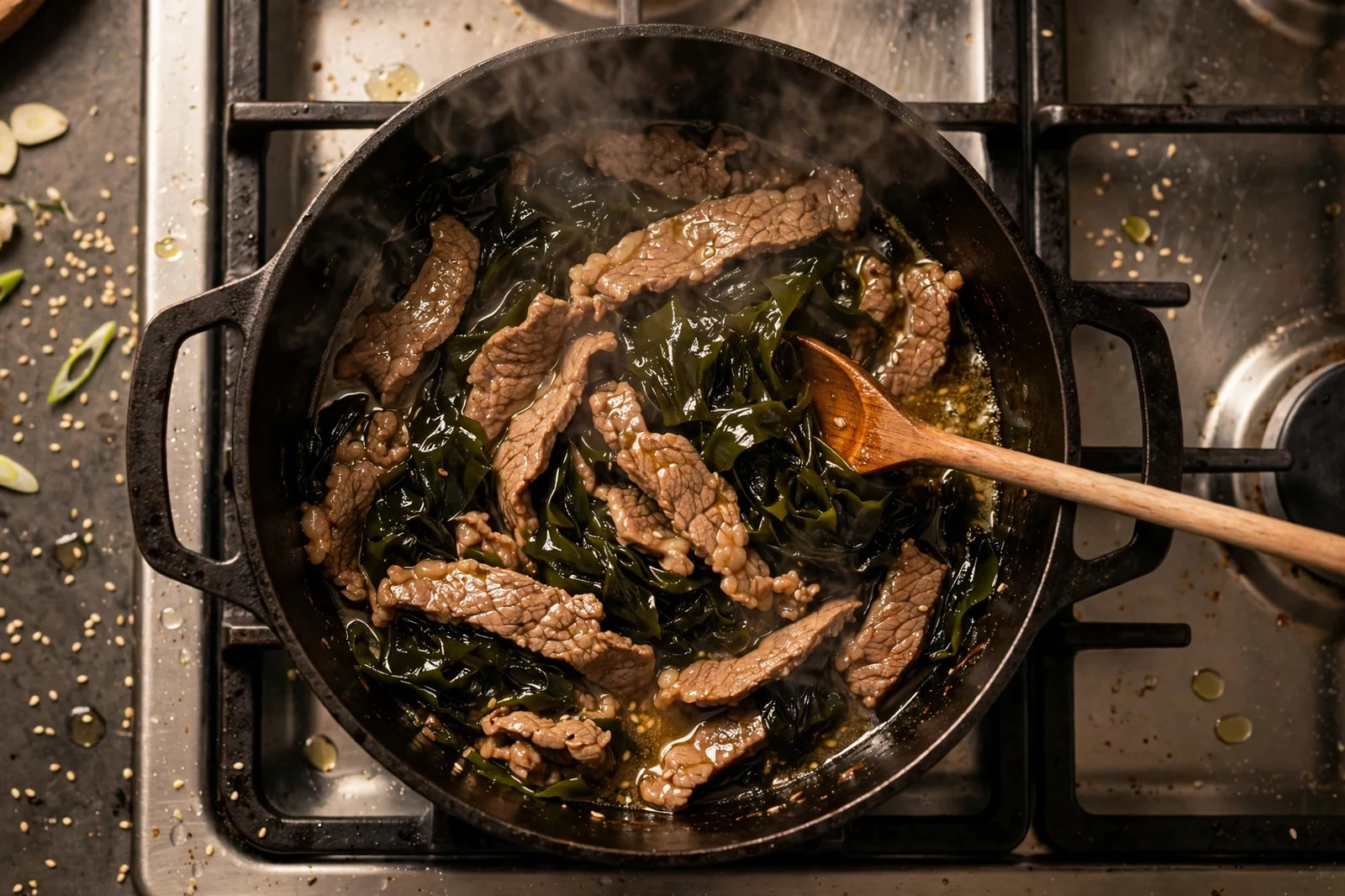
Then add the water and simmer gently for 25 minutes. Keep it at a bare simmer, not a rolling boil. Hard boiling makes the seaweed strands tough and rubbery. Season at the end with salt rather than more soy sauce: extra soy sauce late in the game darkens the broth and muddies the clean flavor.
How to serve it
Serve the soup hot with steamed rice and something pickled, like kimchi. The soup keeps well and honestly tastes better the next day, once the seaweed and broth have settled together. Cool leftovers before refrigerating, and reheat only the portion you plan to eat, since repeated boiling toughens the seaweed. Pair it with kimchi fried rice and two or three small banchan and you have a complete Korean home meal.
Troubleshooting: Fix My Miyeok-Guk
The failure modes below are the ones I have actually hit making this soup. Pick your problem in the widget for the step-by-step fix.
HERB & LIME · KITCHEN HELP
Fix My Miyeok-Guk
Choose what went wrong to see a practical next step.
Possible cause
What to try next
For next time
From Paul's kitchen. Results vary with seaweed thickness, beef cut, and stove heat, adjust timing to your setup.
Quick reference (also works without JavaScript)
The broth tastes watery and bland
Cause: The beef and seaweed went into plain water without the sesame-oil saute, so the flavor base never formed and the short simmer did not have enough to extract.
Try: Give the soup another 15 to 20 minutes at a gentle simmer, tasting every 5, and stir in the salt only after the broth has reduced and deepened.
Prevent: Sear the beef and stir-fry the seaweed in sesame oil for 3 to 5 minutes until glossy and bright green before adding any water, then simmer gently 20 to 30 minutes.
The seaweed turned tough and rubbery
Cause: Boiling the soup hard for too long makes the rehydrated strands tough and chewy instead of tender.
Try: There is no way to soften rubbery seaweed again, so serve the pot as is and snip the strands shorter with scissors at the table so they are less noticeable.
Prevent: Keep the pot at a bare simmer, never a rolling boil, and limit the cook to about 25 minutes after the water goes in, since hard boiling tightens the strands.
The soup came out too dark and salty
Cause: Adding regular soy sauce late in the cook darkens the broth and pushes the salt past balance with no way to lift it back out.
Try: Stir in a cup of hot water to dilute, then bring the salt back up with plain salt, a little at a time, instead of more soy sauce.
Prevent: Do the main seasoning with Korean soup soy sauce (gukganjang) early in the cook, then finish the final adjustment with salt, which seasons without darkening the broth.
The beef smells strong or tastes bland
Cause: The beef was never seared, so its surface proteins and juices diluted straight into the broth instead of browning into flavor first.
Try: Fish the slices out and slice them thinner across the grain, which makes even slightly overdone beef easier to chew, and simmer the pot gently from here.
Prevent: Pat the beef slices dry and sear them in sesame oil until no pink remains before adding water, and use thin-sliced chuck or brisket rather than ground beef, which goes mealy.
The seaweed strands are long and slippery to eat
Cause: Uncut soaked seaweed cooks into long tangled ribbons that slide off chopsticks and off the spoon.
Try: Before serving, lift the strands with tongs and snip them into 2-inch pieces with kitchen scissors directly over the pot.
Prevent: After soaking and draining, cut the seaweed into 2-inch pieces with scissors before it goes into the pot, since strands keep growing longer as they cook.
Miyeok-Guk: Korean Seaweed Soup with Beef
Ingredients
Method
- Soak the seaweed. Put the dried miyeok in a large bowl with 4 cups cold water and soak 30 to 40 minutes, until springy and fully expanded. It grows to roughly 3 to 4 times its dried size.
- Drain and cut. Lift the seaweed out of the water, squeeze out the excess, and cut into 2-inch pieces with kitchen scissors. Discard the soaking water.
- Sear the beef. Heat the sesame oil in a heavy pot over medium-high heat. Add the beef slices and cook 3 to 4 minutes, stirring, until no pink remains.
- Stir-fry the seaweed. Add the drained seaweed, soup soy sauce, and garlic to the pot. Stir-fry 2 to 3 minutes, until the seaweed turns bright glossy green and coats in the oil. This step builds the broth's flavor.
- Simmer gently. Pour in 6 cups water and bring to a boil. Reduce to a bare simmer and cook 25 minutes, skimming any foam that rises.
- Season and serve. Stir in the salt, fish sauce if using, and black pepper. Taste and adjust: the broth should be savory and clean. Ladle into bowls, top with scallions, and serve hot with steamed rice.
Notes
Variations
Mussel miyeok-guk: replace the beef with a pound of scrubbed mussels, added in the last 8 minutes of simmering. The mussel liquor makes a brinier broth; reduce the salt accordingly.
Anchovy-stock version: simmer a handful of dried anchovies and a piece of kelp in the water for 15 minutes, strain, and use it as the soup base for a seafood-only bowl with no beef.
More Korean recipes
- Tteokbokki: Spicy Korean Rice Cakes for when you want heat with your meal
- Bibimbap: Korean Mixed Rice Bowl for a full birthday-table spread
- Doenjang Jjigae: Korean Soybean Paste Stew for another everyday Korean soup