
Bibimbap lands on the table still sizzling, and that sound is the whole point of the dish. Served in a screaming-hot stone bowl, the rice at the bottom fries into a thin golden crust while you eat, and you fold everything together with gochujang sauce at the table. It is one of the most satisfying things you can make from a pot of rice and a handful of vegetables.
What is bibimbap?
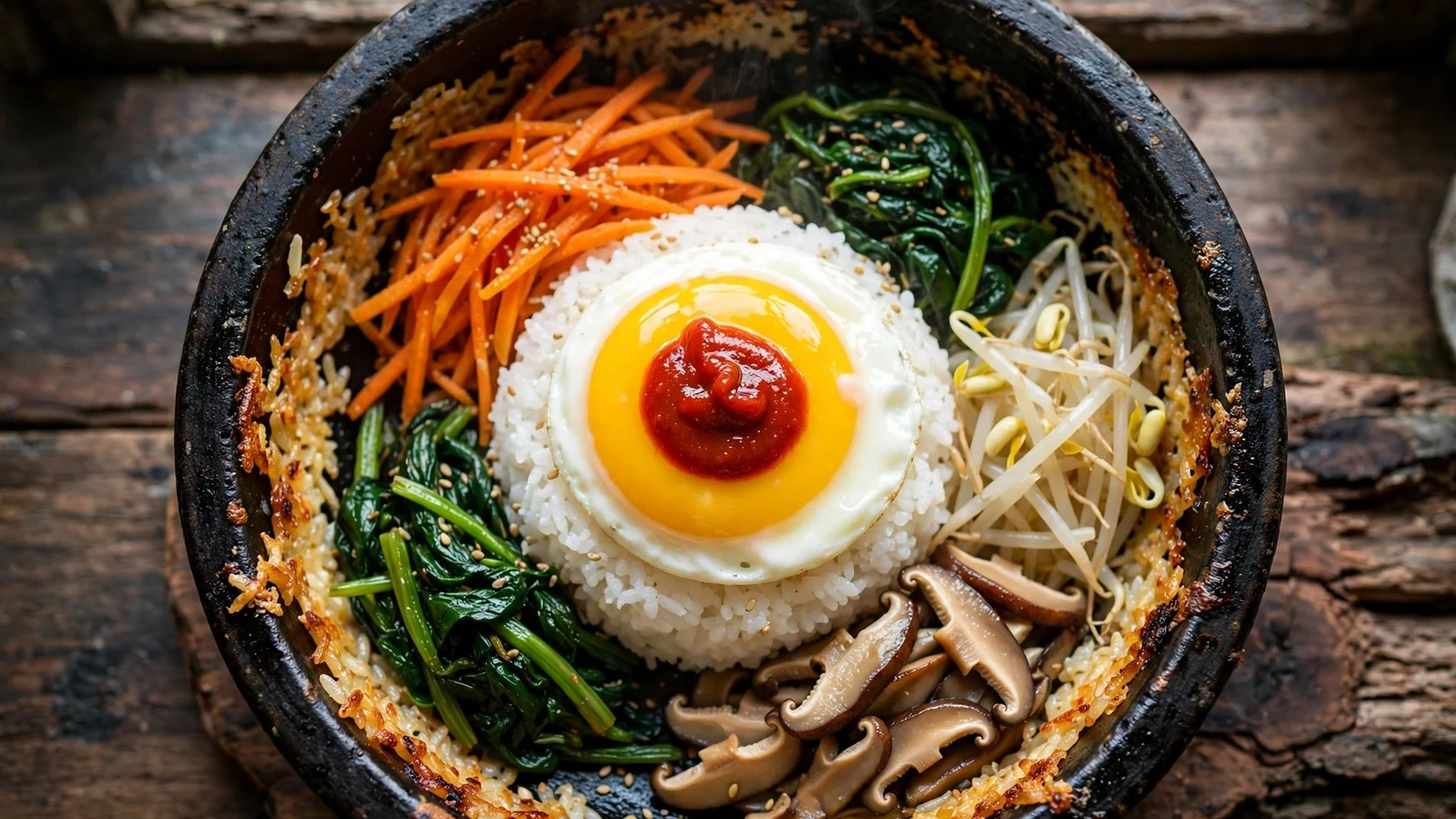
Bibimbap means “mixed rice” in Korean: bibim (mixed) + bap (rice). At its simplest it is steamed rice topped with seasoned vegetables (namul), meat, a fried egg, and gochujang sauce, mixed together right before eating. The version most people fall in love with is dolsot bibimbap, served in a dolsot, a heavy stone bowl preheated until it sears the rice into a crisp layer called nurungji.
The classic arrangement follows the five colors of Korean cooking (obangsaek): orange carrots, dark green spinach, white bean sprouts, brown mushrooms, and the red of the gochujang. Each color is a separate seasoned vegetable, so every spoonful mixes different textures and flavors. Expect contrast in every bite: soft rice against crackling crust, sweet vegetables against salty beef, and the slow heat of the gochujang sauce tying it all together.
Why this recipe works
Three decisions carry the whole bowl. First, every vegetable is seasoned on its own. It is tempting to cook them all in one pan, but a bibimbap where the spinach, carrots, sprouts, and mushrooms all taste the same is a bland bowl no matter how much sauce you add. Each one gets a short blanch or sear, then its own pinch of salt, garlic, and sesame oil. That is how restaurant bibimbap gets its depth.
Second, the sauce is a measured ratio, not a spoonful of gochujang from the tub. I use 3 tablespoons gochujang, 1 1/2 tablespoons sugar, 1 tablespoon toasted sesame oil, 1 tablespoon water, and 1 teaspoon rice vinegar. The sugar and vinegar take the raw edge off the paste so it seasons the whole bowl instead of shouting over it. If your gochujang runs especially hot, my gochujang vs gochugaru guide explains how the two chilies differ and how to adjust the heat.
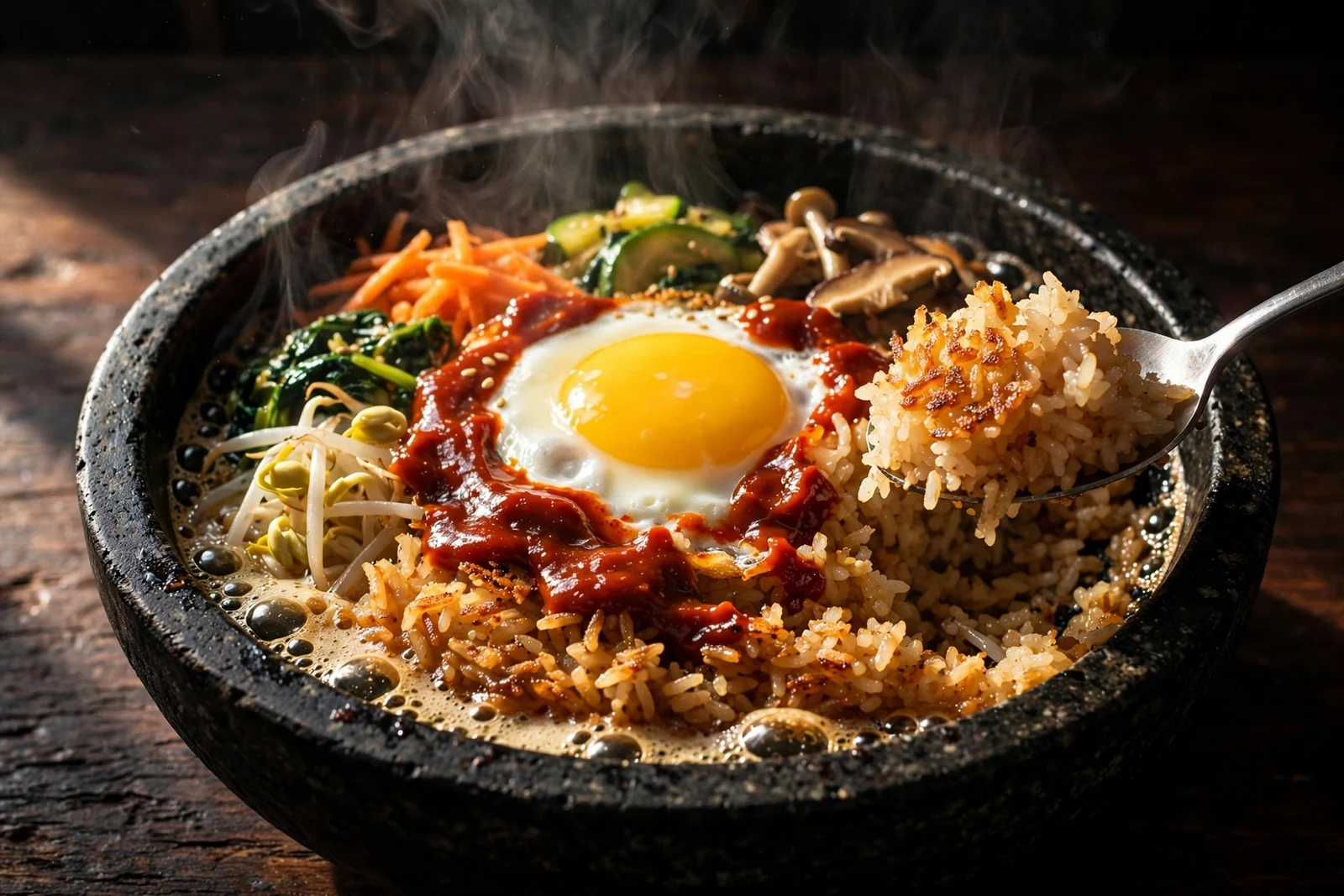
Third, the crust. The dolsot preheats empty over medium heat for 7 to 8 minutes while you arrange the bowls. One tablespoon of sesame oil goes into the hot bowl, then the rice gets packed in firmly and sits untouched for 3 to 4 minutes. You will hear a steady sizzle when the oil hits the rice. If there is no sizzle, the bowl was not hot enough and you will get steamed rice instead of a crust.
How to make bibimbap
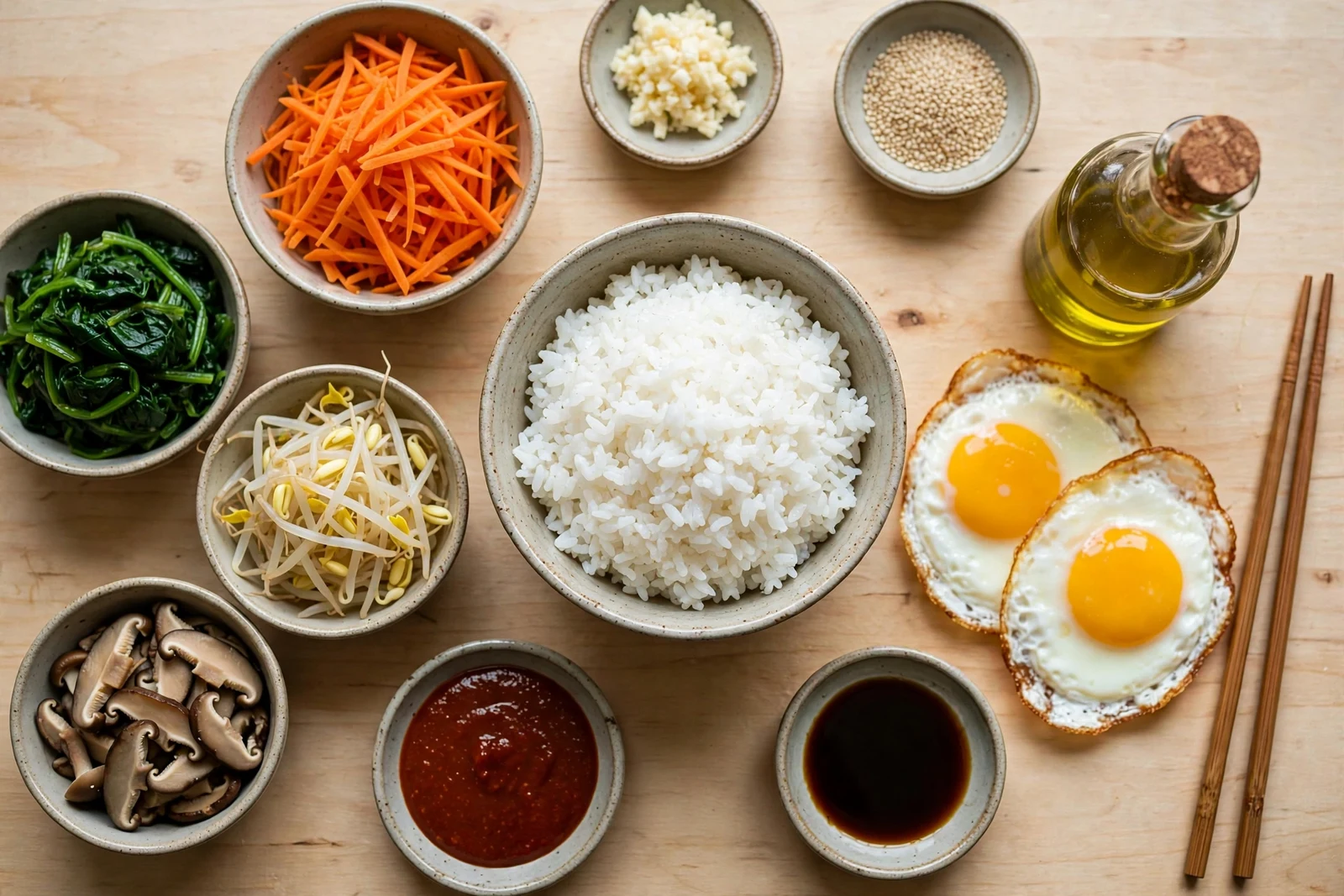
Start the rice first; short-grain rice gives the best crust because the grains pack together. While it cooks, prep the vegetables: julienne the carrots, slice the mushrooms, and trim the spinach. Blanch the spinach and bean sprouts in salted boiling water for 1 to 2 minutes, then rinse under cold water. Now the step most home cooks skip: squeeze the blanched greens hard in a clean towel. A bunch of spinach holds a surprising amount of water even after draining, and that water will leak into the bowl and undo the crust you are about to build. Squeeze until no more drips come out, then season.
Season the beef while the vegetables drain: 8 ounces of thinly sliced or ground beef with 2 tablespoons soy sauce, 1 tablespoon sugar, 1 teaspoon sesame oil, and 1 teaspoon minced garlic. Fifteen minutes is enough; the slices are thin. Sear in a hot skillet for 2 to 3 minutes until just cooked through.
Cook each vegetable separately and fast. The carrots and mushrooms get 2 to 3 minutes in a hot pan with a teaspoon of oil; the blanched spinach and sprouts just need their seasoning tossed through while warm. Season each with about 1/2 teaspoon salt, 1/2 teaspoon minced garlic, 1 teaspoon sesame oil, and a pinch of sesame seeds. Taste as you go: each vegetable should taste good enough to eat on its own. If it tastes flat now, it will taste flat under the sauce.
Getting the crispy rice crust
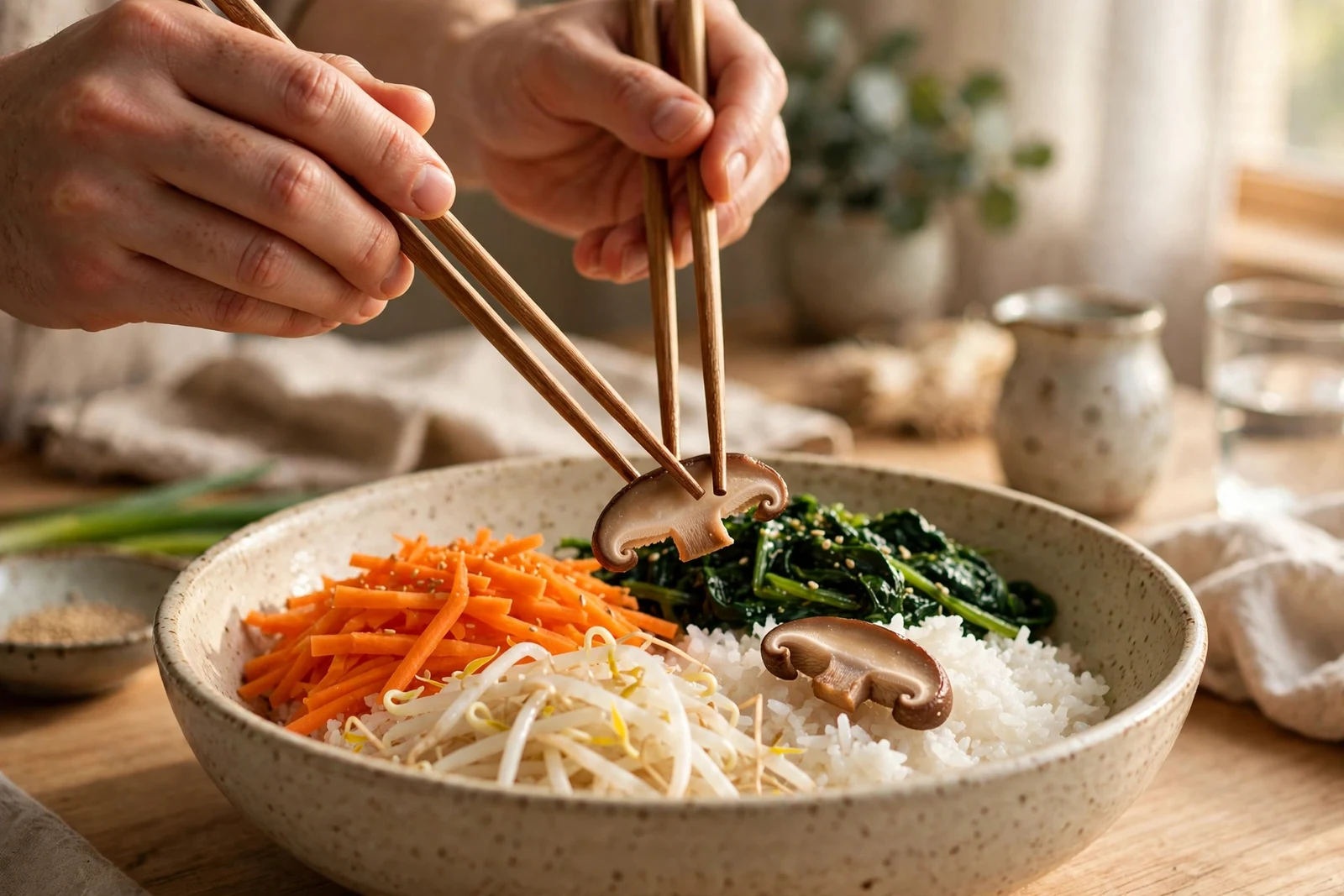
Arrange the seasoned vegetables in sections over the rice, add the beef, and fry an egg sunny-side up for each bowl. For the dolsot version, brush each preheated stone bowl with 1 tablespoon of sesame oil, press in about 1 cup of cooked rice per bowl, and arrange the toppings on top. Set the bowls back over medium heat for 3 to 4 minutes without stirring. You will hear the sizzle start within a minute.
Serve the gochujang sauce on the side so each person controls the heat, and put the fried egg on top at the last minute. The residual heat of the stone bowl keeps cooking the egg, so take it out of the pan while the yolk is still loose. Mix everything together at the table, scraping the bottom to fold in the crisped rice. If you do not own a dolsot, a heavy cast-iron skillet works: heat it the same way, build the bowl in the skillet, and serve straight from the pan.
A note on the rice: freshly cooked rice straight from the cooker is wetter and crisps more slowly. Day-old refrigerated rice, broken up and warmed for a minute in the microwave, fries up noticeably faster. If you only have fresh rice, spread it on a tray for 15 minutes to let surface steam escape before it goes into the hot bowl.
Troubleshooting: Fix My Bibimbap
The five problems below cover nearly every bibimbap that goes wrong at home: the missing crust, soggy vegetables, sauce that overpowers everything, a bland bowl, and an overcooked egg. Pick yours to see what caused it and how to fix it next time.
HERB & LIME · KITCHEN HELP
Fix My Bibimbap
Choose what went wrong to see a practical next step.
Possible cause
What to try next
For next time
From Paul's kitchen. Results vary with rice, vegetables, and bowl heat, adjust timing to your setup.
Quick reference (also works without JavaScript)
No crispy rice at the bottom
Cause: The dolsot was not preheated long enough and the rice was too wet, so the bottom layer steamed instead of frying against the hot stone.
Try: Heat the empty dolsot on the stovetop for several minutes before the rice goes in, then pack the rice in and leave it undisturbed for 2 to 3 minutes until you hear it crackle.
Prevent: Use day-old rice, or spread fresh rice out to cool and air dry for 15 minutes first, spread it in a thin even layer, and brush the bowl with sesame oil before the rice goes in.
Seasoned vegetables turned watery and the bowl got soggy
Cause: Blanched greens like spinach and bean sprouts were not squeezed dry before seasoning, so they leaked water into the rice.
Try: Lift the wet vegetables out of the bowl, pour off any pooled liquid, then drain them in a colander or squeeze them by hand before returning them to the bowl.
Prevent: After blanching, rinse greens in cold water and squeeze them hard by hand until no more liquid drips out, then season, and salt cucumber ahead of time and pat it dry.
Gochujang sauce overpowered everything
Cause: Plain gochujang straight from the tub was added in a heavy spoonful instead of a loosened sauce used sparingly.
Try: Mix the bowl thoroughly so the sauce distributes, add plain rice on the side to soften each bite, and next time start with 1 teaspoon of sauce and add more only to taste.
Prevent: Whisk gochujang with rice vinegar and a little honey or sugar plus sesame oil to make a proper bibim sauce, and serve extra sauce on the side instead of drizzling it all on top.
Bibimbap tastes bland and flat
Cause: Each vegetable was seasoned the same way or not at all, so no single component had enough flavor to stand up to the plain rice.
Try: Toss each vegetable separately with a pinch of salt, a drop of sesame oil, and minced garlic or sesame seeds, tasting each one before it goes back into the bowl.
Prevent: Cook and season every vegetable on its own with salt, sesame oil, and garlic, then finish the assembled bowl with a drizzle of sesame oil and toasted sesame seeds.
Fried egg overcooked and the yolk set solid
Cause: A fried egg went onto the screaming-hot dolsot too early, so the residual heat kept cooking it and the runny yolk turned firm before serving.
Try: For the next bowl, add the egg last, right after the bowl comes off the heat, and serve immediately so the yolk stays runny.
Prevent: Crack a raw egg or just the yolk over the finished bowl at the very end and let the bowl's residual heat set the whites gently, or fry eggs separately and slide them on after plating.
Bibimbap: Korean Mixed Rice Bowl
Ingredients
Method
- Cook the rice. Prepare short-grain rice so it is ready when the toppings are done. Day-old refrigerated rice fries into a crust faster; if using fresh rice, spread it on a tray for 15 minutes so surface steam escapes.
- Blanch and squeeze the greens. Bring a pot of salted water to a boil. Blanch the spinach for 1 minute and the bean sprouts for 2 minutes, then rinse under cold water. Squeeze both hard in a clean kitchen towel until no more water comes out — leftover water will leak into the bowl and undo the crispy crust.
- Season each vegetable separately. Toss the spinach, bean sprouts, julienned carrots, and sliced shiitake each with a pinch of the salt, a little minced garlic, a drizzle of sesame oil, and a sprinkle of sesame seeds. The carrots and mushrooms get a quick 2 to 3 minute sear in a hot pan first; the blanched greens just need the seasoning tossed through while warm. Taste each one — it should be good enough to eat on its own.
- Marinate and sear the beef. Toss the beef with the soy sauce, sugar, sesame oil, and garlic and rest 15 minutes. Sear in a hot skillet for 2 to 3 minutes until just cooked through.
- Make the gochujang sauce. Whisk the gochujang, sugar, sesame oil, water, and rice vinegar until smooth. Set aside.
- Preheat the stone bowls. Set 4 dolsot bowls over medium heat for 7 to 8 minutes while you arrange the toppings. Brush each hot bowl with 1 tablespoon of sesame oil and press in about 1 cup of rice per bowl, then arrange the seasoned vegetables and beef in sections on top.
- Crisp the rice. Return the bowls to medium heat for 3 to 4 minutes without stirring. You will hear a steady sizzle within a minute — that is the crust forming. If there is no sizzle, the bowl needs more heat.
- Fry the eggs and serve. Fry the eggs sunny-side up and place one on each bowl at the last minute; the residual heat of the stone keeps cooking the yolk, so pull them while still loose. Serve the gochujang sauce on the side and mix everything together at the table, scraping the bottom to fold in the crisped rice.
Notes
Variations
Vegetarian bibimbap: leave out the beef and add an extra vegetable, like sauteed zucchini or braised burdock root. The seasoned vegetables are the backbone anyway, so the bowl stays substantial. For a fully plant-based version, the fried egg can come off too and the sauce is already vegan as written.
No stone bowl: build it in wide ceramic bowls at room temperature. You lose the crust, but the seasoning and sauce still make a great bowl. A ripping-hot cast-iron skillet is the closest substitute and it does produce a real crust.
Spice level: the sauce as written is medium. Cut the gochujang to 2 tablespoons for mild, or stir an extra teaspoon of gochugaru into the sauce for a sharper heat. A spoonful of kimchi on the side is the traditional way to add more punch; my kimchi fried rice is another good home for leftover kimchi.
Make-ahead: the seasoned vegetables and beef keep 2 days in the fridge in separate containers. Assemble and crisp the rice just before serving; the crust does not survive reheating.
More Korean recipes
If this bowl got you cooking Korean, try the chewy-sweet stir fry of japchae, the fiery street snack tteokbokki, a bowl of doenjang jjigae on the side, or my gochujang substitutes guide if your jar runs out mid-recipe.
From the garden
The bean sprouts in this bowl take four days to grow on a kitchen counter from a handful of mung beans, no soil and no garden needed. I grow mine in a jar and harvest them exactly when a bibimbap craving hits, and they are crunchier than anything from the store. My guide to growing bean sprouts indoors walks through the rinsing routine that keeps them sweet instead of bitter.
4 thoughts on “Bibimbap: Korean Mixed Rice Bowl”