
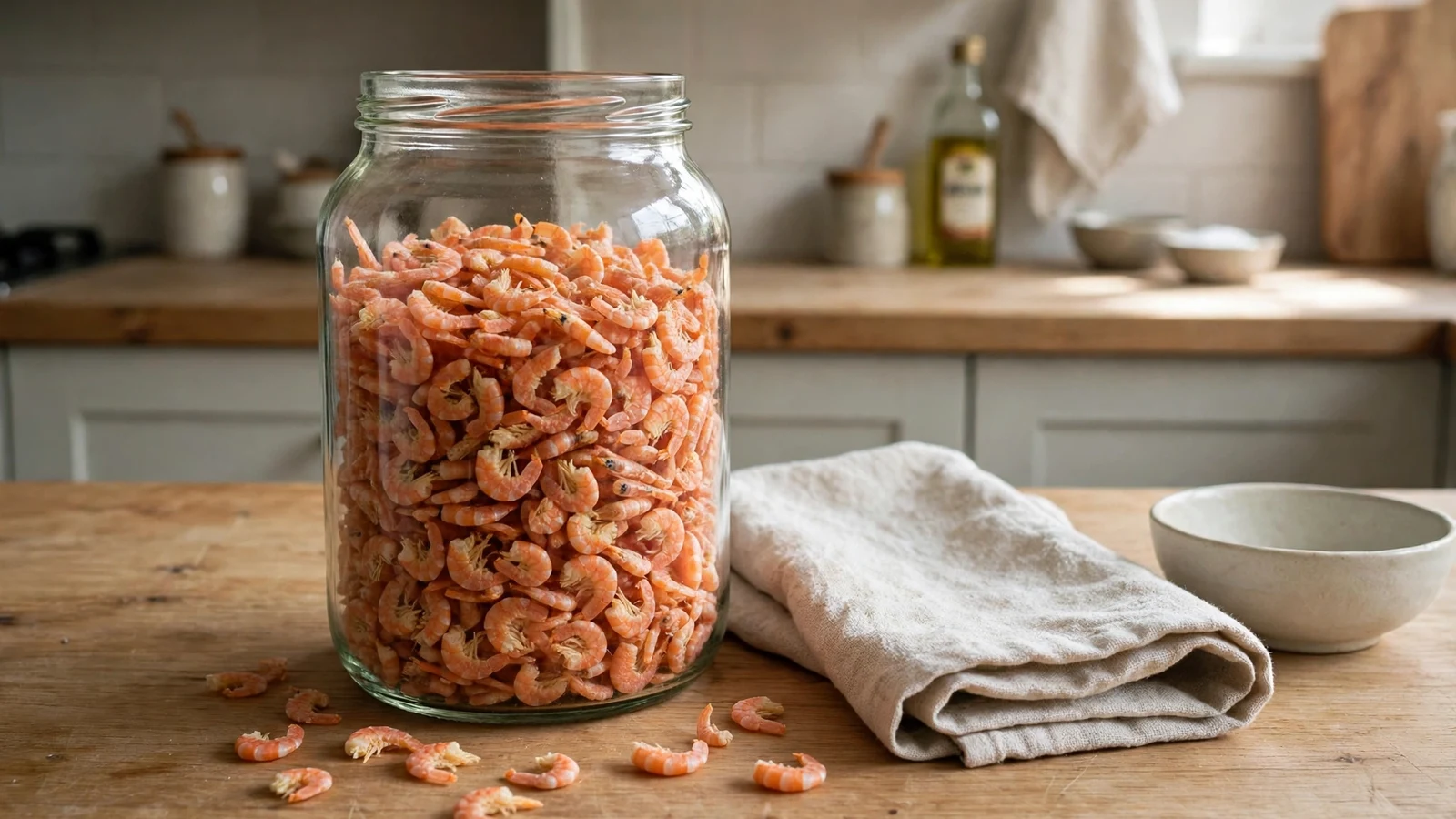
Dried shrimp are one of the hardest-working ingredients in a pan-Asian pantry. A small handful gives a soup, a stir-fry, or a noodle dish a salty, savory depth that is hard to get any other way. But they are still seafood, and the oils in them can turn stale if the bag sits open in a warm cupboard for months. Stored well, dried shrimp keep their color and smell for months. Stored badly, they go soft, dull, and faintly sour.
The fix is simple: keep them dry, keep them sealed, and match the storage spot to how fast you use them.
What to look for when you buy dried shrimp
Start with a good bag. Look for shrimp that are orange-pink and dry to the touch, with a clean sea smell. Gray, damp, or sticky shrimp were stored badly before you bought them, and no storage method at home will bring them back.
Pay attention to where the shop keeps them. If you buy dried shrimp from the freezer section, keep them frozen at home. If they sit at room temperature in the shop, a cool pantry or the fridge is fine. This is one of those small details that saves a bag, and it is worth checking on your next Asian grocery run: shrimp that have lived cold should stay cold.
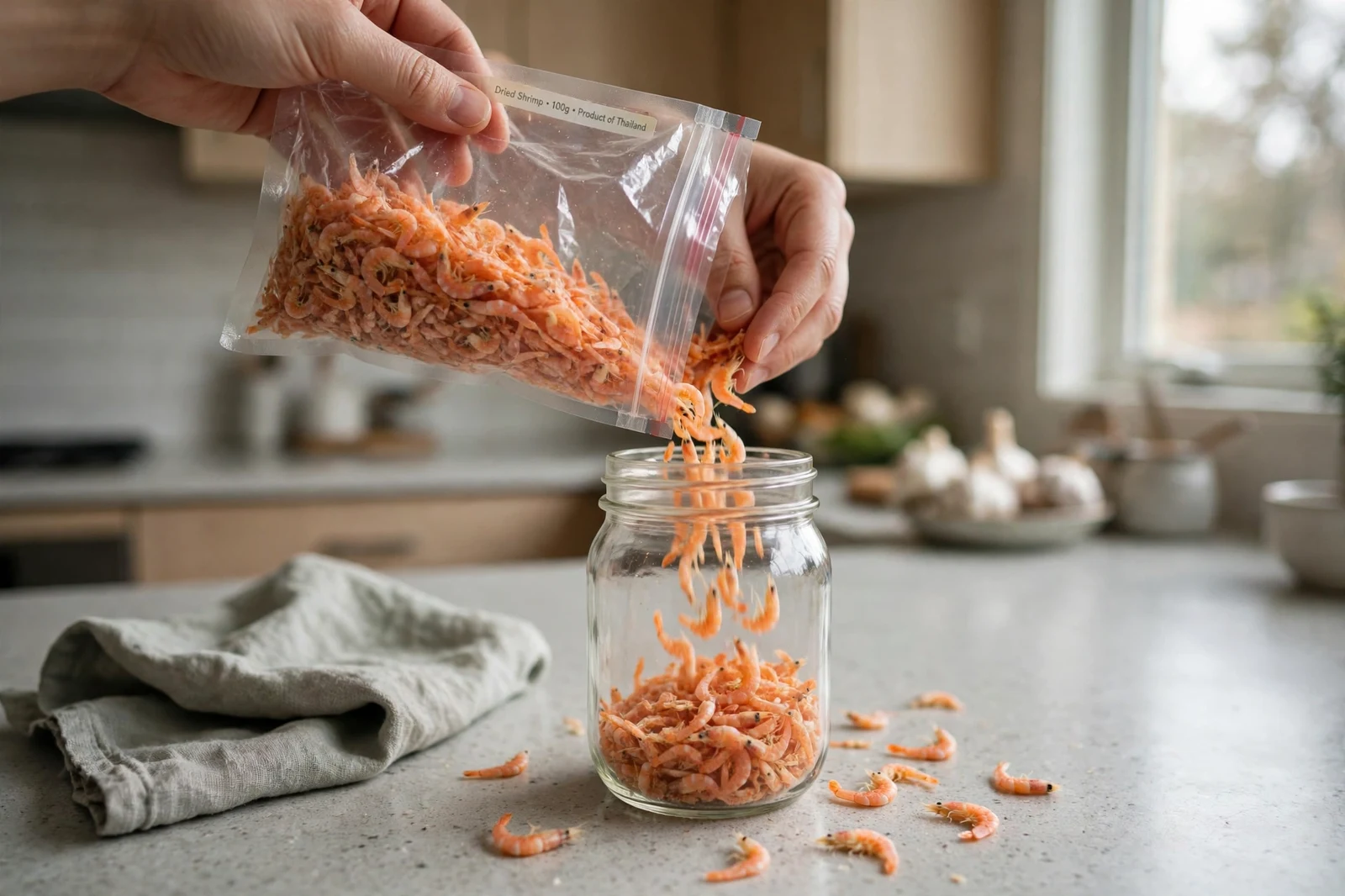
When you get home, move them out of the thin shop bag into a container that seals tight. A glass jar with a clamp lid or a screw-top jar works well. Thin bags let in air and moisture, and dried shrimp pick up smells from whatever sits next to them.
The pantry method: for shrimp you use every week
If you cook with dried shrimp at least once a week, the pantry is fine. Keep the sealed jar in a cool, dark cupboard, away from the stove and the sink. Heat and steam are the two things that age dried shrimp fastest, so a cupboard next to the oven is a bad home for them.
Pantry shrimp keep well for a few months, but their flavor fades with time. I keep a small working jar in the pantry and buy in modest amounts, so no jar sits there for half a year. If you open the jar and the shrimp smell flat instead of briny, they are still safe to eat, but they will not give a dish much. Use them in a soup where other seasonings carry the flavor, and buy a fresh bag for dishes where shrimp lead.
The fridge method: the best middle ground
For most home cooks, the fridge is the best spot. Transfer the shrimp to an airtight container, press out as much air as you can before sealing, and keep the container in the main body of the fridge, not the door. The door warms up every time you open it.
Fridge shrimp hold their flavor for two to three months. This is the method I use for my working jar: about a quarter cup at a time, refilled from the freezer stash when it runs low. Keeping the working amount small means the jar gets opened less often, and every opening lets in a little humid air.
The freezer method: for bulk buys and slow use
If you bought a large bag, or you only reach for dried shrimp a few times a month, freeze most of it. Divide the shrimp into small bags of about a quarter cup each, squeeze out the air, seal, and label each bag with the date. Small bags matter: you can thaw one bag at a time instead of thawing and refreezing the whole batch.
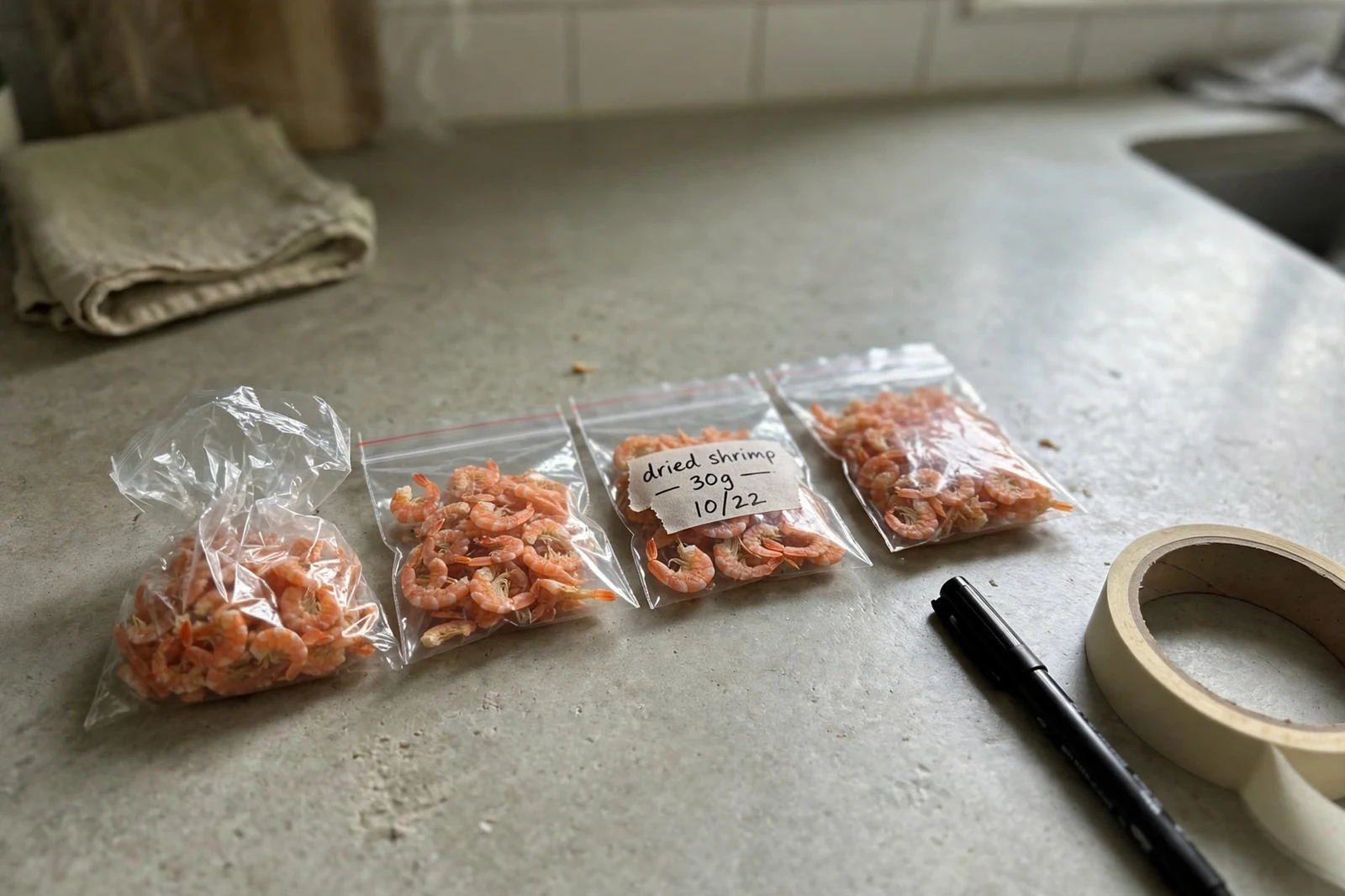
Frozen dried shrimp keep for up to six months. After that they are still safe, but the flavor and aroma start to fade, so dishes taste flatter. To use them, move one bag to the fridge and let it thaw there before cooking. Frozen shrimp thaw fast, so a bag moved to the fridge in the morning is ready by dinner.
How to tell when dried shrimp have gone stale
Check the bag before you cook with it, not after. Toss dried shrimp if you see any of these signs:
- A sour or musty smell instead of a clean sea smell
- A gray or dull color where the shrimp used to be orange-pink
- A damp, sticky, or soft feel instead of dry and firm
- Black spots, white fuzz, or any sign of mold
When in doubt, throw them out. Dried shrimp are cheap, and one stale handful can dull a whole pot of soup.
Mistakes that shorten shelf life
A few habits quietly ruin dried shrimp. Leaving the bag open on the counter lets in humidity, and humidity is what turns crisp shrimp soft. Storing the jar above the stove bathes it in heat every time you cook. Scooping with a wet spoon drops water straight into the jar. And topping up an old jar with a fresh bag mixes stale shrimp with good ones, so the whole jar tastes old. Keep batches separate, keep the jar dry, and keep it away from heat.
Using dried shrimp after storage
Dried shrimp straight from the jar are firm and salty. For most dishes, a short soak in warm water softens them and washes off surface salt. Soak for ten to fifteen minutes, drain, and they are ready to chop into a stir-fry, pound into a paste, or drop into soup. Save the soaking liquid only if the recipe calls for it; it carries salt and a little grit, so taste before you pour it in.
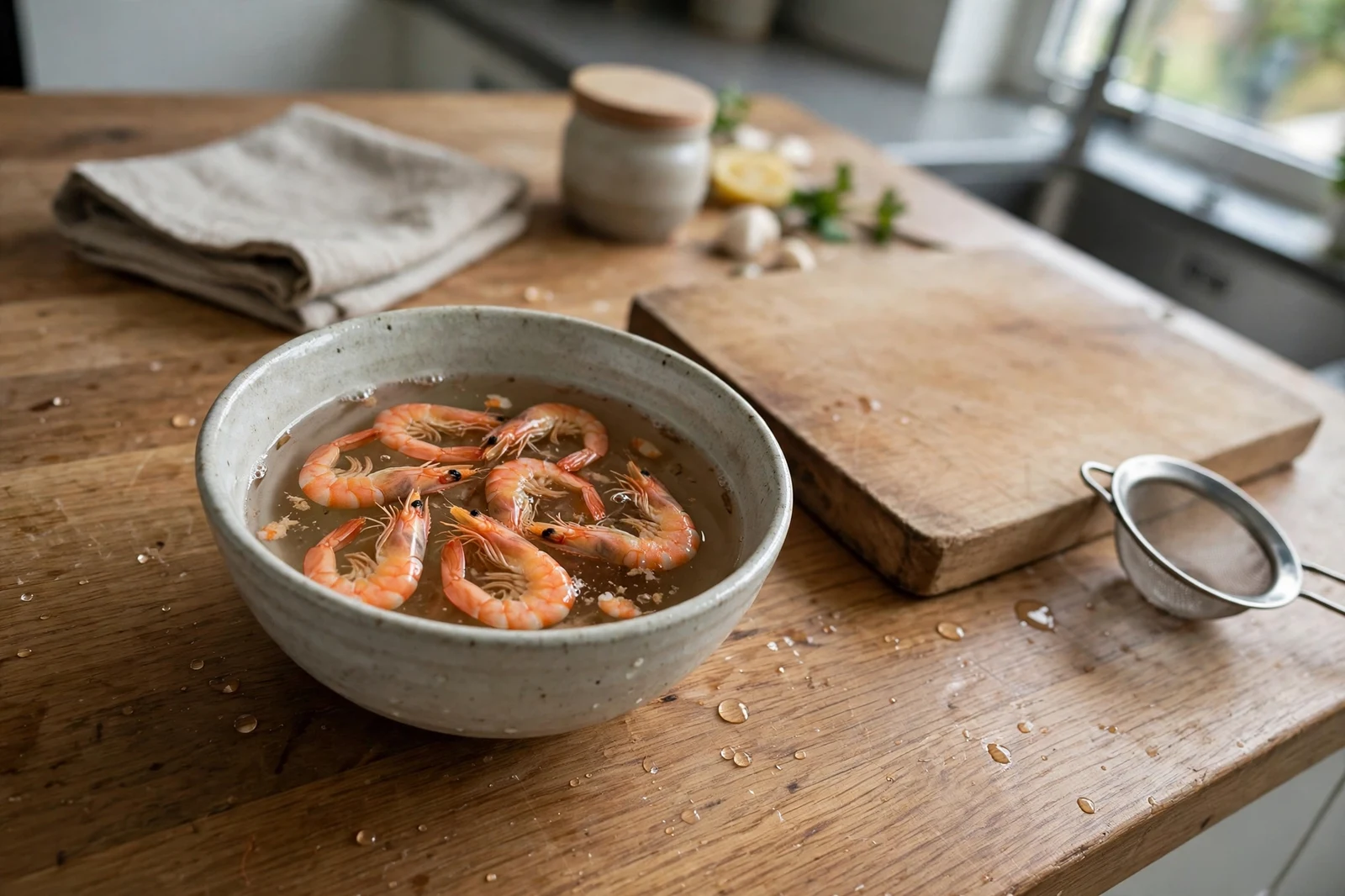
If your shrimp came from the freezer, thaw them in the fridge first, then soak the same way. The soak brings back some of the texture that cold storage firms up.