
Tofu goes from perfectly fine to slimy surprisingly fast, and the difference is almost always how it was stored after the pack came open. I buy tofu weekly and I cook it most nights, so I’ve landed on a routine that wastes almost nothing: the fridge routine handles anything I’ll cook within a week, and the freezer takes the overflow. Here’s exactly how each one works, and how to tell when a block has crossed the line.
Unopened tofu in the fridge
Keep unopened tofu in the coldest part of your fridge: the back of a shelf, not the door, where the temperature swings every time someone opens it. Water-packed tofu keeps until the date printed on the pack, and usually a few days past it if the pack is still flat and tight. A puffed or bloated pack is a toss, at the store or at home: the swelling means gas from fermentation, and no amount of rinsing fixes that.
Shelf-stable silken tofu in aseptic boxes is the exception. Unopened, it lives in the pantry until the printed date. Once you open it, it follows the same rules as every other tofu from that point on.
Opened tofu: submerge it, change the water
This is the method that matters most, and it’s the one people get wrong by half-measures.
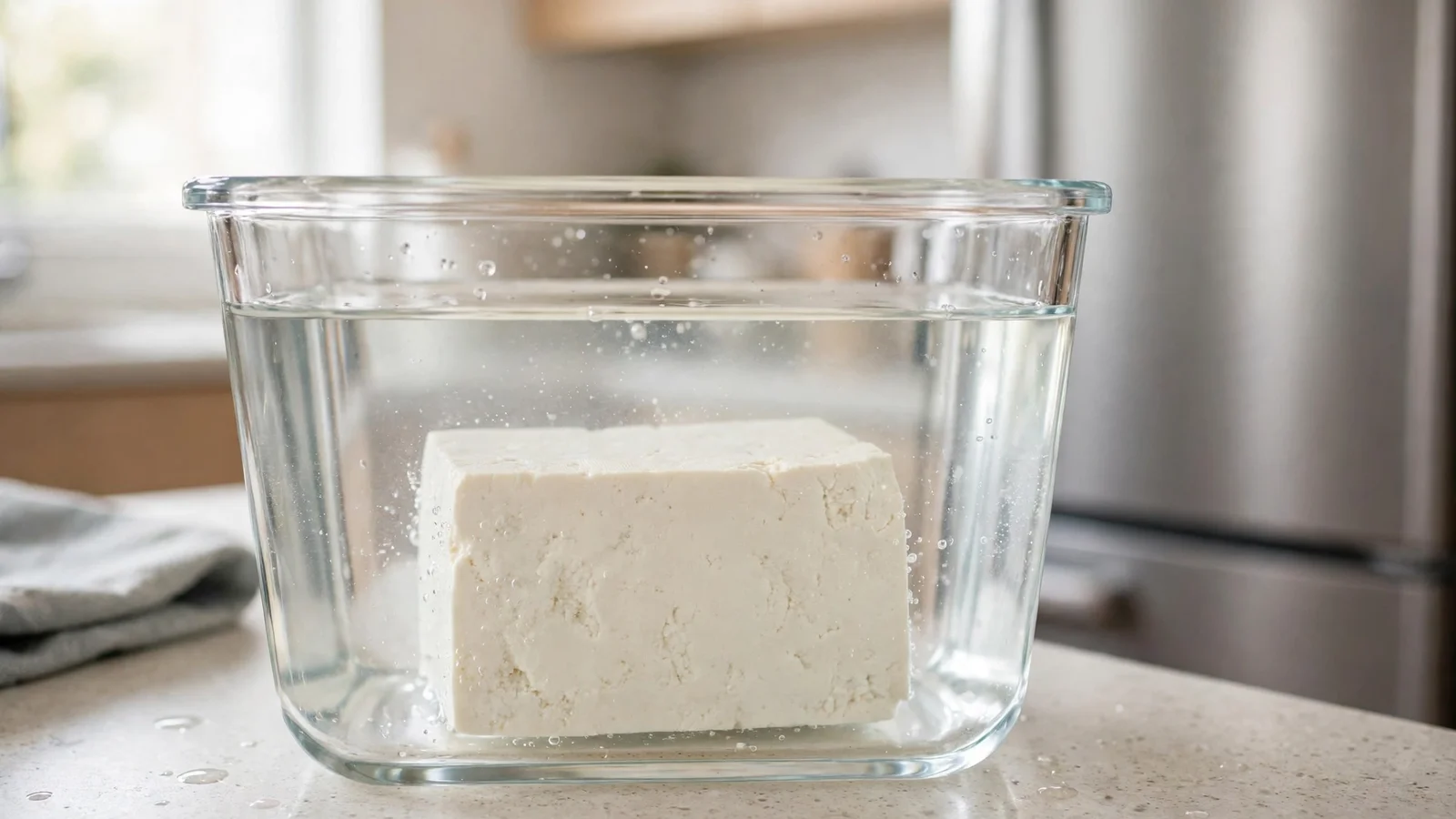
Drain off the water that came in the pack; it sours first. Rinse the block gently under cold water, set it in a clean container with a lid, and cover it completely with fresh cold water. Seal it and refrigerate. Then change the water every day. A block stored this way keeps five to seven days, easy.
The daily water change is the whole trick. The first time I skipped it, I left a block three days without touching the container. By day three the water had gone cloudy and the block wore a slick film. It rinsed off and the tofu smelled fine, so it cooked up okay, but that was luck, not a method. With a fresh-water swap every day, the container stays clean and the tofu tastes like nothing but tofu.
A few specifics that help. Use cold water, since room-temperature water shortens the clock. Cold from the tap is fine, and filtered or boiled-and-cooled is slightly better if your tap water has a strong chlorine smell. Keep the block fully submerged, since any part poking above the water line dries out and spoils faster; cut the block to fit the container or switch to a smaller one. And give each block its own container, because crowding leaves stagnant corners where the water doesn’t circulate.

What about silken and soft tofu?
Silken and soft tofu don’t get the long water bath. Once opened, they’re too fragile for days of submersion and too perishable to stretch. Keep the leftover piece in the fridge, covered in a little of its own liquid, in a small airtight container, and plan to use it within one to two days. My Tofu Guide: Silken vs Soft vs Firm vs Extra-Firm covers how the textures differ, which is exactly why the storage rules split here.
Freezing tofu
Tofu freezes well, and the freezer is where the overflow goes. Drain the block, wrap it tightly to keep air out (a freezer bag with the air pressed out, or wrap plus a bag), and freeze it for up to three months at 0°F. Label the bag with the date: after a month in the freezer, every bag looks the same.
Freezing changes the texture, and you should know what you’re signing up for. Ice crystals punch tiny holes through the protein network, so thawed tofu comes out spongier and chewier than fresh, with a structure that soaks up marinade fast. This is a feature for stir-fries, braises, and baked tofu; it’s a poor fit for dishes that need the silky fresh texture, like a delicate soup. If you’ve ever wondered why some restaurant tofu has that meaty chew, frozen-then-thawed is often the reason.
Thaw it overnight in the fridge, never on the counter. Once thawed, give it a light press. Freezing does about half the pressing work for you, since the water runs out freely once the ice structure collapses. My guide to pressing tofu covers the timing; thawed blocks need the short end of every range. Use thawed tofu within two days, and don’t refreeze it.

How to tell tofu has gone bad
Trust your nose first, your eyes second.
- Smell. Fresh tofu smells like almost nothing, maybe faintly beany. Sour, fermented, or sharp smells mean it’s done.
- Touch. A slimy film that stays put after a rinse means it’s done. A little slickness that rinses clean off a block in old water is borderline; the smell decides.
- Look. Water gone yellow or cloudy after just a day or two, a bloated pack, or tofu that’s darkened or turned pinkish are all bad signs.
The rule I cook by: when in doubt, throw it out. A block of tofu costs a couple of dollars. The risk isn’t worth the savings.
Leftover cooked tofu
Cooked tofu keeps three to four days in an airtight container in the fridge. Let it cool before sealing. Trapping steam makes the coating go soft. Reheat it in a hot pan or oven rather than the microwave if you want the edges to crisp back up; my guide to reheating fried food covers the method.

Put it to work
Stored right, tofu is always ready when a recipe calls for it. Mapo Tofu wants the silky fresh block, Thai Basil Tofu rewards a well-pressed firm block, and Silken Tofu with Scallion Oil is the move when soft tofu needs using up within a day or two. And when you’re at the store deciding what to buy, my Asian grocery shopping guide has a section on picking tofu packs that haven’t been sitting around.