
Sangkhaya is the pale green custard Paul makes when a pot of sticky rice is already on the stove: 250 ml of full-fat coconut milk, 4 egg yolks, 60 g of sugar, and 2 tablespoons of cornstarch, scented with juice from 50 g of fresh pandan leaves. Ten minutes of steady whisking over a double boiler turns it thick and glossy, and it coats the back of a spoon the way a good custard should. Serve it warm with soft white bread for dipping, or spoon it over sticky rice the way Thai street stalls do.

What is sangkhaya?
Sangkhaya is Thailand’s coconut egg custard, made from coconut milk, eggs, sugar, and pandan leaves. The name covers a few forms: this smooth dip for bread, the set custard spooned over khao niao, which is sticky rice, and sangkaya fak thong, the same custard steamed inside a kabocha squash. The pandan version is called sangkhaya bai toey, and it is the one most Thai families make at home. The flavor is gentle: coconut first, then the grassy, almost vanilla-like scent of pandan, with the eggs giving body instead of flavor. Our Mango Sticky Rice uses the same pairing of warm rice and something sweet to spoon over it, and the two desserts sit side by side on Thai dessert menus. If you have made Banh Flan: Vietnamese Caramel Flan before, this custard will feel familiar, except there is no caramel and no baking: the whole thing comes together on the stove in one bowl.
Ingredients
For the pandan juice
- 50 g fresh pandan leaves (about 8 to 10 leaves), cut into short pieces
- 2/3 cup water (150 ml)
For the custard
- 1 cup full-fat coconut milk (250 ml), shaken well
- 4 large egg yolks
- 5 tablespoons sugar (60 g)
- 2 tablespoons cornstarch
- 1/8 teaspoon fine sea salt
How to make it
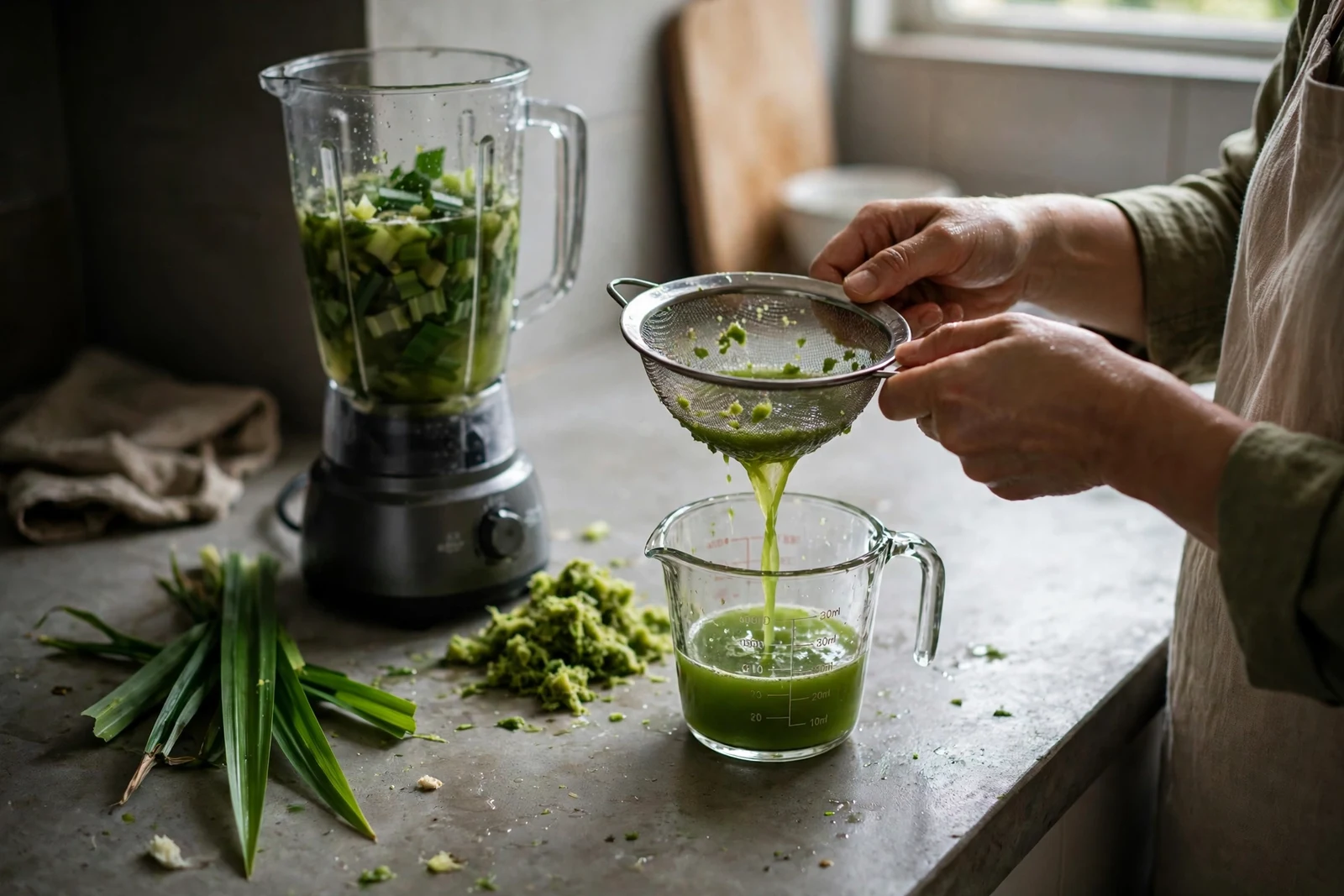
Make the pandan juice first. Blend the pandan leaves with the water for about 1 minute, until the liquid turns deep green and the leaves are broken down fine. Pour it through a fine mesh strainer into a measuring cup and press the pulp with a spoon to get every drop out. You should have about 1/2 cup (120 ml) of juice. Throw the pulp away: any bits left in the juice will show up as green flecks in the finished custard.
Whisk the yolks, sugar, salt, and cornstarch in a heatproof bowl until smooth, then whisk in the coconut milk and the pandan juice. Stir gently rather than beating hard: too much air makes a bubbly, spongy custard instead of a silky one. Strain the mixture once more through a fine mesh strainer into a clean bowl to catch any chalazae or cornstarch lumps. Full-fat coconut milk is doing the real work here: light coconut milk has too much water and the custard will not set. Our guide to Coconut Milk vs Coconut Cream: How to Choose explains how to read a can and pick the right one for desserts like this.
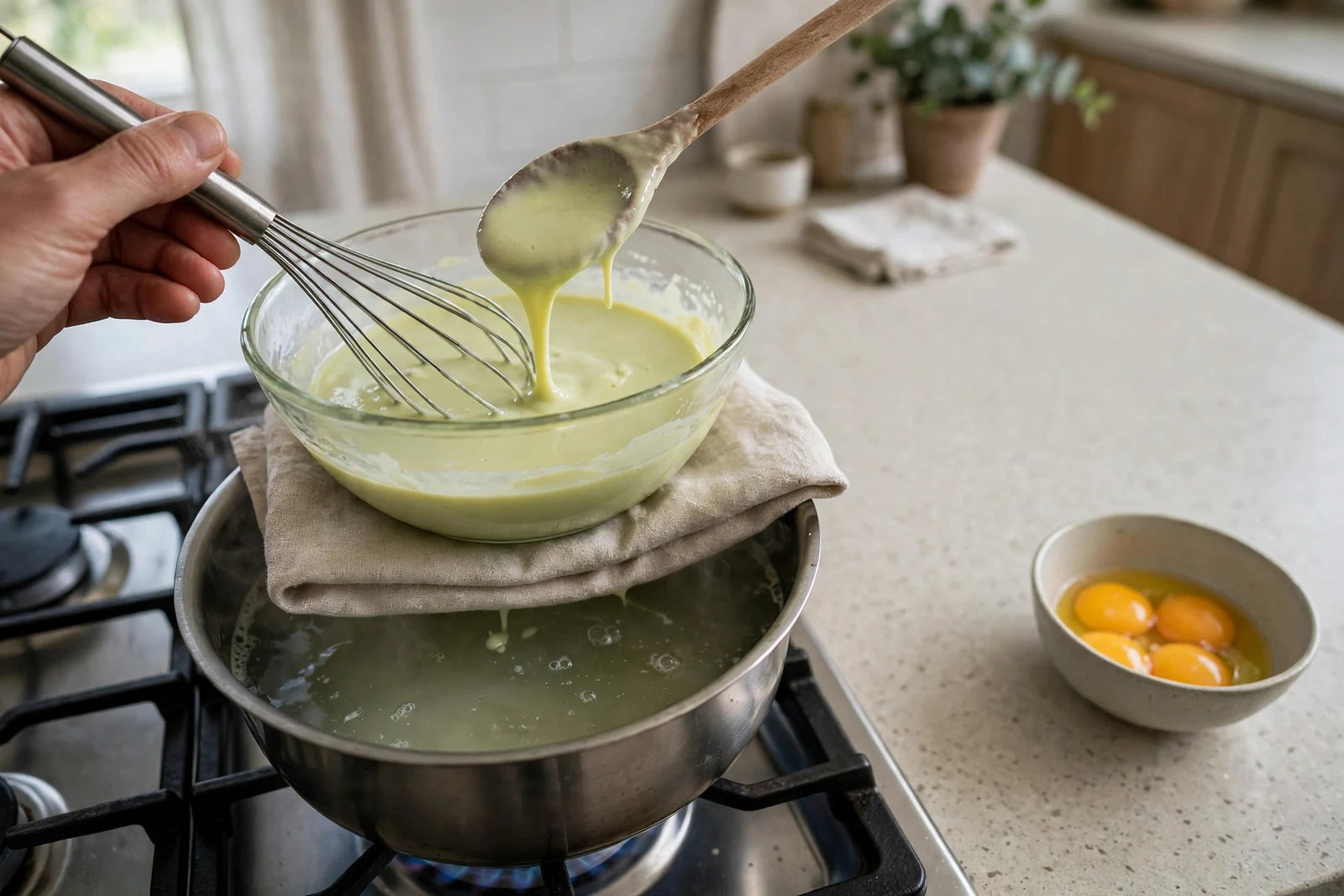
Set the bowl over a pot of simmering water, with the water just below the bottom of the bowl, and whisk constantly for 8 to 10 minutes, scraping the bottom and sides as you go. The custard thickens fast once it gets going, and it is done when it coats the back of a spoon and a line drawn across it stays clear. Egg yolks start to set around 70°C and turn grainy above 85°C, so keep the water at a gentle simmer, never a rolling boil. If the heat runs away from you, lift the bowl off the pot for a few seconds and keep whisking.
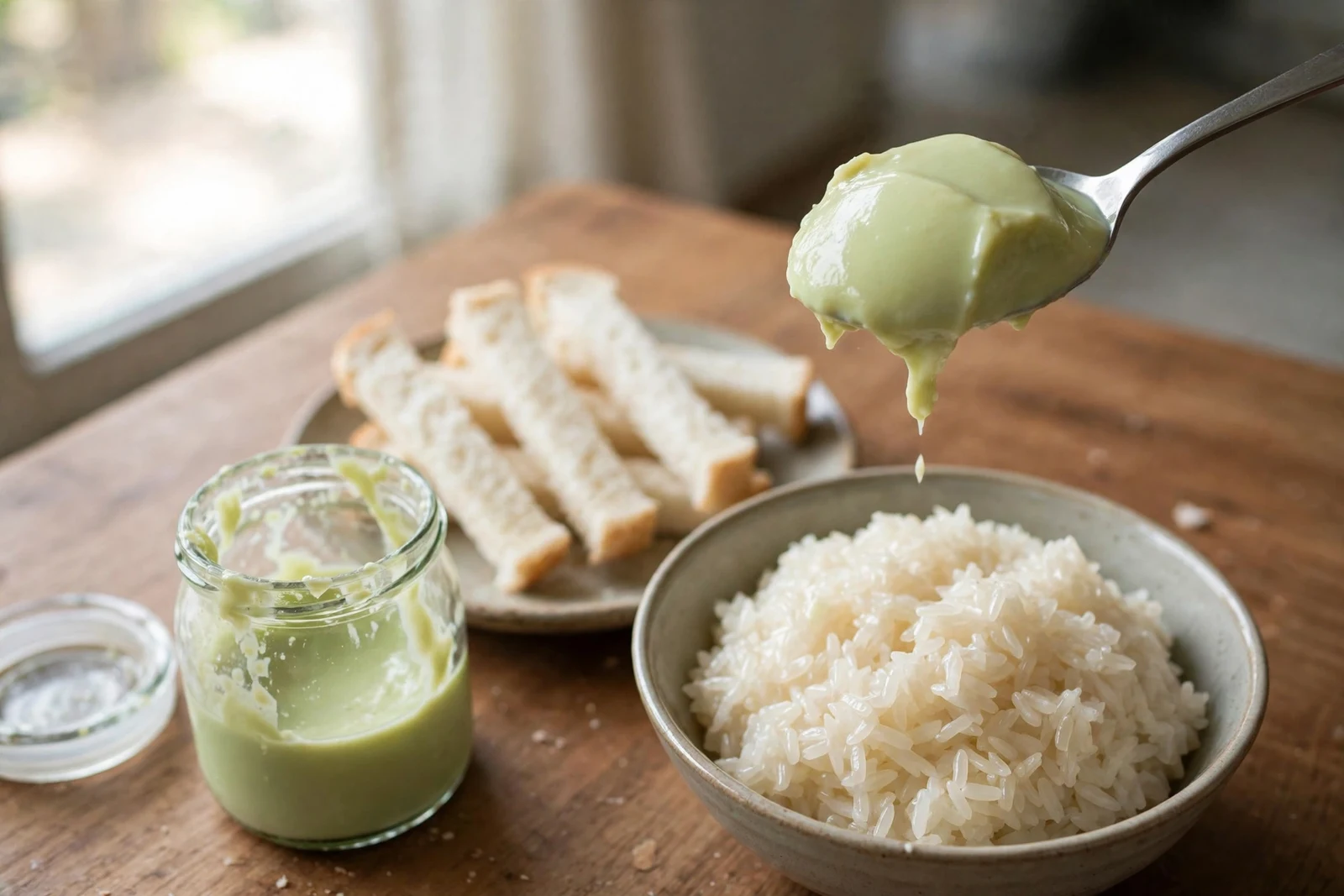
Lift the bowl off the heat and pour the custard into a jar or a serving bowl. Press a piece of plastic wrap right onto the surface so no skin forms while it cools, then let it sit for 15 minutes. Serve it warm with soft white bread cut into strips for dipping, or spoon it over warm sticky rice. A jar keeps in the fridge for 4 days: stir it before serving, or warm it gently over simmering water for a minute if you want it soft again. A cup of Thai Iced Tea next to it makes the whole thing feel like a Bangkok street stall breakfast.
Troubleshooting: Fix My Sangkhaya
Most sangkhaya problems come from heat, air, or the wrong coconut milk. Pick the problem that matches your batch below for a practical next step.
This troubleshooting guide is not available yet.
Sangkhaya: Thai Coconut Egg Custard
Ingredients
Method
- Blend the pandan leaves with the water for about 1 minute, until the liquid turns deep green and the leaves are broken down fine. Pour through a fine mesh strainer into a measuring cup, pressing the pulp with a spoon to get every drop out. You should have about 1/2 cup (120 ml) of juice. Discard the pulp.
- Whisk the egg yolks, sugar, salt, and cornstarch in a heatproof bowl until smooth, then whisk in the coconut milk and the pandan juice. Stir gently rather than beating hard, so no air gets whipped in. Strain once more through a fine mesh strainer into a clean bowl.
- Set the bowl over a pot of simmering water, with the water just below the bottom of the bowl. Whisk constantly for 8 to 10 minutes, scraping the bottom and sides, until the custard is thick and glossy and coats the back of a spoon. Keep the water at a gentle simmer, never a rolling boil.
- Lift the bowl off the heat and pour the custard into a jar or serving bowl. Press plastic wrap directly onto the surface, then let it sit for 15 minutes. Serve warm with soft white bread for dipping, or spoon over warm sticky rice. A jar keeps in the fridge for 4 days.
Notes
More Thai recipes
Four more from the same shelf: Mango Sticky Rice is the warm sticky rice and coconut cream dessert to make when you want the classic pairing; Thai Iced Tea is the sweet spiced tea to make when you want something cold and creamy beside it; Tom Yum Goong: Thai Hot and Sour Shrimp Soup is the hot and sour shrimp soup to make when you want a sharp, sour counterpoint before dessert; and Panang Curry with Chicken is the mild peanut curry to make when you want a gentle main course first.
From the garden
The pandan in this custard comes from a pot by the back door, cut fresh the morning it is cooked, and that matters more than it sounds: a leaf cut an hour before cooking is still supple and fragrant, while one that has sat in the fridge for a week goes dry and gives up little scent in the pot. Our guide to growing pandan in pots covers how to keep a plant going so there is always a leaf to blend into the juice.
From Paul’s kitchen.