
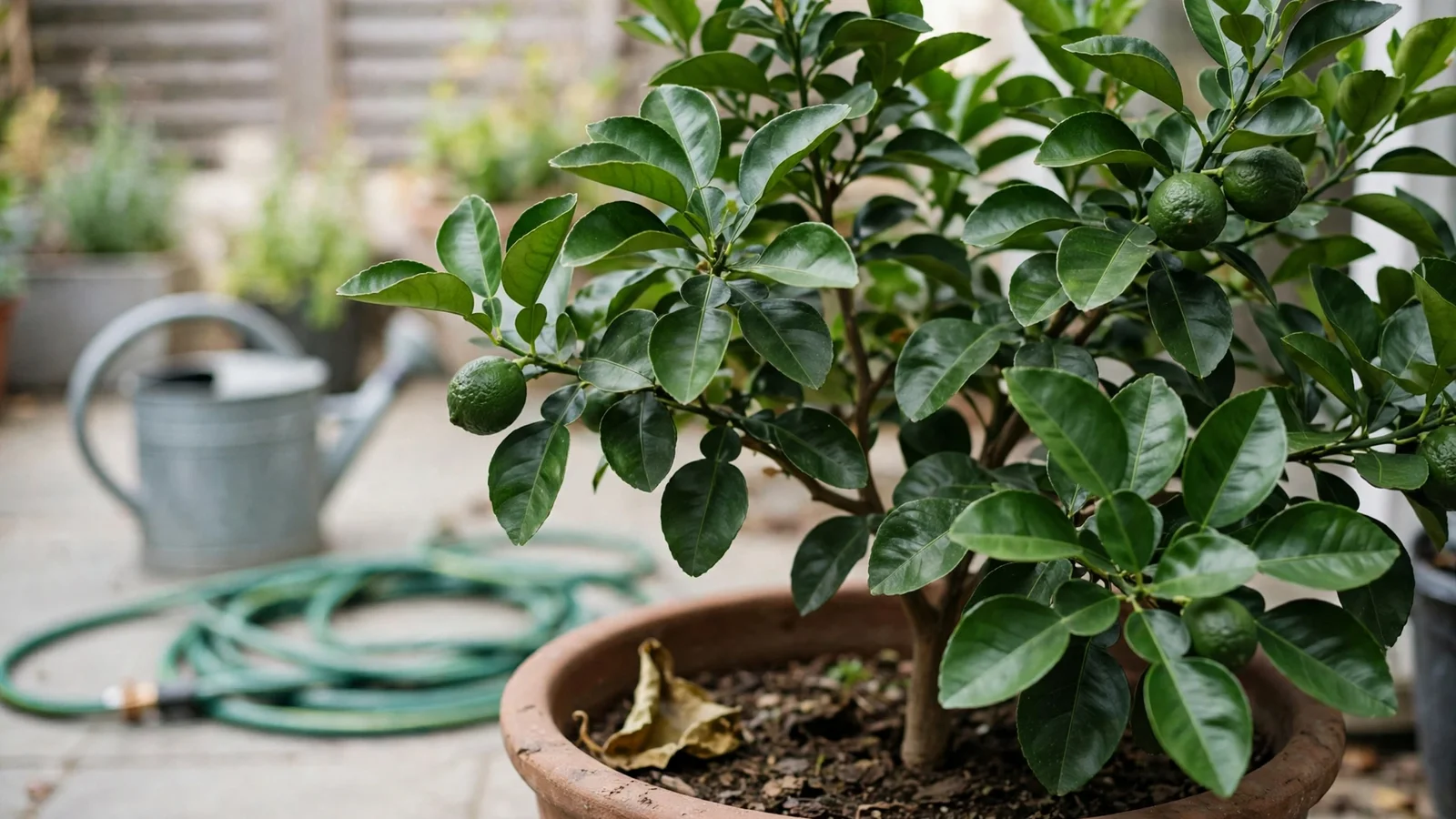
A kaffir lime tree in a pot is the shortest path to fresh makrut leaves. One tree gives you the leaves for tom yum, curries, and curry paste all year, and a pot is what makes it possible outside the warmest states: you set it in the sun all summer and carry it inside before the cold arrives. The leaves are the harvest here, not the fruit. The fruit is small, bumpy, and short on juice, while the leaves carry the sharp citrus scent that Thai cooking depends on. Paul grows the tree in a large pot on the patio, and a few leaves snipped before dinner is all a pot of soup needs.
What kaffir lime is
Kaffir lime is Citrus hystrix, a small citrus tree from Southeast Asia. Many nurseries now sell it as makrut lime or Thai lime, because the word kaffir is a slur in South Africa, and those names are worth knowing when you shop for a tree. This post keeps kaffir lime in the title because that is the name most American cooks still search for, and the tree is the same either way. You can tell it from other limes by the leaves: each leaf has two lobes joined at a narrow waist, like a figure eight, and one crushed leaf smells like lime peel with a floral edge. The tree grows slowly, about 12 to 24 inches a year, and stays 4 to 6 feet tall in a pot, where pruning keeps it in check. In the ground in a warm climate it reaches 6 to 10 feet. The branches carry sharp thorns, so wear gloves when you prune or reach into the center of the tree.
What the tree needs
Kaffir lime wants full sun, 6 to 8 hours a day, and a warm spot out of strong wind. Outdoors year-round it suits zones 9 to 11, where winters stay mild. Everywhere else the pot is the whole plan: the tree lives outside from spring to fall and comes in for winter. It does best between 65 and 85 degrees. Growth stalls below 50 degrees, frost damages the leaves below 32 degrees, and a hard freeze below 25 degrees for 12 hours or more can kill the tree. That is why the pot matters more than the planting spot. A tree in the ground cannot run from a cold snap, while a potted tree rolls inside in ten minutes.
| Tree stage | Pot size | Notes |
|---|---|---|
| Young tree, 2 to 3 feet tall | 3 to 5 gallons, 10 to 14 inches wide | Starter size, easy to carry |
| Established tree, 3 to 4 feet tall | 10 to 15 gallons | Room for 3 to 4 years of growth |
| Mature tree, 4 to 6 feet tall | 15 gallons, up to 25 at most | Heaviest pot you can still move, put it on wheels |
Buying a tree
Buy a grafted nursery tree, 2 to 3 feet tall, with leaves already on it. A tree that size gives you usable leaves in the first growing season, once it settles into its pot. Look for dark green leaves with no yellowing, no curled new growth, and no sticky residue on the stems. Ask the nursery whether the tree is grafted on dwarf or semi-dwarf rootstock, which keeps it smaller in a pot. In California and several other states, nurseries cannot ship citrus trees across state lines because of citrus disease rules, so buy from a nursery in your own state and carry the tree home yourself. Our guide to makrut lime leaf substitutes covers what to cook with while a new tree is still too small to pick from.
Pot and soil
Pick a pot with several drainage holes in the bottom, at least half an inch wide each. One hole is not enough for citrus: water has to run out fast, or the roots sit wet and rot. A 15-gallon pot full of wet soil is heavy, so set it on a plant caddy or pot with wheels before you fill it, not after. Fill it with a citrus potting mix, or mix equal parts potting soil, perlite, and pine bark for the same open, fast-draining result. Kaffir lime likes slightly acidic soil, pH 5.5 to 6.5. Do not use garden soil in a pot: it packs down, holds water at the bottom, and starves the roots of air. A thin layer of mulch on top slows drying, but keep it a few inches away from the trunk, where damp mulch invites rot.
Planting it step by step
Plant in spring, after the last frost, when nights stay above 50 degrees. Fill the pot two-thirds full with the mix, set the tree in so the top of the root ball sits level with the soil surface, and fill in around it, firming the mix gently with your hands. Do not bury the trunk deeper than it sat in the nursery pot: a buried trunk rots. Water it deeply until water runs from the drainage holes, then set the pot in its sunniest spot. For the first few weeks, water when the top inch of soil feels dry, and leave the tree alone to settle. New growth in the first month is the sign the roots have taken hold.

Watering and feeding
Kaffir lime likes even moisture and hates wet feet. Water deeply, then wait until the top inch of soil feels dry before watering again. In summer, a pot in full sun may need water every 2 to 3 days. In winter indoors, the same pot may go a week or more between waterings, because the soil dries slower out of the sun. If the leaves turn yellow while the soil stays damp, the roots are too wet: let the pot dry out, check that the drainage holes are open, and water less often. Feed with a citrus fertilizer every 4 to 6 weeks through the growing season, and every 8 weeks in winter. Pale yellow new leaves usually mean the tree is hungry, so feed it and watch the next flush of growth come in green. Like calamansi and curry leaf, kaffir lime feeds heavily in summer and rests in winter, so match the feeding to the season instead of feeding on a fixed schedule all year.
Pruning to keep it small
Prune in late winter or early spring, before the new growth starts. Cut each branch back to a leaf node that faces outward, so the new growth heads away from the center of the tree instead of into it. You can take a branch back by as much as a third of its length, and a hard prune in spring is the fastest way to bring a leggy tree back into shape. Wear gloves: the thorns are sharp and easy to forget until they catch your hand. Thin out branches that cross and rub each other, and cut off any shoots that sprout below the graft line on the trunk, since those grow from the rootstock, not the makrut tree. Repot every 2 to 3 years, stepping up one pot size at a time. A tree that stops growing in summer despite water and feeding is usually root-bound, and a fresh pot of mix wakes it up.
Picking the leaves
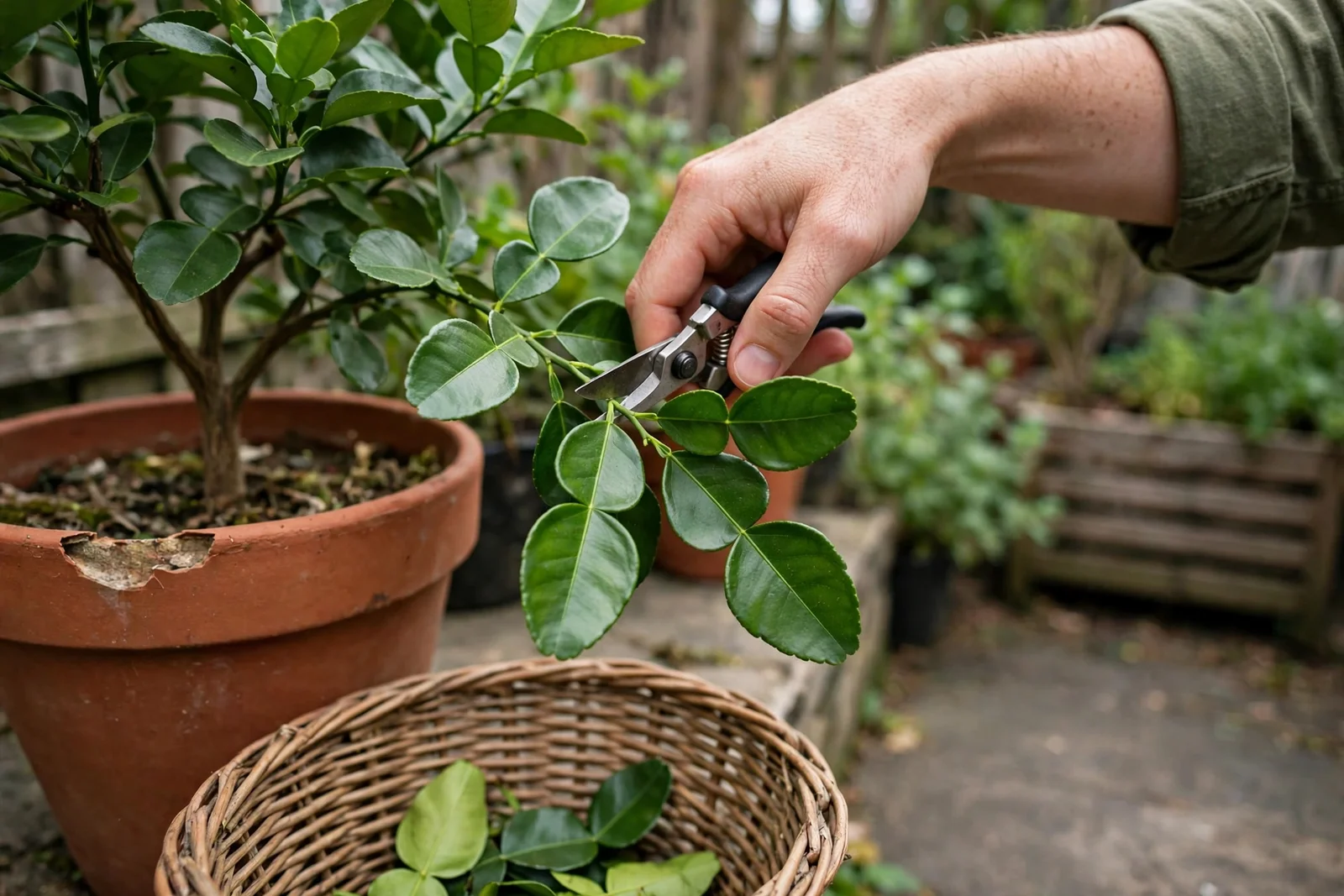
Pick leaves once the tree is settled and pushing new growth, usually in the first growing season. Spring is the best time, when the new leaves are light green and tender. Do not strip single leaves off the tree one by one all season: that thins the tree without giving it a reason to grow back. Prune a branch instead. Cut it back to a leaf node during the warm months, and new growth will sprout from that node within a few weeks. Take the leaves from branches that cross or crowd first, and leave most of the leaves on the tree so it keeps feeding itself. The double-lobed shape gives you one more option: pinch through the joint between the two lobes and take half a leaf, leaving the other half on the tree to keep working. Do not prune for leaves in the coldest part of winter, when the tree needs every leaf it has to get through the cold.
Storing leaves for winter cooking
Rinse picked leaves, pat them dry, and store them in a bag in the fridge for 2 to 4 weeks. For longer storage, freeze them: lay the washed, dried leaves flat in a freezer bag and they keep for up to a year without losing much flavor. Use frozen leaves straight from the bag in soups and curries, where they go in whole and come out before serving. They lose their bright color in the freezer, so save the fresh leaves for dishes where the leaf shows, and use the frozen ones where it cooks down into the pot. A small tree pruned in spring and summer fills a freezer bag by fall, which is how the tree covers your winter cooking.
Moving it inside for winter
Bring the pot inside before nights drop below 50 degrees, well ahead of the first frost. Set it at the sunniest window you have, and add a grow light if the winter light is short. Water less indoors, since the soil dries slower, and check the undersides of the leaves for small pests every couple of weeks. A few leaves may drop in the first weeks inside: that is the tree adjusting to the move, and it steadies once the spot stays the same. Do not move the tree back and forth with every warm day. It goes out once in spring, when nights stay above 50 degrees, and it stays out until fall. Give it a few days in partial shade when it first goes back outside, so the leaves do not scorch in full sun after a winter indoors. The same routine works for ginger, turmeric, and galangal, which all come inside for winter the same way.
What to cook with the leaves
Use the leaves the way Thai cooks do: tear them into tom yum goong, drop them whole into panang curry, or pound them into homemade curry paste. One or two leaves per pot is enough; the scent is strong and more leaves do not make the dish better. Tear out the center vein first if you slice the leaves fine for a salad or a stir-fry, since the vein stays tough while the leaf softens. Treat whole leaves like bay leaves: fish them out before serving. Fresh leaves beat dried ones for scent, which is the whole reason to grow the tree instead of buying a bag of dried leaves.

More garden guides
How to Grow Ginger in Pots, How to Grow Turmeric in Pots, How to Grow Lemongrass in Pots, How to Grow Thai Basil in Pots