
That Smoky Flavor in Great Stir-Fry Has a Name
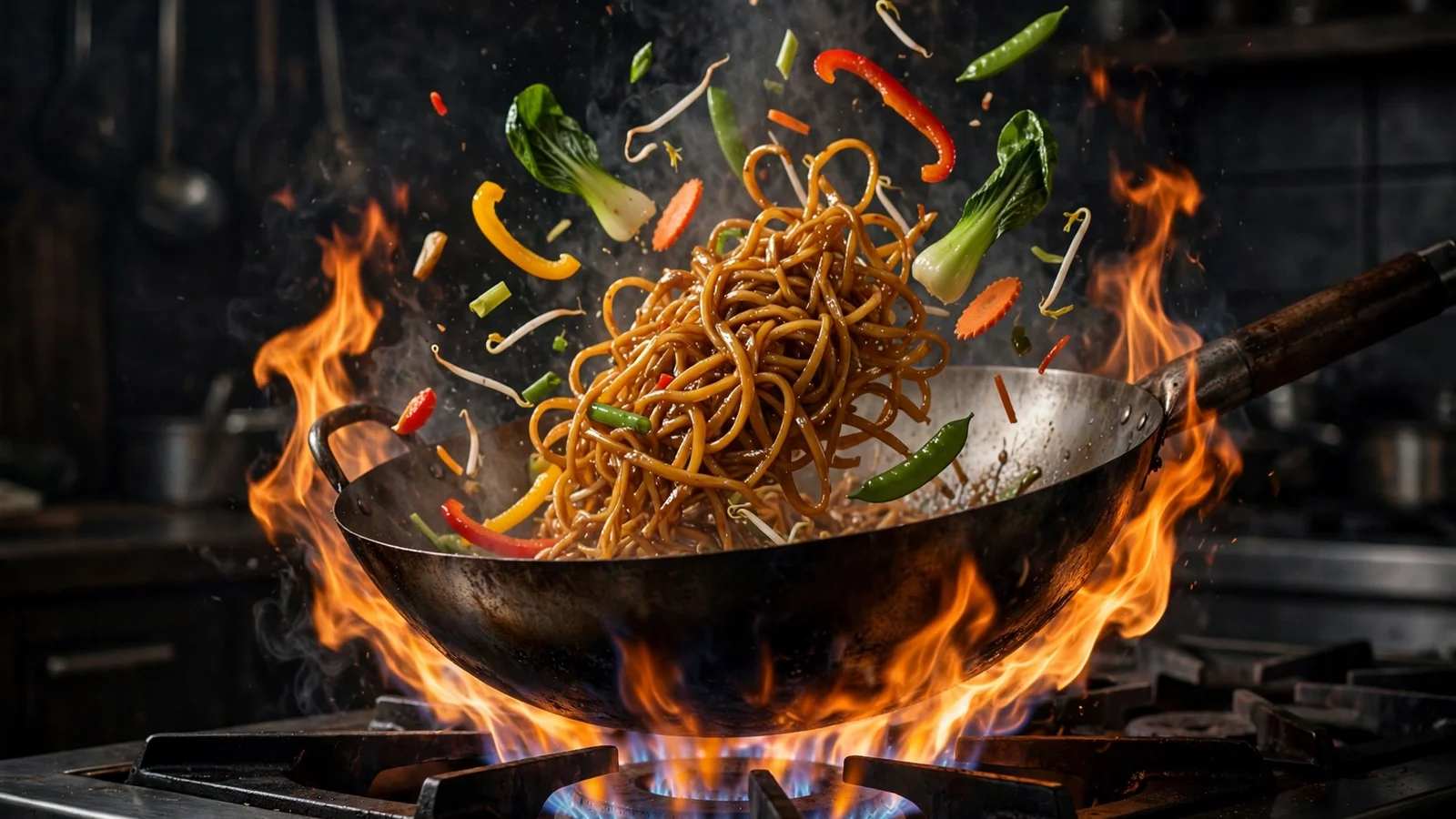
If you've ever ordered stir-fried noodles or Thai basil chicken at a restaurant and wondered why your home version doesn't taste the same even when you use the same ingredients, you've run into wok hei. Pronounced roughly like "wok hey," it's a Cantonese term that translates to "the breath of the wok" — and it describes a very real flavor: a subtle, smoky char that clings to the food.
Wok hei is not burnt flavor. Burnt tastes bitter and acrid. Wok hei tastes like smoke woven into the dish — a depth that makes pad see ew taste like it came from a street cart in Bangkok and fried rice taste like it belongs in a Hong Kong dai pai dong. It is one of the defining characteristics of excellent stir-frying, and once you know what it is, you'll start noticing it everywhere.
What Actually Happens in the Wok
Wok hei comes from extreme heat meeting food, oil, and sauce in a very short window of time. A professional Chinese kitchen uses burners that put out far more heat than a typical home stove — often several times more. When ingredients hit a blazing-hot wok, a few things happen at once:
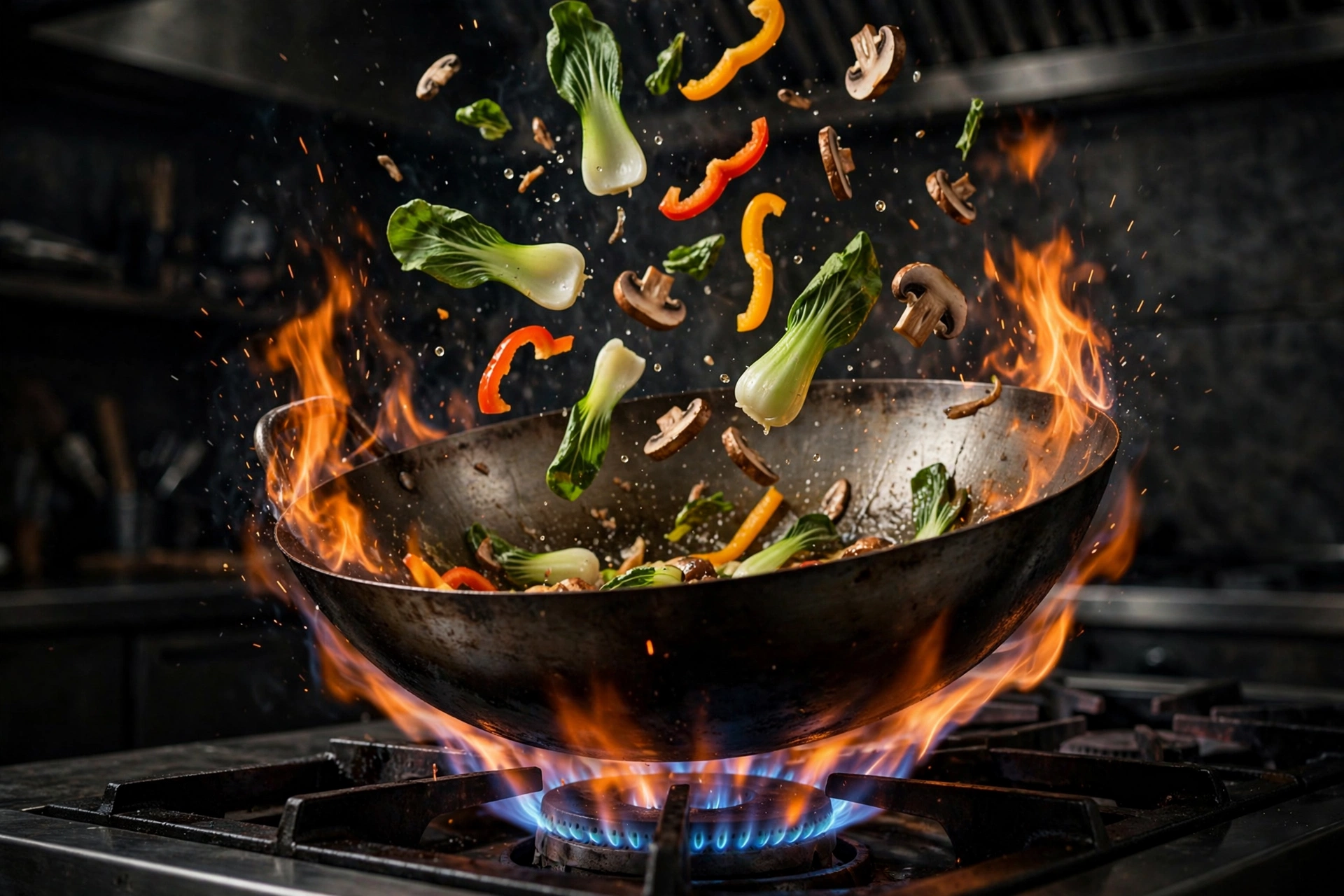
First, the oil and food get hot enough that tiny droplets of oil and rendered fat can vaporize and ignite, or at least combust briefly, right above the surface of the wok. That micro-flash of flame produces aromatic compounds that settle back onto the food. Second, the sauce — usually a mix of soy sauce, sugar, and aromatics — caramelizes almost instantly on contact with the searing metal, creating charred, complex flavors in seconds rather than minutes. Third, the food itself sears deeply on its surface while staying tender inside, because everything happens so fast.
It's not one chemical reaction; it's the combination of caramelization, the Maillard reaction, and brief combustion of cooking fats and drips, all layered together. The result reads to your palate as "smoky" and "complex" rather than as any single taste you could name.
Why Home Stoves Struggle
The honest truth: most home burners max out well below what creates effortless wok hei. An American residential gas burner might give you 7,000 to 12,000 BTUs; a professional Chinese range can exceed 100,000. That gap is why restaurant fried rice has that irreplaceable flavor and most homemade versions, while tasty, taste like… a normal stir-fry.
But you can get closer than you think. Perfect restaurant wok hei might be out of reach, but a genuinely smoky, char-kissed stir-fry is absolutely achievable in a home kitchen. The strategies below are the ones that matter most.
How to Get More Wok Hei at Home
1. Use a carbon steel wok — and heat it properly
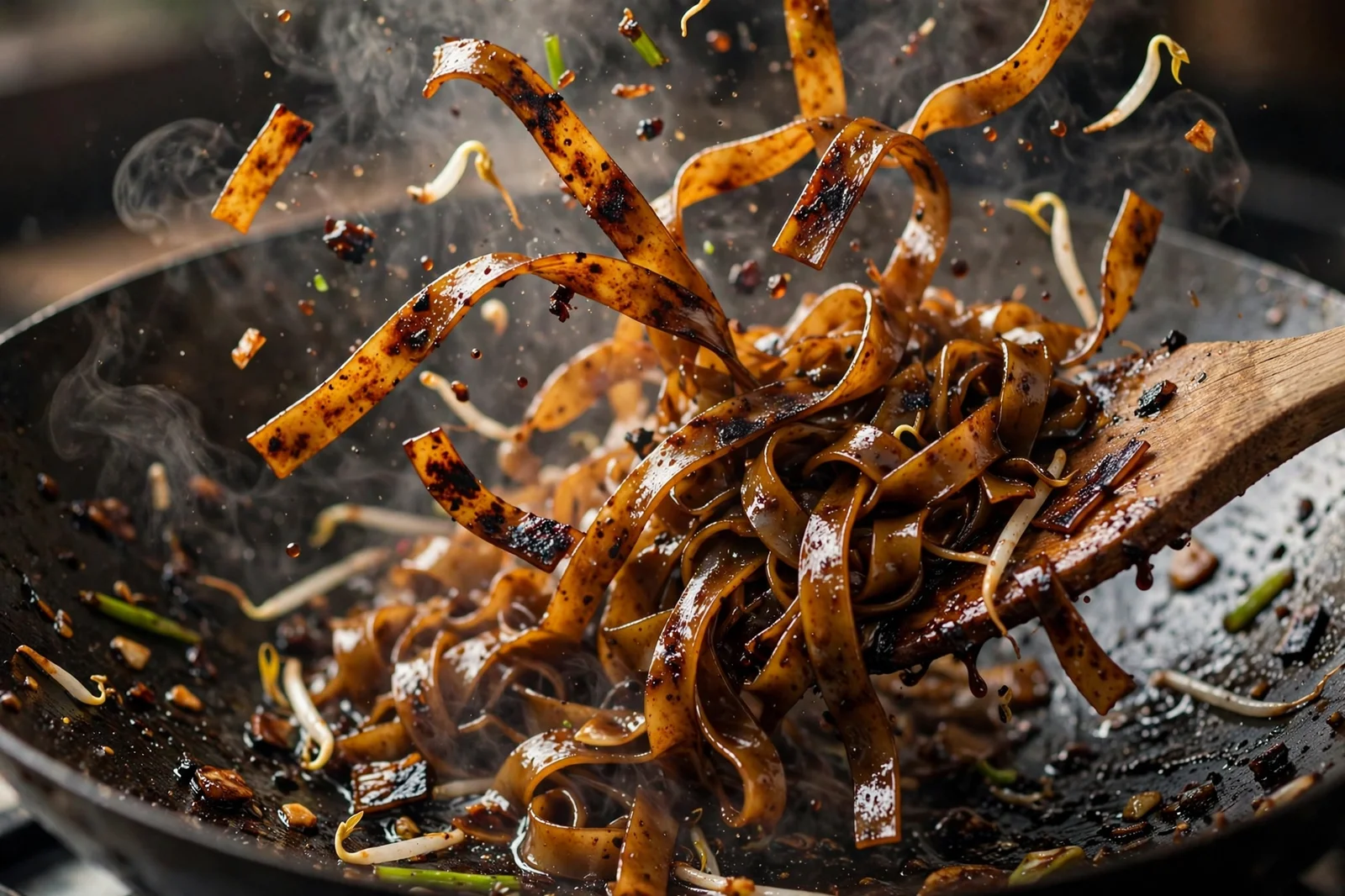
Carbon steel is the traditional choice for a reason. It heats quickly, develops a seasoned nonstick surface over time, and can take the kind of heat this technique demands. A flat-bottomed wok works best on Western stoves; it sits stably on the burner and captures more heat than a round-bottom wok wobbling on a ring.
Heat the wok until it's genuinely smoking before you add oil. Not warm, not hot — smoking. Swirl in your oil so it coats the surface, let it heat for a few more seconds, and then add your ingredients. If the wok isn't hot enough to sear instantly, you'll steam your food instead of charring it.
2. Cook in small batches
This is the single biggest mistake home cooks make. Crowding the wok drops the temperature fast, and a lukewarm wok produces pale, steamed food — the opposite of wok hei. If your recipe serves four, stir-fry it in two batches of two. It takes a few extra minutes, but the difference in flavor is enormous. This applies to everything from fried rice to tom yum soup's stir-fried aromatics to a big batch of Thai basil fried rice.
3. Let the food sit still
Counterintuitively, constant stirring works against you. After the ingredients hit the hot wok, give them 20 to 30 seconds of undisturbed contact with the metal. That pause is when the deep sear forms. Then toss, let them settle again, and repeat. Think "press and sear, then toss" rather than nonstop flipping.
4. Use a hot oven or broiler as backup
For dishes where the wok can't quite deliver, a ripping-hot oven or a close broiler can add char you wouldn't get otherwise. Spread stir-fried vegetables or marinated meat on a sheet pan and finish under the broiler for a minute or two. It's a cheat, but an honest one — you're adding the caramelized, slightly smoky notes by hand.
5. Try the "drizzle sauce on the hot rim" trick
Many restaurant cooks add soy sauce or shaoxing wine by pouring it around the upper rim of the wok rather than directly onto the food. The liquid hits the blazing-hot metal, sizzles and chars instantly, and then slides down into the dish carrying that scorched-sauce flavor. At home, you can do a gentler version: push your ingredients up the sides of the wok, drizzle sauce into the empty hot center, let it bubble for a few seconds, then toss everything together.
6. Choose the right oil
Use an oil with a high smoke point for stir-frying — peanut, avocado, or refined neutral oils all work. Save your flavorful oils (toasted sesame, chili oil, extra-virgin olive) for finishing. If your oil starts smoking in a normal pan at medium heat, it's not the right oil for wok work.
What Wok Hei Isn't
A few myths are worth clearing up:
Dishes That Show Off Wok Hei Best
If you want to taste what you're aiming for, start with dishes where wok hei is the star:
A Few Honest Expectations
Even with every technique above, your home stove won't fully replicate a restaurant wok range. That's physics, not skill. What you can do is close most of the gap — and the jump from "no wok hei" to "a lot of wok hei" is the biggest improvement you'll ever make to your stir-frying. Once you taste a properly seared batch of fried rice made at home, you'll know exactly what you've been missing, and you'll keep chasing that flavor.
And remember: wok hei is a technique, not a badge. No one will test your stir-fry for authenticity. The goal is food that tastes great to you — and a little more smoke in the kitchen is a worthy step toward that.
Keep Practicing
Great stir-frying rewards repetition. Try the same dish — say, thai basil chicken or a simple vegetable fried rice — three or four times in a row, adjusting your heat and timing each round. You'll feel the wok differently each time, and the smoky depth will start showing up right on schedule. That's the breath of the wok, and now it's yours.
6 thoughts on “What Is Wok Hei and How to Get It at Home”