
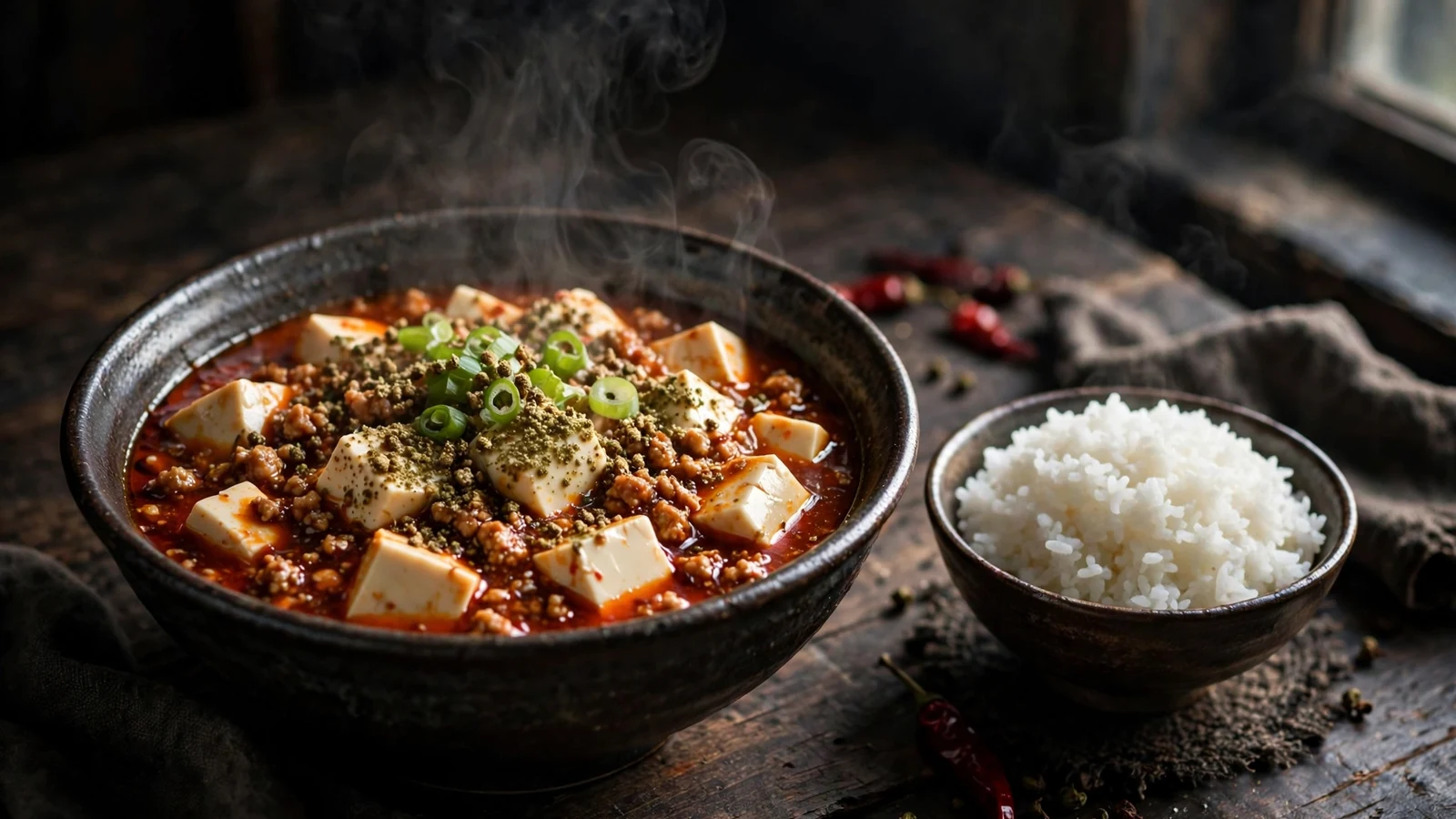
Mapo tofu is the kind of dish that explains, in a single bite, why Sichuan cooking has such a devoted following. Cubes of silky soft tofu settle into a glossy, brick-red sauce that is deeply savory, chili-hot, and — if you use the right peppercorns — delivers that famous ma la tingle: the numbing, buzzing sensation that is Sichuan pepper's signature. It is bold, rich, and completely addictive over a bowl of steamed rice.
The name tells a little story. "Mapo" translates roughly to "pockmarked old woman," a nod to the 19th-century Chengdu cook credited with inventing the dish. The original version used beef, minced fine, folded through the sauce with fermented broad-bean paste. Modern home versions often use pork or skip the meat entirely, but the soul of the dish stays the same: doubanjiang for depth, chili flakes for heat, and Sichuan peppercorns for that electric tingle.
This version lands in about 30 minutes of active cooking, uses ingredients you can find at any well-stocked Asian grocery, and comes out tasting like the real thing — because it is built on the same flavor logic as the Sichuan original. No mystery powders, no shortcuts that flatten the flavor.
What Makes Mapo Tofu Taste Right
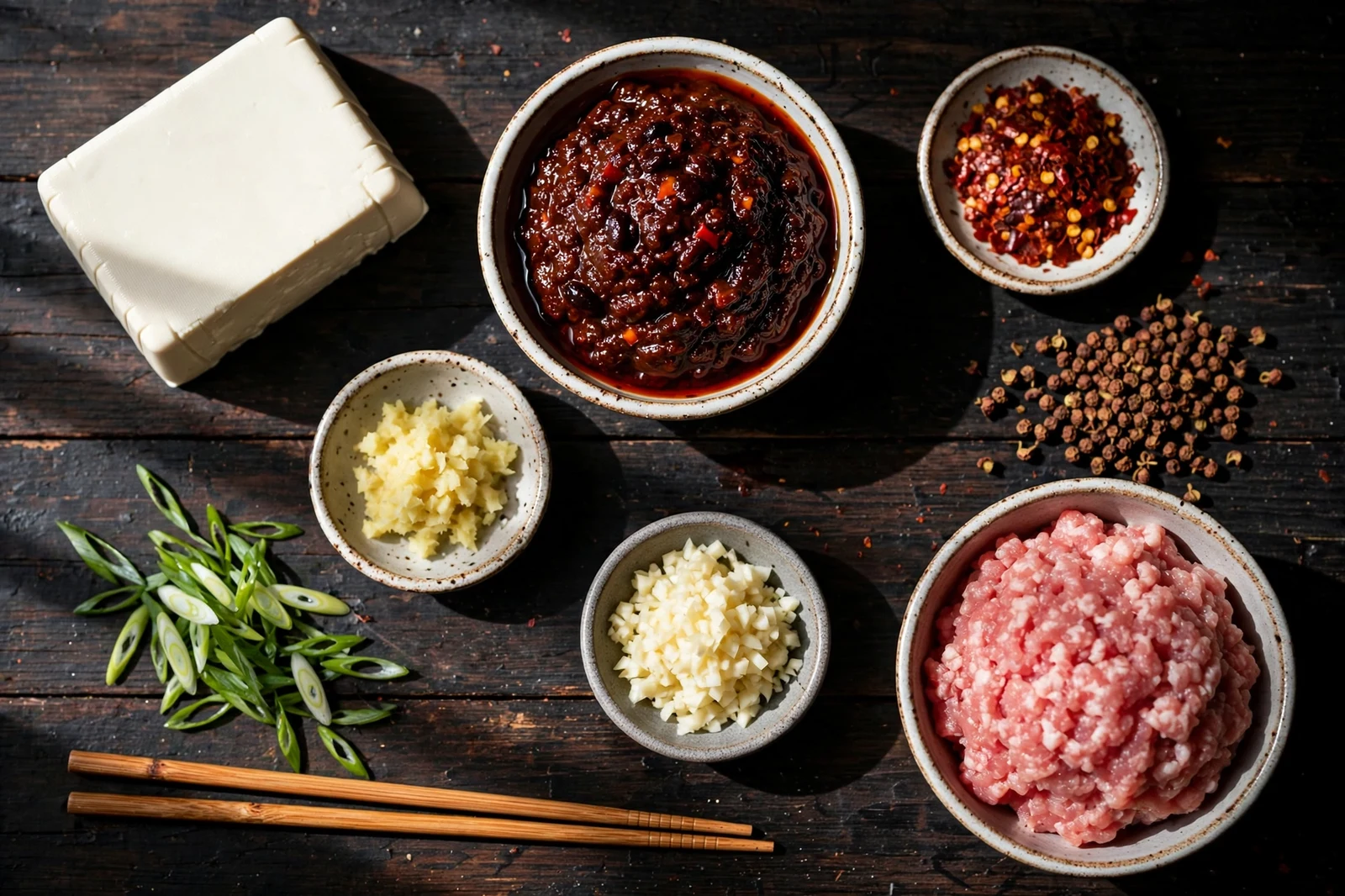
Two ingredients do the heavy lifting, and neither has a Western substitute. Doubanjiang (doubanjiang, fermented broad-bean and chili paste) is the backbone — dark, richly savory, and a little funky in the way only a real ferment can be. The best-known brand among Sichuan cooks is Pixian doubanjiang, aged in earthenware crocks, with a deep reddish-brown color and complex flavor. Regular grocery-store chili-garlic sauce is not the same thing.
The other is Sichuan peppercorns — actually the dried husks of the prickly ash tree, not related to black pepper at all. Toasted and ground fresh, they produce the ma la sensation: a tingling numbness on the lips and tongue that cools the chili heat even as it amplifies it. It is strange the first time and irresistible the second.
Ingredients
For Serving
Instructions
Step 1. Prep the tofu. Cut the tofu into 3/4-inch cubes and place them in a bowl of hot salted water (1 teaspoon salt per quart). Let them sit for 10 to 15 minutes while you prep everything else. This firms up the cubes slightly so they hold together in the pan — soft tofu is delicate, and this small step makes a real difference. Drain gently.
Step 2. Toast and grind the peppercorns. Put the Sichuan peppercorns in a dry wok or skillet over medium heat. Shake the pan for 2 to 3 minutes until they smell intensely fragrant and a few start to pop. Let them cool for a minute, then grind to a coarse powder in a spice grinder or with a mortar and pestle. Set aside — you will season with this at the end so the flavor stays bright.
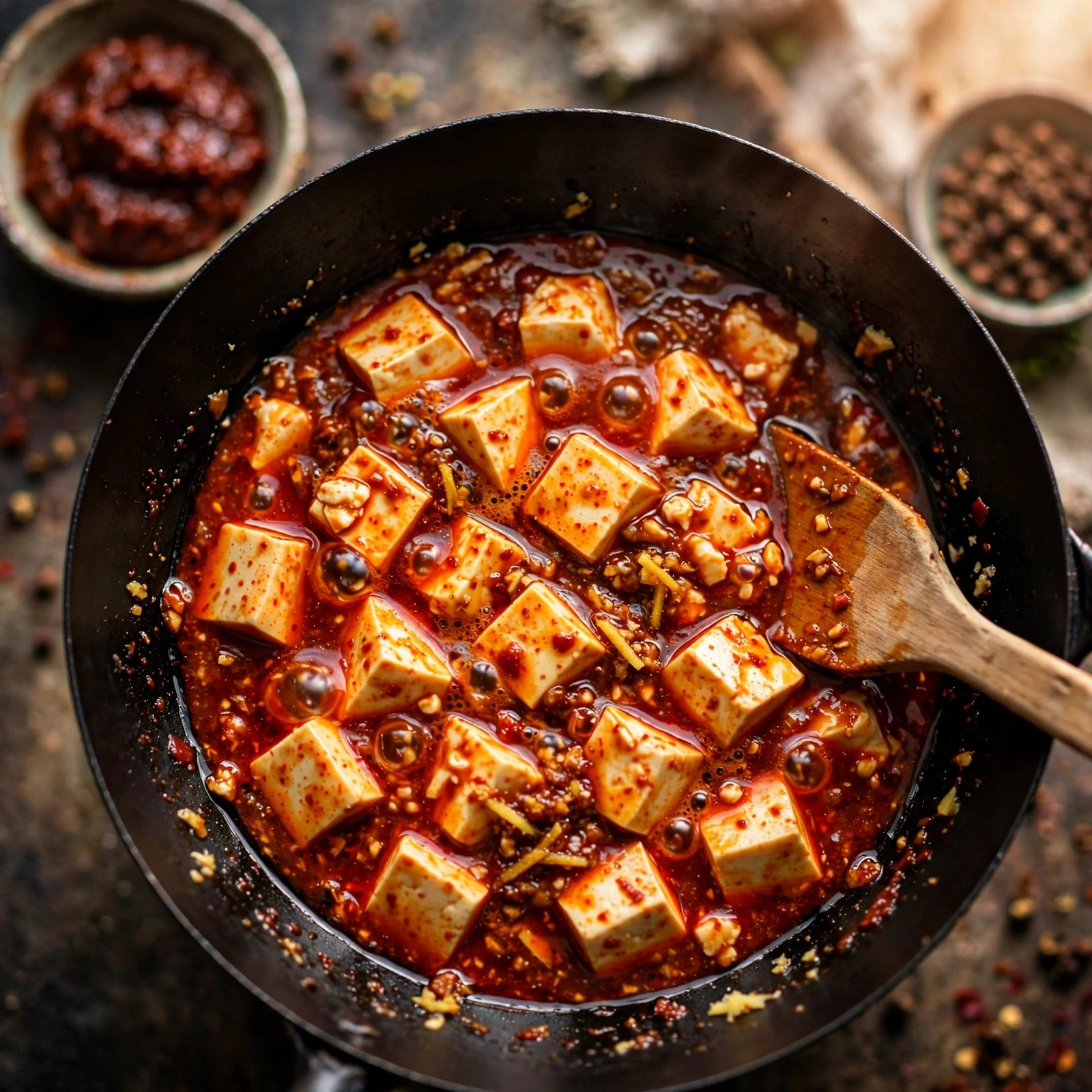
Step 3. Build the flavor base. Heat the neutral oil in a wok over medium-high heat until it shimmers. Add the doubanjiang and stir-fry for about 1 minute, pressing it into the hot oil until it darkens slightly and the oil turns red. This step, called blooming the paste, wakes up its flavor. Add the ground pork (if using) and the Shaoxing wine, breaking the meat into small pieces. Cook 3 to 4 minutes until the pork is no longer pink and starts to crisp at the edges.
Step 4. Add the aromatics. Stir in the garlic, ginger, and the white parts of the scallions. Cook 30 seconds until fragrant — do not let the garlic brown. Add the chili flakes and stir for another 15 seconds so they sizzle in the oil without scorching.
Step 5. Make it saucy. Pour in the stock, soy sauce, and sugar. Bring to a boil, then reduce to a steady simmer. This is your sauce base — taste it now. It should be salty, spicy, and deeply savory. Adjust the salt if needed.
Step 6. Add the tofu. Slide the drained tofu cubes into the simmering sauce. Do not stir with a spoon — instead, gently push and nudge the cubes with the back of a ladle, or swirl the pan so the tofu coats in sauce without breaking. Simmer 3 to 4 minutes so the tofu warms through and starts to absorb the flavors.
Step 7. Thicken. Give the cornstarch slurry a quick stir (cornstarch settles fast) and drizzle it in while gently swirling the pan. The sauce should turn glossy and cling to the tofu within 30 seconds. If it gets too thick, splash in a spoonful of water.
Step 8. Finish with ma la. Off the heat, sprinkle about 1 teaspoon of the ground Sichuan pepper over the top and add the green parts of the scallions. Toss gently once more. Serve immediately over hot rice, with extra ground pepper at the table for anyone who wants more tingle.
Tips for the Best Mapo Tofu
Use soft tofu, not extra-firm. The contrast is the whole point: custardy tofu against a bold, chunky sauce. Extra-firm tofu tastes chalky here and absorbs less flavor. Medium-soft is the most forgiving if you are nervous about breaking cubes.
Salt the tofu water. A 10-minute soak in hot salted water seasons the tofu from the inside and firms the surface just enough to survive the wok. Skip this and the cubes will shed and cloud the sauce.
Bloom the doubanjiang in oil. Raw doubanjiang is harsh and one-dimensional. Frying it in hot oil for a full minute rounds out the edges and deepens the color — this is the single technique that separates restaurant mapo tofu from bland home versions.
Grind the peppercorns fresh. Pre-ground Sichuan pepper loses its punch within weeks. Toasting and grinding right before cooking gives you the full citrusy, electric aroma. Buy whole peppercorns from an Asian grocery and store them in a sealed jar away from light.
Control the heat your way. The chili flakes bring raw heat; the doubanjiang brings fermented depth. If you like it milder, halve the chili flakes but keep the doubanjiang — you will keep the flavor without the fire. If you like it searing, add the flakes in two rounds: half bloomed in the oil, half stirred in at the end.
Serve it over rice, nothing else. Mapo tofu is a sauce that happens to contain tofu — it wants something neutral and starchy to soak it up. Plain steamed rice is the classic, and it lets the ma la flavor shine. A light soup on the side, like hot and sour soup, rounds out the meal without competing.
The technique here — blooming a fermented paste in oil before building the sauce — is the same foundation behind great wok hei stir-fries, and it is worth getting comfortable with.
Variations
Leftover mapo tofu keeps in the fridge for up to 3 days and reheats well — the flavors actually deepen overnight. Reheat gently in a pan with a splash of water to loosen the sauce, and add a fresh pinch of ground Sichuan pepper to wake the tingle back up.
Mapo Tofu
Ingredients
Method
- Cut the tofu into 3/4-inch cubes and soak in hot salted water for 10-15 minutes. Drain gently.
- Toast the Sichuan peppercorns in a dry wok 2-3 minutes until fragrant, cool, then grind to a coarse powder. Set aside.
- Heat the oil in a wok over medium-high heat. Add the doubanjiang and stir-fry 1 minute until it darkens and the oil turns red. Add the ground pork and Shaoxing wine; cook 3-4 minutes until no longer pink.
- Stir in the garlic, ginger, and scallion whites; cook 30 seconds. Add the chili flakes and stir 15 seconds.
- Pour in the stock, soy sauce, and sugar. Bring to a boil, then reduce to a steady simmer. Taste and adjust salt.
- Slide in the drained tofu cubes. Push and nudge gently with the back of a ladle (do not stir roughly). Simmer 3-4 minutes.
- Stir the cornstarch slurry and drizzle in while swirling the pan, until the sauce turns glossy and clings to the tofu, about 30 seconds.
- Off the heat, sprinkle about 1 teaspoon of the ground Sichuan pepper over the top and add the scallion greens. Serve immediately over hot steamed rice.
5 thoughts on “Mapo Tofu”