
Both bottles sit in the vinegar section, both start from rice, and both show up in Asian cooking. That is where the likeness ends. Black vinegar pours dark and smells malty, almost like a mild balsamic with a soy edge. Rice vinegar pours clear or pale gold and smells clean and light. Use the wrong one and a dish changes color, balance, and mood. I keep both bottles by the stove and reach for them for different jobs, and the tests below show why.

What black vinegar is
Black vinegar, often sold as Chinkiang vinegar, is made from glutinous rice and aged until it turns dark brown and full flavored. It is one of the bottles covered in A Home Cook’s Guide to Asian Vinegars. The taste is sweet-sour with a malty, slightly smoky back note. It is stronger in flavor than its pale color suggests, so a little goes a long way in a dipping sauce. In Chinese cooking it shows up with dumplings, in braised dishes, in noodle soups, and in dipping sauces where its depth can stand up to ginger, chili, and soy sauce.
What rice vinegar is
Rice vinegar is made from fermented rice and stays mild, clear, and lightly sweet. Unseasoned rice vinegar has no added sugar or salt, so it seasons without taking over. It is the vinegar for sushi rice, for cucumber salads, for light dressings, and for quick pickles where the other ingredients should stay bright. Seasoned rice vinegar is a different product: the bottle already holds added sugar and salt, so it cannot swap one for one with unseasoned rice vinegar without adjusting the rest of the recipe.
Black vinegar vs rice vinegar at a glance
| Black vinegar | Rice vinegar (unseasoned) | |
|---|---|---|
| Base | Glutinous rice, aged | Fermented rice |
| Color | Dark brown, nearly opaque | Clear to pale gold |
| Flavor | Malty, sweet-sour, slightly smoky | Mild, clean, lightly sweet |
| Strength in a dish | Bold; a small amount shows up fast | Gentle; lets other flavors lead |
| Best uses | Dumpling dip, braises, noodle soups, dipping sauces | Sushi rice, cucumber salad, dressings, quick pickles |
| Watch out for | It darkens light dressings and salads | It tastes thin in a dumpling dip that needs depth |
Taste test: three dishes, three verdicts
I tested both vinegars side by side in three everyday dishes, keeping every other ingredient the same.
Dumpling dip: black vinegar won by a wide margin. A dip of 3 tablespoons black vinegar with thin ginger slivers and a teaspoon of soy sauce tasted round and complete. The same dip with rice vinegar tasted thin and sharp, even after I added a pinch of sugar. Verdict: black vinegar for dumpling dip, no contest.

Cucumber salad: rice vinegar won. A dressing of 3 tablespoons rice vinegar, 1 tablespoon sugar, and 1/2 teaspoon salt over one thinly sliced cucumber stayed bright and let the cucumber taste like cucumber. The same dressing is the base of Japanese cucumber sunomono. Black vinegar turned the dressing brown and pushed the cucumber to the back. Verdict: rice vinegar for cucumber salad and other light salads.
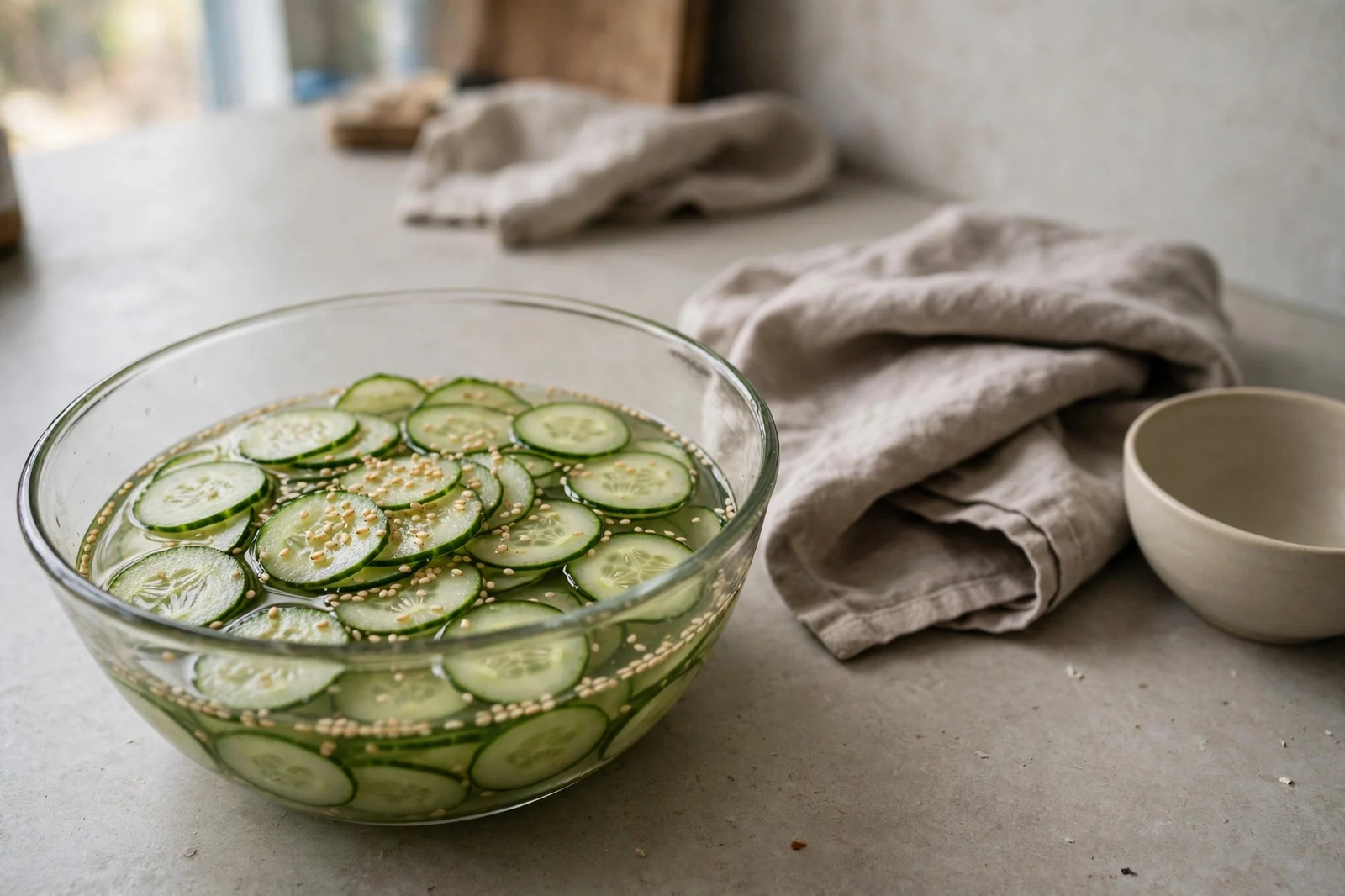
Quick pickle brine: rice vinegar won again for light vegetables. A brine of 1/2 cup rice vinegar, 1/2 cup water, 2 tablespoons sugar, and 1 teaspoon salt gave sliced red onion a clean tang in about 30 minutes. Black vinegar works in a pickle brine too, but only for darker, bolder pickles where its color and malt flavor fit, such as pickled ginger with soy in the mix. Verdict: rice vinegar for most quick pickles, black vinegar only when you want a dark, bold pickle.

When to swap one for the other
Rice vinegar in place of black vinegar: use it in a pinch for a dipping sauce, but add a pinch of sugar and a few drops of soy sauce per tablespoon to fill in the missing depth. It will still taste lighter, and it suits a mild dip better than a bold one. If you have no black vinegar at all, Black Vinegar Substitutes for Every Situation lists closer stand-ins by dish.
Black vinegar in place of rice vinegar: use about three-quarters of the amount the recipe calls for, then taste before adding more. If the dressing looks too dark or tastes too strong, add a tablespoon of water. Do not swap black vinegar into sushi rice: the color and malt flavor change the rice in a way no adjustment fixes.
Seasoned rice vinegar in place of unseasoned: cut back the sugar and salt elsewhere in the recipe, or the dish turns sweet and salty fast. When a recipe just says rice vinegar, read it as unseasoned unless the recipe says seasoned.
Which bottle to buy first
If you cook dumplings, noodles, and braised dishes often, buy black vinegar first. If you cook sushi rice, salads, and pickles often, buy rice vinegar first. If you cook across Chinese and Japanese dishes through the week, buy both: they cost little, keep well, and cover jobs the other bottle cannot cover. That pair, plus soy sauce, covers most of the vinegar work in my kitchen.
Shopping and storage notes
Look for Chinkiang vinegar on the black vinegar label, and check that rice vinegar says unseasoned if that is what you want. Store both bottles capped tight in a cool, dark spot, away from the stove. Opened vinegar keeps for months in my pantry; I replace an opened bottle of rice vinegar after about a year if it smells flat, while black vinegar holds its flavor longer. Both bottles earn their shelf space, just for different dishes.