
Fish amok is the dish I cook when I want a curry that eats like a custard. Pieces of firm white fish sit in a golden coconut mixture scented with lemongrass, galangal, and turmeric, and the whole thing steams in a banana leaf cup until it just sets. It is gentle rather than fiery, it smells like a market stall in Phnom Penh, and it goes with plain jasmine rice and nothing else fancy.

What is fish amok?
Fish amok, called amok trey in Khmer, is Cambodia’s steamed fish curry. It is not a saucy curry poured over rice. The fish, coconut milk, egg, and a pounded herb paste called kroeung are mixed together, spooned into cups folded from banana leaves, and steamed until the mixture sets into a soft, sliceable custard. The banana leaf is both the cooking vessel and the serving bowl.
Kroeung is the flavor base. It is pounded from lemongrass, galangal, fresh turmeric, garlic, shallots, and kaffir lime leaves, with a little dried chili for warmth. Cambodian cooking leans on fresh herbs more than dried spice, so the result tastes fragrant and clean rather than hot. Expect a soft set, like a savory panna cotta, with fish that flakes under a spoon and a sauce that clings instead of pooling.
If you have made my steamed fish with lime, this one uses the same gentle steaming idea but builds a whole custard around the fish instead of a clear broth.
The kroeung paste does the work
Pound the paste first, because everything else waits on it. Trim the tough outer layers from 2 stalks of lemongrass and slice only the pale lower third thin. Peel 1 tablespoon galangal and 1 teaspoon fresh turmeric, and strip the center ribs from 3 kaffir lime leaves before you chop them, since the ribs stay woody no matter how long you pound. Add 3 garlic cloves, 2 small shallots, and 1 small dried chili with the seeds shaken out.
Pound in a mortar until the mixture turns into a smooth, moist paste, about 8 to 10 minutes of steady work. A food processor with a splash of water gets you close, but the mortar gives a finer paste that melts into the custard instead of leaving gritty bits. The paste should smell lemony and warm, and it should hold together in a lump rather than run.
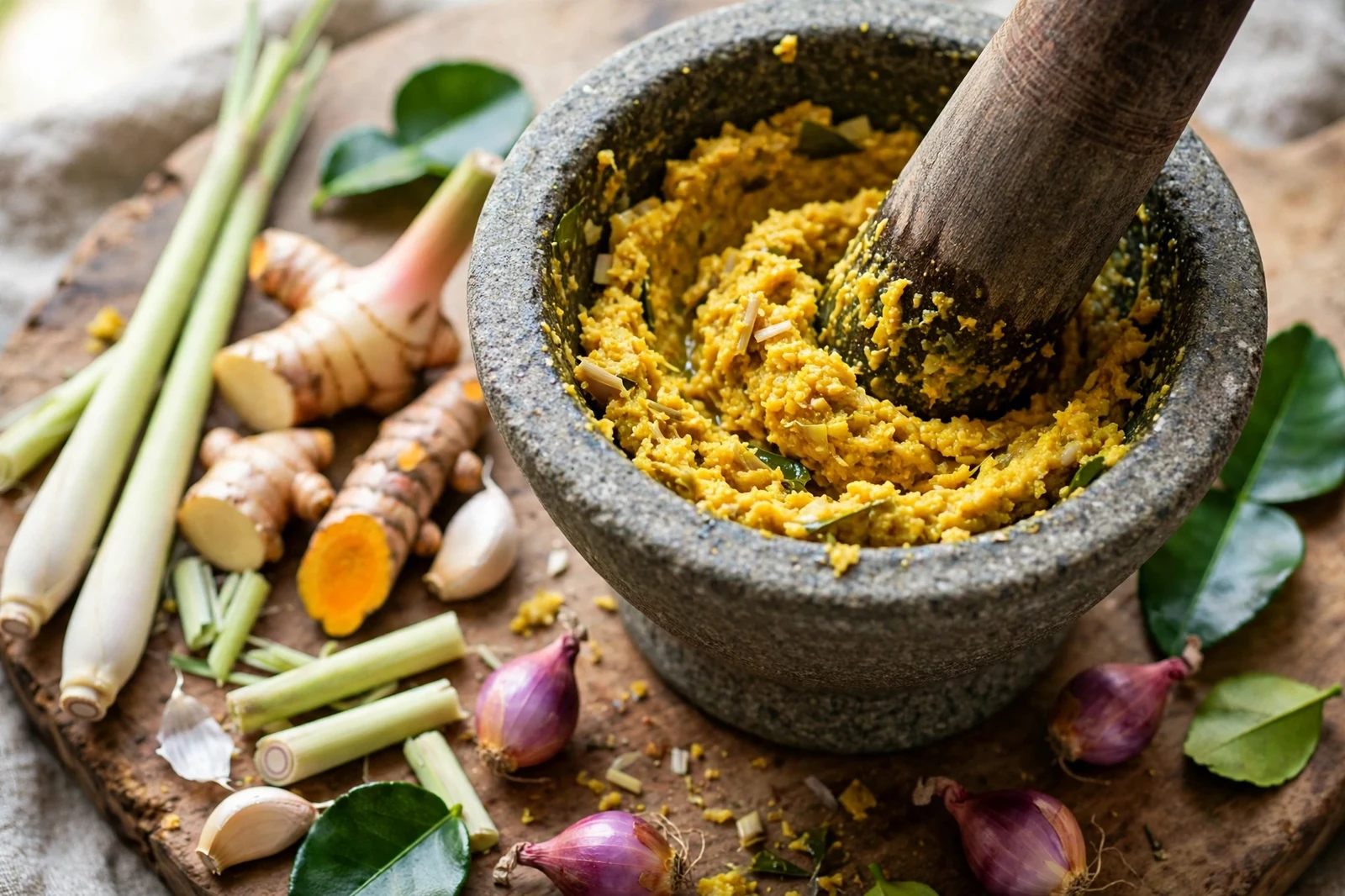
The custard ratio, and why it sets
The ratio that holds this dish together is 1 pound of fish to 1 cup of full-fat coconut milk to 1 large egg, with 3 tablespoons of kroeung. The egg is what sets the custard. Leave it out and you get fish in warm coconut milk. Add a second egg and the set turns firm, closer to a fish cake.
Use a firm white fish, such as cod, halibut, or catfish, cut into 1-inch pieces. Soft fish breaks apart when you fold it into the custard and again when you spoon it into the cups. Pat the pieces dry, then fold them gently into the coconut mixture with 1 tablespoon fish sauce and 1 tablespoon palm sugar. Stir only until mixed. Over-stirring breaks the fish before it ever reaches the steamer.
Taste the raw mixture with a fingertip. It should read salty first, then a little sweet, with the lemongrass coming through clearly. Steaming softens flavors, so a mixture that tastes flat now will taste flatter later. Fix the salt now, not at the table.
Fold the banana leaf cups
Cut banana leaves into 8-inch squares and trim away the thick center rib from each piece. Run each square under warm water and pat it dry, which softens the leaf so it folds without splitting. Fold up the four sides of a square and pin the corners with toothpicks to make a shallow cup about 4 inches across. If a cup leaks at the seam, double it with a second square.
No banana leaves at your market is not a reason to skip the dish. Ramekins or small heatproof bowls work, and the custard sets the same way. You lose the leaf scent, but the fish and kroeung still carry the dish. Line the bottom of each cup with a small handful of baby spinach, which stands in for the noni leaves used in Cambodia and wilts into a green bed under the fish.

Steam gently, and check at 20 minutes
Set the cups in a steamer basket over simmering water, not a rolling boil. Hard boiling shakes the custard and can split the coconut milk. Steam over medium heat for 20 to 25 minutes. Check at 20 minutes by nudging a cup. The center should jiggle slightly, like panna cotta, and the fish should be opaque. Steam too little and you get loose coconut soup. Steam too long and the custard firms up into fish cake.
Rest the cups for 5 minutes before serving. The set firms a little as it cools, and the flavors settle. Top each cup with a spoonful of the reserved coconut cream, a few ribbons of kaffir lime leaf, and sliced red chili. Serve with jasmine rice, and spoon the custard out of the cup at the table.

Troubleshooting: Fix My Fish Amok
Steamed custards punish small mistakes, and most of them show up in the texture. This section covers the five failures that come up most often, with the cause and the fix for each one.
HERB & LIME · KITCHEN HELP
Fix My Cambodian Fish Amok
Choose what went wrong to see a practical next step.
Possible cause
What to try next
For next time
From Paul's kitchen. Results vary with fish size, coconut milk, and stove heat, adjust timing to your setup.
Quick reference (also works without JavaScript)
The fish fell apart
Cause: A soft fish breaks when folded into the custard and again when spooned into the cups.
Try: Next time, use a firm white fish such as cod, halibut, or catfish, cut into even 1-inch pieces, and fold it in gently with a spoon, not a whisk.
Prevent: Pat the pieces dry before mixing, and stir only until the custard coats them.
The custard stayed watery
Cause: Too much coconut milk for the egg, or thin coconut milk, leaves nothing to set the custard.
Try: For the batch in front of you, steam it 5 minutes longer and rest it 10 minutes, which firms the set a little; for the next batch, keep the ratio of 1 cup full-fat coconut milk to 1 egg per pound of fish.
Prevent: Use full-fat coconut milk, and chill the can so you can spoon the thick cream off the top for the mixture.
The custard did not set in the middle
Cause: The cups came off the heat too early, or the heat was too low to set the egg.
Try: Return the cups to the steamer for 5 more minutes over simmering water, then rest 5 minutes before serving.
Prevent: Check at 20 minutes by nudging a cup: the center should jiggle slightly like panna cotta, with the fish opaque.
The banana leaf cups leaked
Cause: A stiff leaf splits at the fold, or the thick center rib keeps the sides from closing.
Try: Line the leaking cup with a second leaf square, or move the mixture to a ramekin and steam it there.
Prevent: Trim the center rib from each square, run the leaf under warm water to soften it, and pin the corners with toothpicks.
The paste tasted gritty or bitter
Cause: Lemongrass fibers and kaffir lime leaf ribs do not break down in the steamer, and they stay woody in the finished custard.
Try: Push the finished custard through a fine strainer before adding the fish, which catches the fibers without losing the flavor.
Prevent: Slice only the pale lower third of the lemongrass very thin, strip the center ribs from the lime leaves, and pound until the paste is smooth and moist, not watery.
Tips and variations
Swap the fish for chicken thigh pieces or extra-firm tofu cut the same size, and keep the same custard ratio. The steaming time stays 20 to 25 minutes for chicken, and 15 to 20 minutes for tofu. For a hotter version, leave the seeds in the dried chili or add a second one to the kroeung, but taste the raw mixture before you commit, since heat builds as the custard sets.
Leftovers keep in the fridge for up to 3 days in a covered container. Reheat gently in a steamer for 5 minutes rather than in a microwave, which heats unevenly and can turn the custard rubbery. I do not freeze fish amok, since thawing breaks the set. For another clay-pot fish dinner, my caramelized fish in a clay pot uses a different technique on the same kind of fish.
Cambodian Fish Amok
Ingredients
Method
- Pound the kroeung: put the lemongrass, galangal, turmeric, garlic, shallots, lime leaves, and dried chili in a mortar and pound 8 to 10 minutes until smooth and moist. A food processor with a splash of water works, but pound a little longer for a finer paste.
- Mix the custard: open the coconut milk without shaking it and reserve 2 tablespoons of thick cream. Whisk the remaining milk with the beaten egg, 3 tablespoons of kroeung, fish sauce, and palm sugar until smooth. Taste with a fingertip and adjust the salt now, since steaming softens flavors.
- Fold in the fish: pat the fish pieces dry and fold them gently into the custard with a spoon until coated. Stir only until mixed, so the pieces stay whole.
- Fold the cups: run each banana leaf square under warm water and pat dry. Fold up the four sides and pin the corners with toothpicks to make a shallow cup about 4 inches across. Put a small handful of spinach in the bottom of each cup, then spoon the fish and custard in evenly.
- Steam gently: set the cups in a steamer basket over simmering water, not a rolling boil. Cover and steam over medium heat for 20 to 25 minutes. Check at 20 minutes: the center should jiggle slightly and the fish should be opaque.
- Rest and serve: rest the cups for 5 minutes, then top each with the reserved coconut cream, lime leaf ribbons, and sliced red chili. Serve with jasmine rice, spooning the custard out of the cup at the table.
Notes
More Southeast Asian recipes
Cambodian recipes are new on this site, so this block gathers the closest cousins from nearby kitchens until more Cambodian dishes join them: steamed fish with lime, caramelized fish in a clay pot, Thai fried fish with chili sauce, and Singapore chili crab.
From the garden
The lemongrass in the kroeung comes from pots by the back door, grown following my lemongrass in pots guide. Pot-grown stalks run thinner than market stalks, so I use three stalks instead of two when the pot is the source, and the fresh-cut pieces pound smoother than any dried lemongrass I have tried.